

P0720 on 2008-2014 Dodge Avenger: Output Speed Sensor Causes and Fixes
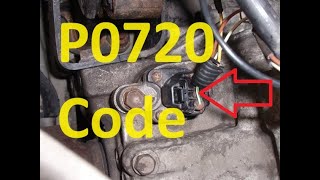
On a 2008-2014 Dodge Avenger, typically equipped with the 62TE transmission, code P0720 is most often caused by a failed transmission Output Speed Sensor (OSS). This results in the car getting stuck in 'limp mode,' harsh shifting, and an erratic speedometer. Replacing the sensor is a common DIY fix costing around $25-$75 for the part, which is often interchangeable with the input speed sensor.
- P0720 on a Dodge Avenger almost always points to a problem with the Output Speed Sensor (OSS) or its wiring.
- The most obvious symptoms will be the transmission getting stuck in a single gear (limp mode), an erratic speedometer, and harsh shifting.
- The fix is usually an inexpensive and accessible DIY replacement of the sensor, especially on the common 62TE transmission.
- Do not immediately assume a catastrophic transmission failure; this code is very often caused by a simple, cheap electronic part.
What's Unique About the 2008-2014 Dodge Avenger
The 2008-2014 Dodge Avenger was available with a 4-speed (40TE/41TE) or the more common 6-speed (62TE) automatic transmission. While the P0720 code points to the same issue on both, the sensor's exact location and part number can vary. On the prevalent 6-speed 62TE, the input and output speed sensors are often identical and interchangeable, which can simplify parts sourcing. The most common failure point is the sensor itself, making it a frequent and straightforward repair for this specific vehicle, often mistaken for a major transmission failure due to the severe symptoms.
Symptoms You May Notice
- Check Engine Light is on
- Transmission gets stuck in one gear (limp mode, 🎬 Watch: Troubleshooting limp mode issues on a 2.4L Avenger. usually 2nd or 3rd gear)
- Harsh, erratic, or delayed shifting
- Speedometer works intermittently, bounces wildly, or not at all
- Cruise control will not engage
- Vehicle may stall when coming to a stop
- ABS or traction control light may illuminate in some cases
- Replacing the Input Speed Sensor instead of the Output Speed Sensor. On the 62TE, they are often interchangeable parts but are in different locations. P0720 points specifically to the output circuit.
- Confusing the transmission speed sensor with an ABS wheel speed sensor. ABS sensors will typically trigger ABS and traction control lights and will not usually cause the transmission to enter limp mode.
Most Likely Causes
- Failed Output Speed Sensor (OSS) 🔴 High Probability These sensors are a known weak point on the 62TE transmission used across many Chrysler/Dodge products of this era due to heat cycles and electronic failure over time. Forum discussions are filled with owners successfully resolving P0720 with a sensor swap.
How to confirm: Use a scan tool to monitor the Output Shaft Speed PID while driving. If the reading is erratic, intermittent, or stays at zero while the vehicle is moving, the sensor is almost certainly bad. Given the low cost of the part and high failure rate, some owners opt to replace it as a primary diagnostic step after a visual wiring check.
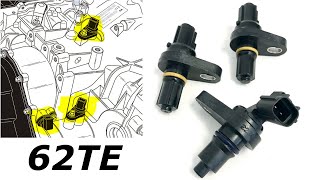
Typical fix: Replace the Output Speed Sensor. On the Avenger with the 62TE transmission, this sensor is located on the side of the transmission and is best accessed by removing the driver's side front wheel. 🎬 Watch: Step-by-step guide to replacing 62TE transmission sensors. It is typically the rearmost of two similar-looking sensors.
Est. part cost: $25-$75 - Damaged Wiring or Connector 🟡 Medium Probability The wiring harness leading to the transmission is exposed to road debris, moisture, and heat, which can cause wires to fray, break, or corrode at the connector pins. In some cases, corrosion inside the main transmission computer connector can also cause intermittent signal loss.
How to confirm: Visually inspect the wiring harness and connector leading to the Output Speed Sensor. Look for any signs of physical damage, corrosion in the pins, or loose connections. Perform a continuity and resistance test on the circuit with a multimeter. Wiggling the harness while monitoring the sensor data on a scan tool can help identify intermittent shorts.
Typical fix: Repair the damaged section of wiring or replace the connector pigtail. Clean corroded pins with electrical contact cleaner and apply dielectric grease to prevent future moisture intrusion.
Est. part cost: $10-$30 - Low or Dirty Transmission Fluid ⚪ Low Probability → Shop Transmission Assembly
How to confirm: Check the transmission fluid level and condition. The correct fluid for the 62TE is ATF+4. The fluid should be at the correct level and not appear dark, burnt, or contain metal particles. Note that some models may not have a traditional dipstick.
Typical fix: If the fluid is low, top it off with ATF+4 fluid and inspect for leaks. If the fluid is dirty, burnt, or contains debris, a transmission fluid and filter change is necessary. Metal shavings on the sensor magnet are a bad sign, indicating potential internal transmission wear.
Est. part cost: $50-$150
Rare But Worth Checking
- Faulty Powertrain Control Module (PCM) or Totally Integrated Power Module (TIPM): → Shop Engine Control Module (ECM) While rare for this specific code, Chrysler products of this era are known for TIPM and PCM issues that can cause a wide range of electrical problems. A faulty TIPM can cause issues like a non-functional fuel pump or headlights, and can sometimes manifest as transmission control problems. This should only be considered after the sensor and wiring have been definitively ruled out as the cause.
Diagnosis Steps
- Scan the vehicle's computer for trouble codes to confirm P0720 and note any other related codes (e.g., P0700, P073x).
- Check the transmission fluid level and condition, ensuring it is clean, full, and of the correct type (ATF+4).
- Visually inspect the Output Speed Sensor's wiring harness and connector for any obvious signs of damage, corrosion, or loose connections. Pay close attention to areas where the harness might rub against the chassis or engine components.
- With a capable scan tool, monitor the live data for 'Output Shaft Speed' while driving. The reading should be smooth and increase with vehicle speed. Erratic, jumping, or zero readings strongly point to a sensor or circuit issue.
- If the scan tool test is inconclusive, test the sensor's circuit. Disconnect the sensor and PCM, and use a multimeter to check for proper resistance in the sensor and for continuity/shorts to power or ground 🎬 See this breakdown of P0720 causes and circuit fixes. in the wiring harness.
- If the wiring and circuit test good, the Output Speed Sensor is the most likely cause of the problem and should be replaced.
- If replacing the sensor and verifying the wiring does not resolve the code, the final step is to investigate the PCM/TIPM, which may require professional diagnosis.
Parts You'll Likely Need
- Transmission Output Speed Sensor
(OEM #4800879 (for 4-speed 41TE) or 05078758AA / 5078554AA (for 6-speed 62TE))— This is the most common failure point for a P0720 code on the Dodge Avenger. Note that part numbers differ between the 4-speed and 6-speed transmissions.
Trusted brands: Mopar, NTK, Standard Motor Products (SMP), Dorman
OEM price range: $50-$75
Aftermarket price range: $25-$50
Related Codes That Often Appear With This One
- P0700 — P0700 is a generic code indicating the Transmission Control Module (TCM) has stored a fault. It's a 'heads-up' code that is almost always present alongside a more specific transmission code like P0720.
- P0721 / P0722 / P0723 — These are related codes that indicate specific types of faults within the output speed sensor circuit, such as 'Range/Performance' (P0721), 'No Signal' (P0722), or 'Intermittent' (P0723).
- P073x (e.g., P0731, P0732) — These are 'Incorrect Gear Ratio' codes. The computer sets them when it can't verify the correct gear is engaged because the output speed sensor is providing faulty data, making it impossible to confirm the actual output speed vs. the expected speed for a given gear.
Technical Service Bulletins (TSBs) & Recalls
- TSB 21-013-12: For some 2013 models, this TSB involves reprogramming the PCM to address general transmission shift quality improvements, which could be a related complaint but is not a direct fix for a failed P0720 sensor.
Platform-Specific Known Issues
- On models equipped with the 6-speed 62TE transmission, the input and output speed sensors are often the same part number (e.g., 05078758AA) and can be physically interchanged, which is a common point of discussion in forums.
- The Output Speed Sensor is located on the driver's side of the transmission case; access is greatly improved by removing the driver's side front wheel. The OSS is the rearmost of the two similar sensors.
- Some owners on forums have reported needing to replace both the transmission output sensor and the rear wheel speed sensor (on the differential) to finally clear the code, though P0720 specifically points to the transmission sensor.
Mechanic-Grade Diagnostic Values
- Output Speed Sensor (OSS) Resistance (62TE) — expected: Approximately 1590 Ohms at 72°F (22°C).. Failure: A reading that is significantly higher, lower, or shows an open circuit (infinite resistance). A failing sensor might also show a resistance that varies wildly when tapped or moved.
- Input Speed Sensor (ISS) Resistance (62TE) — expected: Approximately 1590 Ohms at 72°F (22°C).. Failure: Same as the OSS, as they are often the same part. This is useful for comparison if one sensor tests bad.
- Transfer Shaft Speed Sensor Resistance (62TE) — expected: Approximately 1424 Ohms at 72°F (22°C).. Failure: A reading outside of the expected range. This sensor is different from the input/output sensors.
Scan Tool Commands That Help
- Dealer-level scan tool (e.g., WiTech, Autel, Snap-on): Quick Learn Procedure — After replacing major transmission components like the valve body, solenoid pack, or sometimes even after a battery disconnect, a Quick Learn procedure is recommended to reset transmission shift adapts. This forces the TCM to relearn clutch fill volumes and shift timing, which can resolve harsh shifting that may persist after a repair. The procedure involves following on-screen prompts to shift the vehicle through different gears while stationary with the brake applied.
Wiring & Ground Locations
- Transmission Wiring Harness — Runs from the main engine harness down the driver's side of the engine bay to the transmission case.. This harness contains the signal and ground wires for the output speed sensor. It is susceptible to melting or chafing where it passes between the engine and firewall or near exhaust components. A Reddit user with a 2014 Avenger reported a melted harness in the driver's side wheel well area.
- PCM Connectors (C1, C2) — The Powertrain Control Module (PCM) is located in the engine bay. Its main connectors are the point where the sensor signals are processed.. Corrosion or poor pin fitment at the PCM connectors can interrupt the output speed sensor signal, mimicking a failed sensor. Wiggling these connectors while the engine is running can sometimes reveal a bad connection if it causes the engine to misfire or stall. Diagnostic procedures involve checking for opens or shorts between the sensor connector and the PCM connector pins.
- Main Transmission Connector — This is the large, multi-pin connector that plugs into the transmission, often near the solenoid pack.. Corrosion within this main connector can cause intermittent signal loss for multiple transmission components, including the speed sensors, leading to limp mode and various codes.
Real Owner Repair Stories
- Go-Parts Grounding Search Result (2008-2016 Chrysler Town & Country with 62TE (same platform)) — Vehicle intermittently going into limp mode.
❌ Tried (didn't work) Not specified, but the issue was intermittent, making standard sensor replacement a possible but potentially ineffective first step.
✅ What actually fixed it The problem was traced to corrosion inside the main electrical connector for the transmission computer. Cleaning the connector pins with contact cleaner and applying dielectric grease resolved the intermittent limp mode and associated codes. - YouTube video by 'Transmisión Automática Segura' (2014 Dodge Grand Caravan with 62TE (same platform)) — Limp mode, speedometer at zero while moving, codes P0721, P0731, P0792.
❌ Tried (didn't work) Cleaning the sensor connectors with gasoline and WD-40 did not resolve the issue.
✅ What actually fixed it Testing the resistance of the three speed sensors revealed the output speed sensor was faulty (reading 427 ohms instead of the specified ~1590 ohms). Replacing the output speed sensor (and proactively the other two) fixed the problem. - NHTSA ODI #10433836 (Dodge Platform Reference) — An owner reported that their vehicle's check engine light came on with a P0720 code; after researching the issue, they noted that the Output Speed Sensor (OSS) malfunctioning is a very common occurrence with Dodge vehicles.
OEM Part Supersession History
05078758AA→5078554AA— Part number consolidation and potential minor revisions by Mopar for the 62TE transmission speed sensor.
Heads up: The part numbers 05078758AA and 5078554AA are generally considered interchangeable for the input/output speed sensors on the 62TE transmission.
Model Year Variations Within This Range
- 2011-2014: Chrysler issued several PCM software updates for vehicles with the 62TE transmission to improve shift quality, address harsh shifts (e.g., 1-3 upshift, 2-3 upshift), and refine torque converter lock-up behavior. While not a direct fix for a failed sensor, if a customer complains of poor shift quality along with a P0720, ensuring the PCM has the latest software is a valid diagnostic step after confirming the sensor and wiring are good.
Diagnostic Flowchart
Other Known Issues on This Vehicle
Issues unrelated to this code that are worth knowing about as an owner of this generation:
- Front Subframe (Crossmember) Corrosion 🔴 High — Common in salt-belt states, can occur after 5-8 years. Can lead to catastrophic failure of the front suspension. (Ref: A warranty extension (X69) was issued for some related platforms (Caliber, Compass/Patriot), but many Avenger owners report the same issue without formal coverage. A common cause cited by owners is the A/C drain dripping directly onto the subframe, causing it to rust from the inside out.)
- Totally Integrated Power Module (TIPM) Failure 🔴 High — A well-documented issue across many Chrysler/Dodge/Jeep vehicles of this era. Onset can be random, often after 75,000 miles. (Ref: No specific recall for Avenger, but repair services and forum complaints are very common. Symptoms include random horn honking, engine stalling, fuel pump issues, and other bizarre electrical behavior.)
- Engine Stalling / Shutting Down While Driving 🔴 High — Particularly noted on the 2008 model year, but can affect others. Can happen at any mileage. (Ref: Often linked to TIPM failure or throttle body issues, but can be difficult to diagnose.)
- Transmission Shifting Problems (General) 🟠 Medium → Shop Transmission Assembly — Complaints of harsh shifting, slipping, and delayed engagement are common for the 62TE transmission, especially after 60,000 miles, even without specific sensor codes. (Ref: TSB 21-013-12 was released to reprogram the PCM for better shift quality.)
- Thermostat Housing Failure 🟡 Low — The plastic thermostat housing is prone to cracking and leaking coolant, typically after 60,000 miles.
Used vs. New Parts: Buying Guide for This Vehicle
When a used part is the smart pick: For this repair, sourcing a used part is generally not recommended. The primary failure part, the Output Speed Sensor, is a relatively inexpensive electronic component known for failure over time. A used sensor carries a high risk of having limited remaining life or being faulty from the start.
Donor-vehicle mileage cap: roughly under 80000 miles for the part to have meaningful remaining life.
What to inspect on the donor part:
- If sourcing a larger component like a wiring harness, ensure there is no visible corrosion on the connector pins.
- Check for any signs of melting, brittleness, or previous repairs (e.g., splices wrapped in electrical tape).
- Verify the donor vehicle was not in a front-end collision that could have damaged the harness.
OEM-only on this vehicle (don't cheap out):
- Totally Integrated Power Module (TIPM): While repaired units are available, cheap used TIPMs are a gamble. A new or professionally remanufactured unit with a warranty is a much safer choice to avoid chasing intermittent electrical gremlins.
Aftermarket brands forum-validated for this vehicle:
- NTK (NGK)
- Standard Motor Products (SMP)
- Dorman
Brands owners have reported issues with on this vehicle:
- No-name, unbranded sensors from online marketplaces should be avoided, as their quality control and accuracy can be highly suspect, potentially causing the code to return quickly.
Real Owner Stories
Aggregated from forums and TSBs cited above. Mileages and costs reflect what owners reported in those sources.
2008-2014 Dodge Avenger
Symptoms: The transmission was stuck in limp mode and the speedometer was working intermittently or not at all.
What fixed it: Replacement of the Output Speed Sensor (OSS) located on the side of the transmission.
Source hint: DodgeForum.com: Thread titled 'Which speed sensor for P0720?'
2008-2014 Dodge Avenger
Symptoms: Replaced both speed sensors but the vehicle was still 'whacked.'
What fixed it: The owner had to clean all connectors up to the PCM, suggesting the issue was in the wiring or the PCM itself rather than just the sensors.
Source hint: DodgeForum.com: Thread titled 'Try this again. P0720. Replaced sensors. Still whacked!'
2008-2014 Dodge Avenger
Symptoms: P0720 code present; owner was confused whether to replace the transmission sensor or the rear wheel speed sensor on the differential.
What fixed it: Replacing the transmission output sensor specifically, as it was confirmed that P0720 without an ABS light points to the transmission sensor.
Source hint: DodgeForum.com: Thread titled 'Which speed sensor for P0720?'
Related OBD-II Codes
Frequently Asked Questions
Where is the Output Speed Sensor located on my Dodge Avenger with the 62TE transmission?
Does TSB 21-013-12 fix the P0720 code on my 2013 Avenger?
Can I use the same part for both the input and output speed sensors on my 62TE transmission?
My speedometer is bouncing wildly and the car is stuck in 2nd gear; is this related to P0720?
What type of transmission fluid should I use if I need to top off my Avenger to clear this code?
Is there a recall for the subframe rust I noticed while checking my speed sensor wiring?
Helpful Videos

We Have This Part in Stock



The information in this article is provided for general reference and educational purposes only. Vehicle specifications, procedures, and part compatibility can vary by production date, trim level, and region. Always consult your vehicle's factory service manual and verify part numbers before purchasing or performing repairs. Safety-critical components such as airbags, seat belts, and braking systems should be installed by a qualified professional.
- Dodge Avenger:
- 🧭 Diagnostic Flowchart
- 🎬 Helpful Videos
- 🛍️ Shop This Part
- What's Unique About the 2008-2014 Dodge Avenger
- Symptoms You May Notice
- Most Likely Causes
- Rare But Worth Checking
- Diagnosis Steps
- Parts You'll Likely Need
- Related Codes That Often Appear With This One
- Technical Service Bulletins (TSBs) & Recalls
- Platform-Specific Known Issues
- Mechanic-Grade Diagnostic Values
- Scan Tool Commands That Help
- Wiring & Ground Locations
- Real Owner Repair Stories
- OEM Part Supersession History
- Model Year Variations Within This Range
- Other Known Issues on This Vehicle
- Used vs. New Parts: Buying Guide for This Vehicle
- Real Owner Stories
- 2008-2014 Dodge Avenger
- 2008-2014 Dodge Avenger
- 2008-2014 Dodge Avenger
- Related OBD-II Codes
- Frequently Asked Questions
- 🎟️ Get 5% Off