

P0720 on 1997-2004 Dodge Dakota: Output Speed Sensor Causes and Fixes
On a 1997-2004 Dodge Dakota, code P0720 is almost always caused by a failed transmission Output Speed Sensor (OSS). This results in erratic shifting, a non-functional speedometer, and the transmission entering 'limp mode.' Replacing the sensor, which is located on the driver's side of the transmission and requires a 1" socket, is a common, low-cost DIY fix.
- P0720 on a 1997-2004 Dakota specifically points to the Output Speed Sensor (OSS) on the transmission, not the sensor on the rear axle.
- Primary symptoms are the transmission getting stuck in 'limp mode' (one gear), harsh shifting, and an erratic or dead speedometer.
- The most likely fix is replacing the OSS, which is an inexpensive part and a relatively easy DIY job requiring basic tools.
- Before suspecting a major transmission failure or a bad PCM, always diagnose the OSS and its wiring first.
- Driving with this issue is not recommended as it can cause unsafe driving conditions and put additional strain on the transmission.
What's Unique About the 1997-2004 Dodge Dakota
On this generation of Dodge Dakota, there is often confusion between two speed sensors: the Output Speed Sensor (OSS) on the transmission and the ABS/Vehicle Speed Sensor (VSS) on the rear differential. While both measure speed, the P0720 code specifically points to the OSS on the transmission, which controls shifting behavior. A failure of the rear sensor typically triggers different codes (like P0500) and primarily affects the speedometer and ABS system. Owners frequently misdiagnose the issue by replacing the wrong sensor, a common topic in owner forums.
Symptoms You May Notice
- Transmission stuck in one gear (typically 2nd or 3rd), known as 'limp mode'
- Harsh, erratic, or delayed shifting
- Erratic or non-functional speedometer
- Check Engine Light is on
- Cruise control not working
- Engine stalls or hesitates when coming to a stop or accelerating
- Replacing the rear ABS/Vehicle Speed Sensor (VSS) on the differential. This sensor primarily controls the speedometer and ABS and usually sets a P0500 code, not P0720.
- Assuming the entire transmission has failed. This code is almost always caused by a cheap external sensor, not a major internal transmission failure.
Most Likely Causes
- Failed Output Speed Sensor (OSS) 🔴 High Probability This is a common wear-and-tear item. The sensor is a magnetic pickup that can fail electronically over time or become contaminated with metallic debris from normal transmission wear, which can be seen on the sensor's magnetic tip upon removal.
How to confirm: After confirming the P0720 code, the most direct way to confirm is to replace the sensor, as it is inexpensive and the most likely point of failure. A more advanced method involves using a scan tool to monitor the OSS data stream while driving or using a multimeter to test the sensor's resistance and voltage output.
Typical fix: Replace the Output Speed Sensor located on the driver's side of the transmission's tail housing. It is held in by a single bolt and can be removed with a 1" deep socket.
Est. part cost: $20-$60 - Damaged Wiring or Connector 🟡 Medium Probability The wiring harness leading to the transmission is exposed to road debris, heat, and fluids, which can cause wires to fray, break, or the connector pins to corrode. In one documented case, a user replaced the sensor and PCM, but the issue was ultimately a broken wire in the harness.
How to confirm: Visually inspect the wiring harness and connector for any signs of physical damage, corrosion, or loose connections between the sensor and the PCM. Perform a continuity test on the wires with a multimeter if a visual inspection is inconclusive.
Typical fix: Repair the damaged section of wiring or replace the connector pigtail. Pigtail kits are available from aftermarket suppliers.
Est. part cost: $10-$30 - Low or Contaminated Transmission Fluid ⚪ Low Probability → Shop Transmission Assembly While not a direct cause of an electrical circuit code, very low or heavily contaminated fluid can cause erratic transmission operation and generate metallic debris that can interfere with the magnetic speed sensor's reading. Forum users have noted a large amount of metal shavings on the sensor tip, indicating potential internal wear.
How to confirm: Check the transmission fluid level and condition using the dipstick. The fluid should be at the correct level, reddish in color, and not have a burnt smell or contain excessive metallic particles.
Typical fix: Top off the fluid or perform a transmission fluid and filter change.
Est. part cost: $50-$150
Rare But Worth Checking
- Faulty Powertrain Control Module (PCM): → Shop Engine Control Module (ECM) This is extremely rare and should be considered only after all other possibilities (sensor, wiring) have been exhaustively ruled out. Forum users have replaced the PCM only to find the problem persisted, pointing back to wiring or the sensor itself.
Diagnosis Steps
- Confirm the presence of the P0720 code using an OBD-II scanner. Note any other transmission-related codes.
- Check the transmission fluid level and condition. Address any low fluid or poor condition issues first.
- Locate the Output Speed Sensor on the driver's side of the transmission, near the tail housing. It is the rearmost sensor if two are present (on 45RFE models).
- Thoroughly inspect the sensor's connector and wiring harness for any signs of damage, corrosion, or loose connections. Pay close attention to areas where the harness might rub against the frame or exhaust.
- If the wiring appears intact, the most common and cost-effective next step is to replace the Output Speed Sensor. It is held in by a single bolt and can be removed with a 1" deep socket. Have the new sensor ready to swap in quickly, as a small amount of transmission fluid may leak out.
- Before installing the new sensor, apply a light coat of clean transmission fluid to the O-ring to ensure a good seal.
- After replacing the sensor, clear the code with the scanner and perform a test drive to see if the symptoms and code return.
- If the problem persists, perform a continuity test on the sensor's wiring from the connector back to the PCM to rule out an open or shorted wire.
- If the sensor and wiring are confirmed to be good, the final, though unlikely, possibility is a fault within the Powertrain Control Module (PCM).
Parts You'll Likely Need
- Transmission Output Speed Sensor
(OEM #56028185AB, 4800879, 52118500AB)— This sensor is the most common cause of a P0720 code and its associated symptoms on the Dodge Dakota.
Trusted brands: Mopar, NGK/NTK, Standard Motor Products (SMP), Dorman
OEM price range: $40-$70
Aftermarket price range: $20-$50
Related Codes That Often Appear With This One
- P0700 — P0700 is a generic code indicating the Transmission Control Module (TCM) has requested the Check Engine Light to be turned on. It is a general flag that a more specific transmission code, like P0720, has been stored.
- P0731 - P0736 — These codes for 'Incorrect Gear Ratio' can be triggered alongside P0720 because the PCM/TCM uses the input and output speed sensors to verify the transmission is in the correct gear. If the output speed signal is faulty, the computer cannot confirm the gear ratio.
Platform-Specific Known Issues
- Sensor Location by Transmission: → Shop Transmission Assembly For V6 and 5.2L/5.9L V8 models with the 42RE or 46RE transmission, there is a single output speed sensor. For 4.7L V8 models with the 45RFE/545RFE transmission, there are two sensors (input and output) that look similar; P0720 refers to the rearmost sensor.
Mechanic-Grade Diagnostic Values
- Output Speed Sensor (OSS) Resistance — expected: A general specification for a 2-wire sensor is 560 to 680 Ohms, though some forum posts suggest a wider range of 1400 to 1600 Ohms may be seen on some models. The key is to check for an open (infinite resistance) or short (zero resistance) circuit.. Failure: A reading of infinite Ohms (open circuit) or near zero Ohms (short circuit) indicates a failed sensor.
- OSS Signal Circuit Continuity to PCM — expected: Less than 5.0 Ohms of resistance between the sensor connector pin and the corresponding PCM pin.. Failure: Resistance above 5.0 Ohms indicates an open or high-resistance wire in the harness that needs to be repaired.
- OSS Signal Circuit Short to Ground — expected: Infinite resistance (OL on multimeter) between the OSS signal circuit and chassis ground.. Failure: Any reading below infinite resistance (especially below 5.0 ohms) indicates a short to ground in the harness.
- Reference Voltage at Sensor Connector (Key On, Engine Off) — expected: One user with a 1996 model reported measuring 5.13V on both the reference (Orange wire) and signal (White/Orange wire) circuits, despite a manual suggesting 8V for reference and 5V for signal. This suggests 5V is the more likely correct voltage.. Failure: Significantly lower than 5V or 0V points to a wiring issue or a problem with the PCM's 5V supply circuit.
Scan Tool Commands That Help
- DRB III or equivalent professional scanner: Live Data Monitoring of Input/Output Speed Sensors — This is used to verify if the PCM is receiving a signal from the OSS. While driving, the output speed sensor RPM should increase smoothly with vehicle speed. If the reading is erratic, zero, or does not change, it confirms a problem in the sensor circuit. This is particularly useful on 45RFE transmissions to compare input and output sensor readings simultaneously.
Wiring & Ground Locations
- PCM Connector C4 (Green) — On the firewall, part of the main PCM connector block for 2003-2004 4.7L models.. For 4.7L engines with the 45RFE/545RFE, the OSS signal wire goes to Pin 32 (Output Speed Sensor Signal) and the sensor ground goes to Pin 34 (Speed Sensor Ground) of this connector. Testing for continuity and shorts at these specific pins is the definitive way to check the wiring harness.
- PCM Connector C2 (Gray) — On the firewall, part of the main PCM connector block for 1998-2001 models.. For a '98 Ram (similar wiring to Dakota), the output speed sensor signal wire (Lite Green/Black) is located at Pin 28 of the C2 connector. This is a key test point for checking the signal wire from the sensor to the PCM.
- G104 / G105 — G104 is the alternator ground. G105 is a ground on the front of the engine block.. While the sensor has a dedicated ground wire back to the PCM, poor engine block or chassis grounds can introduce electrical noise and cause erratic sensor behavior. Ensuring these main grounds are clean and tight is a crucial step when diagnosing persistent, hard-to-trace electrical issues.
Real Owner Repair Stories
- DodgeForum.com user 'Freddy Fog' (2000 Dodge Dakota 4x4, 4.7L V8) — Hard, powerless shift around 20 mph, engine felt like it had no power, Check Engine Light with code P0720.
❌ Tried (didn't work) Replaced the most accessible speed sensor on the transmission.
✅ What actually fixed it The user had replaced the wrong sensor. On the 4.7L with the 45RFE transmission, there are two sensors (input and output). P0720 refers to the rearmost (output) sensor. After a forum member provided a diagram showing both sensors, the user replaced the correct (output) sensor, which resolved the issue. - DodgeForum.com user 'FelixAFM' (1999 Dodge Dakota, 5.2L V8) — Wacky speedometer, would not shift into second from a stop, had to restart engine to get it to work temporarily.
❌ Tried (didn't work) Replacing the output speed sensor., Replacing the ECU (PCM).
✅ What actually fixed it After replacing both the sensor and the computer failed to fix the problem, the user ran a new pair of wires directly from the PCM to the output speed sensor connector. This finally resolved the P0720 code and shifting issues, proving the fault was a break or short in the original factory wiring harness. - DodgeForum.com user 'shrpshtr325' (1998 Dodge Dakota) — Check engine light comes on when shifting out of first gear at high RPM, code P0720.
❌ Tried (didn't work) Researching the rear wheel speed sensor as a possible cause.
✅ What actually fixed it Following forum advice, the user replaced the output speed sensor on the driver's side of the transmission. The fix was successful, the light stayed off, and the truck passed inspection. This is a classic case of the most common fix working as expected. - NHTSA ODI #10433836 — An owner reported a dangerous situation while driving in the left lane when the vehicle speed control failed. The "Check Engine" light returned a P0720 code, and the owner noted that after researching the issue, they found that an Output Speed Sensor (OSS) malfunctioning is very common with Dodge vehicles.
OEM Part Supersession History
4800879→56028185AB, 52118500AB— Part consolidation and minor revisions over the production run.
Heads up: While multiple part numbers exist, the key is ensuring the sensor is correct for the specific transmission (42/46RE vs. 45RFE). Forum discussions highlight issues with cheap, no-name aftermarket sensors being unreliable, suggesting sticking to OEM (Mopar) or well-regarded aftermarket brands like NTK or Standard Motor Products is crucial.
Model Year Variations Within This Range
- 2000-2004: Models with the 4.7L V8 use the 45RFE (later 545RFE) transmission, which has both an Input Speed Sensor and an Output Speed Sensor that look identical and are mounted near each other. P0720 specifically refers to the rearmost sensor (OSS). Pre-2000 models with the 3.9L, 5.2L, or 5.9L engines typically use the 42RE or 46RE, which only have a single output speed sensor, simplifying diagnosis.
- 2001-2003: Some 45RFE transmissions could be reprogrammed by the dealer to unlock a fifth gear ratio (making it a 545RFE), which changed highway shift logic. While not directly causing a P0720, being aware of the specific transmission software (4-speed vs 5-speed logic) can be relevant when diagnosing complex shifting complaints that accompany the code.
Diagnostic Flowchart
Other Known Issues on This Vehicle
Issues unrelated to this code that are worth knowing about as an owner of this generation:
- Intake Manifold Plenum Gasket Leak (Magnum V6/V8) 🔴 High — Extremely common on the 3.9L, 5.2L, and 5.9L Magnum engines. Causes mysterious oil consumption, spark knock (pinging), and can lead to catalytic converter failure.
- Cracked Dashboard 🟡 Low — Almost universal on trucks from this era, especially those in warmer climates. The plastic becomes brittle and large chunks can break away.
- Premature Ball Joint Wear 🔴 High — Very common, particularly on upper ball joints, leading to clunking noises from the front suspension and uneven tire wear. Can eventually lead to separation of the wheel from the knuckle. (Ref: Safety Recall for 2000-2003 models regarding upper ball joints.)
- Sticking Front Brake Calipers 🟠 Medium — Calipers are known to seize, causing the truck to pull to one side, smoking brakes, and rapid pad/rotor wear.
- Rear ABS / Speed Sensor Failure 🟠 Medium — The sensor on the rear differential commonly fails, causing the ABS and Brake lights to illuminate and sometimes an inoperative speedometer (though P0720 is not the typical code).
Used vs. New Parts: Buying Guide for This Vehicle
When a used part is the smart pick: For this repair, a used part is almost never a smart choice. The primary failure part is a low-cost electronic sensor which is a wear item. A used sensor from a junkyard has unknown life remaining and is a high-risk gamble for the small amount of money saved. A used PCM could be considered if it is confirmed to be the fault, but it must be from an identical vehicle (year, engine, transmission, and emissions) and may require programming.
Donor-vehicle mileage cap: roughly under 80000 miles for the part to have meaningful remaining life.
What to inspect on the donor part:
- For a used PCM: Verify the part number on the donor PCM matches the original exactly.
- Check the donor vehicle's VIN to confirm it had the same engine and transmission.
- Inspect the connector pins on the used PCM for any corrosion or damage.
OEM-only on this vehicle (don't cheap out):
- Powertrain Control Module (PCM) - While used is an option, aftermarket remanufactured PCMs for this era have a very high failure rate. Sourcing a correct, tested OEM unit is preferred if the PCM is condemned.
Aftermarket brands forum-validated for this vehicle:
- Mopar (OEM)
- Standard Motor Products (SMP)
- NTK/NGK
Brands owners have reported issues with on this vehicle:
- Unbranded, 'white box' sensors from online marketplaces.
- Dorman - While some have success, forum threads mention Dorman sensors being problematic for this specific application, sometimes failing out of the box or shortly after.
Real Owner Stories
Aggregated from forums and TSBs cited above. Mileages and costs reflect what owners reported in those sources.
2000 Dodge Dakota 4.7L V8
Symptoms: Replaced the sensor twice but the P0720 issue persisted. Discussion clarified the need to identify the correct sensor among the two present on the 45RFE transmission.
What fixed it: Identifying the correct rearmost sensor and addressing the possibility of faulty aftermarket sensors.
Source hint: DodgeForum.com - 'P0720 issue.' (2015)
1998 Dodge Dakota
Symptoms: Classic P0720 code symptoms.
What fixed it: Replaced the sensor on the driver's side of the transmission.
Source hint: DodgeForum.com - '98 dakota computer code p0720' (2007)
1999 Dodge Dakota 5.2L V8
Symptoms: Persistent P0720 code despite replacing both the sensor and the ECU (PCM).
What fixed it: Ran new wires to the sensor to bypass a break in the wiring harness.
Source hint: DodgeForum.com - 'P0720 Output Speed Sensor - HELP!' (2021)
1999 Dodge Dakota V6
Symptoms: Transmission shifting issues and P0720 code; owner was confused if the sensor was located on the rear differential.
What fixed it: Correctly identifying the transmission-mounted Output Speed Sensor rather than the differential VSS.
Source hint: Dodge Dakota Forum - 'P0720 and Transmission Shifting' (2005)
Related OBD-II Codes
Frequently Asked Questions
Where is the Output Speed Sensor located on my 4.7L V8 Dakota?
Is the P0720 sensor the same one located on the rear differential?
What size socket do I need to replace the Output Speed Sensor on a 1997-2004 Dakota?
Why is my Dakota stuck in 2nd or 3rd gear with the Check Engine Light on?
Can I just clean the sensor instead of replacing it?
Are there any recalls for the 2000-2003 Dodge Dakota related to these symptoms?
Helpful Videos
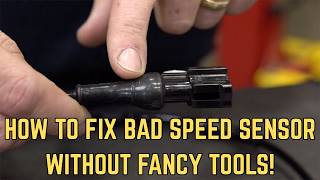
We Have This Part in Stock

The information in this article is provided for general reference and educational purposes only. Vehicle specifications, procedures, and part compatibility can vary by production date, trim level, and region. Always consult your vehicle's factory service manual and verify part numbers before purchasing or performing repairs. Safety-critical components such as airbags, seat belts, and braking systems should be installed by a qualified professional.
- Dodge Dakota:
- 🧭 Diagnostic Flowchart
- 🎬 Helpful Videos
- 🛍️ Shop This Part
- What's Unique About the 1997-2004 Dodge Dakota
- Symptoms You May Notice
- Most Likely Causes
- Rare But Worth Checking
- Diagnosis Steps
- Parts You'll Likely Need
- Related Codes That Often Appear With This One
- Platform-Specific Known Issues
- Mechanic-Grade Diagnostic Values
- Scan Tool Commands That Help
- Wiring & Ground Locations
- Real Owner Repair Stories
- OEM Part Supersession History
- Model Year Variations Within This Range
- Other Known Issues on This Vehicle
- Used vs. New Parts: Buying Guide for This Vehicle
- Real Owner Stories
- 2000 Dodge Dakota 4.7L V8
- 1998 Dodge Dakota
- 1999 Dodge Dakota 5.2L V8
- 1999 Dodge Dakota V6
- Related OBD-II Codes
- Frequently Asked Questions
- 🎟️ Get 5% Off