

P0720 on 2013-2016 Dodge Dart: Output Speed Sensor Circuit Malfunction Causes and Fixes
This code most often indicates a failed transmission Output Speed Sensor (OSS) on your Dodge Dart with the 6F24 automatic transmission. The sensor is located inside the transmission, requiring removal of the valve body to replace. Expect to pay between $100-$150 for a replacement sensor, but labor costs will be significantly higher than a simple external sensor swap due to the complexity.
- P0720 on a 2013-2016 Dodge Dart points to a problem with the Output Speed Sensor (OSS) circuit, which is critical for proper transmission shifting.
- The most common fix is to replace the Output Speed Sensor itself, which is located on the exterior of the transmission.
- Symptoms are serious and affect drivability, including harsh shifting, an inoperative speedometer, and the vehicle entering 'limp mode'.
- Before replacing parts, always inspect the sensor's wiring and connector for visible damage, as this is a common and less expensive failure point.
- Be aware of unrelated but important safety recalls for the shifter cable bushing and Transmission Control Module on these vehicles.
What's Unique About the 2013-2016 Dodge Dart
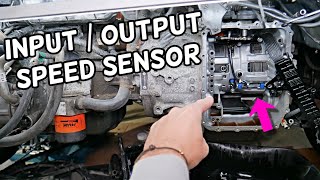
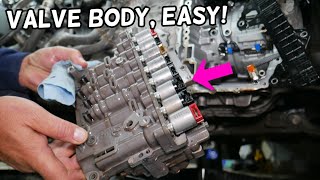
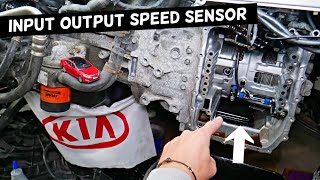
The 2013-2016 Dodge Dart with the 2.0L and 2.4L engines uses a 6-speed Powertech 6F24 automatic transmission, which is a Hyundai design. A critical distinction for this platform is that the Input and Output Speed Sensors are located *inside* the transmission housing, mounted to the valve body. This makes replacement a much more involved job than on many other vehicles where the sensor is externally accessible. It requires draining the fluid, dropping the transmission pan, and removing the valve body to access the sensors. This code should not be confused with recalls for the shifter cable bushing (NHTSA 19V-293), which affects the ability to go into Park but does not set a P0720 code.
Symptoms You May Notice
- Check Engine Light is on.
- Erratic, harsh, or delayed automatic shifting.
- Vehicle enters 'limp mode,' getting stuck in one gear (often 2nd or 3rd).
- Speedometer reads incorrectly or not at all.
- Cruise control does not work.
- Possible engine stalling when coming to a stop.
- Decreased fuel efficiency.
- Replacing the Input Speed Sensor instead of the Output Speed Sensor. The Dart's 6F24 transmission has two similar-looking internal sensors; they are not interchangeable but are often replaced together due to the high labor cost to access them.
- Replacing the wheel speed sensors. Wheel speed sensors are part of the ABS system and will typically set ABS-specific codes, not P0720.
Most Likely Causes
- Failed Output Speed Sensor (OSS) 🔴 High Probability The sensor is an electronic component that can fail over time. On the 6F24 transmission, both the input and output sensors are located internally, bathed in transmission fluid and subject to heat cycles. They are often replaced as a pair due to the labor involved in accessing them.
How to confirm: Use an advanced scan tool to monitor the Output Speed PID while driving. A signal that is erratic, drops to zero, or doesn't correspond to vehicle speed indicates a failed sensor. Physical replacement is the ultimate confirmation, as testing resistance requires removing the valve body to access the sensor.
Typical fix: Replace the Output Speed Sensor (and often the Input Speed Sensor at the same time). This requires draining the transmission, removing the pan, and removing the valve body to access the sensors.
Est. part cost: $100-$150 - Damaged Wiring or Connector 🟡 Medium Probability While the sensor itself is internal, the main transmission wiring harness connector on the outside of the case is exposed to the elements. Furthermore, the wiring harness in the engine bay can be subject to chafing against brackets or other components, potentially causing a short or open circuit. A YouTube video on a Dart with multiple electrical issues highlights how low-hanging harnesses can be damaged by road debris or curbs.
How to confirm: Visually inspect the main transmission connector and the engine wiring harness for any signs of damage, corrosion, or loose pins. Perform a continuity test on the wires between the main connector and the Transmission Control Module (TCM).
Typical fix: Repair the damaged section of the wiring harness or replace the main transmission connector pigtail.
Est. part cost: $25-$75 - Dirty or Low Transmission Fluid ⚪ Low Probability → Shop Transmission Assembly Chrysler marketed the 6F24 transmission with a 'lifetime' fluid fill under 'normal' service, leading many owners to neglect fluid changes. Over time, the fluid degrades and becomes contaminated with fine metallic particles from normal clutch wear. This abrasive fluid can interfere with the magnetic sensors' operation or contribute to their failure.
How to confirm: The Dart does not have a transmission dipstick, making this difficult for a DIYer. A shop can check the fluid level and condition via the fill and check plugs. Dark, burnt-smelling, or debris-filled fluid indicates a need for service.
Typical fix: Perform a transmission fluid drain and fill. Due to the design, a single drain and fill only replaces about 40-50% of the total fluid, so multiple changes may be needed to get it clean. This may temporarily resolve the issue, but if the code returns, the sensor itself is likely damaged.
Est. part cost: $75-$150
Rare But Worth Checking
- Faulty Powertrain Control Module (PCM) or Transmission Control Module (TCM): → Shop Engine Control Module (ECM) This is the least likely cause. Before condemning the control module, all other possibilities (sensor, wiring, fluid) must be exhaustively ruled out. A failed module is a rare event.
- Faulty Transmission Range Sensor: → Shop Transmission Assembly A faulty transmission range sensor (also known as a neutral safety switch) can sometimes send incorrect data that affects how the TCM interprets the output speed sensor signal, potentially triggering a P0720 code.
Diagnosis Steps
- Scan for Codes: Use an OBD-II scanner to confirm P0720 🎬 Watch: Understanding the P0720 code and how to diagnose it. is present and check for any other related transmission codes (e.g., P0721, P0722, P0715).
- Inspect External Wiring: Thoroughly inspect the main transmission wiring harness and its connector for any obvious signs of damage, corrosion, or loose connections. Check for harness chafing near the engine and transmission mounts.
- Check Transmission Fluid (Professional Recommended): Since there is no dipstick, this step is best left to a shop. They will check the fluid level and condition. Contaminated fluid warrants a fluid service.
- Live Data Analysis: Use a scan tool with live data to monitor the Output Speed (OSS) PID. The reading should increase smoothly with vehicle speed. If it's erratic, zero, or doesn't change, the issue is likely the sensor or its internal circuit.
- Test the Circuit: If external wiring looks good, test for voltage, ground, and signal continuity at the main transmission connector pins that correspond to the OSS. This will help determine if the fault is internal to the transmission or in the harness leading to the PCM/TCM.
- Internal Inspection and Replacement: If the fault is isolated to be internal, the transmission pan and valve body must be removed. At this point, inspect the internal wiring to the sensor. If the wiring is good, replace the Output Speed Sensor. 🎬 Watch: Step-by-step guide to replacing the internal speed sensors. It is highly recommended to replace the Input Speed Sensor at the same time.
- Clear Codes and Test Drive: After the repair, clear the trouble codes, perform a transmission relearn procedure if required by the scan tool, and perform a test drive to ensure the issue is resolved and the transmission is shifting correctly.
Parts You'll Likely Need
- Automatic Transmission Output Shaft Speed Sensor
(OEM #68194951AA)— This is the most common failure point for a P0720 code. The sensor's electronic components fail over time, leading to a loss of signal. Note: This part is internal to the transmission.
Trusted brands: Mopar, Standard Motor Products (SMP), Crown
OEM price range: $120-$160
Aftermarket price range: $80-$130
Related Codes That Often Appear With This One
- P0721 — This code indicates 'Output Speed Sensor Range/Performance' and is often set alongside P0720 when the sensor's signal is erratic but not completely lost.
- P0722 — This code for 'Output Speed Sensor Circuit No Signal' points more specifically to a complete loss of signal, which could be a dead sensor or a broken wire.
- P0715 — This code relates to the Input Speed Sensor circuit. Since the input and output sensors work together and are located in the same internal area, a failure in one can sometimes trigger a fault in the other, or they may fail concurrently.
Technical Service Bulletins (TSBs) & Recalls
- While multiple TSBs exist for the 2013-2016 Dart for powertrain and software updates (e.g., TSB #18-023-16 for PCM improvements), no specific TSB directly addresses the P0720 code for a sensor failure. Diagnosis typic
Platform-Specific Known Issues
- There was a recall (NHTSA 19V-293, FCA V34) for the 2013-2016 Dodge Dart concerning the shifter cable bushing, which could cause the vehicle to fail to engage Park and potentially roll away. This issue is separate from and does not cause the P0720 code, but it is a critical safety recall for owners to be aware of.
- Another recall was issued for the Transmission Control Module (TCM) on 2013-2015 models, which could cause the transmission to unexpectedly shift into neutral. While this is a TCM failure, it may not always present with a P0720 code initially.
- The engine wiring harness, particularly near the Active Grill Shutter (AGS) system at the bottom front of the car, is susceptible to damage from road debris and curbs. Damage to this harness can cause various electrical issues, and while not a direct cause of P0720 in all cases, it highlights the vulnerability of wiring on this vehicle.
Mechanic-Grade Diagnostic Values
- Resistance of OSS Signal or Ground Circuit to Ground — expected: Infinite resistance (Open circuit). Failure: A resistance measurement below 5.0 ohms indicates a short to ground in the respective circuit.
- Continuity of OSS Signal or Ground Circuit — expected: Less than 5.0 ohms. Failure: Resistance above 5.0 ohms between the sensor connector and the TCM connector indicates an open circuit.
Scan Tool Commands That Help
- Chrysler wiTECH or equivalent advanced scan tool (e.g., Autel): Service Fast Learn Adapts (or 'Quick Learn') — This procedure is mandatory after replacing internal transmission components like the speed sensors, the valve body, or the TCM itself. It allows the TCM to learn the electronic and hydraulic characteristics of the new parts. Failure to perform this may result in poor shifting, continued fault codes, or the vehicle not moving.
Wiring & Ground Locations
- Transmission Control Module (TCM) — Inside the passenger cabin, on the passenger side, located behind the carpet in the front footwell area.. The TCM is the destination for the output speed sensor signal. Knowing its location is critical for testing the wiring harness continuity from the transmission to the module.
- Main Transmission Case Connector — External connector on the 6F24 transmission housing. This is the primary point for testing the entire internal sensor circuit without opening the transmission.. This connector is where a technician can differentiate between an external wiring fault (harness to TCM) and an internal fault (sensor, internal wiring, valve body connector).
- Ground Point Z908 — A common ground point designation in Chrysler wiring diagrams. Physical location can vary but is typically on the chassis or engine block. A poor ground here can cause erratic behavior in multiple electronic systems.. A faulty ground can introduce electrical noise or incorrect reference voltages, potentially causing the TCM to misinterpret the OSS signal and set a P0720 code.
Diagnostic Flowchart
Used vs. New Parts: Buying Guide for This Vehicle
When a used part is the smart pick: For this repair, a used part is generally not recommended for the sensor itself due to the high labor cost of installation. However, a used external transmission wiring harness from a low-mileage donor car is a viable option if the original is physically damaged.
Donor-vehicle mileage cap: roughly under 75000 miles for the part to have meaningful remaining life.
What to inspect on the donor part:
- For a wiring harness, inspect for any cuts, brittle sections, or corrosion on the connector pins.
- Ensure the donor vehicle has no signs of flood or fire damage.
- Verify the donor vehicle's engine and transmission match the 2.0L/2.4L with the 6F24 automatic.
OEM-only on this vehicle (don't cheap out):
- Transmission Control Module (TCM): Due to programming and software matching requirements, a new or professionally remanufactured and programmed TCM is strongly advised over a used one.
- Internal Speed Sensors: Given the 3-4 hours of labor to access them, installing a new, quality part is the only way to ensure the repair lasts. The cost savings of a used sensor are not worth the risk of a repeat failure.
Aftermarket brands forum-validated for this vehicle:
- Standard Motor Products (SMP)
- Crown
Real Owner Stories
Aggregated from forums and TSBs cited above. Mileages and costs reflect what owners reported in those sources.
2015 Dodge Dart
Symptoms: The vehicle would slip in gear and fall out of lock up. A trouble code scan revealed fault code P0720.
What fixed it: An internal inspection of the transmission found that multiple sections were burned up and the torque converter had failed, requiring a transmission rebuild. Technicians also found and repaired multiple wiring issues, including improperly connected, stripped, and grounded wires.
Cost: $2900
Source hint: Better Business Bureau
Dodge Owner Report
Symptoms: An owner reported a "Check Engine" light appearing with a P0720 code. They noted that the situation could have been a fatal disaster depending on traffic conditions.
What fixed it: The owner noted that after researching the issue, they found that Output Speed Sensor (OSS) malfunctions are very common with Dodge vehicles.
Source hint: NHTSA ODI #10433836
Related OBD-II Codes
Frequently Asked Questions
Is the P0720 code on my Dodge Dart related to the shifter cable recall (NHTSA 19V-293)?
My Dart is unexpectedly shifting into neutral. Could this be caused by the same issue as P0720?
The mechanic wants to replace both the input and output speed sensors for a P0720 code. Is this necessary?
My speedometer isn't working and the check engine light is on. Is this related to P0720?
I was told the transmission fluid is 'lifetime' fill. Can old fluid really cause this code?
Is there a specific Technical Service Bulletin (TSB) for fixing P0720 on the 2013-2016 Dart?
Could wiring damage near the front bumper cause this transmission code?
Helpful Videos
We Have This Part in Stock


The information in this article is provided for general reference and educational purposes only. Vehicle specifications, procedures, and part compatibility can vary by production date, trim level, and region. Always consult your vehicle's factory service manual and verify part numbers before purchasing or performing repairs. Safety-critical components such as airbags, seat belts, and braking systems should be installed by a qualified professional.
- Dodge Dart:
- 🧭 Diagnostic Flowchart
- 🎬 Helpful Videos
- 🛍️ Shop This Part
- What's Unique About the 2013-2016 Dodge Dart
- Symptoms You May Notice
- Most Likely Causes
- Rare But Worth Checking
- Diagnosis Steps
- Parts You'll Likely Need
- Related Codes That Often Appear With This One
- Technical Service Bulletins (TSBs) & Recalls
- Platform-Specific Known Issues
- Mechanic-Grade Diagnostic Values
- Scan Tool Commands That Help
- Wiring & Ground Locations
- Used vs. New Parts: Buying Guide for This Vehicle
- Real Owner Stories
- 2015 Dodge Dart
- Dodge Owner Report
- Related OBD-II Codes
- Frequently Asked Questions
- 🎟️ Get 5% Off