

P0720 on 2008-2020 Dodge Grand Caravan: Output Speed Sensor Causes and Fixes
On a 2008-2020 Dodge Grand Caravan, code P0720 is almost always caused by a failed transmission Output Speed Sensor (OSS). This can cause the van to get stuck in 'limp mode' (2nd or 3rd gear), exhibit harsh shifting, and make the speedometer fail. Replacing the sensor is a common DIY fix costing around $20-$50 for an aftermarket part, often resolving the issue immediately.
- P0720 on a Dodge Grand Caravan almost always points to a bad Output Speed Sensor (OSS).
- Key symptoms are the van getting stuck in 'limp mode' (one gear) and an erratic or dead speedometer.
- Before considering a costly transmission replacement, always diagnose this code first, as the fix is usually a cheap sensor.
- The Output Speed Sensor is located on the driver's side of the transmission and can be replaced by a DIYer with basic tools.
- Check the wiring and connector to the sensor for damage before replacing the part, as this is another common cause.
What's Unique About the 2008-2020 Dodge Grand Caravan
The 2008-2020 Dodge Grand Caravan uses the 6-speed 62TE automatic transmission. A common point of failure on this transmission is the set of speed sensors. The P0720 code is a very frequent complaint from owners, often leading to the frustrating 'limp mode' where the van is stuck in a single gear. Fortunately, the fix is usually simple and inexpensive. On many of these models, the input and output speed sensors are identical and interchangeable, which can simplify parts ordering and diagnosis.
Symptoms You May Notice
- Transmission stuck in 'limp mode' (will not shift out of 2nd or 3rd gear)
- Check Engine Light is on
- Erratic, bouncing, or non-functional speedometer
- Harsh, delayed, or erratic gear shifting
- Vehicle hesitates or stalls when accelerating
- Cruise control does not work
- Complete transmission failure. The symptoms of limp mode and harsh shifting can mimic a catastrophic transmission failure, but P0720 almost always points to a much cheaper sensor or wiring issue.
Most Likely Causes
- Failed Output Speed Sensor (OSS) 🔴 High Probability The speed sensors on the 62TE transmission are a known common failure point due to their electronic nature and location on the transmission case, exposed to heat and vibration. They are a frequent topic in owner forums for causing limp mode.
How to confirm: Use a scan tool to monitor the output speed sensor data while driving. The reading should be zero when stopped and increase smoothly with speed. If the reading is erratic, intermittent, or always zero, the sensor has likely failed. Often, simply replacing the sensor is the most direct diagnostic step due to its high failure rate and low cost.
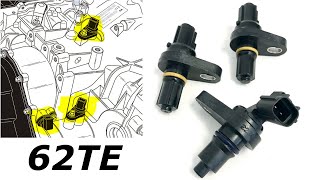
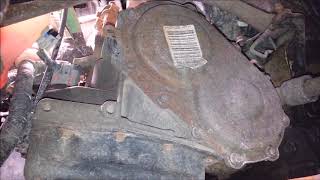
Typical fix: Replace the Output Speed Sensor. 🎬 Watch this walkthrough on how to replace the 62TE sensors. It is located on the side of the transmission, accessible after removing the driver's side front wheel. The output sensor is the rearmost of the two sensors visible there.
Est. part cost: $20-$50 - Damaged Wiring or Connector 🟡 Medium Probability The sensor wiring is located on the exterior of the transmission and can be damaged by road debris, heat from the engine/exhaust, or corrosion, especially in regions that use road salt.
How to confirm: Visually inspect the wiring harness and connector leading to the Output Speed Sensor for any signs of breaks, fraying, melting, or corrosion in the pins. Use a multimeter to test for continuity and check for shorts to ground or voltage in the circuit.
Typical fix: Repair the damaged section of wire or replace the connector pigtail. In some cases, owners find corroded wires further up the harness that require splicing in a new section.
Est. part cost: $10-$30 - Low or Dirty Transmission Fluid ⚪ Low Probability → Shop Transmission Assembly While not specific to this platform, low or contaminated fluid can cause a host of transmission issues, including erratic sensor readings or shifting problems that can be confused with a sensor failure.
How to confirm: Check the transmission fluid level and condition using the dipstick. The fluid should be at the correct level and appear clean and red (for ATF+4), not brown, black, or burnt-smelling.
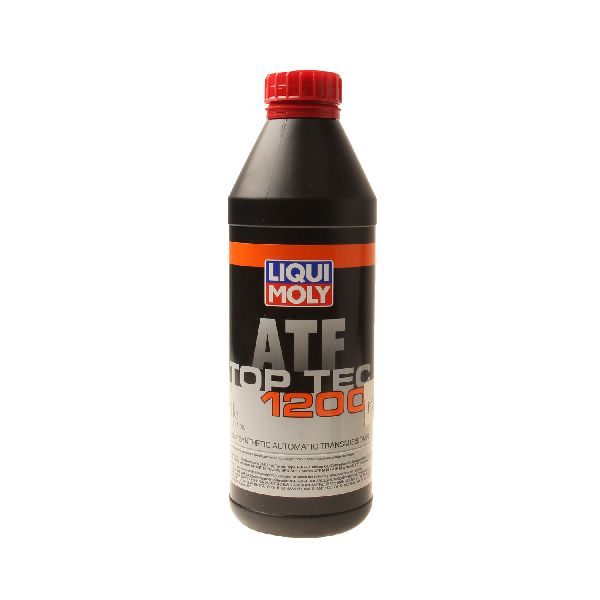
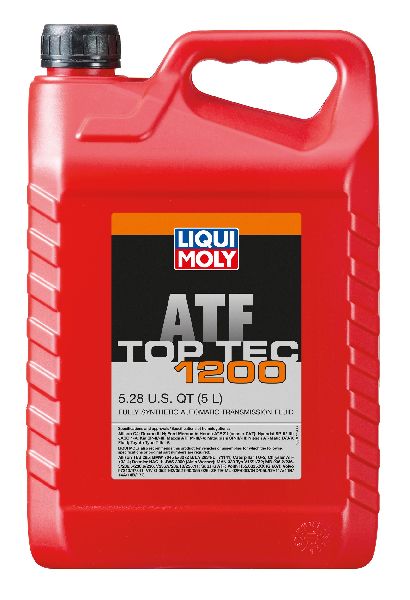
Typical fix: Perform a transmission fluid drain and fill, or a full fluid exchange if the fluid is heavily contaminated. Use only the specified Mopar ATF+4 transmission fluid.
Est. part cost: $50-$150
Rare But Worth Checking
- Faulty Powertrain Control Module (PCM) or Transmission Control Module (TCM): → Shop Engine Control Module (ECM) This is an uncommon cause. The PCM/TCM should only be considered after the sensor and its entire circuit have been thoroughly tested and confirmed to be good.
- Internal Transmission Damage: → Shop Transmission Assembly In rare cases, metal shavings from internal wear can collect on the magnetic tip of the speed sensor, disrupting its reading. This often points to a more severe internal transmission problem, like a failing compounder assembly, requiring a rebuild or replacement.
- Cross-Connected Sensor Wiring: Because the input, output, and transfer shaft speed sensors on the 62TE use identical connectors, it is possible to accidentally swap them during a repair. This will cause gear ratio error codes and erratic shifting. Wire colors must be verified to ensure the correct harness is plugged into the correct sensor.
Diagnosis Steps
- Scan for trouble codes. Confirm P0720 is present and note any other codes like P0700. Note that a basic scanner might only show P0700; a more capable tool is needed to query the TCM for the specific P0720 code.
- Check transmission fluid level and condition. Ensure it is full and the fluid is not burnt or dirty.
- Visually inspect the Output Speed Sensor and its wiring harness. The sensor is on the side of the transmission, toward the rear of the vehicle, accessible from the driver's side wheel well. Look for any obvious damage, corrosion, or loose connections.
- Use a scan tool with live data capability to monitor the Output Shaft Speed while driving. The speed should increase smoothly and match the speedometer. If it's erratic, jumps, or stays at zero, the sensor or circuit is faulty. 🎬 Watch a mechanic diagnose and test the output speed sensor.
- Test the sensor's electrical circuit. Disconnect the sensor and PCM connectors. Use a multimeter to check for continuity on the signal and ground wires. Check for any shorts to ground or voltage.
- If the wiring and circuit are confirmed to be good, the Output Speed Sensor itself is the most likely culprit. Replace the sensor.
- After replacement, clear the codes and perform a test drive. If the problem persists, re-check the wiring and consider the possibility of a faulty PCM, though this is rare.
Parts You'll Likely Need
- Transmission Output Speed Sensor
(OEM #5078930AA)— This sensor is the most common cause of code P0720 on the 62TE transmission used in these vans. Note that this same part number is used for both the Input and Output speed sensors.
Trusted brands: Mopar, NTK (NGK), Dorman, Standard Motor Products (SMP)
OEM price range: $40-$70
Aftermarket price range: $20-$50
Related Codes That Often Appear With This One
- P0700 — P0700 is a generic code that simply means the Transmission Control Module (TCM) has stored a fault. It frequently appears alongside more specific transmission codes like P0720 to signal a problem. A basic code reader may only show P0700, requiring a more advanced scanner to read the specific P0720 from the TCM.
- P0715 — This code relates to the Input Speed Sensor (ISS). Since the input and output sensors work together, a fault in one can sometimes cause the computer to flag issues with the other. It's common practice for many owners and shops to replace both sensors at the same time since they are identical parts.
Technical Service Bulletins (TSBs) & Recalls
- TSB 21-008-12: This Technical Service Bulletin involves reprogramming the Powertrain Control Module (PCM) to improve shift quality for various upshifts and downshifts on the 62TE transmission for 2012-2013 models. While not a direct fix for a failed P0720 sensor, it addresses related drivability complaints like harsh shifts.
Platform-Specific Known Issues
- On the 62TE transmission, the Input and Output speed sensors are the same part number (5078930AA) and are physically interchangeable, which can be helpful during diagnosis or replacement.
- A recall (NHTSA ID S44) was issued for some 2015-2016 Grand Caravans for a transmission pump that could seize, causing a loss of motive power. While not directly related to the P0720 sensor code, it's a known issue with the 62TE transmission in this era.
- The connectors for the Input, Output, and Transfer Shaft speed sensors are identical. It is critical to ensure they are not cross-connected during reassembly, as this will cause multiple gear ratio error codes.
Mechanic-Grade Diagnostic Values
- Output Speed Sensor Resistance — expected: Approximately 1424 Ohms at 72°F (22°C). Failure: A reading significantly different from the specification, or an open/short circuit.
- Sensor Ground Circuit Resistance to Chassis Ground — expected: Less than 5.0 Ohms. Failure: Resistance above 5.0 Ohms indicates a poor ground connection.
- Sensor Reference Voltage at Connector — expected: 5 V ± 0.5 V. Failure: Voltage outside this range points to a problem with the PCM or wiring, not the sensor itself.
Scan Tool Commands That Help
- Autel, Snap-on, or Mopar Witech/DRBIII: Quick Learn (62TE) — This procedure should be performed after replacing the transmission, solenoid pack, or sometimes even after disconnecting the battery to reset the transmission's adaptive learning tables and ensure smooth shifting.
- Autel, Snap-on, or Mopar Witech/DRBIII: TCM/PCM Flash/Reprogram — If a Technical Service Bulletin (TSB) indicates that a software update is available to correct shifting issues or false codes, the Powertrain Control Module needs to be reprogrammed with the latest software.
Wiring & Ground Locations
- Main Transmission Connector (to Solenoid Pack) — On the driver's side of the transmission case, where the main harness connects to the solenoid block.. This large connector is the primary interface for all transmission sensors and solenoids. Corrosion or damage to the pins or the external harness pigtail can cause P0720 and other transmission codes.
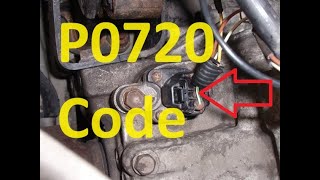
- Output Speed Sensor Connector — On the side of the transmission, accessible from the driver's side wheel well. It is the rearmost of the two similar-looking sensor connectors.. This is the direct connection to the sensor. The locking tab can become brittle, and the wiring can be damaged by road debris or heat, causing a direct circuit malfunction for the OSS.
Real Owner Repair Stories
- DodgeForum.com user post (2002 Dodge Caravan V6 3.3L Flex Fuel) — Speedometer was acting 'wonky,' especially when stopped. Transmission would 'bump shift.' Codes P0700, P0732, and P0720 were present.
❌ Tried (didn't work) The user did not report trying other fixes first.
✅ What actually fixed it Replacing both the input and output speed sensors resolved all symptoms and codes. - YouTube video by 'ray fixes all' (2005 Dodge Caravan 3.8L) — Speedometer doesn't work, van goes into limp mode (stuck in 2nd gear), and check engine light is on with code P0720.
❌ Tried (didn't work) The video creator diagnosed the issue as the sensor and did not attempt other repairs first.
✅ What actually fixed it The problem was fixed by replacing the output speed sensor. The video notes that for this intermittent issue, direct replacement is often more practical than extensive testing. - NHTSA ODI #10433836 — An owner reported a "check engine" light with a P0720 code and noted that after researching the issue, they found that the Output Speed Sensor (OSS) malfunctioning is a very common occurrence with Dodge vehicles.
OEM Part Supersession History
Not specified, but multiple revisions exist.→5078930AA— Standard part consolidation and potential minor improvements over the production run.
Heads up: Part number 5078930AA is specified for the Input, Output, and Transfer Shaft speed sensors on the 62TE transmission, making them interchangeable.
Diagnostic Flowchart
Used vs. New Parts: Buying Guide for This Vehicle
When a used part is the smart pick: For this specific repair, buying a used speed sensor from a junkyard is NOT recommended. The part is a common failure item, has a low cost when purchased new from aftermarket suppliers ($20-$50), and the labor to access it is the main effort. It is not worth the risk of installing a used sensor that may fail shortly after.
What to inspect on the donor part:
- Not applicable as used parts are not advised for this repair.
OEM-only on this vehicle (don't cheap out):
- Transmission Control Module (TCM) / Powertrain Control Module (PCM): While not a common failure for this code, if the module is needed, a new or professionally remanufactured unit programmed to your vehicle's VIN is essential.
Aftermarket brands forum-validated for this vehicle:
- NTK (NGK)
- Standard Motor Products (SMP)
- Dorman
Brands owners have reported issues with on this vehicle:
- Avoid unbranded, 'white-box' parts from online marketplaces. While Standard Motor Products (SMP) is a reputable brand, some sources suggest avoiding their lowest-cost 'T-Series' line for critical sensors if a standard or premium option is available.
Real Owner Stories
Aggregated from forums and TSBs cited above. Mileages and costs reflect what owners reported in those sources.
2005 Dodge Grand Caravan
Symptoms: The van was stuck in 1st or 2nd gear and had codes P0700 and P0720.
What fixed it: The owner was told by the dealer that the transmission had failed, which highlights how the symptoms of a bad sensor can lead to a severe and potentially incorrect diagnosis.
Source hint: DodgeForum.com - 'Help: P0700, 0720, 0733, Limp Mode Tranny'
2003 Dodge Grand Caravan
Symptoms: The owner experienced the classic symptoms of a bouncing speedometer and the transmission going into limp mode, along with code P0720.
What fixed it: The discussion involved first replacing the output speed sensor. When the problem persisted, the next step considered was replacing the input speed sensor.
Source hint: DodgeForum.com - '4th Gen 01-07 P0700, p0720, p0731, p1176'
Related OBD-II Codes
Frequently Asked Questions
Where is the Output Speed Sensor located on my 2008-2020 Grand Caravan?
Can I use the same part for both the input and output speed sensors on my Grand Caravan?
My scanner only shows a P0700 code, not P0720. What does that mean?
I'm replacing the speed sensors myself. Is there anything I need to be careful about with the wiring?
My 2012 Grand Caravan has harsh shifting. Is there a known fix besides replacing the sensor?
What kind of transmission fluid should I use if I need to top it off or change it?
Are there any recommended aftermarket brands for the output speed sensor?
Helpful Videos

We Have This Part in Stock


The information in this article is provided for general reference and educational purposes only. Vehicle specifications, procedures, and part compatibility can vary by production date, trim level, and region. Always consult your vehicle's factory service manual and verify part numbers before purchasing or performing repairs. Safety-critical components such as airbags, seat belts, and braking systems should be installed by a qualified professional.
- Dodge Grand Caravan:
- 🧭 Diagnostic Flowchart
- 🎬 Helpful Videos
- 🛍️ Shop This Part
- What's Unique About the 2008-2020 Dodge Grand Caravan
- Symptoms You May Notice
- Most Likely Causes
- Rare But Worth Checking
- Diagnosis Steps
- Parts You'll Likely Need
- Related Codes That Often Appear With This One
- Technical Service Bulletins (TSBs) & Recalls
- Platform-Specific Known Issues
- Mechanic-Grade Diagnostic Values
- Scan Tool Commands That Help
- Wiring & Ground Locations
- Real Owner Repair Stories
- OEM Part Supersession History
- Used vs. New Parts: Buying Guide for This Vehicle
- Real Owner Stories
- 2005 Dodge Grand Caravan
- 2003 Dodge Grand Caravan
- Related OBD-II Codes
- Frequently Asked Questions
- 🎟️ Get 5% Off