

P0720 on 2009-2020 Dodge Journey: Output Speed Sensor Circuit Fixes
On a 2009-2020 Dodge Journey, code P0720 almost always points to a faulty transmission Output Speed Sensor (OSS). This can cause the vehicle to enter 'limp mode,' shift harshly, and have an inoperative speedometer. Replacing the sensor is a common fix, with aftermarket parts costing around $15-$50.
- P0720 on a Dodge Journey is most commonly caused by a bad Output Speed Sensor (OSS).
- Key symptoms include the vehicle entering 'limp mode' (stuck in one gear) and the speedometer failing.
- Always check the sensor and its wiring before considering more expensive repairs like a transmission replacement.
- This repair is generally accessible for a DIY mechanic with basic tools and can save a significant amount on labor costs.
- On the common 6-speed (62TE) transmission, the input and output speed sensors are often the same part, making ordering easier.
What's Unique About the 2009-2020 Dodge Journey
The Dodge Journey had a long production run using both 4-speed (40TES/41TES) and 6-speed (62TE) automatic transmissions. While the P0720 code's meaning is consistent across both, the most common point of failure is the externally mounted Output Speed Sensor itself. On the widely used 62TE 6-speed transmission, the Input Speed Sensor (ISS) and Output Speed Sensor (OSS) are often identical, interchangeable parts, which can simplify ordering. Unlike some other vehicles where this code points to complex internal transmission issues or control module failures, on the Journey, the fix is frequently a straightforward and inexpensive sensor replacement.
Symptoms You May Notice
- Check Engine Light is on
- Transmission gets stuck in one gear (limp mode), often 2nd or 3rd gear
- Harsh, erratic, or delayed shifting
- Speedometer is inoperative or works erratically
- Vehicle stalls or hesitates when coming to a stop
- Cruise control does not work
- Decreased fuel efficiency
- ABS or Traction Control light may illuminate
- Replacing the Input Speed Sensor (ISS) instead of the Output Speed Sensor (OSS). On the 6-speed 62TE, they are often identical parts but are in different locations and have different functions. Confusing them will not solve the P0720 code.
- Condemning the entire transmission. The P0720 code is very often caused by a simple, inexpensive external sensor, not a major internal failure.
- On 6-speed models, confusing the Input/Output sensors with the nearby Transfer Shaft Speed Sensor (TSS), which is a different part.
Most Likely Causes
- Failed Output Speed Sensor (OSS) 🔴 High Probability The sensor is a very common failure point due to age and heat cycles on both the 4-speed and 6-speed transmissions used in the Journey.
How to confirm: Use a scan tool to monitor the output speed sensor data while driving. If the reading is erratic, zero, or doesn't match the vehicle's actual speed, the sensor is likely faulty. You can also test the sensor's internal resistance with a multimeter; it should typically be within a range of 500-700 Ohms, but consult a service manual for exact specs. An infinite resistance reading indicates a failed sensor.
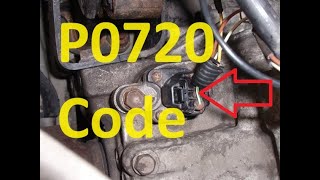
Typical fix: Replace the Output Speed Sensor. It is located on the exterior of the transmission housing, making it accessible from underneath the vehicle. 🎬 Watch: Dodge Journey output speed sensor replacement walkthrough
Est. part cost: $15-$70 - Damaged Wiring or Connector 🟡 Medium Probability The wiring harness to the sensor is exposed to road debris, moisture, and engine/exhaust heat, which can cause corrosion, breaks, or loose connections at the sensor connector or further up the harness.
How to confirm: Visually inspect the wiring harness and connector leading to the OSS for any signs of damage, corrosion, or loose pins. Perform a 'wiggle test' on the harness while monitoring the sensor data on a scan tool to see if the signal cuts out. Check for 5V reference voltage and a good ground at the connector with the key on.
Typical fix: Repair the damaged section of wiring or replace the connector pigtail.
Est. part cost: $10-$30 - Low or Contaminated Transmission Fluid ⚪ Low Probability → Shop Transmission Assembly
How to confirm: Check the transmission fluid level and condition using the dipstick (if equipped). The fluid should be at the correct level, pinkish-red in color, and not smell burnt. Metal shavings in the fluid, a sign of internal wear, can cling to the magnetic tip of the speed sensor and disrupt its signal.
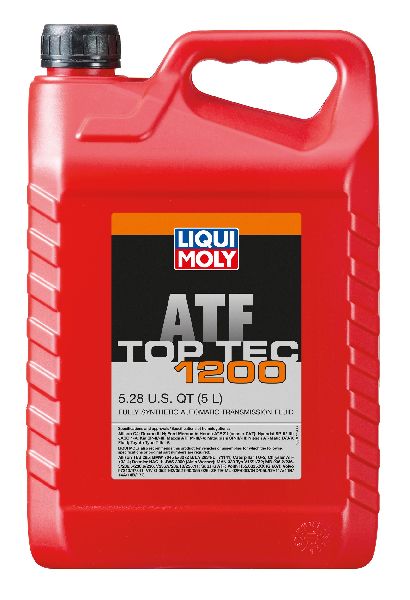
Typical fix: Perform a transmission fluid and filter change using the correct Mopar ATF+4 fluid. If the fluid is heavily contaminated, this may indicate a more serious internal transmission problem.
Est. part cost: $50-$200
Rare But Worth Checking
- Faulty Powertrain Control Module (PCM) or Transmission Control Module (TCM): → Shop Engine Control Module (ECM) This is the least likely cause. All other possibilities, especially the sensor and wiring, should be thoroughly ruled out before considering PCM/TCM replacement, which is an expensive repair that often requires programming to the vehicle.
Diagnosis Steps
- Scan for Codes: Use an OBD-II scanner to confirm P0720 is present and check for any other related transmission codes, especially P0700.
- Check Transmission Fluid: Verify the transmission fluid is at the correct level and in good condition. Look for signs of metal shavings or a burnt smell.
- Inspect Sensor and Wiring: Visually inspect the Output Speed Sensor and its wiring harness for any obvious damage, corrosion, chafing, or loose connections. The sensor is located on the outside of the transmission case.
- Monitor Live Data: Use a scan tool to observe the live data from the Output Speed Sensor while driving (or with wheels raised safely on jack stands). The reading should be smooth and correspond to the vehicle's speed. Any dropouts, erratic readings, or a constant zero indicate a problem in the circuit.
- Test the Sensor: If the wiring appears intact, disconnect the sensor and test its resistance with a multimeter. Compare the reading to the manufacturer's specifications (typically 500-700 ohms).
- Test the Circuit: If the sensor tests good, check for proper voltage (usually a 5V reference) and ground at the sensor's connector to rule out a wiring issue between the sensor and the control module.
Parts You'll Likely Need
- Transmission Output Speed Sensor
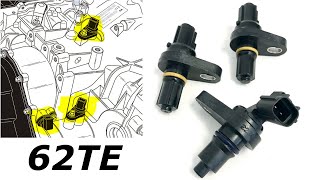
(OEM #5078554AA, 05078930AA)— This sensor is the most common cause of the P0720 code on the Dodge Journey. Note that on the 6-speed 62TE transmission, the input and output sensors are often the same part number. 🎬 See: How to replace 62TE transmission sensors
Trusted brands: Mopar, Standard Motor Products (SMP), Dorman, NTK/NGK
OEM price range: $40-$60
Aftermarket price range: $15-$50
Related Codes That Often Appear With This One
- P0700 — P0700 is a generic code indicating the Transmission Control Module (TCM) has stored a fault. It frequently appears alongside more specific transmission codes like P0720 to illuminate the Check Engine Light.
- P0731, P0733, etc. — These codes indicate an incorrect gear ratio. They can be triggered alongside P0720 because the TCM relies on the OSS signal to verify that the correct gear is engaged. A faulty signal prevents this confirmation.
- P0715, P0717, P0721, P0722 — These are all codes related to the input or output speed sensor circuits, indicating no signal, intermittent signal, or range/performance issues. Seeing them together can point towards a wiring issue common to multiple sensors or a TCM fault.
Technical Service Bulletins (TSBs) & Recalls
- TSB 21-008-12: This TSB for 2012-2013 models involves reprogramming the PCM to improve overall shift quality on the 62TE transmission. While it doesn't directly address a P0720 caused by a failed sensor, it is relevant for owners experiencing harsh shifting complaints.
Platform-Specific Known Issues
- A user on the 'Dodge Journey Forum' described a classic P0720 failure on their 2010 model: the check engine light came on, the speedometer stopped working, and the transmission went into limp mode, stuck in gear. After replacing both the input and output speed sensors, all symptoms were resolved. This highlights the common advice to replace both sensors at the same time as a preventative measure.
- In a YouTube repair video for a similar Chrysler vehicle with the same transmission, the mechanic demonstrated the ease of access to the sensor, located on the front of the transmission case after removing the front driver's side wheel. The repair involved a single bolt and disconnecting the electrical connector, confirming the low difficulty for a DIY repair.
Mechanic-Grade Diagnostic Values
- Output Speed Sensor (OSS) Resistance — expected: 1424 Ohms @ 72°F (22°C). Failure: A reading significantly outside this value, or an open/infinite reading, indicates a failed sensor.
- Input Speed Sensor (ISS) Resistance — expected: 1590 Ohms @ 72°F (22°C). Failure: While not the direct cause of P0720, this value is useful for comparison as the sensors are often identical parts on the 62TE.
- Sensor Reference Voltage at Connector — expected: 5V ± 0.5V. Failure: Missing or low voltage points to a problem with the PCM or the wiring, not the sensor itself.
- Sensor Ground Circuit Resistance at Connector — expected: < 0.1 Ω. Failure: High resistance indicates a poor ground connection, which can disrupt the sensor signal.
Scan Tool Commands That Help
- Professional Scan Tool (e.g., wiTECH): TCM Quick Learn — After any transmission repair, including sensor replacement or software updates, a Quick Learn procedure should be performed to reset adaptive values and ensure proper shift quality.
Wiring & Ground Locations
- Output Speed Sensor (OSS) Location — On the 62TE transmission, it is located on the back side of the transmission case, accessible after removing the driver's side front wheel. It is the rearmost of the two sensors in that area.. This is the primary component to inspect, test, and replace for a P0720 code.
- Main Battery Ground Stud — Located on the driver's side strut tower in the engine bay. The negative battery cable connects here.. The Dodge Journey is noted by owners to have a weak grounding system. Poor connections at this primary point can cause a host of intermittent and difficult-to-diagnose electrical issues, including sensor circuit malfunctions.
- Engine Block Ground — A ground cable runs from the main stud on the strut tower to a stud on the engine block. This provides the ground path for components mounted on the engine and transmission.. Corrosion or a loose connection at the engine block can create high resistance in the ground circuit for the transmission sensors, leading to erratic signals and fault codes.
OEM Part Supersession History
05078554AA→5078554AA— Standard part number update by Mopar (removing the leading '0').
Heads up: The parts are identical. This part number is used for both the input and output speed sensors on the 62TE transmission.
Model Year Variations Within This Range
- 2009-2011 (approx.): Some earlier models, particularly with the 2.4L 4-cylinder or 3.5L V6, were equipped with the 4-speed 40TES/41TES automatic transmission. While the P0720 code's cause (bad sensor or wiring) is similar, the sensor location and part number may differ from the more common 6-speed 62TE used with the 3.6L Pentastar V6 from 2011 onwards.
Diagnostic Flowchart
Other Known Issues on This Vehicle
Issues unrelated to this code that are worth knowing about as an owner of this generation:
- Premature Brake and Rotor Wear 🔴 High — Very common on early models (2009-2012), with owners reporting replacement needed as early as 12,000-20,000 miles. (Ref: Dodge issued TSBs extending the brake warranty to 3 years/36,000 miles for some early models.)
- Uconnect / Bluetooth Connectivity Problems 🟠 Medium — Widespread across many model years, causing issues with phone pairing, audio streaming, and system freezes. (Ref: Software updates are sometimes available from the dealer or Dodge's Uconnect website to resolve bugs.)
- Interior Water Leaks 🟠 Medium — Commonly reported on 2009-2018 models, often due to improperly sealed body seams, leading to wet carpets and water in storage bins.
- Engine Overheating (2.4L and 3.5L) 🔴 High — Reported on 2009-2016 models around 78,000 miles, can be caused by debris in coolant ports, failing thermostats, or cracked plastic coolant housings.
- 3.6L Pentastar V6 Left Cylinder Head Failure 🔴 High — Affects early 2011-2013 models, causing misfires (P0300, P0302, P0304, P0306) and requiring cylinder head replacement. (Ref: FCA issued a warranty extension (X56) to 10 years / 150,000 miles for this specific issue.)
- Faulty Throttle Body (2.4L Engine) 🟠 Medium — Can fail causing stalling, hesitation, and codes like P2110, P2111, and P2112.
Used vs. New Parts: Buying Guide for This Vehicle
When a used part is the smart pick: For this repair, buying a used sensor is generally not recommended due to the low cost of a new aftermarket part and the high probability of failure from age and heat cycles. A used wiring harness pigtail from a junkyard is a viable option if only the connector is damaged and a new pigtail is unavailable.
Donor-vehicle mileage cap: roughly under 80000 miles for the part to have meaningful remaining life.
What to inspect on the donor part:
- For a pigtail, ensure the plastic is not brittle or cracked.
- Check for any signs of corrosion (green or white powder) on the connector pins.
- Inspect the wiring for at least 6 inches back from the connector to ensure there are no splices, cracks, or heat damage.
OEM-only on this vehicle (don't cheap out):
- Transmission Control Module (TCM) / Powertrain Control Module (PCM)
Aftermarket brands forum-validated for this vehicle:
- NTK/NGK
- Standard Motor Products (SMP)
- Dorman
Brands owners have reported issues with on this vehicle:
- Avoid unbranded, 'white-box' parts from online marketplaces, as sensor accuracy and longevity can be highly inconsistent.
Real Owner Stories
Aggregated from forums and TSBs cited above. Mileages and costs reflect what owners reported in those sources.
2010 Dodge Journey
Symptoms: The check engine light came on, the speedometer stopped working, and the transmission went into limp mode, stuck in gear.
What fixed it: Replacing both the input and output speed sensors.
Source hint: Dodge Journey Forum - 'P0720 Output Speed Sensor'
NHTSA Reported Incident
Symptoms: An owner reported that the "Check Engine" light illuminated with a P0720 code. They noted that after researching the issue, they found that Output Speed Sensor (OSS) malfunctions are very common with Dodge vehicles.
What fixed it: The report emphasizes the potential safety risks of this failure while driving in traffic.
Source hint: NHTSA ODI #10433836
Related OBD-II Codes
Frequently Asked Questions
Does TSB 21-008-12 fix the P0720 code on my 2012 Dodge Journey?
Where is the Output Speed Sensor located on the Dodge Journey transmission?
Can I test the Output Speed Sensor on my Journey with a multimeter?
Is it true I should replace both speed sensors at the same time?
What type of transmission fluid should I use if I'm servicing my Journey to fix shifting issues?
Could my 2011 Journey's Uconnect issues be related to the P0720 code?
Helpful Videos

We Have This Part in Stock


The information in this article is provided for general reference and educational purposes only. Vehicle specifications, procedures, and part compatibility can vary by production date, trim level, and region. Always consult your vehicle's factory service manual and verify part numbers before purchasing or performing repairs. Safety-critical components such as airbags, seat belts, and braking systems should be installed by a qualified professional.
- Dodge Journey:
- 🧭 Diagnostic Flowchart
- 🎬 Helpful Videos
- 🛍️ Shop This Part
- What's Unique About the 2009-2020 Dodge Journey
- Symptoms You May Notice
- Most Likely Causes
- Rare But Worth Checking
- Diagnosis Steps
- Parts You'll Likely Need
- Related Codes That Often Appear With This One
- Technical Service Bulletins (TSBs) & Recalls
- Platform-Specific Known Issues
- Mechanic-Grade Diagnostic Values
- Scan Tool Commands That Help
- Wiring & Ground Locations
- OEM Part Supersession History
- Model Year Variations Within This Range
- Other Known Issues on This Vehicle
- Used vs. New Parts: Buying Guide for This Vehicle
- Real Owner Stories
- 2010 Dodge Journey
- NHTSA Reported Incident
- Related OBD-II Codes
- Frequently Asked Questions
- 🎟️ Get 5% Off