

P0720 on 2009-2012 Ford Escape: Output Speed Sensor Causes and Fixes
On a 2009-2012 Ford Escape, code P0720 is almost always caused by a failed Output Speed Sensor (OSS). Crucially, this sensor is located inside the 6F35 transmission, requiring removal of the valve body to replace. This makes it a complex job, with shop costs estimated between $470 and $650. In many cases, the sensor fails as part of the entire molded lead frame assembly.
- P0720 on a 2009-2012 Escape points directly to a problem with the Output Speed Sensor (OSS) or its circuit.
- The primary challenge with this repair is that the sensor is located *inside* the transmission, making it a difficult and labor-intensive job.
- Symptoms are severe and affect drivability, including harsh shifting and a dead speedometer.
- Due to the complexity of removing the valve body, this repair is not recommended for DIYers and should be handled by a professional transmission shop.
- The cost of the sensor part is low, but expect total repair costs to be in the $470-$650 range due to high labor.
What's Unique About the 2009-2012 Ford Escape
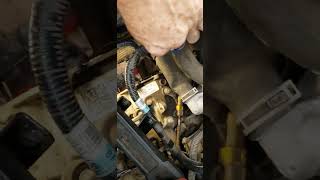
The key issue for the 2009-2012 Escape with the 6F35 automatic transmission is the location of the Output Speed Sensor. Unlike many vehicles where the sensor is easily accessible on the outside of the transmission case, on this platform, the OSS is internal. 🎬 Watch: Locate the internal OSS on a 2009 Escape Replacing it requires draining the fluid, dropping the transmission pan, and removing the entire main control valve body assembly to gain access. This significantly increases the labor time, cost, and complexity of what would otherwise be a simple repair. Furthermore, Ford issued TSB 10-1-7 for 2009-2010 models, acknowledging that P0720 could be caused by an open circuit in the OSS or the main control lead frame, sometimes requiring replacement of the entire lead frame assembly, not just the sensor.
Symptoms You May Notice
- Harsh, erratic, or delayed gear shifts
- Speedometer needle fluctuating wildly or not working at all
- Check Engine Light and/or wrench light illuminated
- Cruise control inoperative
- Possible engine hesitation or stalling
- Reduced fuel economy
- Transmission may enter a "limp mode" or start in a higher gear (e.g., 5th gear) from a stop.
- Replacing the entire transmission. While the symptoms are severe, the cause is often a relatively inexpensive (though difficult to access) sensor or lead frame.
- Replacing the vehicle speed sensor (VSS) on the wheel hub. The P0720 code specifically refers to the transmission's *output* shaft sensor, not the wheel speed sensors used for the ABS system.
Most Likely Causes
- Faulty Internal Output Speed Sensor (OSS) or Molded Lead Frame 🔴 High Probability → Shop Transmission Valve Body The sensor and its connections are part of the internal transmission electronics (often a molded leadframe) which are constantly bathed in hot transmission fluid, leading to eventual electronic failure. TSB 10-1-7 specifically calls out an open circuit in the OSS or the lead frame connector as a primary cause for P0720 on 2009-2010 models. This indicates a known weakness in these internal components. A class-action lawsuit, though later dismissed, alleged that Ford was aware of defects in the 6F35 transmission since 2009.
How to confirm: A professional will use a scan tool to monitor OSS data while driving. A reading that is erratic, drops to zero, or doesn't match the vehicle's actual speed confirms a sensor or circuit issue. Given the internal location, direct sensor testing is difficult until the transmission is opened. The presence of codes P0720 and P0722 together strongly points to this internal failure.
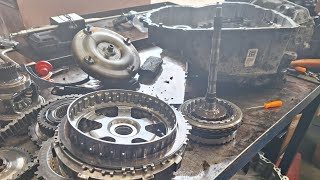
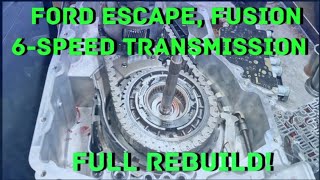
Typical fix: Replace the Output Speed Sensor and/or the entire molded lead frame assembly. 🎬 See this step-by-step OSS replacement walkthrough This requires removing the transmission pan and valve body to access the components.
Est. part cost: $25-$150 - Damaged Wiring or Connectors 🟡 Medium Probability
How to confirm: Inspect the main transmission wiring harness connector for corrosion, pushed-out pins, or damage. Test for continuity and proper voltage at the connector leading into the transmission. This rules out external issues before opening the transmission.
Typical fix: Repair the damaged section of the wiring harness or clean/replace the external connector. This is less common than internal sensor failure for this specific code.
Est. part cost: $10-$50 - Low or Contaminated Transmission Fluid ⚪ Low Probability → Shop Transmission Assembly
How to confirm: Check the transmission fluid level and condition via the dipstick. Fluid should be at the correct level, red in color, and not smell burnt. While low fluid can cause shifting issues, it's less likely to be the direct cause of a P0720 circuit code unless the fluid is extremely contaminated with metallic debris, causing electrical shorts.
Typical fix: Perform a transmission fluid drain-and-fill or flush if the fluid is low or dirty. This will be done as part of the sensor replacement anyway.
Est. part cost: $60-$150
Rare But Worth Checking
- Faulty Powertrain Control Module (PCM): → Shop Engine Control Module (ECM) This is very rare. The PCM should only be considered after all other possibilities, including the sensor, lead frame, and all wiring, have been definitively ruled out by a professional.
Diagnosis Steps
- Use an OBD-II scanner to confirm P0720 and check for any other related transmission codes, especially P0722 or P0731.
- Check the transmission fluid level and condition. The 2009-2012 Escape has a dipstick for this purpose. If the fluid is very low, dark, or smells burnt, it indicates a problem that could be related or be a separate issue.
- Visually inspect the main external transmission wiring harness connector for any obvious signs of damage, corrosion, or loose pins.
- Using a professional scan tool, monitor the live data stream for the Output Speed Sensor (OSS) while driving. Observe if the signal is erratic, drops to zero, or does not increase smoothly with vehicle speed. This is the most crucial diagnostic step.
- If the scan tool shows an erratic signal and the external wiring is intact, the fault is almost certainly the internal Output Speed Sensor or the molded lead frame.
- At this point, the vehicle should be taken to a qualified transmission shop for internal diagnosis and repair, which involves removing the transmission pan and valve body.
Parts You'll Likely Need
- Transmission Output Speed Sensor
(OEM #DY-1215)— This is the most common part to fail, causing the P0720 code. It is located inside the transmission.
Trusted brands: Motorcraft, NGK, Dorman, Rostra
OEM price range: $80-$110
Aftermarket price range: $25-$60 - Transmission Molded Leadframe Connector (Valve Body Separator Plate)
(OEM #9L8Z-7G276-A (superseded by FD8Z-7G276-B))— TSB 10-1-7 indicates this entire assembly can fail, causing an open circuit. It contains the internal wiring for the sensors. The original part number 9L8Z-7G276-A has been superseded, suggesting a revision. Often replaced as a unit with the sensors.
Trusted brands: Motorcraft
OEM price range: $85-$130 - Transmission Pan Gasket — Must be replaced when the transmission pan is removed to access the sensor.
Trusted brands: Motorcraft, Fel-Pro, Mahle
OEM price range: $20-$40
Aftermarket price range: $10-$25 - Motorcraft MERCON LV Automatic Transmission Fluid
(OEM #XT-10-QLVC)— The transmission fluid must be drained to perform the repair and will need to be refilled with the correct OEM-spec fluid. Approximately 6-7 quarts are needed for a pan drop.
Trusted brands: Motorcraft
OEM price range: $8-$12 per quart
Related Codes That Often Appear With This One
- P0722 — This code means "Output Speed Sensor Circuit No Signal," which is a more specific version of the P0720 fault. TSB 10-1-7 lists both codes together as symptoms of the same internal OSS or lead frame failure.
- P0731 — This code for "Gear 1 Incorrect Ratio" can be triggered because the TCM cannot confirm the gear ratio without a reliable OSS signal. Customer Satisfaction Program 19N01 for other Ford vehicles also links this code with P0720.
Technical Service Bulletins (TSBs) & Recalls
- TSB 10-1-7: Specifically for 2009-2010 Escape/Mariner with 6F35 transmission, addresses DTCs P0720 and P0722 caused by an open circuit in the OSS sensor or the lead frame connector.
- TSB 13-6-8: While for the 6R80 transmission in F-150s and Mustangs, this TSB addresses the same codes (P0720, P0722) and symptoms (starts in 5th gear, no speedo) caused by a faulty molded leadframe, showing a pattern of failure in this component design across Ford platforms.
- Bulletin #19N01-S3: This manufacturer bulletin notes that a lead frame failure may result in an illuminated MIL or wrench light with diagnostic trouble codes P0720, P0722, P0731, and/or P1500 stored in the PCM.
Platform-Specific Known Issues
- A known issue on related Ford 6-speed transmissions (like the 6R80) involves failure of the molded leadframe, which integrates the speed sensors. Customer Satisfaction Program 19N01 was issued for other vehicles for this exact issue with code P0720, suggesting a pattern of this type of failure in Ford's 6-speed automatics.
- Ford Technical Service Bulletin (TSB) 10-1-7 directly addresses P0720 and P0722 on 2009-2010 Escapes and Mariners with the 6F35 transmission. It identifies the cause as a potential open circuit in the OSS sensor or the main control lead frame connector, instructing technicians to replace either the sensor or the entire lead frame based on its build date.
- NHTSA ODI #11578725 describes a scenario where an orange wrench or illuminated MIL light appeared followed by a solid check engine light, with DTCs P0720 and P0722 present.
Mechanic-Grade Diagnostic Values
- 6F35 Transmission Shift/TCC/LPC Solenoid Resistance — expected: 4.00 - 5.89 Ohms at room temperature (68-86°F / 20-30°C). The resistance changes with temperature.. Failure: A reading outside the specified range for a given temperature indicates a faulty solenoid. This does not directly test the OSS sensor but is critical data when the valve body is removed.
- 6F35 Transmission Shift Solenoid E (SSE) Resistance — expected: 19.05 - 27.95 Ohms at room temperature (68-86°F / 20-30°C). This is an on/off solenoid with a different specification.. Failure: A reading outside the specified range for a given temperature indicates a faulty SSE solenoid.
Hidden / Shadow Codes Worth Checking
- P0720 / P0722 (Intermittent): On related Ford transmissions like the 6R80, TSB 13-6-8 notes that the symptoms (starting in 5th gear, no speedometer) can occur and then clear after an ignition cycle, and the DTCs P0720/P0722 may or may not be stored in the PCM. This means a tech may need to diagnose the leadframe failure even if the code is not currently active. (see via The code may be stored in history and not be active, or may not be present at all despite symptoms. Requires checking for intermittent faults and considering the TSB even without a stored code if symptoms match.)
Scan Tool Commands That Help
- Ford IDS (or equivalent professional scanner): Pin Point Test (PPT) C — TSB 10-1-7 explicitly directs technicians to follow WSM, Section 307-01A, and perform PPT steps C through C7 to diagnose the OSS circuit. This is the Ford-prescribed diagnostic path to confirm if the OSS sensor or lead frame is the root cause before removing the valve body.
Wiring & Ground Locations
- G108 — On the 3.0L V6, located at the rear of the engine, near the transmission. On the 2.3L/2.5L, located at the left rear of the engine, near the transmission.. This is a primary engine/transmission area ground point. Corrosion or a loose connection at this location can cause a variety of erratic electronic signals, including those from transmission sensors, potentially mimicking a sensor failure.
- Bulkhead Connector Sleeve Seals — The main electrical connector passing through the transmission case to the lead frame.. On similar Ford transmissions (6R80), it is a common best practice to replace the original orange-colored seals on this connector with updated black seals during a lead frame replacement to prevent future fluid leaks and connection issues.
Real Owner Repair Stories
- Ford F150 Forum thread (2013 Ford F-150 Raptor (6R80 Transmission)) — Vehicle would not shift into 1st, 2nd, or 6th gear. Sometimes it would shift from 1st to 5th. The issue could be temporarily cleared by cycling the ignition key. Wrench light was intermittent.
❌ Tried (didn't work) Dealer could not replicate the issue initially as there were no stored codes and cycling the key had cleared the symptoms.
✅ What actually fixed it The dealer replaced the molded lead frame assembly inside the transmission, as instructed by TSB 13-6-8 which addresses these exact symptoms and codes (P0720/P0722). The problem was resolved after the replacement. - NHTSA ODI #11475327 — An owner reported that their dealer pulled codes P0706, P0707, P0720, P0722, P1921, P1702, and P0722, confirming the cause was a faulty molded lead frame.
- NHTSA ODI #11492951 — An owner described a failure where everything on the instrument panel stopped working except for RPMs and the vehicle became stuck in 5th gear, accompanied by a P0720 code.
OEM Part Supersession History
9L8Z-7G276-A→FD8Z-7G276-B— Revision to address the open circuit and failure issues identified in TSB 10-1-7 and other service actions. The new part is presumed to be more durable.
Model Year Variations Within This Range
- 2009-2010: TSB 10-1-7 specifically covers 2009-2010 Escape models with the 6F35 transmission built on or before November 25, 2009. This implies that 2011-2012 models, and those built after this date, may have received the updated lead frame (FD8Z-7G276-B) from the factory, making them less susceptible to this specific failure mode, although not immune.
Diagnostic Flowchart
Other Known Issues on This Vehicle
Issues unrelated to this code that are worth knowing about as an owner of this generation:
- Electric Power Steering Failure 🔴 High — Very common on 2008-2011 models. Can occur suddenly, resulting in loss of power assist. (Ref: NHTSA Recall 14V284 (Ford Recall 14S05) was issued to reprogram the PSCM and replace the torque sensor if fault codes were present.)
- Electronic Throttle Body Failure 🔴 High — Common issue causing sudden loss of power, rough idle, and the wrench light to illuminate. (Ref: Ford issued Customer Satisfaction Program 13N03, extending the warranty on the throttle body to 10 years/150,000 miles.)
- Rear Shock Tower Rust 🔴 High — Extremely common, especially in rust belt states. The upper rear shock mount rusts through the body, causing the shock to detach. (Ref: No recall, but aftermarket repair panels are widely available due to the frequency of the problem. Part number for a common repair kit is 924-358.)
- Transmission Failure (General) 🔴 High → Shop Transmission Assembly — The 6F35 transmission in this generation is known for issues beyond the P0720 code, including harsh shifting, slipping, and complete failure.
- Ignition Coil Failure 🟠 Medium — Common cause of engine misfires (P030X codes) and rough running.
Used vs. New Parts: Buying Guide for This Vehicle
When a used part is the smart pick: For this specific repair, using a used part is NOT recommended. The failure is electronic and heat-related. A used sensor or lead frame from a junkyard has an unknown history and could fail shortly after installation.
What to inspect on the donor part:
- Not applicable. The high labor cost to access these internal components makes installing a used part with no warranty a significant financial risk.
OEM-only on this vehicle (don't cheap out):
- Molded Lead Frame: Due to the known issues and part supersessions, using the latest revision Motorcraft OEM part is the most reliable choice to ensure a lasting repair.
- Transmission Fluid: Only use Motorcraft MERCON LV. The 6F35 is sensitive to fluid type, and using a non-specified fluid can cause shifting problems or damage.
Aftermarket brands forum-validated for this vehicle:
- Rostra: Mentioned as a Tier 1 supplier for transmission sensors and harnesses, including for the 6F35.
Brands owners have reported issues with on this vehicle:
- Unnamed, no-brand electronics from online marketplaces should be avoided due to the high labor cost of a potential repeat repair.
Real Owner Stories
Aggregated from forums and TSBs cited above. Mileages and costs reflect what owners reported in those sources.
2017 Ford Escape
Symptoms: Owner reported codes P0720, P0722, and P0731. A shop diagnosed the vehicle with burnt transmission fluid.
What fixed it: The shop recommended a full transmission replacement.
Source hint: Reddit - r/fordescape - "Some help here please"
2009 Ford Escape
Symptoms: The vehicle was driven to a gas station and turned off; upon restarting, the owner encountered issues leading to a P0720 diagnosis.
What fixed it: Replacement of the Output Speed Sensor (OSS) or molded lead frame assembly as per TSB 10-1-7.
Source hint: youtube_comment - The Mechanic Club
NHTSA Reported Incident
Symptoms: An owner reported a P0720 output speed sensor circuit malfunction that was causing engine misfires in cylinder 7 (NHTSA ODI #11597108).
What fixed it: Diagnosis confirmed the sensor circuit malfunction as the root cause affecting vehicle control.
Related OBD-II Codes
Frequently Asked Questions
Does TSB 10-1-7 apply to my 2009 Ford Escape with the 6F35 transmission?
My 2011 Escape is stuck in 5th gear and the speedometer is dead; is this related to P0720?
Is there a recall for the molded leadframe failure on the 2009-2012 Escape?
Can I just replace the sensor, or do I need the whole molded lead frame assembly?
Will I need to remove the transmission to fix the P0720 code?
Are there other common failures on the 2009-2012 Escape I should check while fixing the transmission?
Helpful Videos
We Have This Part in Stock

The information in this article is provided for general reference and educational purposes only. Vehicle specifications, procedures, and part compatibility can vary by production date, trim level, and region. Always consult your vehicle's factory service manual and verify part numbers before purchasing or performing repairs. Safety-critical components such as airbags, seat belts, and braking systems should be installed by a qualified professional.
- Ford Escape:
- 🧭 Diagnostic Flowchart
- 🎬 Helpful Videos
- 🛍️ Shop This Part
- What's Unique About the 2009-2012 Ford Escape
- Symptoms You May Notice
- Most Likely Causes
- Rare But Worth Checking
- Diagnosis Steps
- Parts You'll Likely Need
- Related Codes That Often Appear With This One
- Technical Service Bulletins (TSBs) & Recalls
- Platform-Specific Known Issues
- Mechanic-Grade Diagnostic Values
- Hidden / Shadow Codes Worth Checking
- Scan Tool Commands That Help
- Wiring & Ground Locations
- Real Owner Repair Stories
- OEM Part Supersession History
- Model Year Variations Within This Range
- Other Known Issues on This Vehicle
- Used vs. New Parts: Buying Guide for This Vehicle
- Real Owner Stories
- 2017 Ford Escape
- 2009 Ford Escape
- NHTSA Reported Incident
- Related OBD-II Codes
- Frequently Asked Questions
- 🎟️ Get 5% Off