

P0720 on 2007-2010 Ford Explorer: Output Speed Sensor Circuit Malfunction Causes and Fixes
For a 2007-2010 Ford Explorer, code P0720 is most often caused by a failed Output Speed Sensor (OSS). This is a relatively simple and affordable DIY repair, as the sensor is located on the outside of the transmission. Expect to pay between $25 and $75 for a new sensor.
- P0720 on a 2007-2010 Explorer points directly to a problem with the Output Speed Sensor (OSS) circuit.
- The most likely cause is a failed sensor, which is an inexpensive part and relatively easy to replace on this specific generation as it's mounted externally on the transmission.
- Symptoms are serious and affect drivability, including erratic shifting and a non-functional speedometer.
- Before replacing the sensor, always check the transmission fluid and inspect the wiring harness for visible damage, paying special attention to potential water intrusion from the A/C drain.
- Do not confuse the Output Speed Sensor (OSS) with the Input Speed Sensor (ISS) or ABS wheel speed sensors.
What's Unique About the 2007-2010 Ford Explorer
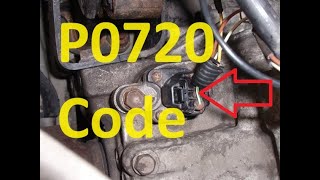
On the 2007-2010 fourth-generation Ford Explorer, which uses the 5R55S automatic transmission, the Output Speed Sensor (OSS) is conveniently located on the exterior of the transmission case on the driver's side. This makes it significantly easier and cheaper to diagnose and replace compared to later Explorer generations (2011 and newer), where the sensor is integrated inside the transmission as part of a molded lead frame and requires extensive labor to access. Therefore, for this specific vehicle range, a faulty sensor itself is the most common and straightforward fix.
Symptoms You May Notice
- Erratic, harsh, or delayed shifting.
- Check Engine Light or wrench light is on.
- Speedometer works incorrectly, jumps around, or stops working completely.
- Cruise control will not engage or work.
- Vehicle enters "limp mode," getting stuck in a single gear (often 2nd or 3rd).
- Engine hesitates or stalls when coming to a stop.
- Flashing Overdrive (O/D) light on the dashboard.
- Loss of reverse gear or weak reverse engagement.
- Replacing the Input Speed Sensor (ISS) instead of the Output Speed Sensor (OSS). While they look similar and are often nearby, they have different functions. The OSS is at the rear of the transmission case.
- Replacing an ABS wheel speed sensor. P0720 is specific to the transmission's output speed, not the wheel speed sensors used for the anti-lock brake system.
Most Likely Causes
- Faulty Output Speed Sensor (OSS) 🔴 High Probability The sensor is a common failure point due to age and heat cycles. On this specific generation, it is an external part, making it the most likely and easiest component to service.
How to confirm: After checking wiring, test the sensor's resistance with a multimeter or use a scan tool to monitor its output while driving. A reading that is erratic or does not change with vehicle speed indicates a bad sensor. The sensor is held in by a single 8mm bolt.
Typical fix: Replace the Output Speed Sensor. It is located on the driver's side of the transmission case, towards the rear, and is held in by a single bolt.
Est. part cost: $25-$75 - Damaged Wiring or Connector 🟡 Medium Probability The wiring harness leading to the transmission can be damaged by road debris, heat from the exhaust, or fluid leaks, causing a short or open circuit. A specific issue for this platform is water intrusion from the A/C drain dripping directly onto the transmission solenoid body connector, which can cause corrosion and various electrical faults.
How to confirm: Visually inspect the wiring harness and connector for any signs of damage, corrosion, or loose pins. Pay close attention to the area around the A/C drain. Perform a continuity test on the wires between the sensor and the PCM.
Typical fix: Repair the damaged section of the wire or replace the connector pigtail. If water intrusion from the A/C is the cause, clean the connector with electrical cleaner, apply dielectric grease, and reroute the A/C drain tube as per TSB 09-22-15.
Est. part cost: $15-$50 - Low or Contaminated Transmission Fluid ⚪ Low Probability → Shop Transmission Assembly Low fluid can cause a variety of shifting problems and codes, while fluid contaminated with metal shavings can interfere with magnetic sensors like the OSS.
How to confirm: Check the transmission fluid level and condition using the dipstick. The fluid should be at the correct level, red in color, and not have a burnt smell or visible debris.
Typical fix: Top off the fluid if low. If the fluid is dirty or burnt, perform a transmission fluid and filter change.
Est. part cost: $50-$150
Rare But Worth Checking
- Faulty Powertrain Control Module (PCM): → Shop Engine Control Module (ECM) This is very rare and should only be considered after all other possibilities (sensor, wiring, fluid) have been definitively ruled out.
- Internal Transmission Failure: → Shop Transmission Assembly While the external sensor is the most common cause, internal issues with the 5R55S transmission, such as a failing solenoid body or worn servo bores, can sometimes trigger various electrical codes. This is less likely for a solitary P0720 but should be considered if other symptoms are present.
Diagnosis Steps
- Scan for Codes: Use an OBD-II scanner to confirm P0720 and check for any other related transmission codes.
- Check Transmission Fluid: Inspect the transmission fluid level and condition. Ensure it is full, clean, and does not smell burnt.
- Inspect Wiring and Connector: Visually inspect the OSS connector and wiring harness for any signs of damage, corrosion, or fluid contamination. The sensor is located on the driver's side of the transmission, toward the rear. Specifically check for moisture near the main transmission connector, which could indicate a leak from the A/C drain.
- Test the Sensor: Disconnect the sensor and test its internal resistance with a multimeter. Compare the reading to the manufacturer's specification. Alternatively, use a scan tool that can graph live data to monitor the OSS signal while the wheels are turning. The signal should be a clean, consistent wave that increases with speed.
- Test the Circuit: If the sensor tests good, check for voltage and ground at the sensor connector. Check for continuity on the signal wire between the sensor connector and the PCM to rule out a broken wire.
- Replace the Sensor: If the sensor is faulty or the circuit is confirmed to be good, replace the Output Speed Sensor. The Motorcraft part number is often DY1123 (superceded by DY1209) or 7L2Z-7H103-A.
- Consider the PCM: If all other steps fail to resolve the issue, the PCM may be at fault, though this is highly unlikely.
Parts You'll Likely Need
- Automatic Transmission Output Shaft Speed Sensor (OSS)
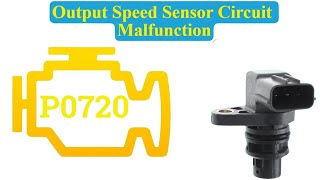
(OEM #7L2Z-7H103-A (Motorcraft DY1123, DY1209))— This is the most common failure point for code P0720 on this vehicle. For the 2007-2010 Explorer, it is an accessible, externally mounted sensor.
Trusted brands: Motorcraft, NGK/NTK, Standard Motor Products (SMP), Dorman
OEM price range: $50-$90
Aftermarket price range: $25-$60
Related Codes That Often Appear With This One
- P0722 — This code means "Output Speed Sensor No Signal," which is a more specific version of P0720, often appearing when the sensor or circuit has completely failed.
- P0731 — This code for "Gear 1 Incorrect Ratio" can be triggered because the PCM cannot verify the correct gear engagement without a reliable signal from the OSS.
- P0713 — This code for "Transmission Fluid Temperature Sensor Circuit High Input" can appear alongside P0720 if the cause is water intrusion into the main transmission connector from the A/C drain, as described in TSB 09-22-15.
Technical Service Bulletins (TSBs) & Recalls
- TSB 09-22-15: Addresses an issue where water from the A/C drain can intrude into the transmission solenoid body connector, causing various DTCs including P0713. While not specific to P0720, it points to a known wiring vulnerability in the same area.
Platform-Specific Known Issues
- The 5R55S transmission used in this generation Explorer makes the OSS an external component, simplifying replacement.
- These vehicles are susceptible to water from the A/C drain dripping onto the transmission's main electrical connector, causing corrosion and codes like P0720. This is addressed in TSB 09-22-15.
- NHTSA ODI #11475327 notes that on similar Ford platforms, P0720 and P0722 codes were confirmed by dealers to be caused by a faulty molded lead frame.
- NHTSA ODI #11578725 describes an instance where a dealership technician attempted to resolve P0720 and P0722 by reprogramming the PCM and output shaft speed sensor.
Mechanic-Grade Diagnostic Values
- Output Speed Sensor (OSS) Resistance — expected: 560 to 680 Ohms. Failure: A reading significantly outside this range, or an open/infinite reading, indicates a faulty sensor.
- Alternator AC Ripple Voltage — expected: Less than 0.5 Volts (500 millivolts) AC. Failure: A reading above 0.5V AC with the engine running and electrical loads on (headlights, blower fan) indicates a failing alternator diode bridge, which can introduce electrical noise that disrupts sensor signals.
- OSS Circuit Continuity to PCM — expected: < 5.0 Ohms. Failure: A reading higher than 5.0 Ohms indicates excessive resistance or an open in the wiring between the sensor connector and the PCM.
Scan Tool Commands That Help
- Ford IDS (or equivalent high-level scanner): Live Data Graphing - OSS_SRC PID — This is crucial for diagnosing intermittent issues. Graphing the OSS signal while driving (or with wheels turning) can reveal dropouts or erratic waveforms that a simple multimeter test would miss. A clean, rising and falling waveform corresponding to speed indicates a good sensor and circuit.
- Ford IDS (or equivalent high-level scanner): Adaptive Learning Reset — After replacing a major transmission component like the valve body or the entire transmission, resetting the adaptive learning tables is necessary. For a simple sensor replacement, this is generally not required, but can be performed if shifting issues persist after the repair.
Wiring & Ground Locations
- PCM Connector C175T — Located at the Powertrain Control Module (PCM), typically in the engine bay near the firewall.. This connector contains the pins for the OSS circuit. Testing at these pins is the final step to confirm if a wiring fault exists or if the PCM itself is the issue.
- C175T - Pin 25 (OSS Signal) — On the 50-pin PCM connector (C175T), this pin receives the signal from the Output Speed Sensor. The wire is typically Yellow with an Orange stripe.. This is the specific pin to test for continuity from the sensor connector. A break in the YE-OG wire between the transmission and this pin will cause a P0720.
- C175T - Pin 16 (TSS/OSS Ground/Return) — On the 50-pin PCM connector (C175T), this pin provides the signal return/ground for both the Turbine (TSS) and Output (OSS) speed sensors. The wire is typically White with a Violet stripe.. A fault in this shared ground wire can cause codes for both the input and output speed sensors. Checking for good continuity to ground at this pin is essential.
- Main Chassis/Engine Ground — The primary ground strap from the battery negative terminal to the chassis and engine block.. A loose or corroded main ground can cause widespread, bizarre electrical issues, including false sensor readings as the PCM struggles to find a stable ground reference.
Real Owner Repair Stories
- YouTube Channel 'Project Time Garage' (Ford F-250 with 7.3L Powerstroke (different vehicle, but same diagnostic principle for electrical interference)) — Intermittent P0720 code, vehicle speed reading on scan tool when stopped, incorrect shifting from a stop.
❌ Tried (didn't work) Replaced Output Speed Sensor (tested good)., Replaced alternator with a used one (worked for two days, then failed)., Replaced alternator with a new parts-store one.
✅ What actually fixed it The ultimate fix was discovering and tightening a loose main engine or chassis ground connection. The loose ground was causing electrical noise, mimicking the symptoms of a bad alternator or sensor. - Reddit user r/f150 (2013 Ford F-150 EcoBoost (later generation, internal sensor)) — P0720, intermittent shifting problems, speedometer not working, getting stuck in 1st or 3rd gear, wrench light.
❌ Tried (didn't work) Restarting the truck would temporarily fix it., Dealer inspection under extended warranty for the lead frame (which contains the sensor).
✅ What actually fixed it The owner took it to an independent shop which replaced the entire valve body assembly to resolve the issue. This highlights that on later models where the sensor is internal, the repair is much more involved and can be part of a larger component failure. - NHTSA ODI #11715554 — An owner reported the vehicle downshifted from gear 6 to gear 4 and threw a wrench icon on the dash. The vehicle would not come out of 4th gear until the P0720 code was cleared, though the issue recurred after 20 miles.
- NHTSA ODI #11492951 — A report describes a failure where everything on the instrument panel stopped working except for RPMs, and the truck became stuck in 5th gear with a P0720 code.
- NHTSA ODI #11597108 — A mechanic confirmed a P0720 output speed sensor circuit malfunction was causing the vehicle to lose control and reportedly caused engine misfires in cylinder 7.
OEM Part Supersession History
XW4Z-7H103-AA→7L2Z-7H103-A (Motorcraft DY1123), which was then superseded by Motorcraft DY1209— Part revision and consolidation over time.
Heads up: The Input (TSS) and Output (OSS) sensors on the 5R55S are physically identical and use the same part number, which can lead to confusion. Ensure you are replacing the correct sensor (OSS is at the rear of the case).
Diagnostic Flowchart
Other Known Issues on This Vehicle
Issues unrelated to this code that are worth knowing about as an owner of this generation:
- 4.0L SOHC V6 Timing Chain Cassette Failure 🔴 High — Very common, especially on higher-mileage vehicles. Often presents as a rattling or ticking noise from the engine on startup or at idle.
- Cracked Rear Liftgate Applique Panel 🟡 Low — Extremely common cosmetic issue where the plastic panel below the rear window cracks, typically near the emblem. Can allow water intrusion.
- Cracked Plastic Thermostat Housing (4.0L V6) 🟠 Medium — A common failure point leading to coolant leaks. The plastic housing becomes brittle over time and cracks at the seams.
- 5R55S Transmission Solenoid Body Failure 🔴 High → Shop Transmission Assembly — A well-documented internal transmission problem causing harsh shifts, delayed engagement, and slipping. This is a separate issue from the external speed sensors.
- Worn Transmission Servo Bores (5R55S) 🟠 Medium → Shop Transmission Assembly — The servo bores in the transmission case can wear out, leading to fluid pressure loss and causing slipping or shifting issues, particularly with overdrive.
Used vs. New Parts: Buying Guide for This Vehicle
When a used part is the smart pick: For this specific repair, using a used OEM sensor from a low-mileage donor vehicle is a reasonable option. Since it's an external electronic part, failure is not always tied to mechanical wear. A used part can be a cost-effective alternative to a new OEM sensor if budget is a primary concern.
Donor-vehicle mileage cap: roughly under 80000 miles for the part to have meaningful remaining life.
What to inspect on the donor part:
- Check for any physical damage to the sensor body or connector.
- Ensure the O-ring is present and not cracked (though replacing it is always recommended).
- Ask for the VIN of the donor vehicle to verify it falls within the 2007-2010 year range and had the 5R55S transmission.
- If possible, test the resistance of the used sensor with a multimeter before purchase; it should be within the 560-680 Ohm range.
Aftermarket brands forum-validated for this vehicle:
- Motorcraft (OEM)
- NTK (NGK)
- Standard Motor Products (SMP)
Brands owners have reported issues with on this vehicle:
- Unnamed 'white box' or no-name brands from online marketplaces can have high failure rates and are best avoided for critical electronic sensors.
Real Owner Stories
Aggregated from forums and TSBs cited above. Mileages and costs reflect what owners reported in those sources.
2006 Ford Explorer
Symptoms: Jerky forward gears and almost no reverse gear engagement.
What fixed it: Replacing the Output Speed Sensor (OSS) fixed the forward gear issues, though a weak reverse remained.
Source hint: Ford Truck Enthusiasts Forums - Thread 'P0720 EXPLORER 2006'
2007-2010 Ford Explorer Sport Trac V6
Symptoms: Hard shifting and electrical issues caused by water leaking from the A/C drain onto the transmission connector.
What fixed it: Cleaning the connector with electrical cleaner, applying dielectric grease, and reroute the A/C drain tube as per TSB 09-22-15.
Source hint: Ford SportTrac Forum - Thread '2007-2010 V6 Tranny hard shift fix?'
Related OBD-II Codes
Frequently Asked Questions
Where is the Output Speed Sensor (OSS) located on my 2007-2010 Ford Explorer?
Does TSB 09-22-15 apply to my P0720 code?
What specific replacement part should I look for to fix P0720?
Why is my speedometer jumping around while the Check Engine Light is on?
Can a bad OSS cause my Explorer to get stuck in one gear?
Is the P0720 code related to the common timing chain issues on the 4.0L V6?
Helpful Videos
We Have This Part in Stock

The information in this article is provided for general reference and educational purposes only. Vehicle specifications, procedures, and part compatibility can vary by production date, trim level, and region. Always consult your vehicle's factory service manual and verify part numbers before purchasing or performing repairs. Safety-critical components such as airbags, seat belts, and braking systems should be installed by a qualified professional.
- Ford Explorer:
- 🧭 Diagnostic Flowchart
- 🎬 Helpful Videos
- 🛍️ Shop This Part
- What's Unique About the 2007-2010 Ford Explorer
- Symptoms You May Notice
- Most Likely Causes
- Rare But Worth Checking
- Diagnosis Steps
- Parts You'll Likely Need
- Related Codes That Often Appear With This One
- Technical Service Bulletins (TSBs) & Recalls
- Platform-Specific Known Issues
- Mechanic-Grade Diagnostic Values
- Scan Tool Commands That Help
- Wiring & Ground Locations
- Real Owner Repair Stories
- OEM Part Supersession History
- Other Known Issues on This Vehicle
- Used vs. New Parts: Buying Guide for This Vehicle
- Real Owner Stories
- 2006 Ford Explorer
- 2007-2010 Ford Explorer Sport Trac V6
- Related OBD-II Codes
- Frequently Asked Questions
- 🎟️ Get 5% Off