

P0720 on 2011-2024 Ford Explorer: Output Speed Sensor Causes & Fixes
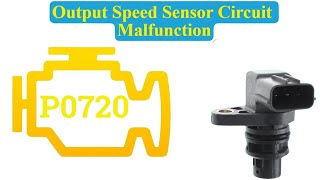
For 2011-2019 Explorers with the 6F35/6F55 6-speed transmission, this code is almost always caused by a failed Output Speed Sensor (OSS) located on the internal molded lead frame. This is a well-documented failure, leading Ford to issue Customer Satisfaction Program 19N01. For 2020-2024 models with the 10-speed automatic, it typically points to a faulty sensor, wiring, or fluid issue. The repair is complex as the sensor is inside the transmission for all model years.
- For a 2011-2019 Explorer, P0720 strongly suggests a failure of the internal molded lead frame; check for warranty coverage with a Ford dealer immediately.
- This is not a DIY-friendly repair. The sensor is located inside the transmission on all 2011-2024 models.
- Symptoms include erratic shifting and a faulty speedometer. Driving is not recommended due to the risk of unpredictable transmission behavior.
- The repair involves replacing either the molded lead frame (on 6-speed models) or the sensor itself (on 10-speed models), along with new transmission fluid and gaskets.
What's Unique About the 2011-2024 Ford Explorer
The Ford Explorer from 2011-2024 spans two distinct generations with different transmissions, making the cause of P0720 highly specific to the year. The 5th generation (2011-2019) uses a 6-speed automatic (6F35/6F55) where the OSS is integrated into a 'molded lead frame' inside the transmission. This part is a notorious failure point due to fractures in its conductors, leading Ford to issue warranty extensions like 19N01. For the 6th generation (2020-2024) with the 10-speed automatic, the sensor is a more distinct component, though still internal, making diagnosis slightly different.
Generation note: The 2011-2024 range covers the 5th Generation (2011-2019) with 6-speed 6F35/6F55 automatic transmissions and the 6th Generation (2020-2024) with 10-speed automatic transmissions. The most common cause for P0720—a faulty molded lead frame—is specific to the 5th generation models and their 6R80 (for RWD variants) or 6F55 transmissions.
Symptoms You May Notice
- Check Engine Light and/or Wrench Light are on.
- Erratic, harsh, or delayed gear shifts.
- Transmission unexpectedly downshifting, sometimes to 1st gear at speed.
- Speedometer works erratically or not at all.
- Vehicle enters 'limp mode' (stuck in a single gear).
- Flashing overdrive 'O/D OFF' light on the instrument cluster.
- Cruise control does not work.
- Reduced fuel efficiency.
- Loss of reverse gear or very weak reverse engagement.
- Replacing the entire transmission when only the internal molded lead frame is faulty.
- Replacing the external Vehicle Speed Sensor (VSS) on the wheel hubs (used for ABS), when the issue is the internal transmission Output Speed Sensor (OSS).
Most Likely Causes
- Failed Molded Lead Frame (2011-2019 Models) 🔴 High Probability → Shop Transmission Valve Body The Output Speed Sensor (OSS) is integrated into this internal transmission component, which has a high failure rate due to fractures in the conductors caused by thermal stress. Ford acknowledged this with Customer Satisfaction Program 19N01, extending the warranty to 10 years/150,000 miles for this specific part on many vehicles with the 6R80/6F55 transmission.
How to confirm: A professional scan tool will show P0720, often accompanied by P0722. A technician must confirm the vehicle is within the warranty extension period by VIN and that the failure is the lead frame. The program requires these specific DTCs to be present for coverage.
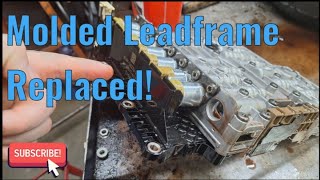
Typical fix: Replace the molded lead frame inside the transmission. This requires dropping the transmission pan, draining the fluid, and removing the valve body to access the lead frame.
Est. part cost: $200-$400 - Failed Output Speed Sensor (2020-2024 Models) 🔴 High Probability While not as prone to a specific lead frame issue as the earlier generation, the sensor itself can still fail electronically or mechanically. These models use a 10-speed transmission where the sensor is a more distinct, but still internal, component.
How to confirm: A diagnostic scan showing P0720 is the first step. A technician will need to test the sensor's circuit and signal from within the transmission, which involves accessing internal components.
Typical fix: Replace the output speed sensor. This is also an internal transmission repair requiring removal of the pan and other components.
Est. part cost: $50-$150 - Damaged Wiring or Connector 🟡 Medium Probability Although the sensor is internal, the external wiring harness leading to the transmission can be damaged by road debris, heat from the exhaust, or corrosion at the main bulkhead connector. Rodent damage is also a possibility.
How to confirm: Visually inspect the external transmission wiring harness and the main circular connector for damage, melting, or corrosion. A multimeter can be used to check for continuity and shorts in the circuit between the PCM and the transmission connector.
Typical fix: Repair the damaged section of wiring or replace the connector pigtail. In some cases, the transmission must be lowered to access the damaged wiring.
Est. part cost: $20-$100 - Low or Contaminated Transmission Fluid ⚪ Low Probability → Shop Transmission Assembly
How to confirm: Check the transmission fluid level and condition. On these sealed transmissions, this is not a simple task and may require a technician. Dirty, burnt, or low fluid can cause a variety of transmission issues, including erratic sensor readings due to debris or improper hydraulic pressure.
Typical fix: Perform a transmission fluid drain and fill or flush with the correct Motorcraft MERCON LV or ULV fluid, depending on the transmission.
Est. part cost: $150-$300
Rare But Worth Checking
- Faulty Powertrain Control Module (PCM): → Shop Engine Control Module (ECM) This is very rare. The PCM should only be considered after all other possibilities, including the sensor, lead frame, and wiring, have been exhaustively tested and ruled out.
Diagnosis Steps
- Confirm the presence of code P0720 using an OBD-II scanner. Check for other related codes like P0722, P0731, or P1500.
- Check for any applicable recalls or warranty extensions (like 19N01 for 2011-2019 models) using the vehicle's VIN. This is a critical first step for 5th Gen Explorers.
- Inspect the transmission fluid level and condition. This may require a technician as there is no dipstick.
- Visually inspect the external transmission housing, wiring harness, and main bulkhead connector for any obvious signs of damage, corrosion, or loose connections.
- If no external issues are found, the problem is almost certainly internal, requiring professional service.
- A technician will drop the transmission pan and test the OSS circuit and sensor directly at the molded lead frame or sensor connector.
- Based on testing, replace the molded lead frame (2011-2019) or the individual sensor (2020-2024).
- After repair, clear codes and perform a test drive to ensure proper shift behavior.
Parts You'll Likely Need
- Molded Lead Frame (Transmission Conductor Plate)
(OEM #AL3Z-7G276-D (for 6R80 RWD variant, check VIN for specific 6F55 part))— This is the primary failure point for the 2011-2019 Ford Explorer with the 6-speed automatic transmission. The OSS is integrated into this part.
Trusted brands: Motorcraft, Dorman (926-149)
OEM price range: $250-$400
Aftermarket price range: $150-$250 - Automatic Transmission Output Speed Sensor — For 6th generation (2020+) models with the 10-speed transmission, the sensor may be a separate, replaceable component, though still internal.
Trusted brands: Motorcraft
OEM price range: $70-$150
Aftermarket price range: $40-$80 - Automatic Transmission Fluid
(OEM #Motorcraft MERCON LV (for 6-speed), MERCON ULV (for 10-speed))— The transmission fluid must be drained to perform the repair and will need to be replaced with the correct specification fluid. A full replacement requires 9-10 quarts.
Trusted brands: Motorcraft
OEM price range: $15-$25 per quart
Aftermarket price range: $10-$20 per quart - Transmission Filter and Pan Gasket — The filter and gasket should always be replaced when the transmission pan is removed for service.
Trusted brands: Motorcraft, Wix, ATP
OEM price range: $40-$70
Aftermarket price range: $20-$40
Related Codes That Often Appear With This One
- P0722 — Stands for 'Output Speed Sensor No Signal'. It often appears with P0720 and is another strong indicator of a failed sensor or a complete break in the circuit. It is one of the qualifying codes for the 19N01 warranty extension.
- P0731 — Stands for 'Gear 1 Incorrect Ratio'. This code can be triggered when the PCM commands a gear but the OSS reports a speed that doesn't match the expected gear ratio, a direct consequence of the faulty OSS signal. This is also a qualifying code for the 19N01 program.
- P1500 — This code can also be related to the OSS failure and is listed as a qualifying DTC for the 19N01 Customer Satisfaction Program.
Technical Service Bulletins (TSBs) & Recalls
- 19N01: Customer Satisfaction Program - Transmission Molded Leadframe Extended Coverage for certain vehicles with 6R80 transmissions. While the initial TSB focused on F-150s, the issue and part are common to the Explorer platform.
- 16N02: Customer Satisfaction Program - Molded Leadframe Extended Coverage for various Ford models, addressing the same core issue as 19N01.
Platform-Specific Known Issues
- Customer Satisfaction Program 19N01: Ford extended the warranty on the molded lead frame for many 6-speed automatic transmissions (including the 6R80 and related units) to 10 years or 150,000 miles. Owners experiencing P0720, P0722, P0731, or P1500 on an eligible 2011-2019 Explorer should check with a Ford dealer for coverage.
Mechanic-Grade Diagnostic Values
- Resistance of the solenoid body internal circuit for the OSS sensor. — expected: Less than 5 ohms.. Failure: A resistance reading greater than 5 ohms indicates a fault within the solenoid body (lead frame).
Scan Tool Commands That Help
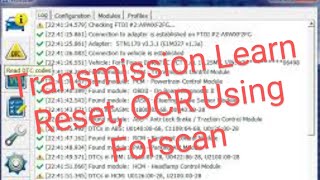
- FORScan: TCM - Reset all adaptations / Clear Transmission Adaptive Tables — This function should be used after replacing the molded lead frame or valve body to clear the transmission's learned shift patterns. This forces the TCM to relearn shift points and pressures with the new components, which is critical for smooth operation.
- Ford IDS: Module Programming / PCM — The dealer-level tool is required to perform any software updates related to transmission control. A PCM software update was part of a related recall (19S07) to prevent sudden downshifts to 1st gear in the event of an OSS failure, prior to the lead frame replacement program.
Wiring & Ground Locations
- C175T — This is the main 50-pin connector at the Powertrain Control Module (PCM).. The signals from the OSS travel through this connector to the PCM. For 6F55 transmissions, the OSS signal is on Pin 16 (Circuit VET31, GY-VT wire). A poor connection or corrosion at this specific pin can mimic a sensor failure.
- Bulkhead Connector Sleeve — Where the main external wiring harness connects to the transmission case.. This is a common point for fluid leaks and corrosion. The original orange seals were prone to leaking and were updated to black seals. A leak here can contaminate the pins for the OSS circuit, causing intermittent signal loss.
- G100 / G101 / G104 — These are major chassis ground points located in the engine compartment, typically on the fender aprons or near the radiator support.. While not directly for the sensor, the PCM and other modules rely on these grounds. A corroded or loose main ground can introduce electrical noise into the system, potentially causing erratic sensor readings and codes like P0720.
Real Owner Repair Stories
- Ford F150 Forum user (2013 F-150 STX 5.0L V8 (with same 6R80 transmission and lead frame issue)) — Code P0720, truck gets stuck in first gear, airbag light turns on, speedometer goes to zero, and vehicle lunges.
❌ Tried (didn't work) Clearing the code with a scanner provided temporary relief., A recall for reprogramming the sensor did not fix the root cause.
✅ What actually fixed it The user was outside the 150,000-mile warranty extension. A dealership repair cost around $500 (in 2022) and involved replacing the lead frame, bulkhead connector seal, and another internal seal, plus a fluid and filter change. - Reddit r/f150 user (2013 F-150 EcoBoost with 104k miles (with same 6R80 transmission)) — Experiencing issues related to P0720, dealer scanned and found P0722 (No Signal).
❌ Tried (didn't work) The code would reset temporarily after several ignition cycles, making diagnosis difficult without the light on.
✅ What actually fixed it The vehicle was barely within the 10-year window for Customer Satisfaction Program 19N01. The dealer ordered the molded lead frame for replacement under the extended warranty. The user noted that the part was on backorder, a common issue.
Documented NHTSA Reports
- An owner reported that their vehicle unexpectedly downshifted from 6th gear to 4th gear, followed by a wrench icon on the dash and a P0720 code for the output shaft speed sensor (NHTSA ODI #11715554).
- NHTSA ODI #11492951 describes a failure where everything on the instrument panel stopped working except for the RPM gauge, and the truck became stuck in 5th gear with a P0720 code.
- A report in NHTSA ODI #11475327 notes that a dealer pulled codes P0706, P0707, P0720, and P0722, confirming the issue was a faulty molded lead frame.
- According to NHTSA ODI #11578725, a technician attempted to reprogram the PCM and output shaft speed sensor to address DTCs P0720 and P0722.
- NHTSA ODI #11714928 describes a vehicle violently downshifting on the interstate due to code P0720, even after a previous software reprogram was performed.
OEM Part Supersession History
AL3Z-7G276-A, AL3Z-7G276-B→AL3Z-7G276-D— Revision to address the conductor cracking and sensor failure issues. The 'D' revision is the most current and recommended replacement part.
Heads up: The older 'A' and 'B' revisions should not be used, as they are prone to the original failure. Always install the latest revision, AL3Z-7G276-D.
Model Year Variations Within This Range
- 2011-2012 (and earlier models with 6F50): TSB 07-21-11 was issued for earlier 6F50 transaxles (used in other Ford models but relevant) for intermittent shorts in the OSS or TSS sensors, causing codes like P0720. The fix was to replace the individual sensor, not the entire lead frame at that time. This highlights that sensor issues existed even before the widespread lead frame failures were identified as the primary cause.
Diagnostic Flowchart
Other Known Issues on This Vehicle
Issues unrelated to this code that are worth knowing about as an owner of this generation:
- Internal Water Pump Failure (3.5L V6) 🔴 High — Common after 80,000-120,000 miles. A major design flaw where the pump is located inside the engine, driven by the timing chain. When it fails, it can leak coolant into the engine oil, leading to catastrophic engine failure if not caught immediately. Repair is extremely labor-intensive and expensive ($2,000-$4,000).
- Power Transfer Unit (PTU) Failure (AWD Models) 🔴 High — Common on 2011-2019 models. The PTU is located next to the hot exhaust, causing its gear oil to cook and break down. It has no drain plug, making service difficult. Failure leads to grinding noises and loss of AWD. Repair costs are typically $2,200-$3,300.
- Exhaust Odor in Cabin 🟠 Medium — Widespread on 2011-2017 models, leading to an NHTSA investigation. Caused by cracked exhaust manifolds or poor body sealing, allowing fumes to enter the cabin during acceleration. (Ref: Multiple TSBs issued (e.g., 12-12-4, 16-0166, 17-0029, 17-0044) to address sealing issues and reprogram HVAC.)
- A-Pillar Trim Detachment 🟡 Low — Affects nearly all 2011-2019 models. The exterior trim pieces on either side of the windshield can loosen and fly off at highway speeds due to failing retention clips. (Ref: Recall 24S02)
- Rear Axle Bolt Fracture (2020-2022 Models) 🔴 High — A significant issue on early 6th generation models. The rear axle mounting bolt can fracture, potentially causing a loss of power and allowing the vehicle to roll away when in Park. (Ref: Multiple recalls issued to address the bolt and subframe bushing.)
- Cracked Applique Panel on Liftgate 🟡 Low — Common cosmetic issue on 2011-2019 models where the black plastic panel below the rear window develops a crack, typically originating from the Ford emblem. (Ref: Ford issued a bulletin on how to replace the panel.)
Used vs. New Parts: Buying Guide for This Vehicle
When a used part is the smart pick: A used part is almost never a smart choice for this repair. The molded lead frame is a known high-failure item, and a used part has a high probability of failing soon after installation. The only scenario where a used part might be considered is a complete used transmission from a low-mileage, late-model donor if the vehicle's value doesn't justify the cost of a new transmission or a lead frame repair.
Donor-vehicle mileage cap: roughly under 50000 miles for the part to have meaningful remaining life.
What to inspect on the donor part:
- Verify the donor vehicle's VIN to ensure it wasn't part of a flood or had a salvage title for a major collision.
- Check the transmission fluid from the donor if possible; it should be bright red and not smell burnt.
- Obtain a vehicle history report for the donor to check for reported maintenance or accidents.
OEM-only on this vehicle (don't cheap out):
- Molded Lead Frame (Conductor Plate)
Aftermarket brands forum-validated for this vehicle:
- Dorman (Part #926-149) is a widely available aftermarket alternative for the lead frame. Forum discussions show mixed but generally acceptable results, with some users reporting long-term success. It is often chosen when the OEM part is on backorder.
Brands owners have reported issues with on this vehicle:
- Unnamed, low-cost lead frames from online marketplaces are a significant gamble. Given the high labor cost to access the part, saving a small amount on a no-name brand is not recommended as failure rates are high.
Real Owner Stories
Aggregated from forums and TSBs cited above. Mileages and costs reflect what owners reported in those sources.
2009 Ford Explorer
Symptoms: Flashing O/D light and the engine stalling when the vehicle was placed in reverse.
What fixed it: Replacement of the Output Speed Sensor (OSS).
Source hint: Ford Truck Enthusiasts Forum: p0720
2006 Ford Explorer
Symptoms: Jerky forward motion and non-existent reverse gear after the code appeared.
What fixed it: Replacement of the Output Speed Sensor.
Source hint: Ford Truck Enthusiasts Forum: P0720 EXPLORER 2006
2011-2019 Ford Explorer — ~120000 miles
Symptoms: Unexpected downshifting to 1st gear at speed and illumination of the Wrench Light.
What fixed it: Replacement of the molded lead frame under Customer Satisfaction Program 19N01.
Source hint: 19N01: Customer Satisfaction Program - Transmission Molded Leadframe Extended Coverage
Related OBD-II Codes
Frequently Asked Questions
Is there a warranty extension for the P0720 code on my 2011-2019 Ford Explorer?
My 2014 Explorer is downshifting to 1st gear unexpectedly while driving. Is this related to P0720?
Can I just replace the sensor on my 2022 Explorer, or do I need a whole lead frame?
Why did my speedometer stop working at the same time the Wrench Light came on?
Does the 19N01 program cover my Explorer if I don't have a Check Engine Light but the car is shifting harshly?
Is the P0720 code related to the internal water pump issues on the 3.5L V6 Explorer?
Helpful Videos


The information in this article is provided for general reference and educational purposes only. Vehicle specifications, procedures, and part compatibility can vary by production date, trim level, and region. Always consult your vehicle's factory service manual and verify part numbers before purchasing or performing repairs. Safety-critical components such as airbags, seat belts, and braking systems should be installed by a qualified professional.
- Ford Explorer:
- 🧭 Diagnostic Flowchart
- 🎬 Helpful Videos
- What's Unique About the 2011-2024 Ford Explorer
- Symptoms You May Notice
- Most Likely Causes
- Rare But Worth Checking
- Diagnosis Steps
- Parts You'll Likely Need
- Related Codes That Often Appear With This One
- Technical Service Bulletins (TSBs) & Recalls
- Platform-Specific Known Issues
- Mechanic-Grade Diagnostic Values
- Scan Tool Commands That Help
- Wiring & Ground Locations
- Real Owner Repair Stories
- Documented NHTSA Reports
- OEM Part Supersession History
- Model Year Variations Within This Range
- Other Known Issues on This Vehicle
- Used vs. New Parts: Buying Guide for This Vehicle
- Real Owner Stories
- 2009 Ford Explorer
- 2006 Ford Explorer
- 2011-2019 Ford Explorer — ~120000 miles
- Related OBD-II Codes
- Frequently Asked Questions
- 🎟️ Get 5% Off