

P0720 on 2003-2007 Honda Accord: Output Speed Sensor Causes and Fixes
On a 2003-2007 Honda Accord, code P0720 is almost always caused by a failed transmission output speed sensor. Symptoms include erratic shifting, a faulty speedometer, and a flashing 'D' light. Replacing the sensor is a common DIY fix, with the part costing between $25 and $110. Ensure you get the correct part for your V6 or 4-cylinder engine.
- P0720 on a 7th-gen Accord almost always points to a bad output speed sensor.
- Key symptoms are a non-functional speedometer, a flashing 'D' light, and erratic transmission shifting.
- Before replacing the sensor, check the transmission fluid level and inspect the sensor's wiring for obvious damage.
- The repair is DIY-friendly for those with basic tools, typically taking less than an hour.
- Ensure you purchase the correct sensor for your engine (4-cylinder vs. V6) as part numbers differ: 28810-PWR-013 for V6 and 28810-P6H-013 for 4-cylinder.
What's Unique About the 2003-2007 Honda Accord
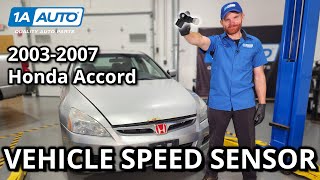
For the seventh-generation Honda Accord, the P0720 code is a common and straightforward issue. The automatic transmissions from this era (particularly the 5-speed in V6 models like the BAYA and BCLA) are known for having these sensors fail due to age and heat exposure. Unlike in some other vehicles where the cause can be ambiguous, on these Accords, the problem is very frequently the sensor itself. The sensor is located externally on the transmission housing, making it accessible for replacement without major disassembly, often by just removing the driver's side wheel and splash shield.
Symptoms You May Notice
- Erratic, harsh, or delayed automatic shifts
- Flashing 'D' (Drive) indicator light on the dashboard
- Speedometer reads incorrectly or not at all
- Cruise control is inoperative
- Engine hesitates or stalls when accelerating or coming to a stop
- Check Engine Light is on
- Transmission feels stuck in a low gear with poor acceleration
- Replacing the Input Speed Sensor instead of the Output Speed Sensor. They are two different sensors, often located near each other.
- Replacing an ABS Wheel Speed Sensor, which provides speed data for the ABS system, not the transmission.
- Condemning the entire transmission as failed when only the inexpensive external sensor is at fault. This is a common tactic at dishonest shops when they see a transmission code.
Most Likely Causes
- Faulty Output Speed Sensor (Countershaft Speed Sensor) 🔴 High Probability The sensor is a known failure point on this generation of Honda transmissions due to age and prolonged exposure to heat cycles, leading to internal electronic failure.
How to confirm: Test the sensor's resistance with a multimeter against factory specifications. A more definitive test is to watch its signal on an advanced scan tool while driving (or with wheels raised); an absent or erratic reading confirms failure. A faulty sensor is the most probable cause if symptoms include both erratic shifting and a dead speedometer.
Typical fix: Replace the output speed sensor. It is held in by a single 10mm bolt and is located on the exterior of the transmission housing.
Est. part cost: $25-$110 - Damaged Wiring or Electrical Connector 🟡 Medium Probability The wiring harness is exposed to engine bay heat and vibrations, which can cause wires to become brittle, frayed, or corroded over time. The connector pins can also lose tension or corrode.
How to confirm: Visually inspect the wiring harness leading to the sensor for any signs of damage, melting, or corrosion. Check the connector for loose pins or corrosion. Use a multimeter to check for 5V reference voltage and good ground at the connector with the key on. If a new sensor does not fix the code, a wiring issue is the next logical suspect.
Typical fix: Repair the damaged section of wiring or replace the connector pigtail.
Est. part cost: $10-$30 - Low or Contaminated Transmission Fluid ⚪ Low Probability → Shop Transmission Assembly
How to confirm: Check the transmission fluid level using the dipstick (engine off, on level ground). Note the fluid's color and smell. It should be reddish and not have a burnt odor. Dark, burnt, or low fluid indicates a problem that can cause erratic shifting.
Typical fix: Perform a transmission fluid drain-and-fill using Honda-specific ATF (DW-1 or older Z1). If the fluid is heavily contaminated, it may be a symptom of a larger internal transmission issue, which is a known weak point on V6 models.
Est. part cost: $30-$80
Rare But Worth Checking
- Faulty Powertrain Control Module (PCM): → Shop Engine Control Module (ECM) This is very uncommon. The PCM should only be considered after the sensor and its entire circuit have been thoroughly tested and confirmed to be in good working order. Some owners have replaced the PCM unnecessarily when the real issue was a wiring fault.
Diagnosis Steps
- Scan for Codes: Use an OBD-II scanner to confirm P0720 and check for any other related transmission codes.
- Check Transmission Fluid: Verify the transmission fluid is at the correct level and is in good condition (not burnt or dirty). Low or dirty fluid can cause shifting problems. Ensure only Honda ATF DW-1 (or prior-spec Z1) is used.
- Inspect Wiring and Connector: Visually inspect the wiring harness and connector for the output speed sensor. Look for any breaks, corrosion, or loose connections. The connector is often a 3-pin plug.
- Test the Sensor Circuit: Disconnect the sensor. With the key on, use a multimeter to check for a reference voltage (typically 5V) and a good ground at the connector. This verifies the integrity of the wiring from the PCM.
- Test the Sensor: If the wiring is good, test the sensor itself. You can check its internal resistance with a multimeter and compare it to the manufacturer's specification. A more definitive test is to watch its signal on an advanced scan tool (like a Honda HDS) during a test drive.
- Replace the Sensor: If the sensor is faulty, replace it. The sensor is located on the exterior of the transmission housing, often accessible by removing the driver's side wheel and splash shield. On V6 models, removing the air intake snorkel can provide better top-down access. It is held by one 10mm bolt.
- Clear Codes and Test Drive: After replacement, clear the DTCs with the scanner and perform a test drive to ensure the shifting issues and speedometer problems are resolved.
Parts You'll Likely Need
- Automatic Transmission Output Speed Sensor (Countershaft)
(OEM #V6: 28810-PWR-013 | 4-Cyl: 28810-P6H-013)— This is the most common failure point for the P0720 code on this vehicle. It is critical to use the correct part number for your engine, as the V6 and 4-cylinder sensors are different.
Trusted brands: Honda (OEM), Beck/Arnley, Standard Motor Products (SMP), Denso, NTK
OEM price range: $70-$110
Aftermarket price range: $25-$60
Related Codes That Often Appear With This One
- P0721 — This code for 'Output Speed Sensor Range/Performance' is a companion to P0720. While P0720 indicates a circuit malfunction (like no signal), P0721 indicates the signal is erratic or irrational. Both point to the same root causes.
- P0715 — This code relates to the Input/Turbine Speed Sensor. The PCM compares input and output speeds to control shifts, so a fault in one sensor can sometimes trigger codes related to the other.
- P0700 — This is a general Transmission Control Module (TCM) fault code. It simply means the TCM has stored a specific code, like P0720, and is requesting the Check Engine Light to be turned on.
Technical Service Bulletins (TSBs) & Recalls
- Honda TSB 07-086: While not for P0720, this TSB addresses a power steering pump whine on V6 models caused by a bad O-ring. This is relevant as fluid leaks from this area could potentially contaminate nearby wiring, including the speed sensor harness.
Platform-Specific Known Issues
- V6 vs. 4-Cylinder Transmissions: The V6 models use a 5-speed automatic (BAYA, BCLA) that is notoriously prone to premature failure, a much more severe issue than this sensor. The P0720 code on a V6 should be addressed promptly, as erratic shifting can stress an already weak transmission.
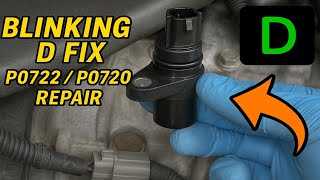
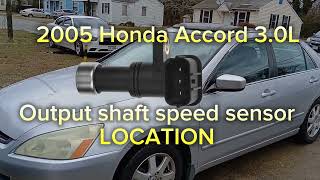
- Sensor Location: On V6 models, the sensor is located on the top-front of the transmission, near the fill bolt, and can be accessed from above after removing some of the air intake assembly. 🎬 Watch: Locate the V6 countershaft speed sensor from above On 4-cylinder models, it is typically on the side of the transmission, more easily accessed from the driver's side wheel well.
Mechanic-Grade Diagnostic Values
- Output Speed Sensor Internal Resistance — expected: 400-600 Ohms. Failure: A reading outside this range, or OL (Open Loop/infinite resistance), indicates a faulty sensor.
- Sensor Connector Voltage (Key On, Engine Off, Connector Unplugged) — expected: One pin should have ~5V (VCC reference from PCM), one pin should have continuity to ground, and the third is the signal wire.. Failure: Missing 5V reference or a bad ground points to a problem in the wiring or the PCM, not the sensor itself.
Scan Tool Commands That Help
- Honda HDS (or advanced equivalent): Live Data Monitoring for 'Countershaft Speed' — This is the most definitive test. While driving (or with drive wheels safely in the air), the scan tool should display a smooth, increasing RPM from the sensor that corresponds to vehicle speed. If the reading is zero, erratic, or drops out intermittently, the sensor or its circuit is faulty.
Wiring & Ground Locations
- G101 — On V6 models, this main engine harness ground is often located on the thermostat housing or on the driver's side of the intake manifold.. G101 serves as the ECU's power and logic ground termination point. A loose or corroded G101 can cause intermittent and bizarre electrical issues, including faulty sensor readings that can trigger a P0720 code even if the sensor and its direct wiring are good.
- Output Speed Sensor Connector — A 3-pin connector plugging directly into the sensor on the transmission housing.. This is the primary point of failure for wiring issues. Pins can corrode or lose tension, and the wiring right at the connector can become brittle and break from heat and vibration. Testing for voltage and ground should be done at this connector's female terminals.
Real Owner Repair Stories
- Honda-Tech Forum User (Honda with similar engine/ground setup) — Car would randomly die and not restart, various electrical gremlins.
❌ Tried (didn't work) Checking the connection at the thermostat housing.
✅ What actually fixed it The G101 ground wire was frayed inside the loom, not at the terminal. The user ran a temporary new ground wire from the ECU pin for G101 to the chassis, which immediately solved the problem, confirming the break in the original wire.
When the Usual Fixes Don't Work
- While the vast majority of P0720 cases on this Accord are fixed by replacing the sensor, a non-trivial number of forum posts describe scenarios where the code persisted. The most common secondary cause, after a faulty new part is ruled out, is a wiring issue. This can be a break in a wire, corrosion in the connector, or a poor main ground at G101. In very rare instances, after all wiring has been painstakingly verified, the PCM itself is the culprit.
OEM Part Supersession History
28810-PWR-003→28810-PWR-013— Standard part revision by the manufacturer.
Heads up: 28810-PWR-013 is the correct and current part number for the V6 automatic transmission output/countershaft speed sensor for this generation.
Model Year Variations Within This Range
- 2006-2007 (V6 Models): The 2006-2007 V6 models received an updated 5-speed automatic transmission (coded BAYA) which is considered more robust than the earlier 2003-2005 units. While the P0720 sensor failure is common to both, the health of the underlying transmission is generally better on the facelifted 2006-2007 models. Additionally, the 2006 refresh included a new gauge cluster, steering wheel, and standard Vehicle Stability Assist (VSA) on all V6 models.
Diagnostic Flowchart
Other Known Issues on This Vehicle
Issues unrelated to this code that are worth knowing about as an owner of this generation:
- Automatic Transmission Failure (V6 Models) 🔴 High → Shop Transmission Assembly — Very common, especially in 2003-2004 models. Can occur before 100,000 miles. Symptoms include harsh shifting, gear slippage (especially 2-3), and eventual total failure.
- Cracked Power Steering Hose (V6 Models) 🔴 High — Common enough to warrant a major safety recall. The hose deteriorates from engine heat, leaking fluid onto the hot catalytic converter, posing a fire risk. (Ref: NHTSA Action Number: PE12012, Honda Recall)
- Clogged EGR Passages 🟠 Medium — A frequent issue on both 4-cylinder and V6 engines, causing codes like P0401 or P0400. Leads to rough idle, hesitation, and failed emissions tests. The fix is cleaning the passages, not always replacing the valve.
- Excessive Oil Consumption (4-Cylinder K24 Engine) 🟠 Medium — A noted issue where the K24 engine can begin to consume oil between changes, often due to piston ring wear. Requires regular oil level checks to prevent engine damage.
- Faulty Ignition Switch / Interlock 🟡 Low — Reported issue where the car may not start or the key can be difficult to remove from the ignition.
- Failing Stereo Backlight / HVAC Display 🟡 Low — Common cosmetic and convenience issue, particularly on 2003-2004 models, where the radio and climate control display fails.
Used vs. New Parts: Buying Guide for This Vehicle
When a used part is the smart pick: For this specific repair, buying a used sensor is NOT recommended. It is an inexpensive electronic part that fails from heat and age. A used sensor from a junkyard has unknown remaining life and is likely to fail soon, if it works at all. The labor to replace it again outweighs any initial savings.
What to inspect on the donor part:
- Not applicable as used sensors are not advised.
OEM-only on this vehicle (don't cheap out):
- While not strictly 'OEM-only', using a genuine Honda sensor (28810-PWR-013 for V6, 28810-P6H-013 for 4-Cyl) or one from a trusted OEM supplier like Denso or NTK is highly recommended for first-time fix success.
Aftermarket brands forum-validated for this vehicle:
- Beck/Arnley
- Standard Motor Products (SMP)
- NTK
- Denso
Brands owners have reported issues with on this vehicle:
- Unnamed, no-brand sensors from online marketplaces should be avoided. The risk of receiving a dead-on-arrival or quickly failing part is high, leading to wasted time and money.
Real Owner Stories
Aggregated from forums and TSBs cited above. Mileages and costs reflect what owners reported in those sources.
1996 Honda Accord
Symptoms: The owner tried replacing the sensor twice and even replaced the ECU, but the P0720 code persisted.
What fixed it: The issue was identified as a persistent wiring or connector issue that was difficult to trace.
Source hint: honda-tech.com: '96 accord code p0720 tried everything! hellppp...!!!'
2004 Acura TL 3.2L V6
Symptoms: The vehicle experienced a dead speedometer and the P0720 code. Replacing the sensor did not initially resolve the problem.
What fixed it: The owner had to check connections and ensure the new part was functioning correctly, emphasizing the importance of electrical contact integrity.
Source hint: AcuraZine: 'Countershaft Speed Sensor'
2003 Honda Accord V6 — ~95000 miles
Symptoms: Harsh shifting and gear slippage, specifically between 2nd and 3rd gear.
What fixed it: While P0720 can be a sensor, these symptoms often indicate total internal transmission failure common in 2003-2004 V6 models.
Source hint: vehicle_specific_issues: Automatic Transmission Failure (V6 Models)
Documented NHTSA Reports
Honda Owner Report
Symptoms: An owner reported that diagnostic code P0720 appeared as an early sign of transmission failure, even with maintenance performed more frequently than recommended.
What fixed it: While the dealership replaced the sensor, the owner was informed the root cause was likely internal transmission failure.
Source hint: NHTSA ODI #10339099
Related OBD-II Codes
Frequently Asked Questions
Where is the output speed sensor located on my V6 Honda Accord?
Is the P0720 code related to the power steering pump whine mentioned in TSB 07-086?
Why is my speedometer dead and my 'D' light flashing at the same time?
I have a 2003 V6 Accord; should I be worried about more than just a sensor with code P0720?
Can I use any transmission fluid to fix the erratic shifting associated with P0720?
How do I access the sensor on a 4-cylinder 2003-2007 Accord?
Helpful Videos
We Have This Part in Stock

The information in this article is provided for general reference and educational purposes only. Vehicle specifications, procedures, and part compatibility can vary by production date, trim level, and region. Always consult your vehicle's factory service manual and verify part numbers before purchasing or performing repairs. Safety-critical components such as airbags, seat belts, and braking systems should be installed by a qualified professional.
- Honda Accord:
- 🧭 Diagnostic Flowchart
- 🎬 Helpful Videos
- 🛍️ Shop This Part
- What's Unique About the 2003-2007 Honda Accord
- Symptoms You May Notice
- Most Likely Causes
- Rare But Worth Checking
- Diagnosis Steps
- Parts You'll Likely Need
- Related Codes That Often Appear With This One
- Technical Service Bulletins (TSBs) & Recalls
- Platform-Specific Known Issues
- Mechanic-Grade Diagnostic Values
- Scan Tool Commands That Help
- Wiring & Ground Locations
- Real Owner Repair Stories
- When the Usual Fixes Don't Work
- OEM Part Supersession History
- Model Year Variations Within This Range
- Other Known Issues on This Vehicle
- Used vs. New Parts: Buying Guide for This Vehicle
- Real Owner Stories
- 1996 Honda Accord
- 2004 Acura TL 3.2L V6
- 2003 Honda Accord V6 — ~95000 miles
- Documented NHTSA Reports
- Honda Owner Report
- Related OBD-II Codes
- Frequently Asked Questions
- 🎟️ Get 5% Off