

P0720 on 2006-2011 Honda Civic: Output Speed Sensor Failure Causes and Fixes
For a 2006-2011 Honda Civic, code P0720 almost always points to a failed automatic transmission output shaft speed sensor. This is a common failure item that causes erratic shifting, a blinking 'D' indicator light, and speedometer issues. Replacing the sensor is the typical fix, with the correct OEM part being 28810-PWR-013. Parts cost between $20 and $70.
- P0720 on a 2006-2011 Civic almost always means the output shaft speed sensor has failed.
- Key symptoms include erratic shifting, a faulty speedometer, and a blinking 'D' (Drive) light on the dash.
- Before replacing parts, check the sensor's wiring and connector for damage or corrosion, as this is the second most likely cause.
- The most likely fix is replacing the sensor (Part No. 28810-PWR-013), which is a relatively inexpensive and accessible DIY job for many.
- Driving with this issue can cause further transmission damage, so it should be addressed promptly.
What's Unique About the 2006-2011 Honda Civic
The 8th generation Honda Civic (2006-2011) is known for its reliability, but like many vehicles of its era, its electronic sensors are a common point of failure as the car ages. The output shaft speed sensor is a known high-failure part on this platform. Owners frequently report that replacing this specific sensor is a straightforward and effective fix for the P0720 code, often resolving all related drivability issues without the need for more complex transmission work. A key vehicle-specific symptom is the blinking 'D' light on the instrument cluster, which is Honda's common indicator for a transmission-related fault.
Symptoms You May Notice
- Erratic, harsh, or delayed automatic transmission shifting
- Check Engine Light is on
- Blinking 'D' (Drive) indicator light on the dashboard
- Speedometer works intermittently or not at all
- Poor acceleration or vehicle feels sluggish
- Cruise control may not function
- Potential stalling during acceleration or when coming to a stop
- Replacing the entire transmission when only a sensor is needed.
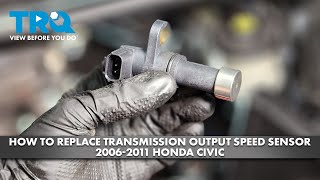
- Replacing the input shaft speed sensor instead of the output shaft speed sensor. The input sensor is located nearby but is a different part. 🎬 See this video to identify the input vs output sensors.
- Replacing the PCM without first thoroughly testing the sensor and wiring.
Most Likely Causes
- Faulty Output Shaft Speed Sensor 🔴 High Probability This sensor is a very common failure point due to age, heat cycles, and internal electrical breakdown. Owner forums and mechanic testimonials confirm this is the primary culprit in over 85% of cases.
How to confirm: Use a multimeter to test the sensor's resistance; it should be within the manufacturer's specified range. A diagnostic scan tool can also monitor the sensor's output signal (PID for 'Countershaft Speed') for dropouts while driving. The sensor is located on the top/rear of the transmission, under the air filter box.
Typical fix: Replace the output shaft speed sensor. This is a DIY-friendly job for many, requiring removal of the airbox for access.
Est. part cost: $20-$70 - Damaged Wiring or Connectors 🟡 Medium Probability The wiring harness leading to the sensor is exposed to engine bay heat and vibration, which can cause wires to become brittle, frayed, or corroded over time. Rodents are also known to chew on these wires. The wiring for this sensor is often a shielded coaxial-style cable, and improper repair can lead to signal interference.
How to confirm: Visually inspect the wiring harness and the 3-pin connector for any signs of damage, corrosion, or loose connections. Check for continuity and voltage at the connector pins. With the key on, you should have a reference voltage (approx. 5.0V) and a good ground. Wiggle the harness while monitoring live data to see if the signal cuts out.
Typical fix: Repair the damaged section of the wire or replace the connector pigtail. Ensure any shielded wiring is repaired correctly to prevent interference.
Est. part cost: $10-$30 - Contaminated or Low Transmission Fluid ⚪ Low Probability → Shop Transmission Assembly While less common for this specific code, old, dirty, or low fluid can affect the hydraulic and mechanical operations of the transmission, sometimes indirectly causing sensor-related codes or erratic shifting that can be confused with a sensor issue.
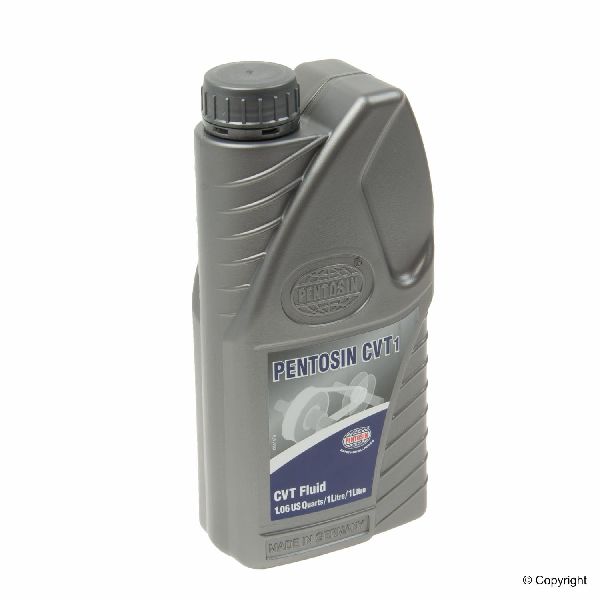
How to confirm: Check the transmission fluid level and condition using the dipstick. The fluid should be at the correct level, reddish in color, and not have a burnt smell. Use only Honda-specified ATF (DW-1 is the modern equivalent for ATF-Z1).
Typical fix: Drain and fill the transmission with the correct Honda ATF DW-1.
Est. part cost: $40-$80
Rare But Worth Checking
- Faulty Powertrain Control Module (PCM): → Shop Engine Control Module (ECM) This is extremely rare and should only be considered after all other possibilities (sensor, wiring) have been definitively ruled out. A PCM failure is a last-resort diagnosis.
Diagnosis Steps
- Read the trouble codes with an OBD-II scanner to confirm P0720 is present. Note if the 'D' light is flashing.
- Check the transmission fluid level and condition. Top off or change if necessary with Honda ATF DW-1.
- Remove the air intake assembly to gain access to the transmission sensors.
- Locate the output shaft speed sensor on the rear of the transmission. It is distinct from the nearby input speed sensor.
- Visually inspect the sensor's wiring harness and connector for any obvious damage, corrosion, or loose connections.
- With the ignition on (engine off), disconnect the sensor and use a multimeter to check for a 5V reference signal and ground at the connector.
- If voltage is correct, test the resistance of the sensor itself. Compare the reading to the factory specification. If it's out of spec, the sensor is bad.
- If the sensor tests good and wiring appears intact, use a scan tool with live data capabilities to monitor the 'Countershaft Speed' or 'Output Shaft Speed' PID while driving (if safe) or with wheels raised. Look for erratic readings or signal dropouts that correspond with shifting problems.
- If the signal is erratic or absent despite a good sensor and wiring, the issue may be an intermittent connection or, in very rare cases, the PCM.
- Replace the output shaft speed sensor if it is confirmed to be faulty. The torque spec for the 10mm hold-down bolt is approximately 8.7 ft-lbs.
Parts You'll Likely Need
- Automatic Transmission Output Shaft Speed Sensor
(OEM #28810-PWR-013)— This is the most common cause of the P0720 code on this vehicle. The original sensor fails electrically over time. This part number is confirmed for the 2006-2011 Civic with automatic transmission.
Trusted brands: Honda (OEM), NGK/NTK, Beck Arnley, Standard Motor Products (SMP), Wells / Airtex
OEM price range: $45-$70
Aftermarket price range: $20-$50
Related Codes That Often Appear With This One
- P0721 — This code indicates an erratic signal ('Range/Performance') from the output speed sensor, which is a more specific version of the general circuit malfunction indicated by P0720.
- P0722 — This code indicates 'No Signal' from the output speed sensor, often appearing with P0720 if the sensor or circuit has completely failed.
- P0700 — This is a general Transmission Control System Malfunction code. It often appears alongside more specific transmission codes like P0720 to indicate a fault has been registered by the transmission control module.
Technical Service Bulletins (TSBs) & Recalls
- While no TSB specifically for P0720 on this model was found, Honda TSB 15-086 addresses transmission judder and software updates for similar platforms, highlighting Honda's use of software to manage transmission behavior. However, P0720 is almost always a hardware (sensor/wiring) issue.
Platform-Specific Known Issues
- Blinking 'D' (Drive) Indicator Light: A very common symptom paired with P0720 on Honda vehicles is a flashing 'D' light on the dashboard. This is the vehicle's primary way of signaling a fault within the automatic transmission control system. If you have P0720 and a blinking D light, the output speed sensor is the most probable cause.
- Sensor Location and Access: The output speed sensor is located on the top/rear of the transmission housing. To access it, the entire air filter box assembly must be removed. While not difficult, it adds several steps to the repair. The input and output sensors are located near each other, so care must be taken to identify and replace the correct one.
Mechanic-Grade Diagnostic Values
- Output Speed Sensor Resistance — expected: 800Ω - 1,200Ω. Failure: A reading of infinite resistance indicates an open circuit and a failed sensor.
- Sensor Connector Voltage (Key On, Engine Off) — expected: Approximately 5.0V. Failure: No voltage suggests an open circuit in the VCC1 power wire from the PCM.
- Sensor AC Voltage Output (Wheels rotating) — expected: 0.5V to 2.5V AC, fluctuating with speed. Failure: No voltage or an unsteady signal indicates a failing sensor.
Scan Tool Commands That Help
- Honda Diagnostic System (HDS): Data List > C-shaft SPD — This is the specific PID (Parameter ID) to monitor the live data from the output/countershaft speed sensor. It is used to confirm if the sensor is sending a signal and if that signal is erratic or dropping out during a test drive.
- Honda Diagnostic System (HDS): Jump SCS Line — This is a diagnostic function used to test for short circuits in the wiring harness between the PCM and the sensor. It is an advanced step used when direct voltage and continuity tests are inconclusive.
Wiring & Ground Locations
- G101 — On the thermostat housing, where the main engine harness ground connects.. This is the primary ground termination point for the ECU/PCM. A poor connection here due to corrosion or looseness can cause a wide range of seemingly unrelated sensor and module communication errors, including P0720.
- Transmission to Chassis Ground — A braided cable or heavy gauge wire running from a bolt on the transmission case to the chassis, often near the strut tower or radiator support.. The transmission case itself provides a ground path for sensors mounted to it. If this main ground strap is corroded, loose, or broken, it can cause intermittent and difficult-to-diagnose sensor circuit codes like P0720.
- Output Speed Sensor Connector — A 3-pin connector plugging into the sensor on the top/rear of the transmission.. This is the direct connection point for testing. Pin 1 should have ~5.0V reference, and another pin should provide a solid ground from the PCM. The center pin is typically the signal wire. The wiring to this sensor is often a coaxial cable with a braided shield to prevent interference; improper repairs that short the signal wire to the shield are a common cause of persistent codes.
Real Owner Repair Stories
- CivicForums.com user 'Aurilen' (2001-2005 generation Civic (principle applies to 2006-2011)) — P0720 code, check engine light, and drivability issues.
❌ Tried (didn't work) Initially taping the cut wires back together without understanding their coaxial nature.
✅ What actually fixed it The root cause was rodent damage that severed the wires to the output speed sensor. The fix required understanding that the wiring was coaxial. The inner signal wire had to be repaired separately from the outer braided shield, ensuring they did not touch. A simple twist-and-tape repair failed because it shorted the signal wire to the shield ground. - NHTSA ODI #10339099 (Cross-manufacturer reference) — An owner of a similar Honda platform reported that diagnostic code P0720 can be an early sign of transmission failure. In their case, the dealership replaced the sensor, though they were cautioned that the underlying issue could be more extensive.
When the Usual Fixes Don't Work
- In some cases, even after replacing the output speed sensor, the P0720 code may persist. This points to a problem upstream or downstream from the sensor itself. The next logical step is a thorough inspection of the wiring harness for continuity, shorts to ground, and voltage at the connector. A less common but possible cause is electrical noise from a failing alternator or a bad ground (G101), which can interfere with the sensor's signal to the PCM. Only after the sensor, wiring, and grounds are confirmed to be good should the Powertrain Control Module (PCM) be considered as the potential point of failure.
Diagnostic Flowchart
Used vs. New Parts: Buying Guide for This Vehicle
When a used part is the smart pick: For this specific repair, using a used part is not recommended. The output speed sensor is a relatively inexpensive electronic component that fails due to age and heat cycles. A used sensor from a donor vehicle will have an unknown amount of remaining life and may fail soon after installation, forcing you to do the job twice.
What to inspect on the donor part:
- Not applicable as used sensors are not advised.
OEM-only on this vehicle (don't cheap out):
- While not strictly 'OEM-only', using the genuine Honda part (28810-PWR-013) is the safest option for guaranteed compatibility and reliability.
Aftermarket brands forum-validated for this vehicle:
- NTK (a brand of NGK)
- Standard Motor Products (SMP)
- Beck/Arnley
- Wells Vehicle Electronics
Brands owners have reported issues with on this vehicle:
- Generic, unbranded sensors from online marketplaces should be avoided. They often have poor internal components, lack proper electromagnetic shielding, and can be dead on arrival or fail prematurely, leading to a repeat of the same P0720 code.
Real Owner Stories
Aggregated from forums and TSBs cited above. Mileages and costs reflect what owners reported in those sources.
2007 Honda Civic EX — 142000 miles
Symptoms: Persistent P0720 code, intermittent loss of speedometer, harsh shifting, and the car would enter limp mode after driving for more than 20 minutes.
What fixed it: Replaced the output shaft speed sensor.
Source hint: AliExpress / Honda Forums
2007 Civic LX — 138000 miles
Symptoms: P0720 code and warning lights on the dashboard.
What fixed it: Replaced the output shaft speed sensor (part 28810-PWR-013).
Source hint: AliExpress / Honda Forums
2006-2011 Honda Civic
Symptoms: P0720 code was present due to cut wires.
What fixed it: Repaired the cut coaxial wires leading to the sensor, ensuring the shield was kept separate from the signal wire.
Source hint: CivicForums.com - 'p0720 output speed shaft sensor help.'
Related OBD-II Codes
Frequently Asked Questions
My 2007 Civic has a P0720 code and the 'D' (Drive) light is blinking. Is this normal?
Where is the output shaft speed sensor located on my 2009 Honda Civic and is it hard to access?
I'm replacing the output speed sensor. Are there other sensors nearby I could mix up?
My speedometer stopped working at the same time the P0720 code appeared. Are these related?
What kind of transmission fluid should I use in my 2010 Civic when checking for issues related to P0720?
I found a cut wire going to the sensor. Can I just splice it back together?
Helpful Videos
We Have This Part in Stock

The information in this article is provided for general reference and educational purposes only. Vehicle specifications, procedures, and part compatibility can vary by production date, trim level, and region. Always consult your vehicle's factory service manual and verify part numbers before purchasing or performing repairs. Safety-critical components such as airbags, seat belts, and braking systems should be installed by a qualified professional.
- Honda Civic:
- 🧭 Diagnostic Flowchart
- 🎬 Helpful Videos
- 🛍️ Shop This Part
- What's Unique About the 2006-2011 Honda Civic
- Symptoms You May Notice
- Most Likely Causes
- Rare But Worth Checking
- Diagnosis Steps
- Parts You'll Likely Need
- Related Codes That Often Appear With This One
- Technical Service Bulletins (TSBs) & Recalls
- Platform-Specific Known Issues
- Mechanic-Grade Diagnostic Values
- Scan Tool Commands That Help
- Wiring & Ground Locations
- Real Owner Repair Stories
- When the Usual Fixes Don't Work
- Used vs. New Parts: Buying Guide for This Vehicle
- Real Owner Stories
- 2007 Honda Civic EX — 142000 miles
- 2007 Civic LX — 138000 miles
- 2006-2011 Honda Civic
- Related OBD-II Codes
- Frequently Asked Questions
- 🎟️ Get 5% Off