

P0720 on 2010-2015 Kia Optima: Output Speed Sensor Causes and Fixes
P0720 on a 2010-2015 Kia Optima indicates a malfunction in the Output Speed Sensor (OSS) circuit. This typically results in harsh shifting, a malfunctioning speedometer, and the transmission entering 'limp mode'. The most common cause is a failed internal sensor/harness assembly within the A6MF1 6-speed automatic transmission. This is a complex repair requiring removal of the transmission valve body and is best left to a professional, costing between $450 and $850.
- P0720 on a 2010-2015 Optima points to a problem with the transmission's Output Speed Sensor circuit.
- The most common symptoms are severe shifting problems, a non-functional speedometer, and the vehicle entering 'limp mode'.
- The sensor is part of an internal wire harness (Part # 46307-3B650) inside the A6MF1 transmission, making replacement a complex job that requires removing the transmission pan and valve body.
- Due to the complexity, this repair is not recommended for beginners and professional service is advised.
- Always check the transmission fluid level and condition first, using the correct SP-IV fluid type.
What's Unique About the 2010-2015 Kia Optima
The 2010-2015 Kia Optima (third generation, or TF) uses a Hyundai/Kia-designed 6-speed automatic transmission, typically the A6MF1 model for the 2.0L and 2.4L engines. On these specific transmissions, the P0720 code is very commonly caused by the failure of the internal wire harness which contains both the input and output speed sensors. Unlike vehicles where the sensor is an easily accessible part bolted to the outside of the transmission case, this design requires removing the transmission oil pan and valve body to access and replace the sensor harness, making it a more involved and labor-intensive repair.
Symptoms You May Notice
- Harsh, erratic, or delayed gear shifts
- Transmission getting stuck in one gear (limp mode)
- Speedometer not working or behaving erratically
- Check Engine Light is on
- Engine stalling, especially when coming to a stop
- Cruise control not working
- Decreased fuel efficiency
- Replacing the entire transmission when only the internal sensor harness is needed.
- Replacing the valve body unnecessarily when the fault is in the attached wiring harness.
- Replacing an external vehicle speed sensor when the fault is with the internal transmission speed sensor.
Most Likely Causes
- Faulty Internal Output Speed Sensor / Wire Harness 🔴 High Probability On the A6MF1 6-speed automatic transmission, the input and output speed sensors are integrated into a single internal wire harness that is submerged in transmission fluid. Over many heat cycles, the plastic and wiring insulation can become brittle, crack, and fail, leading to a loss of signal. This is a well-documented failure point on this family of transmissions.
How to confirm: A professional technician will use a scan tool to monitor live data from the output speed sensor. If the reading is zero or erratic while the vehicle is moving, it points to a sensor or circuit failure. The internal nature of the part makes direct visual inspection impossible without removing the transmission oil pan and valve body.
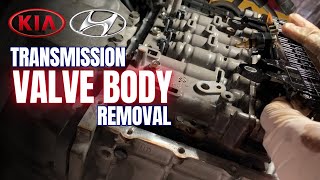
Typical fix: Replace the entire internal transmission wire harness assembly (OEM Part # 46307-3B650 🎬 Watch: Step-by-step valve body removal and harness replacement), which includes both the input and output speed sensors. This requires draining the transmission fluid, removing the oil pan, and detaching the valve body to access the harness.
Est. part cost: $70-$160 - Low or Contaminated Transmission Fluid 🟡 Medium Probability → Shop Transmission Assembly
How to confirm: Check the transmission fluid level and condition. The fluid should be at the correct level, bright red, and not smell burnt. Dark, burnt, or metallic-flecked fluid indicates a more serious internal problem that could be causing the sensor issue.
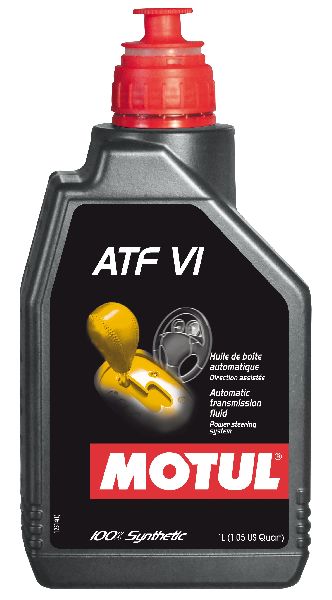
Typical fix: Perform a transmission fluid drain-and-fill or a full fluid exchange using the correct Kia-specified fluid, which is typically Hyundai/Kia SP-IV for this transmission.
Est. part cost: $60-$140 for fluid - Damaged Wiring or Connectors ⚪ Low Probability
How to confirm: Visually inspect the external transmission wiring harness leading to the main transmission connector. Look for any signs of chafing, corrosion, loose pins, or breaks. Test for continuity and proper voltage at the connector with a multimeter.
Typical fix: Repair or replace the damaged section of the wiring harness or the main transmission connector itself.
Est. part cost: $20-$100
Rare But Worth Checking
- Faulty Powertrain Control Module (PCM) or Transmission Control Module (TCM): → Shop Engine Control Module (ECM) This is the least likely cause and should only be considered after all other possibilities (sensor, fluid, wiring) have been definitively ruled out. A faulty module can fail to interpret a correct signal from the sensor.
Diagnosis Steps
- Check for any other stored trouble codes with an OBD-II scanner. Note any codes like P0717 or P0722, as they strongly suggest the internal harness is the culprit.
- Check the transmission fluid level and condition. Low or dirty fluid can cause a variety of transmission issues and should be corrected first.
- Use a professional scan tool to observe the live data stream for the Output Speed Sensor (OSS) while driving. The reading should increase smoothly with vehicle speed. A reading of 0 RPM or erratic jumps indicates a problem.
- If the signal is absent or erratic, inspect the external wiring and connectors leading to the transmission for any visible damage, corrosion, or loose connections.
- If external wiring is intact, the next step is to test the sensor circuit itself. This involves dropping the transmission pan to access the internal harness and valve body.
- Disconnect the harness and test the sensor's resistance with a multimeter. While specific values can vary, an open or shorted circuit indicates a failed sensor.
- If the sensor or its integrated harness is found to be faulty, it must be replaced.
Parts You'll Likely Need
- Transmission Input/Output Speed Sensor Harness
(OEM #46307-3B650)— This is the most frequent failure point for the P0720 code on this platform, as the sensors are integrated into an internal harness that degrades over time. This part number is widely cited for this application.
Trusted brands: Kia (OEM), Hyundai (OEM), Mando, Dorman
OEM price range: $150-$210
Aftermarket price range: $70-$120
Related Codes That Often Appear With This One
- P0717 — Input Speed Sensor circuit no signal. This sensor is part of the same internal harness as the Output Speed Sensor, and they frequently fail together due to the harness degrading.
- P0722 — Output Speed Sensor No Signal. This is a more specific version of P0720, confirming the complete loss of signal from the OSS.
- P0723 — Output Speed Sensor Intermittent. This code points to an erratic signal, often caused by the same internal harness failure where wires are beginning to break or short intermittently.
Technical Service Bulletins (TSBs) & Recalls
- While no specific TSB for P0720 on the Optima was found, Hyundai (the transmission manufacturer) issued TSB 20-AT-011H for other models using the same A6MF transmission family for this exact internal harness failure, indicating it's a known issue with the transmission design itself.
Platform-Specific Known Issues
- Owner Experience on Kia-Forums.com: A thread titled '2011 Optima P0717 and P0722 codes' details a user's experience with symptoms identical to P0720 (stuck in 3rd gear, no speedometer). The confirmed fix was the replacement of the internal transmission wire harness (part # 46307-3B650), which resolved both codes. This highlights the commonality of the harness failing and causing multiple speed sensor codes simultaneously.
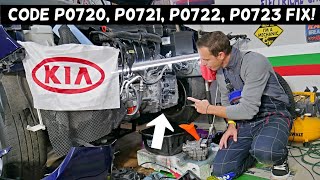
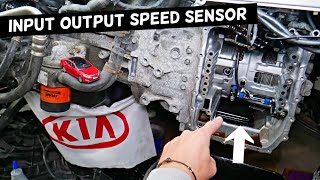
- DIY Repair Video Confirmation: The YouTube channel 'World Mechanics' has a video titled 'KIA CODE P0720 P0721 P0722 P0723 OUTPUT SPEED SENSOR ENGINE LIGHT ON' where they diagnose a 2013 Kia Optima. They demonstrate that the input and output speed sensors are on a single harness attached to the valve body, confirming the internal nature of the repair and showing the physical part that fails. 🎬 See: How to locate and replace the internal sensor
Mechanic-Grade Diagnostic Values
- Speed Sensor Input Voltage — expected: 9 Volts. Failure: Significantly lower or no voltage indicates a problem in the supply circuit from the TCM.
Scan Tool Commands That Help
- Kia GDS (Global Diagnostic System): Resetting Auto T/A Values / Init Of TCU Learning — This function must be performed after replacing the internal transmission harness or the TCM. It clears the old, learned shift adaptations, allowing the TCM to relearn shift points with the new components to ensure smooth operation and prevent harsh shifting.
OEM Part Supersession History
46307-3B610, 46307-3B620→46307-3B650— Component revision and consolidation by the manufacturer.
Model Year Variations Within This Range
- 2013-2015: On models from 2013 and later, the Transmission Fluid Temperature (TFT) sensor is integrated into the main internal wiring harness (the same one that contains the speed sensors). On earlier models (2010-2012), the TFT sensor was a stand-alone component. The later, integrated harness is often recommended as an upgrade for earlier models when performing repairs.
Diagnostic Flowchart
Other Known Issues on This Vehicle
Issues unrelated to this code that are worth knowing about as an owner of this generation:
- Theta II GDI Engine Failure 🔴 High — Widespread across 2.0L and 2.4L engines, often occurring under 100,000 miles. Led to a class-action lawsuit and massive recalls. (Ref: Recall SC147. A settlement extended warranties and provided compensation for repairs.)
- Steering Column Flexible Coupler Failure 🟠 Medium — Very common issue causing a distinct clicking or clunking noise in the steering wheel when turning at low speeds or when stopped. (Ref: TSB CHA072 / Customer Satisfaction Program CS1604 extended the warranty for this part to 10 years/unlimited miles.)
- Engine Knocking and Seizing 🔴 High — A primary symptom of the Theta II engine defect, caused by premature connecting rod bearing wear from manufacturing debris. (Ref: Recall SC147)
- Excessive Oil Consumption 🟠 Medium — Many owners of the 2.4L engine report high oil consumption, which can exacerbate the bearing wear issue if the oil level is not monitored closely.
Used vs. New Parts: Buying Guide for This Vehicle
When a used part is the smart pick: For this specific P0720 fault, which is overwhelmingly caused by the internal wiring harness, a used part is strongly discouraged. The failure mechanism is degradation from heat and age, so a used harness from a junkyard vehicle is likely to have a very limited remaining lifespan or could be faulty from the start.
Donor-vehicle mileage cap: roughly under 40000 miles for the part to have meaningful remaining life.
What to inspect on the donor part:
- Verify the donor vehicle was not in a front-end collision that could have shocked the transmission.
- Ask for the VIN to check the vehicle's service history for any transmission-related complaints.
- If possible, inspect the harness connectors for any signs of brittleness, cracking, or discoloration before purchase.
OEM-only on this vehicle (don't cheap out):
- Internal Transmission Wiring Harness (46307-3B650)
Aftermarket brands forum-validated for this vehicle:
- Mando (often an OEM supplier to Hyundai/Kia)
Brands owners have reported issues with on this vehicle:
- Dorman: While Dorman is a common aftermarket brand, reviews for their transmission solenoid packs and harnesses can be very mixed, with some users reporting parts being faulty out of the box or failing shortly after installation. Given the high labor cost of this repair, using a lower-quality part is a significant risk.
Real Owner Stories
Aggregated from forums and TSBs cited above. Mileages and costs reflect what owners reported in those sources.
2011 Kia Optima
Symptoms: The vehicle was stuck in 3rd gear and the speedometer was not working.
What fixed it: Replacement of the internal transmission wire harness (part # 46307-3B650).
Source hint: Kia-Forums.com: Thread '2011 Optima P0717 and P0722 codes'
2013 Kia Optima
Symptoms: Check engine light on with codes P0720, P0721, P0722, and P0723.
What fixed it: Replacing the internal harness attached to the valve body which contains the input and output speed sensors.
Source hint: YouTube channel 'World Mechanics' video titled 'KIA CODE P0720 P0721 P0722 P0723 OUTPUT SPEED SENSOR ENGINE LIGHT ON'
Related OBD-II Codes
Frequently Asked Questions
Is there a TSB for the internal transmission harness failure on my Kia Optima?
What specific part number do I need to fix the P0720 code on my 2010-2015 Optima?
Why does my Optima get stuck in 3rd gear (limp mode) when this code triggers?
Can I just replace the sensor without opening the transmission?
Is the P0720 code related to the Theta II engine recalls on my Optima?
What type of transmission fluid should I use if I perform this repair?
Helpful Videos

We Have This Part in Stock



The information in this article is provided for general reference and educational purposes only. Vehicle specifications, procedures, and part compatibility can vary by production date, trim level, and region. Always consult your vehicle's factory service manual and verify part numbers before purchasing or performing repairs. Safety-critical components such as airbags, seat belts, and braking systems should be installed by a qualified professional.
- Kia Optima:
- 🧭 Diagnostic Flowchart
- 🎬 Helpful Videos
- 🛍️ Shop This Part
- What's Unique About the 2010-2015 Kia Optima
- Symptoms You May Notice
- Most Likely Causes
- Rare But Worth Checking
- Diagnosis Steps
- Parts You'll Likely Need
- Related Codes That Often Appear With This One
- Technical Service Bulletins (TSBs) & Recalls
- Platform-Specific Known Issues
- Mechanic-Grade Diagnostic Values
- Scan Tool Commands That Help
- OEM Part Supersession History
- Model Year Variations Within This Range
- Other Known Issues on This Vehicle
- Used vs. New Parts: Buying Guide for This Vehicle
- Real Owner Stories
- 2011 Kia Optima
- 2013 Kia Optima
- Related OBD-II Codes
- Frequently Asked Questions
- 🎟️ Get 5% Off