

P0720 on 2009-2015 Kia Sorento: Output Speed Sensor Circuit Malfunction Causes and Fixes
On a 2009-2015 Sorento, P0720 almost always means the internal transmission speed sensor harness has failed. The sensor is located inside the transmission pan on the valve body, making it a labor-intensive repair. The most common replacement part is the entire harness assembly, OEM part number 46307-3B650. Expect a shop to charge between $550 and $850 for the replacement.
- P0720 on a 2009-2015 Sorento indicates a failure in the Output Speed Sensor circuit, almost always due to a faulty internal wire harness.
- The repair is labor-intensive as the part is located inside the transmission oil pan, attached to the valve body.
- The correct fix is to replace the entire sensor harness assembly, part number 46307-3B650.
- Driving with this code is not recommended due to severe shifting problems and the risk of entering 'limp mode'.
- This is not a beginner-friendly DIY repair; professional service is strongly advised.
What's Unique About the 2009-2015 Kia Sorento
For the second-generation (2009-2015) Kia Sorento equipped with the common 6-speed A6MF/A6LF family automatic transmission, the Output Speed Sensor is not an easily accessible external part. It is located inside the transmission oil pan and is integrated into a larger wire harness (part no. 46307-3B650) that is bolted to the valve body. This design choice means that what sounds like a simple sensor replacement is actually a significant repair requiring removal of the transmission pan and sometimes the valve body, making it more complex and costly than on many other vehicles.
Generation note: This guide covers the second generation (XM) of the Kia Sorento. This generation received a major facelift for the 2014-2015 model years, but the 6-speed automatic transmission (A6MF/A6LF family) and the internal location of the output speed sensor remained a consistent design feature.
Symptoms You May Notice
- Harsh, erratic, or delayed shifting
- Transmission getting stuck in one gear (limp-home mode, often 3rd gear)
- Engine stalling when coming to a stop
- Speedometer not working or behaving erratically
- Check Engine Light is on
- Reduced fuel economy
- Cruise control not working
- Replacing only the output speed sensor when it's part of a harness. Often, the wiring itself is the issue, not just the sensor head. Replacing the full harness is the correct repair.
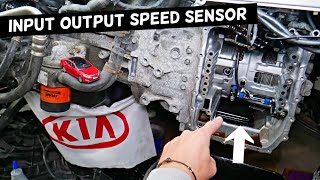
- Confusing the transmission Output Speed Sensor (OSS) with an ABS Wheel Speed Sensor (WSS). They are different parts with different functions. P0720 specifically refers to the transmission sensor. 🎬 Watch: Diagnosing P0720 and output speed sensor codes An ABS sensor fault will typically set a 'C' code and illuminate the ABS or ESC light.
Most Likely Causes
- Faulty Internal Transmission Sensor Harness 🔴 High Probability → Shop Transmission Assembly The sensor and its wiring are located inside the transmission, exposed to constant high temperatures from the transmission fluid. Over time, the plastic and wiring insulation can become brittle, leading to cracks and failed electrical connections. The entire harness, which includes both input and output sensors, is the common failure point, not just the sensor itself.
How to confirm: A professional technician will use a scan tool to monitor live data from the output speed sensor while driving. If the sensor shows 0 RPM or erratic readings while the vehicle is moving, the sensor circuit is faulty. Given the internal location and high failure rate of the harness, diagnosis typically proceeds directly to replacement after confirming external wiring is intact.
Typical fix: Replace the entire internal sensor harness assembly (OEM Part #46307-3B650). This involves draining the transmission fluid, removing the pan, and removing the valve body to access and replace the harness.
Est. part cost: $100-$200 - Low or Dirty Transmission Fluid ⚪ Low Probability → Shop Transmission Assembly
How to confirm: Check the transmission fluid level and condition. On these models, this often requires the vehicle to be level and at operating temperature, with a check/fill plug on the side of the transmission case. Fluid should be at the correct level, pinkish-red, and not smell burnt. Dark, brown, or burnt-smelling fluid indicates internal wear or neglect.
Typical fix: Perform a transmission fluid drain-and-fill or a full fluid exchange using the manufacturer-specified fluid (Kia SP-IV). This is always done as part of the sensor harness replacement.
Est. part cost: $60-$150
Rare But Worth Checking
- Damaged External Wiring or Connectors: While the primary sensor is internal, the wiring harness connects to the outside of the transmission. It's worth visually inspecting the main transmission connector for corrosion, pushed-out pins, or rodent damage before condemning the internal harness.
- Faulty Powertrain Control Module (PCM) or Transmission Control Module (TCM): → Shop Engine Control Module (ECM) This is extremely rare. The PCM/TCM should only be considered after all other possibilities, including the sensor harness and wiring, have been definitively ruled out by a professional.
Diagnosis Steps
- Check the transmission fluid level and condition. Ensure it is full and the fluid is clean.
- Use an OBD-II scanner to check for any other transmission-related codes, paying close attention to P0717, P0721, or P0722.
- Monitor the Output Speed Sensor (OSS) data stream on the scanner while driving. The reading should increase smoothly with vehicle speed. If it is erratic, intermittent, or reads zero while moving, a fault in the circuit is confirmed.
- Visually inspect the main external transmission wiring harness and connector for any signs of damage, corrosion, or loose connections.
- If the external wiring is okay, the next step is to test the sensor circuit itself. However, due to the internal location, this typically proceeds directly to replacing the internal sensor harness.
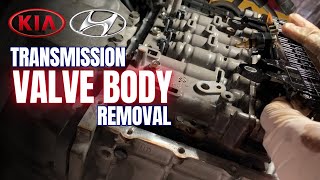
- Drain the transmission fluid, remove the transmission oil pan, and unbolt the valve body. 🎬 Watch: How to safely remove the transmission valve body
- Carefully disconnect and replace the internal sensor harness assembly.
- Reinstall the valve body, torquing bolts to manufacturer specifications.
- Reinstall the transmission pan with a new gasket.
- Refill with the correct type and amount of new transmission fluid (Kia SP-IV).
- Clear the trouble codes and perform a test drive to confirm the repair. It is also recommended to reset the transmission's adaptive learning values with a capable scan tool.
Parts You'll Likely Need
- Transmission Input/Output Sensor Harness
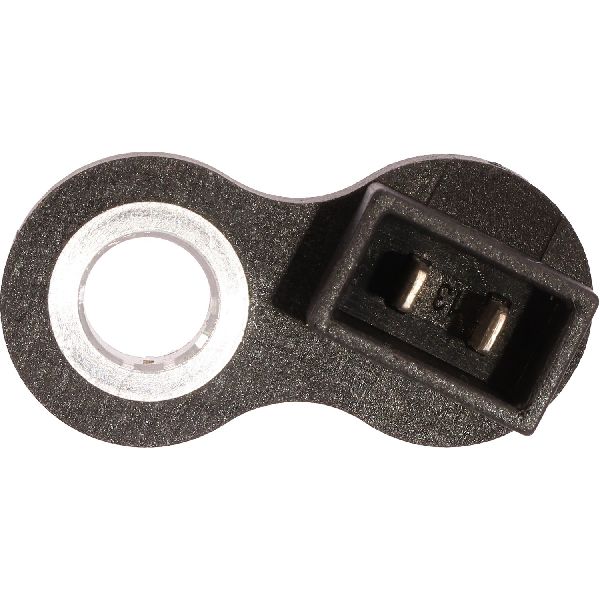
(OEM #46307-3B650)— This is the most common failure point. The harness contains the output speed sensor and its integrated wiring, which degrades over time. Replacing the entire assembly is the standard, reliable repair. This part number supersedes older versions like 46307-3B610 and 46307-3B620.
Trusted brands: Kia (OEM), Hyundai (OEM)
OEM price range: $100-$200
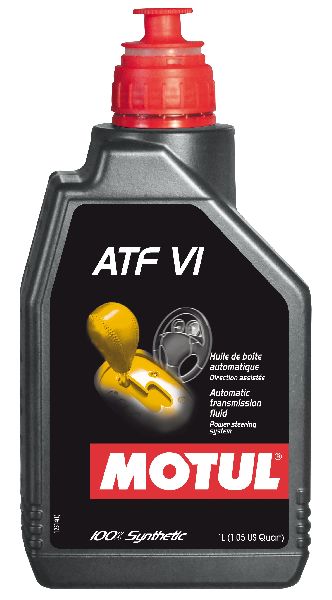
Aftermarket price range: $70-$150 - Automatic Transmission Fluid — The transmission must be drained to perform the repair, requiring a fluid refill. Using the OEM-specified fluid (SP-IV) is critical for transmission health and performance.
Trusted brands: Kia/Hyundai SP-IV, Idemitsu TLS-LV, ENEOS ECO-ATF
OEM price range: $15-$25 per quart
Aftermarket price range: $10-$18 per quart - Transmission Oil Pan Gasket
(OEM #45285-3B610)— The original gasket should be replaced when the oil pan is removed to prevent leaks. Some technicians may use a high-quality RTV sealant specified for transmission fluid instead.
Trusted brands: Kia (OEM), Fel-Pro, Mahle
OEM price range: $20-$40
Aftermarket price range: $15-$30
Related Codes That Often Appear With This One
- P0717 — This code is for the Input Speed Sensor circuit. Since the input and output sensors are integrated into the same internal harness assembly (46307-3B650), a failure in the harness can trigger both codes simultaneously.
- P0722 — This code means 'Output Speed Sensor No Signal,' which is a more specific version of the P0720 circuit malfunction code. They point to the same root cause, often a completely broken wire in the harness.
- P0721 — This code for 'Output Speed Sensor Range/Performance' can also be triggered by the same failing internal harness, indicating erratic but not completely lost signals.
Technical Service Bulletins (TSBs) & Recalls
- While no TSB directly addresses P0720 for this specific model range, Kia has issued related transmission recalls and TSBs. For example, recall SC124 addressed a faulty brake-shift interlock mechanism on 2011-2013 Sorentos. It is always advisable to have a dealer check for any applicable software updates for the TCM which can improve shift logic.
Platform-Specific Known Issues
- Owner Experience with Limp Mode: A common owner complaint is the vehicle suddenly entering limp mode (stuck in 3rd or 4th gear) on the highway, creating a dangerous situation where the car cannot accelerate properly. This is often the first and only symptom before the P0720 code is stored.
- DIY Repair Complexity: In a YouTube comment on a transmission repair video, an owner described replacing the harness on a 2011 Sorento 2.4L to fix shifting problems and lack of power, only to have the same issue persist, highlighting the complexity and potential for other underlying issues. This underscores the recommendation for professional diagnosis.
Scan Tool Commands That Help
- Kia GDS (Global Diagnostic System) or equivalent professional scanner: Resetting Auto T/A Values / Init Of TCU Learning — This function is mandatory after replacing the internal sensor harness, valve body, or the entire transmission. It clears the TCM's learned shift adaptations. Failure to perform this reset can lead to continued harsh or improper shifting even after the hardware is replaced.
- Kia GDS (Global Diagnostic System) or equivalent professional scanner: Dynamic Relearn Drive Cycle — Immediately after resetting the adaptive values, a specific driving procedure must be performed to allow the TCM to relearn the hydraulic and electronic characteristics of the new components. This typically involves accelerating gently from a stop through all gears (1-6) while keeping the throttle position between 10-20%, and repeating this 5 times.
Wiring & Ground Locations
- Transmission Case Ground — A primary ground connection for the transmission is typically a strap or thick cable running from the transmission housing to the vehicle's chassis or engine block.. A poor ground connection can introduce electrical noise or voltage drops in sensor circuits, potentially causing erratic signals and triggering codes like P0720. While not a common cause for this specific code (where the internal harness is the primary culprit), it's a fundamental check for any electronic transmission fault.
OEM Part Supersession History
46307-3B610, 46307-3B620→46307-3B650— Component revision and improvement by the manufacturer to enhance durability and reliability.
Heads up: The updated harness (46307-3B650) may integrate the transmission fluid temperature sensor, which was a separate, disconnectable component on the oldest harnesses. When replacing, it is recommended to always use the latest part number.
Model Year Variations Within This Range
- 2009-2015: The Kia Sorento in this generation used the A6MF/A6LF family of 6-speed automatic transmissions. The specific variant (e.g., A6MF1, A6MF2) depended on the engine it was paired with (2.4L I4 vs. 3.5L V6), which affects torque capacity. However, the internal design, including the location and failure mode of the speed sensor harness, remains consistent across these variants.
Diagnostic Flowchart
Other Known Issues on This Vehicle
Issues unrelated to this code that are worth knowing about as an owner of this generation:
- Theta II Engine Failure (2.4L GDI) 🔴 High — Widespread across multiple model years, can occur at various mileages but often cited between 60,000 and 100,000 miles. Led to class-action lawsuits and recalls. (Ref: Recalls SC147, SC200; NHTSA Campaign 17V224000.)
- Excessive Oil Consumption (2.4L GDI) 🟠 Medium — Commonly reported after 80,000-100,000 miles, often attributed to carbon buildup on piston rings. Can lead to engine damage if not monitored closely.
- Brake Light Switch Failure 🟡 Low — A common failure item causing brake lights to not illuminate or stay on, and can prevent shifting out of Park. Relatively inexpensive part to replace. (Ref: Related to some older Kia recalls, a known weak point.)
- Brake-Shift Interlock Failure 🟠 Medium — A plastic component in the shifter assembly can crack, allowing the vehicle to be shifted out of Park without depressing the brake pedal. (Ref: Recall SC124; NHTSA Campaign 15V626000)
Used vs. New Parts: Buying Guide for This Vehicle
When a used part is the smart pick: For this specific P0720 fault on a 2009-2015 Sorento, purchasing a used internal sensor harness from a junkyard is strongly discouraged. The failure is caused by heat-cycle fatigue and fluid exposure degrading the plastic and wiring insulation over time. A used part will have similar wear and is highly likely to fail soon after installation, wasting significant labor costs.
What to inspect on the donor part:
- Not applicable, as used parts are not recommended for this repair.
OEM-only on this vehicle (don't cheap out):
- Transmission Input/Output Sensor Harness (Part #46307-3B650)
Aftermarket brands forum-validated for this vehicle:
- While some aftermarket harnesses exist, the OEM part from Kia/Hyundai is the most consistently reliable choice for this repair.
Brands owners have reported issues with on this vehicle:
- Unnamed, low-cost harnesses from online marketplaces may have quality control issues and are best avoided given the high labor cost to install them.
Real Owner Stories
Aggregated from forums and TSBs cited above. Mileages and costs reflect what owners reported in those sources.
2011 Kia Sorento — 142000 miles
Symptoms: erratic gear shifts and a persistent “Check Engine” light.
What fixed it: Replaced the transmission output speed sensor using a 47353-H1000 sensor.
Source hint: Reliable Transmission Speed Sensor for Kia Sorento: A Real-World Performance Review
2011 Kia Sorento 2.4L
Symptoms: shifting problems and lack of power; vehicle entering limp mode (stuck in 3rd or 4th gear) on the highway.
What fixed it: Replaced the internal sensor harness, though the owner noted the complexity and potential for underlying issues to persist.
Source hint: vehicle_specific_issues: DIY Repair Complexity / Owner Experience with Limp Mode
2011 Kia Sorento 2.4 AWD
Symptoms: Experienced codes P0717 and P0722, which are directly related to the output speed sensor circuit.
What fixed it: The repair involves replacing the internal transmission harness.
Source hint: https://www.kia-forums.com/threads/p0717-and-p0722-on-2011-sorento-2-4-awd.338529/
Related OBD-II Codes
Frequently Asked Questions
What is the specific part number I need to fix the P0720 code on my 2009-2015 Kia Sorento?
My 2011 Sorento is stuck in 3rd gear and won't accelerate properly. Is this related to P0720?
Does Kia have a recall for the transmission issues causing the P0720 code?
Why does the internal harness fail so often on the Sorento?
What type of transmission fluid should I use when replacing the sensor harness?
Can I just replace the sensor itself to save money?
Helpful Videos
Used OEM Parts in Stock
New Aftermarket Parts Available



The information in this article is provided for general reference and educational purposes only. Vehicle specifications, procedures, and part compatibility can vary by production date, trim level, and region. Always consult your vehicle's factory service manual and verify part numbers before purchasing or performing repairs. Safety-critical components such as airbags, seat belts, and braking systems should be installed by a qualified professional.
- Kia Sorento:
- 🧭 Diagnostic Flowchart
- 🎬 Helpful Videos
- 🛍️ Shop This Part
- What's Unique About the 2009-2015 Kia Sorento
- Symptoms You May Notice
- Most Likely Causes
- Rare But Worth Checking
- Diagnosis Steps
- Parts You'll Likely Need
- Related Codes That Often Appear With This One
- Technical Service Bulletins (TSBs) & Recalls
- Platform-Specific Known Issues
- Scan Tool Commands That Help
- Wiring & Ground Locations
- OEM Part Supersession History
- Model Year Variations Within This Range
- Other Known Issues on This Vehicle
- Used vs. New Parts: Buying Guide for This Vehicle
- Real Owner Stories
- 2011 Kia Sorento — 142000 miles
- 2011 Kia Sorento 2.4L
- 2011 Kia Sorento 2.4 AWD
- Related OBD-II Codes
- Frequently Asked Questions
- 🎟️ Get 5% Off