

P0720 on 2016-2020 Kia Sorento: Output Speed Sensor Causes and Fixes
P0720 on a 2016-2020 Sorento means a fault with the Output Speed Sensor. The sensor is inside the transmission, making it a complex job. The most common fix is replacing the entire internal transmission sensor harness, not just the single sensor. The correct part number for this harness is typically 46307-3B650. Expect shop costs of $550-$850 due to high labor.
- P0720 on a 2016-2020 Sorento points to a faulty Output Speed Sensor.
- The sensor is located INSIDE the transmission, making this a labor-intensive and expensive repair for what seems like a simple sensor code.
- The most likely and recommended repair is to replace the entire internal sensor harness, which includes the input, output, and temperature sensors.
- Do not confuse this with an external ABS wheel speed sensor; they are different parts.
- Due to the complexity of the repair, this is not a recommended DIY job for beginners. Professional service is strongly advised.
What's Unique About the 2016-2020 Kia Sorento
On the 2016-2020 Kia Sorento with the common 6-speed automatic transmission (A6MF/A6LF family), the Output Speed Sensor is not a simple, externally accessible part. It is located inside the transmission oil pan, mounted on the valve body as part of a larger sensor harness assembly. This internal location means replacement is significantly more labor-intensive than on vehicles with external sensors, requiring the transmission to be drained and the oil pan and valve body to be removed for access. This is the primary reason for the high repair cost estimates for this specific vehicle.
Symptoms You May Notice
- Harsh, erratic, or delayed gear shifts
- Transmission stuck in one gear (limp mode)
- Check Engine Light is on
- Malfunctioning or inaccurate speedometer and/or odometer
- Vehicle stalling when coming to a stop
- Cruise control may not function
- Decreased fuel economy
- Car jerks or bucks while driving
- Replacing the external ABS wheel speed sensors. These are often confused with the transmission output speed sensor but are part of a completely different system and will not fix a P0720 code.
- Replacing the entire transmission. While a possibility for severe internal damage, this code is very often caused by the much cheaper internal sensor harness, and this should be the first component to be replaced.
- Unnecessarily replacing the valve body. The harness is mounted to the valve body, but the valve body itself is usually not the cause of the P0720 code.
Most Likely Causes
- Faulty Internal Transmission Sensor Harness 🔴 High Probability → Shop Transmission Assembly The input, output, and temperature sensors are integrated into a single harness (Part No. 46307-3B650) inside the transmission. This harness is subjected to constant heat cycles and immersion in transmission fluid, which can cause the internal wiring to become brittle and develop open circuits or shorts over time, leading to sensor signal failure.
How to confirm: A professional technician will use a diagnostic scan tool to monitor the live data from the output speed sensor. A lack of signal or an erratic signal while the vehicle is moving points to a sensor or circuit failure. Given the internal location and the high failure rate of the harness, it is often replaced based on the code and symptoms after ruling out external issues.
Typical fix: Replace the entire internal transmission sensor harness assembly (Hyundai/Kia part 46307-3B650). This involves draining the fluid, removing the transmission oil pan, and detaching the valve body to access and replace the harness.
Est. part cost: $100-$200 - Low or Contaminated Transmission Fluid 🟡 Medium Probability → Shop Transmission Assembly These transmissions are 'sealed' and do not have a traditional dipstick, making it difficult for owners to check the fluid level or condition. Low fluid can cause erratic hydraulic pressure, overheating, and shifting issues that may indirectly affect sensor readings or mimic sensor failure.
How to confirm: A technician must raise the vehicle while level and at a specific operating temperature to check the fluid level via the fill/check plug on the side of the transmission case. The fluid condition (color and smell) should also be inspected for signs of burning or contamination.
Typical fix: Perform a transmission fluid drain and fill with the correct specification fluid (Kia SP-IV or equivalent). If the fluid is heavily contaminated, multiple drain-and-fills may be necessary.
Est. part cost: $80-$150 - Damaged Wiring or Connectors ⚪ Low Probability While the sensor itself is internal, the main wiring harness connector on the outside of the transmission case can be damaged by road debris, corrosion, or improper servicing. The pins can become corroded or pushed out, causing a poor connection.
How to confirm: Visually inspect the main transmission harness connector for pushed-out pins, corrosion, or physical damage. Test for continuity and voltage at the connector pins leading to the TCM to verify the integrity of the external circuit.
Typical fix: Repair the damaged wiring or clean/replace the external connector.
Est. part cost: $20-$100
Rare But Worth Checking
- Faulty Transmission Control Module (TCM) or Powertrain Control Module (PCM): → Shop Engine Control Module (ECM) This is rare. The module should only be considered after the sensor, harness, and wiring have been definitively ruled out as the cause. Module failure is the least likely scenario.
Diagnosis Steps
- Scan the vehicle for all stored trouble codes. Note P0720 and any other related transmission codes like P0717 or P0722.
- Check the transmission fluid level and condition. This requires the vehicle to be level and at operating temperature, using the check/fill plug on the transmission. This is best done by a professional.
- Using a professional scan tool, monitor the live data stream for the Output Speed Sensor (OSS) while driving. The reading should increase smoothly with vehicle speed. Compare it to the Input Speed Sensor (ISS) and ABS wheel speed sensor data for correlation.
- If the OSS signal is erratic, intermittent, or zero, the problem is likely with the sensor or its circuit.
- Inspect the main transmission wiring harness connector on the exterior of the transmission case for any visible damage, corrosion, or loose pins.
- If external wiring is okay, the next step is to access the internal sensor harness. This involves draining the transmission fluid and removing the oil pan.
- Visually inspect the internal harness for any signs of damage, such as brittle or broken wires.
- If no visible damage is found, the most common and effective repair is to replace the entire internal sensor harness assembly (Part No. 46307-3B650), which contains both the input and output speed sensors.
- Reinstall the valve body, a new pan gasket, and the oil pan. Ensure valve body bolts are torqued to the manufacturer's specification.
- Refill the transmission with the correct type and amount of Kia SP-IV (or equivalent) fluid.
- Clear all codes and perform a test drive to verify the repair. The TCM may need to perform a re-learn procedure.
Parts You'll Likely Need
- Transmission Input/Output Speed Sensor Harness
(OEM #46307-3B650)— This is the most common failure point. The harness contains the output speed sensor that triggers the P0720 code, and it is typically replaced as a complete assembly. This part number is widely used across many Hyundai/Kia 6-speed automatic models.
Trusted brands: Kia/Hyundai Genuine Parts
OEM price range: $100-$200
Aftermarket price range: $70-$150 - Automatic Transmission Fluid (Kia SP-IV) — The transmission fluid must be drained to access the internal sensor and will need to be replaced with new fluid. Using the correct OEM-spec fluid is critical for transmission health.
Trusted brands: Kia/Hyundai, Idemitsu, ENEOS
OEM price range: $18-$25 per quart
Aftermarket price range: $10-$18 per quart - Transmission Oil Pan Gasket — The oil pan must be removed, and the gasket should always be replaced to prevent leaks. Some applications may use RTV sealant instead of a pre-formed gasket.
Trusted brands: Kia/Hyundai Genuine Parts, Fel-Pro
OEM price range: $25-$40
Aftermarket price range: $15-$30
Related Codes That Often Appear With This One
- P0722 — P0722 means 'Output Speed Sensor Circuit No Signal,' which is a more specific version of the P0720 fault, indicating a complete loss of signal, often from a broken wire in the harness.
- P0717 — P0717 indicates a fault with the Input Speed Sensor ('Input/Turbine Speed Sensor Circuit No Signal'). Since both the input and output sensors are on the same internal harness, it's common for them to fail around the same time or for a single harness fault to trigger both codes.
- P0731-P0735 — These codes indicate incorrect gear ratios. They are often a symptom of the P0720 code, as the TCM cannot command or confirm proper shifts without a reliable output speed signal.
Technical Service Bulletins (TSBs) & Recalls
- TSB SA292A / NHTSA ID 10185000: While not directly for P0720, this service action for 2016 Sorento models addresses general shift quality concerns like harsh downshifts and shift delays by updating the TCU logic. This can be relevant as software can sometimes misinterpret sensor data.
- TSB TRA046_R3 / NHTSA ID 10226555: This is a general 'Transmission Fluid Application Guide' from Kia. It's important because using the wrong fluid can cause shifting problems that might be misdiagnosed as sensor issues.
Platform-Specific Known Issues
- Owners on forums frequently report that the P0720 code appears alongside P0717 (Input Speed Sensor fault), confirming that the entire harness assembly is the weak point, not just a single sensor.
- Some owners have experienced the transmission going into limp mode intermittently for weeks before a hard failure.
Mechanic-Grade Diagnostic Values
- Transmission Fluid Temperature Sensor Resistance — expected: Approximately 2.51 kΩ at 68°F (20°C). Failure: A significant deviation from the expected resistance at a known temperature indicates a fault in the sensor, which is part of the 46307-3B650 harness.
- Transmission Fluid Temperature Sensor Voltage — expected: Approximately 3.2 volts at 104°F (40°C). Failure: Incorrect voltage reading relative to the fluid temperature can point to a harness or sensor issue.
Scan Tool Commands That Help
- Kia GDS/KDS: ECU Upgrade — Used to apply software updates to the Transmission Control Unit (TCU). A TSB (SA246) exists for some 2017 Sorento 3.3L models to improve shift logic, which should be checked for applicability.
- Kia GDS/KDS: Resetting Auto Trans Adaptive Values — This function should be performed after replacing transmission components like the sensor harness or valve body to force the TCM to relearn shift points and pressures with the new parts.
- Kia GDS/KDS: DTC Analysis & Live Data (Current Data) — To monitor the live data stream from the Input Speed Sensor and Output Speed Sensor simultaneously while driving. A failure will show as an erratic, dropping, or zero RPM reading from the OSS, while other speed sensors (ISS, wheel speed) read normally.
Wiring & Ground Locations
- Main Chassis Ground — There is a common grounding bolt on the right side of the interior fuse panel where multiple wires are connected.. While the sensor circuit issue is typically internal to the transmission, a poor main chassis ground can cause a variety of unpredictable electrical issues. Verifying this ground is clean and tight is a quick and easy check before diving into more complex diagnostics.
Real Owner Repair Stories
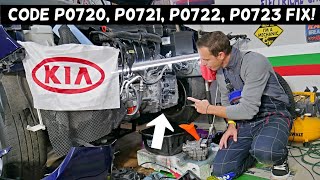
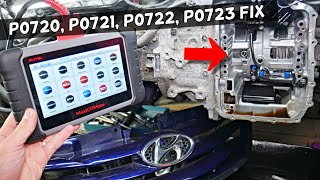
- YouTube video comment section (2013 Kia Optima (uses same A6MF transmission family and harness)) — Check engine light with codes P0720, P0721, P0722, or P0723. Hard shifting, no shifting, or incorrect transmission operation.
❌ Tried (didn't work) The video creator notes that simply replacing the sensor twice did not fix the problem in a similar vehicle, suggesting the issue is often more than just the sensor itself.
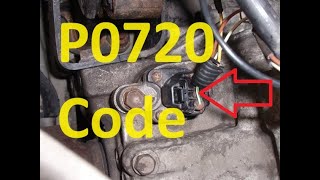
✅ What actually fixed it The video explains that the cause is the internal output speed sensor, which is part of the main harness assembly inside the transmission, requiring removal of the valve body to access and replace.
OEM Part Supersession History
46307-3B610, 46307-3B620→46307-3B650— Part has been revised and updated by the manufacturer. The newer part number is the correct replacement for the older versions.
Heads up: The older part numbers have been replaced by 46307-3B650. When ordering, one should use the latest part number to ensure they receive the most current revision.
Model Year Variations Within This Range
- 2017: A Technical Service Bulletin (SA246) was released for some 2017 Sorento models with the 3.3L GDI engine (produced from April 6, 2016, to October 20, 2016) for a TCU software upgrade to improve driving performance. This should be checked before assuming a hardware fault.
Diagnostic Flowchart
Other Known Issues on This Vehicle
Issues unrelated to this code that are worth knowing about as an owner of this generation:
- Theta II Engine Failure 🔴 High — Widespread across multiple model years, particularly 2.0L Turbo and 2.4L GDI engines. Can occur from 60,000 miles onward. (Ref: Multiple recalls (e.g., NHTSA 23V-877 for 2011 models) and class-action lawsuits have been issued, resulting in extended warranties (Lifetime for some repairs) and the Knock Sensor Detection System (KSDS) software update.)
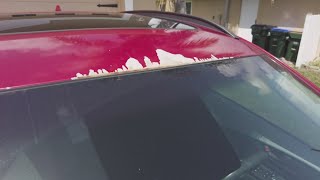
- Peeling Exterior Paint (Especially 'Snow White Pearl') 🟡 Low — Commonly reported issue where paint, particularly white, flakes or peels off in sheets, often due to poor primer adhesion from the factory. (Ref: No official recall, but Kia has been known to cover repainting on a case-by-case basis under a goodwill policy after customer complaint.)
- Excessive Oil Consumption 🟠 Medium — Affects Nu, Gamma, and Theta engines. Owners report needing to add oil between changes. Can be a precursor to more serious engine problems. (Ref: TSB ENG222_R4 (NHTSA ID 10205426) provides procedures for dealers to diagnose and address excessive oil consumption.)
- Ignition Coil Failure 🟡 Low — Fairly common around 100,000 miles, causing engine misfires. It is considered a wear-and-tear item by some, but reports suggest it can be frequent.
- Noisy Timing Chain on 3.3L V6 🟠 Medium — Owners report a rattling noise on cold startups, which may indicate a failing timing chain tensioner. If the chain fails, it can cause catastrophic engine damage.
Used vs. New Parts: Buying Guide for This Vehicle
When a used part is the smart pick: For this specific repair, buying a used internal transmission harness (46307-3B650) is NOT recommended. The part fails due to heat and fluid exposure over time, so a used part has a high likelihood of failing soon after installation. A used valve body or complete transmission assembly may be considered if the issue is diagnosed to be more severe than just the sensor harness, but the harness itself should always be replaced with a new OEM or high-quality aftermarket part.
What to inspect on the donor part:
- Not applicable, as a used harness is not recommended.
OEM-only on this vehicle (don't cheap out):
- Transmission Input/Output Speed Sensor Harness (46307-3B650)
- Automatic Transmission Fluid (Kia SP-IV specification)
Brands owners have reported issues with on this vehicle:
- Unbranded, no-name harnesses from online marketplaces without warranties or good reviews. The labor involved in the replacement is too high to risk using a part of unknown quality.
Real Owner Stories
Aggregated from forums and TSBs cited above. Mileages and costs reflect what owners reported in those sources.
2020 Kia Sorento V6
Symptoms: Transmission issues that were causing shifting problems.
What fixed it: An electronic reset/software reprogramming at the dealership.
Source hint: Reddit r/kia - 2020 sorento v6 transmission issue
2016-2020 Kia Sorento
Symptoms: Transmission going into limp mode intermittently for weeks before a hard failure.
What fixed it: Replacement of the entire internal transmission sensor harness assembly.
Source hint: vehicle_specific_issues
Related OBD-II Codes
Frequently Asked Questions
My 2016 Sorento has harsh downshifts; is there a software update for this?
What specific part do I need to fix the P0720 code on my Kia Sorento?
Can I check the transmission fluid level myself on a 2016-2020 Sorento?
Is the P0720 code related to the engine failure issues common in Sorentos?
Why is my Sorento stuck in one gear and showing a Check Engine Light?
Does the P0720 code always mean the sensor is broken?
Helpful Videos
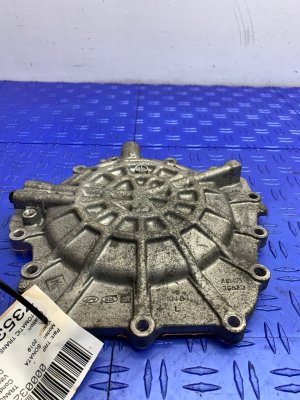
Used OEM Parts in Stock
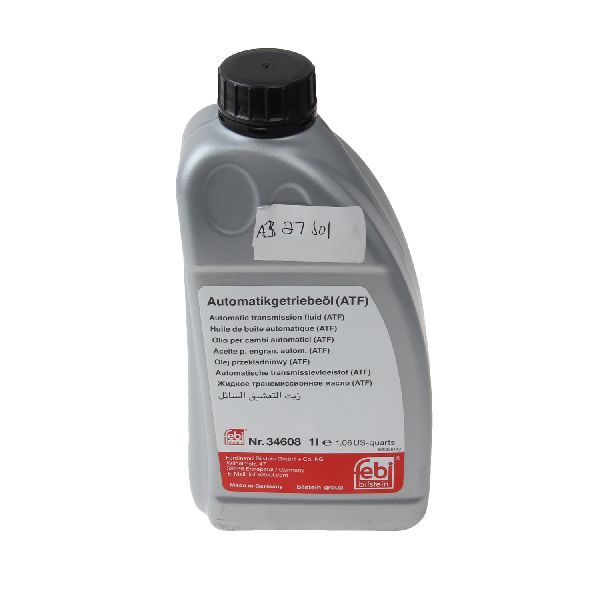
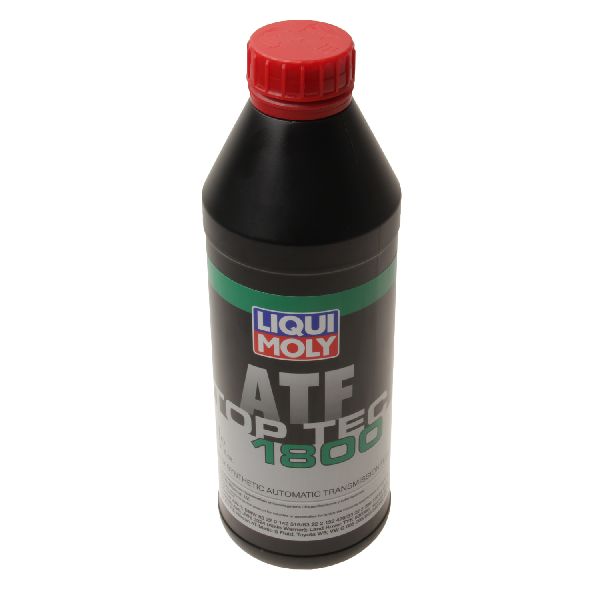
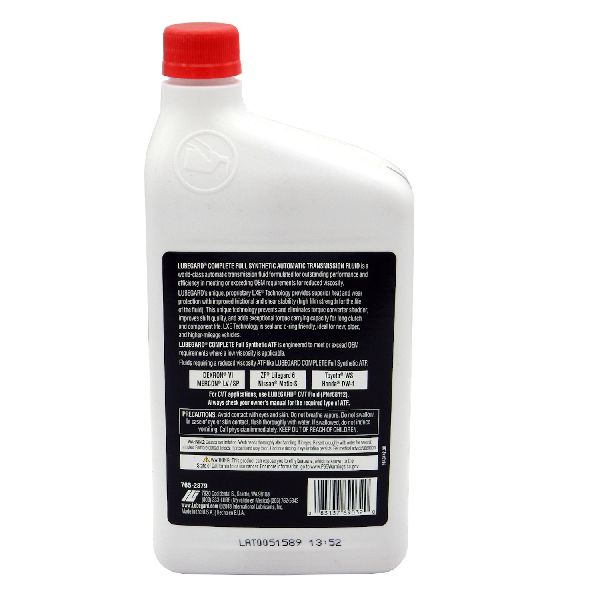
New Aftermarket Parts Available


The information in this article is provided for general reference and educational purposes only. Vehicle specifications, procedures, and part compatibility can vary by production date, trim level, and region. Always consult your vehicle's factory service manual and verify part numbers before purchasing or performing repairs. Safety-critical components such as airbags, seat belts, and braking systems should be installed by a qualified professional.
- Kia Sorento:
- 🧭 Diagnostic Flowchart
- 🎬 Helpful Videos
- 🛍️ Shop This Part
- What's Unique About the 2016-2020 Kia Sorento
- Symptoms You May Notice
- Most Likely Causes
- Rare But Worth Checking
- Diagnosis Steps
- Parts You'll Likely Need
- Related Codes That Often Appear With This One
- Technical Service Bulletins (TSBs) & Recalls
- Platform-Specific Known Issues
- Mechanic-Grade Diagnostic Values
- Scan Tool Commands That Help
- Wiring & Ground Locations
- Real Owner Repair Stories
- OEM Part Supersession History
- Model Year Variations Within This Range
- Other Known Issues on This Vehicle
- Used vs. New Parts: Buying Guide for This Vehicle
- Real Owner Stories
- 2020 Kia Sorento V6
- 2016-2020 Kia Sorento
- Related OBD-II Codes
- Frequently Asked Questions
- 🎟️ Get 5% Off