

P0720 on 2004-2009 Mazda 3: Output Speed Sensor or Faulty TCM?
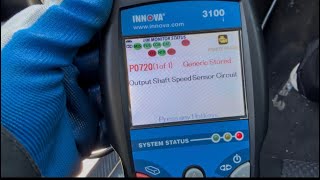
On a 2004-2009 Mazda 3, code P0720 is most often caused by a failing Transmission Control Module (TCM), not the Output Speed Sensor itself. Symptoms include the 'AT' light, harsh shifting, and getting stuck in 3rd gear (limp mode). Expect to pay $250-$500 for a remanufactured TCM, which is the common and recommended fix.
- Do not immediately replace the Output Speed Sensor for a P0720 code on a 2004-2009 Mazda 3.
- The most likely cause is a failed Transmission Control Module (TCM) due to a known design flaw related to its location.
- Confirm a bad TCM by checking for other communication codes (like U0101) and verifying signal voltage at the sensor connector.
- Using a remanufactured TCM is a common, cost-effective, and reliable repair.
What's Unique About the 2004-2009 Mazda 3
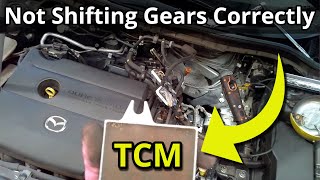
For this generation of Mazda 3, the P0720 code has a notorious reputation for being caused by a faulty Transmission Control Module (TCM) rather than the actual speed sensor. The TCM is mounted directly on the transmission, where it's exposed to constant heat and vibration. This design flaw often leads to internal solder joint and electronic component failure, causing the TCM to send false error codes for the sensors it controls or lose communication altogether.
Generation note: This guide covers the first generation of the Mazda 3 (2004-2009). The issue of TCM failure causing this code is also extremely common in the second generation (2010-2013) and platform-mate Mazda 5.
Symptoms You May Notice
- Check Engine Light is on
- Automatic Transmission (AT) light is on
- Harsh, erratic, or delayed shifting
- Transmission gets stuck in a single gear (usually 3rd gear)
- Inability to upshift or downshift
- Vehicle unexpectedly downshifts while driving, causing a jolt
- Speedometer works erratically or not at all
- Gear indicator on the dashboard may disappear
- Decreased fuel economy
- Replacing the Output Speed Sensor (OSS) when the 🎬 Watch: Real-world P0720 diagnostic and repair solution Transmission Control Module (TCM) is the actual cause. Many owners and shops replace the sensor first, only for the P0720 code to return shortly after.
Most Likely Causes
- Faulty Transmission Control Module (TCM) 🔴 High Probability → Shop Transmission Assembly The TCM is mounted directly on the transmission, where excessive heat and vibration cause internal electronic components and solder joints to fail over time. This is a widely documented failure point for this platform.
How to confirm: After verifying the sensor and wiring are good, test the voltage at the sensor connector. A fluctuating or incorrect voltage reading (e.g., 3.6V instead of a stable 5V) strongly points to a bad TCM. A professional scan tool can also check for communication errors with the TCM (like code U0101), which is another strong indicator of TCM failure. Wiggling the TCM connector while monitoring voltage can also reveal internal faults if the voltage fluctuates.
Typical fix: Replace the Transmission Control Module. It is often more cost-effective to use a reputable remanufactured unit from specialists like UpFix or Circuit Board Medics.
Est. part cost: $250-$500 for a remanufactured TCM. - Faulty Output Speed Sensor (OSS) 🟡 Medium Probability
How to confirm: Inspect the sensor for physical damage. Use a multimeter to test the sensor's internal resistance; specifications are often in the 560-680 Ohm range, but consult a service manual. You can also monitor the sensor's output signal on a scan tool or oscilloscope while driving; it should produce a clean, consistent wave form.
Typical fix: Replace the Output Speed Sensor. It is located on the exterior of the transmission case, often held by a single 10mm bolt.
Est. part cost: $80-$150 - Damaged Wiring or Connectors ⚪ Low Probability
How to confirm: Visually inspect the wiring harness between the OSS and the TCM for any signs of fraying, corrosion, or loose connections. Pay close attention to the connectors at both ends. Perform a continuity test on each wire to check for breaks or shorts to ground.
Typical fix: Repair or replace the damaged section of the wiring harness or the connector.
Est. part cost: $10-$50
Rare But Worth Checking
- Dirty or Low Transmission Fluid: → Shop Transmission Assembly While less common for a circuit code, very low or contaminated fluid can cause erratic transmission behavior that might be misinterpreted by the system. It's a simple and important check to perform first.
- Faulty Powertrain Control Module (PCM): → Shop Engine Control Module (ECM) This is very rare. The TCM is the primary suspect for control issues. On some models, the PCM handles all functions, and in those cases, it could be the cause. This should only be considered after all other possibilities are exhausted.
Diagnosis Steps
- Check Transmission Fluid: Ensure the automatic transmission fluid level is correct and the fluid is clean. Burnt-smelling or dark fluid indicates other potential transmission problems.
- Inspect Wiring: Visually inspect the wiring harness and connector for the Output Speed Sensor. Look for any breaks, corrosion, or loose pins. The sensor is located on the exterior of the transmission case.
- Test the Sensor: If the wiring looks good, test the Output Speed Sensor itself. This can be done by checking its resistance with a multimeter or by monitoring its signal with an advanced scan tool while rotating the wheels.
- Check for Voltage at the Connector: Unplug the sensor and, with the key on, check the voltage on the signal wire from the TCM. A fluctuating or incorrect voltage reading (e.g., below 5V) strongly suggests a problem with the TCM itself.
- Scan for Other Codes: Use a quality OBD-II scanner to check for other transmission-related codes, especially communication codes like U0101, which point directly to a faulty TCM.
- Confirm TCM Failure: If the sensor and wiring test good, and especially if communication codes are present or voltage readings are incorrect, the Transmission Control Module is the most likely cause of the problem.
Parts You'll Likely Need
- Transmission Control Module (TCM)
(OEM #L34T-18-9E1E (2.3L, 2007-2009, supersedes multiple older part numbers))— This is the most common failure point for the P0720 code on this vehicle due to its mounting location, which exposes it to damaging heat and vibration.
Trusted brands: Mazda (OEM), Circuit Board Medics (Remanufactured), UpFix (Remanufactured), Module Repair Pro (Remanufactured)
OEM price range: $600-$900
Aftermarket price range: $250-$500 (Remanufactured) - Output Speed Sensor / Vehicle Speed Sensor (VSS)
(OEM #FN01-21-550)— While less common than TCM failure, the sensor itself can fail and is the part directly named by the code definition.
Trusted brands: Mazda (OEM), NTK, Dorman
OEM price range: $90-$120
Aftermarket price range: $40-$80
Related Codes That Often Appear With This One
- U0101 — This code means 'Lost Communication with TCM.' It often appears 🎬 See how to diagnose a U0101 no communication fault with P0720 because a failing TCM can cause both internal circuit faults and broader communication failures.
- P0715 — This code relates to the Input/Turbine Speed Sensor circuit. Since the TCM processes signals from multiple speed sensors, a failing module can generate faults for both input and output sensor circuits simultaneously.
Platform-Specific Known Issues
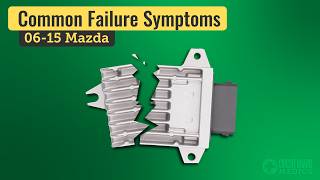
- The first-generation Mazda 3 is known for a high rate of Transmission Control Module (TCM) failures. The module's placement on top of the transmission housing leads to overheating and vibration damage, causing a wide range of shifting problems and fault codes, with P0720 being one of the most common. Many owners report that replacing the TCM with a remanufactured unit permanently solves the problem after they had 🎬 Watch: Common Mazda TCM symptoms and repair walkthrough unsuccessfully replaced the speed sensor first.
Mechanic-Grade Diagnostic Values
- Voltage at OSS harness connector (signal wire to ground), Key On Engine Off — expected: Approximately 5.0V ± 0.5V. Failure: A significantly lower reading, such as 3.6V, or a voltage that fluctuates when wiggling the TCM connector, is a classic indicator of an internal voltage drop within the TCM.
- Output Speed Sensor (OSS) internal resistance — expected: Approximately 500 Ω ± 10%. Failure: A reading of OL (open circuit), 0 Ω (short circuit), or a value significantly outside the specified range indicates a faulty sensor.
- Ground resistance at TCM and sensor connectors to chassis ground — expected: Less than 0.1 Ω. Failure: Higher resistance indicates a poor or corroded ground connection, which can cause erratic sensor readings and trigger false codes.
Wiring & Ground Locations
- Main Transmission Case Ground — A bolt with one or more ground wires attached directly to the top or front of the transmission housing, near the bell housing.. The TCM and its sensors rely on a solid chassis ground through the transmission case. A loose or corroded ground strap here can cause a variety of electrical issues, including erratic sensor readings that trigger P0720.
- TCM Connector Pins (FN4A-EL Transmission) — On the large connector plugging into the TCM, which is located under the battery and battery tray, mounted on the transmission.. Based on common wiring diagrams, the OSS signal and ground wires terminate here (often pins 1J and 1L). Probing these specific pins is the most direct way to test the circuit's integrity right at the module, bypassing the rest of the harness.
- Engine Block to Chassis Ground — A primary ground strap often connects from the engine block or cylinder head to the chassis, sometimes near the passenger-side motor mount or strut tower.. While not directly on the transmission, a poor engine-to-chassis ground can create a voltage potential difference, forcing sensor return paths through unintended routes and causing signal integrity problems for the TCM.
Real Owner Repair Stories
- Reddit user @fosterreichert (2008 Mazda 3 S 2.3L) — While cruising, the car would jolt, downshift from 5th to 4th gear, and the AT light would come on.
❌ Tried (didn't work) Replacing the input speed sensor, Replacing the output speed sensor
✅ What actually fixed it Replacing the Transmission Control Module (TCM) with a used unit from a local scrap yard solved all the problems. - Mazda3Club.com user @rcannon92 (2010 Mazda 3 2.0L (Note: 2nd Gen, but same failure pattern)) — Persistent P0720 code, AT light on.
❌ Tried (didn't work) Initial diagnosis pointed towards the sensor.
✅ What actually fixed it Diagnosed a low voltage (3.6V) on the sensor signal wire. Wiggling the TCM connector caused the voltage to fluctuate. The final fix was sending the original TCM to 'Module Repair Pro' for a rebuild, which resolved the code.
Documented NHTSA Reports
- NHTSA ODI #10536611 — An owner reported an "Output Speed Sensor Circuit Malfunction" with error code P0720. The vehicle would not go faster than 25 miles an hour.
- NHTSA ODI #10536609 — A report describes a vehicle that would not go in reverse and would not engage all gears while driving on the interstate, accompanied by error code P0720.
- NHTSA ODI #10537207 — An owner experienced a vehicle that would not go over 30 miles an hour and would not go in reverse anymore, with P0720 and P0740 codes present.
OEM Part Supersession History
L34T-18-9E1A, L34T-18-9E1B, L34T-18-9E1C, L34T-18-9E1D→L34T-18-9E1E— Standard part revision and update by the manufacturer.
Heads up: This part number series is specific to the 2.3L engine models from 2007-2009.L32E-18-9E1A, L32E-18-9E1B, L32E-18-9E1C, L32E-18-9E1D→L32E-18-9E1x (latest revision)— Standard part revision and update by the manufacturer.
Heads up: This part number series is typically for the 2.0L and earlier 2.3L engines (approx. 2006). It is critical to match the original part number from your vehicle, as 2.0L and 2.3L modules are generally not interchangeable.
Model Year Variations Within This Range
- 2004-2006 vs 2007-2009: There were different TCM part numbers used across the first generation, often tied to the engine size (2.0L vs 2.3L) and model year. For example, the L32E series is associated with earlier models/2.0L engines, while the L34T series is for later 2.3L engines. Always verify the part number on the original module before ordering a replacement.
Diagnostic Flowchart
Other Known Issues on This Vehicle
Issues unrelated to this code that are worth knowing about as an owner of this generation:
- Premature Rust 🔴 High — Extremely common, especially in the rear wheel arches, rocker panels, and underbody on 2004-2008 models in salt-belt regions.
- Failed Passenger-Side Engine Mount 🔴 High — The hydraulic, fluid-filled passenger-side engine mount is a notorious failure point, causing excessive vibration at idle when in gear. Often fails before 100,000 miles.
- Cracked Plastic Thermostat Housing 🟠 Medium — The original plastic thermostat housing becomes brittle with age and can crack, leading to coolant leaks. A common symptom is the code P0128 (Coolant Temp Below Thermostat Regulating Temperature) when the thermostat fails in the open position.
- Worn Rear Sway Bar Links/Bushings 🟡 Low — Owners frequently report clunking or rattling noises from the rear suspension, often caused by worn-out sway bar links or bushings.
- Leaking Shock Absorbers 🟠 Medium — Both front and rear shock absorbers are known to leak and wear out, leading to a bouncy or loose feeling ride.
Used vs. New Parts: Buying Guide for This Vehicle
When a used part is the smart pick: For the Transmission Control Module (TCM), a used part from a junkyard can be a viable, cost-effective option. Many owners have successfully resolved their P0720 code this way. Since the failure is due to a design flaw (heat/vibration), a used part carries some risk, but it is often significantly cheaper than a remanufactured unit.
Donor-vehicle mileage cap: roughly under 120000 miles for the part to have meaningful remaining life.
What to inspect on the donor part:
- Match the OEM part number EXACTLY. 2.0L and 2.3L modules are different.
- Inspect the connector pins for any corrosion or damage.
- If possible, choose a part from a vehicle with lower mileage and no signs of collision damage near the transmission.
- Ask the salvage yard about their return policy or warranty in case the part is also faulty.
Aftermarket brands forum-validated for this vehicle:
- UpFix (TCM Remanufacturing Service)
- Circuit Board Medics (TCM Remanufacturing Service)
- Module Repair Pro (TCM Remanufacturing Service)
- NTK (Speed Sensor)
- Dorman (Speed Sensor)
Brands owners have reported issues with on this vehicle:
- Unbranded, no-name TCMs from online marketplaces without a warranty or significant positive reviews.
Real Owner Stories
Aggregated from forums and TSBs cited above. Mileages and costs reflect what owners reported in those sources.
2008 Mazda 3 2.3L
Symptoms: The vehicle was jolting out of 5th gear. The owner replaced both the input and output speed sensors, but the problem returned.
What fixed it: Replacing the TCM with one from a local scrap yard solved all problems.
Source hint: Reddit r/mazda3 - 'Transmission Problems: P0720'
2008 Mazda 3
Symptoms: The AT light came on and the car entered limp mode. A mechanic replaced the output speed sensor, but the symptoms returned within 24 hours.
What fixed it: The mechanic identified the TCM as the actual failing component after the sensor replacement failed.
Source hint: Mazda Forum - 'DTC code P0720/ Engine light and AT light'
2004-2009 Mazda 3
Symptoms: Error code P0720 was present. Diagnosis showed an incorrect 3.6V on the signal wire. Wiggling the TCM connector caused the voltage to fluctuate.
What fixed it: Sent the TCM to 'Module Repair Pro' for a rebuild/repair.
Source hint: Mazda3Club.com - 'Error Code P0720'
Related OBD-II Codes
Frequently Asked Questions
Why is my 2004-2009 Mazda 3 stuck in 3rd gear with the AT light on?
My mechanic wants to replace the Output Speed Sensor for P0720. Is this the right move for a Mazda 3?
Can I use a used TCM from a junkyard to fix the P0720 code?
Does a U0101 code appearing with P0720 mean I have two separate problems?
Is the P0720 code related to the common passenger-side engine mount failure on this car?
Will wiggling the wires help diagnose P0720 on my Mazda 3?
Helpful Videos
We Have This Part in Stock

The information in this article is provided for general reference and educational purposes only. Vehicle specifications, procedures, and part compatibility can vary by production date, trim level, and region. Always consult your vehicle's factory service manual and verify part numbers before purchasing or performing repairs. Safety-critical components such as airbags, seat belts, and braking systems should be installed by a qualified professional.
- Mazda 3:
- 🧭 Diagnostic Flowchart
- 🎬 Helpful Videos
- 🛍️ Shop This Part
- What's Unique About the 2004-2009 Mazda 3
- Symptoms You May Notice
- Most Likely Causes
- Rare But Worth Checking
- Diagnosis Steps
- Parts You'll Likely Need
- Related Codes That Often Appear With This One
- Platform-Specific Known Issues
- Mechanic-Grade Diagnostic Values
- Wiring & Ground Locations
- Real Owner Repair Stories
- Documented NHTSA Reports
- OEM Part Supersession History
- Model Year Variations Within This Range
- Other Known Issues on This Vehicle
- Used vs. New Parts: Buying Guide for This Vehicle
- Real Owner Stories
- 2008 Mazda 3 2.3L
- 2008 Mazda 3
- 2004-2009 Mazda 3
- Related OBD-II Codes
- Frequently Asked Questions
- 🎟️ Get 5% Off