

P0720 on 2007-2017 Nissan Altima: Output Speed Sensor and TCM Causes
On a 2007-2017 Nissan Altima, code P0720 often points to a faulty Output Speed Sensor, but a failing Transmission Control Module (TCM) is also a very common underlying cause. Replacing the sensor is a ~$50-$150 DIY job, but if the TCM is the culprit, expect a much more expensive professional repair involving the valve body.
- Do not automatically replace the Output Speed Sensor. On a 2007-2017 Altima, a P0720 code is very frequently a symptom of a failing Transmission Control Module (TCM), which is part of the expensive valve body assembly.
- Proper diagnosis with a professional scan tool that can read live data from the TCM is critical to avoid wasting money on the wrong part.
- If the TCM/valve body is replaced, it must be electronically programmed to the vehicle, a step that often requires a dealership or a well-equipped independent shop.
What's Unique About the 2007-2017 Nissan Altima
For many Nissan and Infiniti models from this era equipped with Jatco CVTs, the P0720 code is notoriously misleading. While the code directly blames the Output Speed Sensor, it is frequently triggered by an internal failure of the Transmission Control Module (TCM). Technicians and owners report that on these Jatco transmissions, a failing TCM is a more common cause for this code than the sensor itself. This often leads to misdiagnosis, where the external sensor is replaced without fixing the root problem, which is the TCM integrated into the valve body.
Generation note: This range covers the fourth generation (L32; 2007–2012) and the fifth generation (L33; 2013–2018) of the Nissan Altima. Both generations utilize a Jatco CVT and are well-documented to experience this code. The underlying causes, particularly the high potential for TCM failure, are common to many Nissan vehicles of this period and are not specific to one generation over the other.
Symptoms You May Notice
- Check Engine Light is on
- Harsh, delayed, or erratic shifting
- Vehicle enters 'limp mode' or gets stuck in a single gear
- Inaccurate or non-functional speedometer
- Engine stalling when coming to a stop
- Reduced fuel economy
- Vehicle shudders or jerks on acceleration
- Cruise control may become inoperative
- Replacing the Output Speed Sensor when the true fault lies within the Transmission Control Module (TCM). This is a very common and costly mistake on these vehicles.
Most Likely Causes
- Faulty Transmission Control Module (TCM) 🔴 High Probability → Shop Transmission Assembly A widely documented issue on Nissan/Infiniti vehicles from this period is that the TCM, which is integrated into the valve body, fails and falsely triggers a P0720 code. This is a known weakness of the Jatco CVTs used in these Altimas. Nissan has issued service bulletins acknowledging this issue on similar platforms. Manufacturer TSB Bulletin #NTB10150A specifically instructs technicians to replace the transmission control valve assembly (valve body) and reprogram the unit when P0720 is stored in the engine or transmission.
How to confirm: Requires advanced diagnostics with a scan tool like Nissan's CONSULT-III to check TCM communication and function. If the sensor and wiring test good, the TCM is the likely culprit. A tell-tale sign can be live data showing erratic output speed readings even after the sensor is replaced.
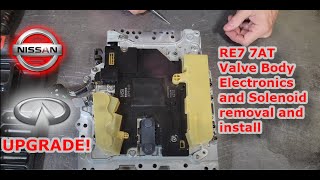
Typical fix: Replace the TCM, which is sold as a unit with the transmission valve body. 🎬 See this step-by-step CVT valve body replacement The new unit must be programmed to the vehicle.
Est. part cost: $800 - $1800 - Faulty Output Speed Sensor (OSS) 🟡 Medium Probability While less common than TCM failure on this platform, the sensor itself can fail due to heat and age. It is a primary suspect when P0720 is accompanied by P0500 (Vehicle Speed Sensor Malfunction).
How to confirm: Use a multimeter to test the sensor's resistance and compare it to the manufacturer's specifications. A capable scan tool can also monitor the sensor's live data stream for dropouts or erratic readings. The sensor is located on the outside of the transmission, accessible after removing the driver's side front wheel.
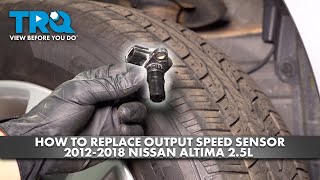
Typical fix: Replace the Output Speed Sensor. This is a DIY-friendly job involving removing the driver's side wheel for access, unplugging the connector, and removing a single 10mm bolt. 🎬 Watch: How to replace the output speed sensor
Est. part cost: $40 - $150 - Damaged Wiring or Connectors ⚪ Low Probability Manufacturer TSB Bulletin #NTB14019 notes that a combination of codes including P0720 and P0500 can be caused by moisture and/or corrosion present on or around the Secondary Speed Sensor pins.
How to confirm: Visually inspect the wiring harness leading to the OSS for any signs of fraying, corrosion, or loose connections. Perform a continuity test on the circuit from the sensor to the TCM.
Typical fix: Repair or replace the damaged section of the wiring harness or the connector.
Est. part cost: $10 - $100 - Low or Contaminated Transmission Fluid ⚪ Low Probability → Shop Transmission Assembly Nissan CVTs are very sensitive to fluid level and condition. Using the incorrect fluid (non-NS-2/NS-3) or running it low can cause a variety of issues, including this code.
How to confirm: Check the level and condition of the CVT fluid. If it's low, dark, or contains metal shavings, it can cause erratic transmission behavior and trigger various codes.
Typical fix: Perform a transmission fluid drain and fill or a full fluid exchange using the correct Nissan-specific CVT fluid (NS-2 for 4th gen, NS-3 for 5th gen).
Est. part cost: $100 - $250
Rare But Worth Checking
- Faulty Powertrain Control Module (PCM): → Shop Engine Control Module (ECM) While possible, it is much less common for the main engine computer to be the issue compared to the dedicated Transmission Control Module.
- Internal Transmission Mechanical Failure: → Shop Transmission Assembly Rarely, internal issues like a damaged reluctor wheel or failing shift solenoids can cause erratic speed readings. This would typically be accompanied by other symptoms like grinding noises and other transmission-specific codes.
Diagnosis Steps
- Retrieve all stored fault codes with an OBD-II scanner. Note if other codes like P0500 or P0715 are present.
- Check the level and condition of the CVT fluid. Ensure it is clean, at the correct level, and does not smell burnt. Low or dirty fluid can cause numerous issues.
- Use a professional scan tool to monitor the live data from the Output Speed Sensor while driving. Look for an erratic signal or a signal that drops to zero.
- Visually inspect the Output Speed Sensor's wiring harness and connector for any damage, corrosion, or loose connections. The sensor is located behind the driver's side front wheel.
- If the wiring appears intact, test the sensor's internal resistance with a multimeter and compare the reading to the factory specification.
- If the sensor and wiring test good, the suspicion shifts heavily toward the Transmission Control Module (TCM). This is the most common failure point for this code on Altimas. This step typically requires a professional diagnosis with advanced tools to confirm TCM failure before replacement.
Parts You'll Likely Need
- Transmission Control Module (TCM) / Valve Body Assembly
(OEM #31705-28X2A (example, varies by year/model))— This is a very common point of failure on this platform that directly causes a P0720 code. It is sold with the valve body.
Trusted brands: Hitachi, Nissan OE
OEM price range: $1200-$1800
Aftermarket price range: $800-$1500 - Transmission Output Speed Sensor
(OEM #31935-8E006 (example, varies by year/model))— This is the component directly implicated by the code definition, and while less common than a TCM failure on this car, it is still a primary suspect.
Trusted brands: Hitachi, NTK, Delphi, TRQ
OEM price range: $100-$150
Aftermarket price range: $40-$90
Related Codes That Often Appear With This One
- P0500 — This code relates to the Vehicle Speed Sensor (VSS). The OSS data is often used to determine vehicle speed, so a P0720 can sometimes trigger a P0500. When seen together, it can still be either the sensor or the TCM.
- P0715 — This code relates to the Input Speed Sensor. The TCM compares input and output speeds to determine the CVT ratio, so a fault in one can sometimes trigger a fault in the other.
- P0700 — This is a generic code indicating that the Transmission Control Module (TCM) has stored a fault code. It's an informational code that points you toward the specific transmission code, like P0720.
Technical Service Bulletins (TSBs) & Recalls
- NTB12-103g: This bulletin details the procedure for writing calibration data to a new TCM/valve body using the CONSULT-III plus tool, which is a required step after replacement.
- NTB17-018: While not directly for P0720, this TSB relates to other electronic control issues in the transmission and highlights the complexity of the system.
- Bulletin #NTB10150A: This manufacturer bulletin addresses MIL ON conditions with DTC P0720 and directs the replacement of the transmission control valve assembly (valve body) followed by reprogramming.
- Bulletin #NTB14019: This TSB identifies that P0720 can be triggered by moisture or corrosion on the Secondary Speed Sensor pins and provides instructions for moisture removal.
Platform-Specific Known Issues
- There is a well-documented history of Transmission Control Module (TCM) failures in Nissan vehicles equipped with Jatco CVTs, which frequently manifest as a P0720 code.
- Owner forums are filled with stories of replacing the output speed sensor multiple times, only to find the issue was the TCM/valve body assembly all along.
Mechanic-Grade Diagnostic Values
- Output Speed Sensor (OSS) Resistance — expected: 560 to 680 Ohms. Failure: A reading significantly outside this range, or an open/infinite reading, indicates a faulty sensor.
- Sensor Reference Voltage at Connector — expected: 5V ± 0.5V. Failure: No voltage or significantly lower/higher voltage points to a wiring or TCM issue, not a sensor failure.
- Ground Resistance at Connector — expected: < 0.1 Ohms. Failure: Higher resistance indicates a poor ground connection, which can cause an erratic signal.
Hidden / Shadow Codes Worth Checking
- U1000: CAN Communication Circuit Malfunction. While not a shadow code, its presence alongside P0720 is a strong indicator that the root cause is a broader communication failure, often originating from the TCM, rather than an isolated sensor fault. (see via Standard OBD-II scanner or Nissan CONSULT tool.)
Scan Tool Commands That Help
- Nissan CONSULT-III: Data Monitor for 'SECNY SPEED SENSOR' — This is the primary function to use for diagnosis. While driving, a technician can monitor the live data from the output speed sensor (called the secondary speed sensor in CONSULT). A healthy sensor will show a smooth, linear increase in speed. Dropouts, erratic jumps, or a value stuck at zero while the vehicle is moving strongly suggest a fault in the sensor, wiring, or TCM.
- Nissan CONSULT-III: DTC Confirmation Procedure — After a repair (like replacing the sensor), this guided procedure helps confirm if the fault has been rectified. It involves driving the vehicle under specific conditions (e.g., for at least 12 consecutive seconds) to allow the TCM to verify the sensor signal is stable.
Wiring & Ground Locations
- Main Transmission Ground — A thick ground strap is typically bolted from the negative battery terminal directly to a stud on the transmission housing, often near the front or top of the case.. A corroded or broken main transmission ground is a frequently overlooked cause of various electronic transmission codes, including P0720. The TCM and its sensors rely on a clean ground path. A poor ground can introduce electrical noise and cause the TCM to misinterpret the speed sensor signal, leading to a false P0720 code even when the sensor and wiring are intact.
Real Owner Repair Stories
- YouTube channel 'P0720 output speed sensor in Nissan and infiniti problem' (2015 Infiniti QX70 (uses a similar Jatco transmission and TCM architecture)) — Car not shifting gears properly, P0720 code stored for output speed sensor.
❌ Tried (didn't work) The technician notes that on a previous, similar repair, they tried replacing only the individual speed sensor on the valve body, but the problem returned after a few months.
✅ What actually fixed it The entire valve body assembly, which includes the integrated TCM and both input/output speed sensors, was replaced with a new OEM unit. After replacement, the live data for both input and output sensors matched correctly and the P0720 code was resolved. - NHTSA ODI #11683803 — An owner reported a dangerous situation in traffic where the vehicle could not accelerate normally. A scan revealed a P0720 Speed Sensor Circuit failure, and the dealer advised replacing the valve body assembly.
- NHTSA ODI #11652917 — A driver experienced limp mode on the highway and could not exceed 40 mph in a 70 mph zone. The vehicle threw a P0720 code, which the owner noted usually points to a valve body or transmission issue.
OEM Part Supersession History
31705-28X1C, 31705-3VX4A (Examples for 5th Gen)→31705-28X2A (Example)— Revisions to the valve body and integrated TCM to improve reliability and address common failure points.
Heads up: It is critical to match the valve body part number to the specific year and model of the Altima. While physically similar, different revisions have different programming and solenoid configurations. Installing an incorrect valve body can lead to no-start conditions or complete transmission failure. New OEM valve bodies often come unprogrammed and require dealer-level tools to write the vehicle's calibration data.
Model Year Variations Within This Range
- 2007-2012 (4th Gen L32): These models typically use the Jatco RE0F10A or RE0F09B CVT. The TCM failure pattern is well-established in this generation.
- 2013-2017 (5th Gen L33): These models use an updated Jatco CVT, often the RE0F10D or JF016E. While the transmission design was revised, the fundamental architecture of an integrated TCM on the valve body remains, and it continues to be a common failure point leading to the P0720 code.
Diagnostic Flowchart
Other Known Issues on This Vehicle
Issues unrelated to this code that are worth knowing about as an owner of this generation:
- Premature CVT Transmission Failure 🔴 High → Shop Transmission Assembly — Very common, often occurring between 60,000 and 100,000 miles. Symptoms include shuddering, whining, and sudden loss of power. (Ref: Multiple class-action lawsuits led to warranty extensions for some model years.)
- Electronic Steering Column Lock (ESCL) Failure 🔴 High — Common on 2009-2010 models, causing a no-start condition where the vehicle is completely immobilized. (Ref: Nissan issued a voluntary service campaign (PC516) to replace the ESCL.)
- Cracked Radiator / Coolant Contamination 🔴 High → Shop Radiator — The internal transmission cooler within the radiator can crack, allowing coolant and transmission fluid to mix, which destroys the CVT. This is a common failure mode.
- Melting or Sticky Dashboard 🟡 Low — Common in vehicles exposed to high heat and sun, particularly on the 4th generation (2007-2012). The dashboard surface becomes shiny, sticky, and soft.
- Failing Camshaft/Crankshaft Position Sensors 🟠 Medium — A common issue across many Nissan models of this era, leading to stalling or a no-start condition. (Ref: Recalls were issued for some models for this problem.)
- Secondary Hood Latch Corrosion 🟠 Medium — Affects 2013-2018 models. Corrosion can cause the secondary hood latch to remain open, potentially allowing the hood to fly up while driving if the primary latch is released. (Ref: Recall #16V-029)
Used vs. New Parts: Buying Guide for This Vehicle
When a used part is the smart pick: For the external Output Speed Sensor, a used OEM part from a low-mileage donor vehicle is a reasonable and cost-effective option. For the expensive TCM/Valve Body assembly, a used part is a high-risk but potentially viable choice if the vehicle is old and has a low residual value. It should only be considered if the donor vehicle's history is known and the part comes with a warranty from the seller.
Donor-vehicle mileage cap: roughly under 80000 miles for the part to have meaningful remaining life.
What to inspect on the donor part:
- For a TCM/Valve Body, ensure the part number is an exact match for the recipient vehicle.
- Check for any signs of corrosion on the TCM's external connector pins.
- Ask the dismantler if the donor vehicle had any transmission-related codes or issues before being salvaged.
- Verify the donor vehicle was not involved in a flood, as water damage can destroy the electronics.
OEM-only on this vehicle (don't cheap out):
- Transmission Control Module (TCM) / Valve Body Assembly. Due to the high failure rate and the need for precise programming, a new or professionally remanufactured OEM unit from a reputable source is strongly recommended over aftermarket alternatives or a typical junkyard part.
Aftermarket brands forum-validated for this vehicle:
- For the external Output Speed Sensor: NTK, Hitachi, Delphi, and Beck/Arnley are generally considered reliable aftermarket brands by the DIY community.
Brands owners have reported issues with on this vehicle:
- Unbranded, 'white-box' sensors sold on marketplace websites should be avoided, as their quality control and accuracy can be inconsistent, leading to a quick return of the P0720 code.
Real Owner Stories
Aggregated from forums and TSBs cited above. Mileages and costs reflect what owners reported in those sources.
2012 Nissan Altima
Symptoms: Owner reported getting both P0720 and P0500 codes. Upon inspection, the owner found the new output sensor was getting physically scratched.
What fixed it: The physical damage to the sensor pointed to an internal transmission issue rather than a simple sensor failure.
Source hint: Reddit r/Nissan - 'p0720 and p0500'
2016 Infiniti Q70 (Similar Platform)
Symptoms: Vehicle was stuck in first gear with codes P0720 and P0500 present.
What fixed it: Expert advice indicated that while it could be the TCM, the combination of codes strongly pointed to a failed output speed sensor.
Source hint: NICOclub Forums - 'P0720 code'
Nissan Altima (Jatco CVT)
Symptoms: Owner observed code P0720 and discovered corrosion on the TCM traces after pulling the valve body.
What fixed it: The owner had to choose between a TCM repair or a full $1500 replacement.
Cost: $1500-$1500
Source hint: Reddit r/Nissan - 'P0720 and repairing the TCM'
Nissan Owner Report
Symptoms: An owner reported that inspection of their vehicle revealed OBD II codes P0500 and P0720. Further investigation by the owner suggested these codes were linked to existing manufacturer issues for this make and model.
Source hint: NHTSA ODI #11115192
Related OBD-II Codes
Frequently Asked Questions
I replaced the Output Speed Sensor on my Altima but the P0720 code is still there. What is the next step?
Can I replace the TCM/valve body myself to fix a P0720 code?
Where is the Output Speed Sensor located on a 2007-2017 Altima?
Is there a specific transmission fluid I should use to avoid CVT codes like P0720?
Does Nissan have a service bulletin for programming the transmission after a P0720 repair?
Could my P0720 code be caused by a radiator issue?
Helpful Videos
We Have This Part in Stock

The information in this article is provided for general reference and educational purposes only. Vehicle specifications, procedures, and part compatibility can vary by production date, trim level, and region. Always consult your vehicle's factory service manual and verify part numbers before purchasing or performing repairs. Safety-critical components such as airbags, seat belts, and braking systems should be installed by a qualified professional.
- Nissan Altima:
- 🧭 Diagnostic Flowchart
- 🎬 Helpful Videos
- 🛍️ Shop This Part
- What's Unique About the 2007-2017 Nissan Altima
- Symptoms You May Notice
- Most Likely Causes
- Rare But Worth Checking
- Diagnosis Steps
- Parts You'll Likely Need
- Related Codes That Often Appear With This One
- Technical Service Bulletins (TSBs) & Recalls
- Platform-Specific Known Issues
- Mechanic-Grade Diagnostic Values
- Hidden / Shadow Codes Worth Checking
- Scan Tool Commands That Help
- Wiring & Ground Locations
- Real Owner Repair Stories
- OEM Part Supersession History
- Model Year Variations Within This Range
- Other Known Issues on This Vehicle
- Used vs. New Parts: Buying Guide for This Vehicle
- Real Owner Stories
- 2012 Nissan Altima
- 2016 Infiniti Q70 (Similar Platform)
- Nissan Altima (Jatco CVT)
- Nissan Owner Report
- Related OBD-II Codes
- Frequently Asked Questions
- 🎟️ Get 5% Off