

P0720 on 2005-2015 Nissan Armada: Output Speed Sensor Causes and Fixes
On a 2005-2015 Nissan Armada, code P0720 is most often caused by a failing Transmission Control Module (TCM), which is integrated with the valve body inside the transmission. Replacing the external speed sensor will not fix it. Expect a high repair cost, often over $1,000, for a new valve body assembly that must be programmed to the vehicle's VIN.
- P0720 on a 2005-2015 Armada indicates a problem with the output speed sensor circuit.
- The most common cause on this specific vehicle is NOT the external sensor, but a failed Transmission Control Module (TCM) located inside the transmission.
- Symptoms include harsh shifting, getting stuck in gear, and a faulty speedometer.
- Diagnosis should rule out simple issues like fluid level and external wiring before condemning the expensive TCM/valve body assembly.
- This is a complex repair best left to a professional transmission shop due to the internal location of the primary failed part.
What's Unique About the 2005-2015 Nissan Armada
On this generation of Nissan Armada, along with other Nissan trucks and SUVs like the Titan and Pathfinder using the RE5R05A 5-speed automatic transmission, the P0720 code is notoriously caused by a failing Transmission Control Module (TCM), not the external sensor itself. The TCM is located inside the transmission oil pan as part of the valve body assembly. This design exposes the electronics to constant heat and vibration, leading to a high failure rate of internal solder joints and electronic components. Owners often mistakenly replace the external sensor first, only to find the problem persists until the entire valve body/TCM unit is replaced and programmed.
Symptoms You May Notice
- Check Engine Light is on
- Transmission shifts harshly or erratically
- Vehicle gets stuck in one gear (limp mode), often 3rd gear
- Speedometer works incorrectly or not at all
- Vehicle may stall when coming to a stop
- Cruise control is inoperative
- Decreased fuel economy
- A/T CHECK light is illuminated on the dash
- Torque converter clutch fails to lock up
- Replacing only the external output speed sensor without diagnosing the full circuit. On these Nissan models, the root cause is very often the internal TCM, making an external sensor replacement ineffective.
Most Likely Causes
- Failed Transmission Control Module (TCM) / Valve Body Assembly 🔴 High Probability → Shop Transmission Valve Body The TCM is integrated into the valve body, located inside the transmission pan. This location subjects the electronics to significant heat and vibration, leading to a common failure of solder joints and other internal components. This is a well-documented weak point for the RE5R05A transmission, to the point that Nissan issued service bulletins about it.
How to confirm: A professional diagnosis with an advanced scan tool is needed to monitor live data from the speed sensors and confirm the TCM is unresponsive or providing faulty data (e.g., showing 170mph when stopped), even with known-good sensors. The diagnosis often concludes after ruling out external wiring and the sensor itself. A Nissan-specific scan tool can perform bidirectional tests.
Typical fix: Replace the entire transmission valve body assembly, which includes the integrated TCM and solenoids. The new unit must be programmed with the vehicle's VIN. Remanufactured units are a common, cost-effective alternative to new OEM parts.
Est. part cost: $800-$1500+ - Faulty Output Speed Sensor (VSS) ⚪ Low Probability While the sensor itself can fail, it is a far less common cause for P0720 on this platform compared to the TCM. It is often replaced in error.
How to confirm: Test the sensor's resistance and voltage output with a multimeter, or monitor its signal with a capable OBD-II scanner. The sensor is typically located on the exterior of the transmission case, near the output shaft/driveshaft.
Typical fix: Replace the output speed sensor. This is an unlikely fix for this specific vehicle and code.
Est. part cost: $40-$120 - Damaged Wiring or Connectors ⚪ Low Probability
How to confirm: Visually inspect the wiring harness leading to the external output speed sensor and the main transmission connector for any signs of fraying, corrosion, melting, or loose pins. Check for continuity and shorts between the TCM connector and the sensor connector using a multimeter and a wiring diagram. Manufacturer Bulletin #NTB14019 notes that moisture or corrosion on speed sensor pins can trigger P0720.
Typical fix: Repair or replace the damaged section of the wiring harness or the connector.
Est. part cost: $10-$100 - Low or Contaminated Transmission Fluid ⚪ Low Probability → Shop Transmission Assembly A common issue on the 2005-2010 models with the RE5R05A is coolant contamination from a failed internal radiator cooler (the 'strawberry milkshake of death' or SMOD), which can short out the TCM and internal wiring.
How to confirm: Check the transmission fluid level and condition using the dipstick. The fluid should be at the correct level, pinkish-red in color, and not smell burnt. A milky pink or brown appearance indicates coolant contamination. Metal shavings can also interfere with magnetic sensors.
Typical fix: If contaminated with coolant, the radiator, valve body, and possibly the entire transmission will need replacement. If simply low or dirty, perform a transmission fluid and filter change.
Est. part cost: $50-$3000+
Rare But Worth Checking
- Faulty Powertrain Control Module (PCM): → Shop Engine Control Module (ECM) This is rare. The PCM is the main engine computer. Before condemning the PCM, all other possibilities, especially the TCM, wiring, and sensor, must be exhaustively ruled out.
Diagnosis Steps
- Scan for Codes: Use an OBD-II scanner to confirm P0720 and check for any other related codes like P0715, P0500, or U1000.
- Check Transmission Fluid: Inspect the transmission fluid level and condition. Look specifically for a milky pink appearance, which indicates coolant contamination—a known issue that destroys these transmissions, especially on 2005-2010 models.
- Inspect Wiring: Visually inspect the external wiring harness and connector for the output speed sensor. Look for damage, corrosion, or loose connections. Check the main transmission harness connector as well.
- Test the External Sensor: If accessible, test the output speed sensor's resistance with a multimeter to see if it's within the manufacturer's specifications. This step helps rule out the cheapest part, but be aware it is not the likely cause.
- Analyze Live Data: Use an advanced scan tool to monitor the output speed sensor signal in real-time while driving. An erratic, zero, or nonsensical reading (like 170mph when stopped) while the vehicle is moving points to a problem in the circuit.
- Suspect the TCM: If the external sensor and wiring test good, the cause is highly likely to be the internal Transmission Control Module (TCM) / valve body assembly, a known issue on this platform.
- Professional Confirmation: At this stage, it is highly recommended to have a professional transmission shop confirm the diagnosis before ordering an expensive valve body assembly. They can perform advanced tests, such as checking for proper grounding and power at the TCM connector and using a Nissan-specific tool for bidirectional control tests.
Parts You'll Likely Need
- Transmission Valve Body with TCM
(OEM #31705-XXXXX series (e.g., 31705-EZ00B, 31705-X100B, etc. - VIN specific))— This is the most common failure point for a P0720 code on the 2005-2015 Armada. The TCM is integrated into this assembly and fails due to heat. Must be programmed to the vehicle's VIN.
Trusted brands: Hitachi (OEM Manufacturer), Genuine Nissan, Street Smart Transmission (Remanufactured)
OEM price range: $1200-$1800
Aftermarket price range: $600-$1200 (Remanufactured) - Transmission Output Speed Sensor / Vehicle Speed Sensor (VSS)
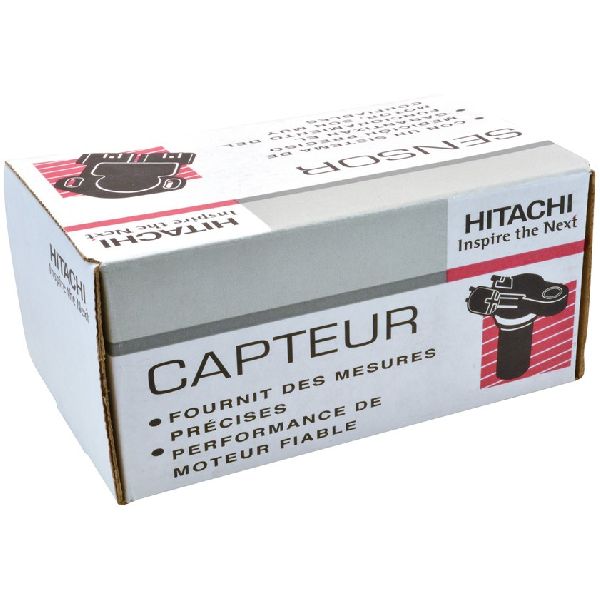
(OEM #31935-8E006 (Example, verify by VIN))— This is the part indicated by the code definition and should be tested, but it is less likely to be the root cause on this vehicle than the TCM.
Trusted brands: Hitachi, Standard Motor Products (SMP), Denso
OEM price range: $80-$150
Aftermarket price range: $40-$90
Related Codes That Often Appear With This One
- P0715 — This code relates to the Input Speed Sensor circuit. Since the input and output sensors are often part of the same internal TCM assembly, a fault can trigger codes for both.
- P0500 — This code relates to the Vehicle Speed Sensor (VSS) circuit. On many vehicles, the transmission output speed sensor is the primary VSS, so a P0720 fault will often be accompanied by a P0500.
- U1000 — This is a CAN communication circuit code. A failing TCM can disrupt communication on the network, leading to this code being stored alongside the P0720.
Technical Service Bulletins (TSBs) & Recalls
- NTB15-052A: While not directly for P0720, this TSB relates to transmission and control module procedures, indicating the complexity and software-dependent nature of these systems.
- NTB08-052 (and subsequent revisions): Addresses harsh shifting and other issues on RE5R05A transmissions, which are often symptoms that accompany or precede a P0720 code. A bulletin was also released for the related 7-speed transmission noting that P0720 is often a false code caused by a bad TCM, not the sensor.
- Bulletin #NTB10150A: For certain Nissan models, this bulletin directs technicians to replace the transmission control valve assembly (valve body) and reprogram the unit when P0720 is stored.
- Bulletin #NTB14019: Notes that P0720 can be triggered by moisture and/or corrosion present on or around the speed sensor pins.
Platform-Specific Known Issues
- A high rate of Transmission Control Module (TCM) failure is documented for Nissan vehicles with the RE5R05A transmission, including the Armada, Titan, Xterra, and Frontier. The TCM is part of the valve body inside the transmission, and its failure is the most frequent cause of code P0720.
Mechanic-Grade Diagnostic Values
- Solenoid Resistance (All except Low Coast Brake) — expected: 3.3 ohms. Failure: Significant deviation from 3.3 ohms.
- Low Coast Brake Solenoid Resistance — expected: 23 ohms. Failure: Significant deviation from 23 ohms.
- Solenoid Current Draw (Live Data) — expected: Ramping from 0.0 to 0.8 amps during operation.. Failure: No current draw or erratic readings when the solenoid should be active.
- Transmission Temperature Sensor 1 (Sump) Resistance — expected: ~6.5k ohms @ 68°F (20°C). Failure: Open circuit or resistance far outside the expected value.
Scan Tool Commands That Help
- Nissan CONSULT or compatible advanced scanner (e.g., Launch, Autel): Active Test for Transmission Solenoids — To individually command each of the seven solenoids on the valve body to check for response. This can help isolate a single failed solenoid from a complete TCM failure, though they are replaced as a unit.
- Nissan CONSULT or compatible advanced scanner: TCM Reprogramming / VIN Writing — This is a mandatory step after replacing the valve body/TCM assembly. The new module must be programmed with the vehicle's VIN to communicate with other vehicle systems.
- Nissan CONSULT or compatible advanced scanner: Accelerator Pedal Released Position Learning — This relearn procedure is required if the battery, TCM, or ECM is disconnected. It ensures the TCM knows the throttle's baseline closed position.
Wiring & Ground Locations
- Type 2 Valve Body Connector — A single green connector on the transmission for models from mid-2004 and later. The TCM, pressure switches, and speed sensors are integrated into this assembly inside the pan.. This is the main electrical interface for the internal TCM. Checking for power, ground, and CAN communication signals at this connector is a key diagnostic step before dropping the transmission pan.
- Main Harness Ground Points — While specific ground point locations (e.g., G101, G102) require a factory service manual, poor grounds on the engine block or chassis can cause erratic sensor readings. Aftermarket grounding kits are sold specifically for the Armada/Titan to improve electrical stability.. A weak or corroded ground can introduce electrical noise into the speed sensor circuits, potentially triggering a P0720 code even if the sensor and TCM are functional. Ensuring all main battery and engine grounds are clean and tight is a crucial, often overlooked, step.
- TCM Connector E123 — This is the designation for the main TCM connector in wiring diagrams. For example, terminal 9 is a primary power source that should have battery voltage with the key on.. Using a wiring diagram to probe specific pins like E123-9 (Power) and checking continuity to other pins (e.g., E123-20 to the solenoid harness) allows a technician to confirm if the fault is in the external harness or internal to the TCM/valve body assembly.
Real Owner Repair Stories
- Reddit user, r/CarRepair (2005 Nissan Armada SE Off-Road Edition (4WD)) — P0720 code present.
❌ Tried (didn't work) Not specified, user was in the diagnostic phase.
✅ What actually fixed it The user was advised by multiple commenters that the problem is almost certainly the internal TCM/valve body assembly, a very common failure on this platform, and that replacing the external sensor would be a waste of money. This aligns with widespread professional experience. - Import Performance Trans (YouTube) (Nissan/Infiniti with RE7R01A (7-speed, but same P0720 issue)) — P0720 code for output speed sensor.
❌ Tried (didn't work) Replacing the external output speed sensor.
✅ What actually fixed it The problem was an internal failure of the Transmission Control Module (TCM). The video explains that Nissan has issued bulletins because this is so common, and the P0720 code is often a false flag for a bad TCM. The fix is to replace the entire valve body with the integrated TCM. - NHTSA ODI #11683803 — An owner reported a dangerous situation in traffic where the vehicle could not accelerate normally. A scan revealed a P0720 Speed Sensor Circuit failure, and the dealer advised replacing the valve body assembly.
- NHTSA ODI #11652917 — An owner reported the vehicle entered limp mode on the highway and would not exceed 40 mph where speeds were around 70 mph, putting them at risk with a code of P0720.
OEM Part Supersession History
1st Design Valve Body (2002-early 2004)→2nd Design (mid-2004-2008), 3rd Design (2009+)— Internal design changes to solenoids, check ball locations, casting, and pressure regulation.
Heads up: The different design valve bodies are not interchangeable. The early 'Type 1' system (up to mid-2004) had an external TCM and two blue connectors, while the 'Type 2' (mid-2004+) has an internal TCM with a single green or black connector. You must match the design to the vehicle year.
Model Year Variations Within This Range
- 2005-2010: These model years are highly susceptible to the 'Strawberry Milkshake of Death' (SMOD), where the internal transmission cooler in the radiator fails, mixing coolant with transmission fluid. This contamination rapidly destroys the transmission and the TCM. The radiator design was reportedly updated for the 2011 model year.
- Mid-2004 (affecting 2005 models) and later: The transmission control system changed from a 'Type 1' with an external TCM to a 'Type 2' where the TCM is integrated with the valve body inside the transmission pan. All 2005-2015 Armadas use the Type 2 system, which is prone to heat-related failure causing P0720.
Diagnostic Flowchart
Used vs. New Parts: Buying Guide for This Vehicle
When a used part is the smart pick: A used valve body/TCM assembly from a junkyard is a very high-risk purchase for this specific repair. The failure is due to an inherent design flaw (heat and vibration), so a used part has a high likelihood of either being faulty already or failing soon after installation. It only makes sense if the part has a verifiable history from a very low-mileage, late-model donor (2011+) and comes with a strong warranty.
Donor-vehicle mileage cap: roughly under 60000 miles for the part to have meaningful remaining life.
What to inspect on the donor part:
- Verify the donor vehicle's year is 2011 or newer to reduce the risk of SMOD contamination.
- Ask for the VIN of the donor vehicle to ensure compatibility; the TCM software is vehicle-specific.
- Inspect the transmission fluid from the donor vehicle if possible. Any sign of coolant contamination (milky, pinkish sludge) means the part is junk.
- Check the main electrical connector for any bent, corroded, or damaged pins.
OEM-only on this vehicle (don't cheap out):
- Transmission Control Module (TCM) / Valve Body Assembly
Aftermarket brands forum-validated for this vehicle:
- Street Smart Transmission (Remanufactured)
- Sonnax (Offers valve body repair kits, but this is for professional rebuilders)
Brands owners have reported issues with on this vehicle:
- Unbranded, no-name units from online marketplaces without a clear warranty or VIN programming service. The programming is critical for function.
Real Owner Stories
Aggregated from forums and TSBs cited above. Mileages and costs reflect what owners reported in those sources.
2017 Nissan Titan
Symptoms: Initially received a P0715 code. After a shop replaced the input sensor, a P0720 code appeared.
What fixed it: The owner replaced the valve body themselves, which resolved the issue.
Cost: $1450-$1550
Source hint: Reddit - r/NissanTitan - '2017 Titan p0720 code'
2012 Nissan Quest
Symptoms: Vehicle exhibited OBD II codes P0500 and P0720 while attempting to exit a street.
What fixed it: Investigation revealed an existing recall for automobiles of this make and model exhibiting these symptoms.
Source hint: NHTSA ODI #11115192
Related OBD-II Codes
Frequently Asked Questions
My 2008 Armada has code P0720. Is it more likely the speed sensor or something else?
I heard about a 'strawberry milkshake' issue on these trucks. Could that cause my P0720 code?
The shop wants to replace the whole valve body for my P0720 code. Is that the correct fix?
Are there any Nissan service bulletins (TSBs) related to P0720 on the Armada?
My speedometer isn't working and the truck is stuck in 3rd gear with a P0720. Are these symptoms related?
Besides the Armada, what other Nissan vehicles have this same P0720 problem?
We Have This Part in Stock




The information in this article is provided for general reference and educational purposes only. Vehicle specifications, procedures, and part compatibility can vary by production date, trim level, and region. Always consult your vehicle's factory service manual and verify part numbers before purchasing or performing repairs. Safety-critical components such as airbags, seat belts, and braking systems should be installed by a qualified professional.
- Nissan Armada:
- 🧭 Diagnostic Flowchart
- 🛍️ Shop This Part
- What's Unique About the 2005-2015 Nissan Armada
- Symptoms You May Notice
- Most Likely Causes
- Rare But Worth Checking
- Diagnosis Steps
- Parts You'll Likely Need
- Related Codes That Often Appear With This One
- Technical Service Bulletins (TSBs) & Recalls
- Platform-Specific Known Issues
- Mechanic-Grade Diagnostic Values
- Scan Tool Commands That Help
- Wiring & Ground Locations
- Real Owner Repair Stories
- OEM Part Supersession History
- Model Year Variations Within This Range
- Used vs. New Parts: Buying Guide for This Vehicle
- Real Owner Stories
- 2017 Nissan Titan
- 2012 Nissan Quest
- Related OBD-II Codes
- Frequently Asked Questions
- 🎟️ Get 5% Off