

P0720 on 2003-2017 Nissan Murano: Output Speed Sensor Failure Causes and Fixes
P0720 on a Nissan Murano indicates a fault with the transmission's output speed sensor circuit. The most common fix is replacing the sensor itself, which is a relatively inexpensive part. However, this code can sometimes point to a more serious issue with the Transmission Control Module (TCM) or internal CVT damage. Proper diagnosis is critical to avoid replacing the wrong parts.
- P0720 on a Murano most often points to a bad output speed sensor, which is an affordable and accessible part.
- Symptoms include a lit Check Engine Light, erratic shifting, a non-functional speedometer, and the vehicle possibly entering limp mode.
- Always check the transmission fluid level and wiring to the sensor before replacing parts.
- Be aware that this code is a notorious false flag for a more serious and expensive failure of the Transmission Control Module (TCM). If a new sensor doesn't fix it, the TCM is the next likely culprit.
What's Unique About the 2003-2017 Nissan Murano
The Nissan Murano has used a CVT for most of its production run, which relies heavily on accurate speed sensor data for its complex ratio adjustments. While the external speed sensor is a common failure point, P0720 on Nissans from this era can also be a notorious false code, with the actual problem being a failing Transmission Control Module (TCM). It's crucial to diagnose properly, as replacing the sensor won't fix a bad TCM. In some cases, Nissan has issued service bulletins for other models advising technicians to replace the entire control valve/TCM assembly for a P0720 code, even though the code points to the sensor.
Generation note: The 2003-2017 range covers three Murano generations: Z50 (2003-2007), Z51 (2009-2014), and Z52 (2015-2017). The output speed sensor is externally located on the transmission for at least the Z50 and Z51 generations, making it accessible from under the vehicle, typically on the driver's side of the transmission housing. While the sensor itself is a common point of failure across these years, the specific part numbers and the likelihood of a related TCM failure can vary.
Symptoms You May Notice
- Check Engine Light is on
- Harsh, delayed, or erratic shifting
- Vehicle enters 'limp mode' (stuck in one gear)
- Speedometer reads incorrectly or not at all
- Cruise control does not work
- Loss of power or hesitant acceleration
- Decreased fuel efficiency
- Vehicle may stall
- Replacing the output speed sensor when the actual fault lies within the TCM.
- Replacing the entire valve body when only the external sensor is bad.
- Confusing the output speed sensor with the input speed sensor, which is a different part located elsewhere on the transmission.
Most Likely Causes
- Faulty Output Speed Sensor 🔴 High Probability The sensor is an electronic component exposed to heat, vibration, and potential corrosion from road salt and moisture at its connector, leading to eventual failure.
How to confirm: Test the sensor's resistance with a multimeter or monitor its output signal with an advanced scan tool while driving. A reading of zero, an erratic signal, or a signal that doesn't change with vehicle speed indicates failure. The sensor is typically secured by a single 10mm bolt.
Typical fix: Replace the output speed sensor. This is a DIY-friendly job that usually takes 30-60 minutes and does not require draining transmission fluid.
Est. part cost: $20 - $70 - Damaged Wiring or Connector 🟡 Medium Probability The wiring harness leading to the sensor is located under the vehicle and is susceptible to damage from road debris, heat, and corrosion, especially in regions with heavy road salt use. Manufacturer Bulletin #NTB14019 notes that moisture or corrosion on or around the speed sensor pins can trigger P0720 alongside other codes like P0500 or P1715.
How to confirm: Visually inspect the wiring harness and connector for any signs of fraying, breaks, or green/white corrosion. Perform a continuity test with a multimeter between the TCM connector and the sensor connector to check for open or shorted wires.
Typical fix: Repair the damaged section of the wiring harness or replace the connector. Use electrical contact cleaner on corroded terminals.
Est. part cost: $10 - $50 - Faulty Transmission Control Module (TCM) 🟡 Medium Probability → Shop Transmission Assembly On many Nissan vehicles, including those with similar transmissions, the P0720 code is a known false code pointing to an internal failure of the TCM, which is often integrated with the valve body. This is a well-documented issue across various Nissan/Infiniti models.
How to confirm: This is difficult to confirm without professional diagnostic equipment. If a new sensor and confirmed good wiring do not resolve the code, the TCM is the likely culprit. A dealership or specialist can perform advanced diagnostics.
Typical fix: Replace the TCM, which is often sold as part of the valve body assembly. This is an expensive repair that requires programming by a dealership 🎬 See how to program a Nissan CVT valve body or specialized shop.
Est. part cost: $800 - $1800 - Low or Contaminated Transmission Fluid ⚪ Low Probability → Shop Transmission Assembly Nissan CVTs are highly sensitive to fluid level and condition. Neglected maintenance can lead to fluid that is low or full of metallic debris, which can interfere with magnetic sensors.
How to confirm: Check the transmission fluid level and condition according to the owner's manual procedure. If the fluid is dark, burnt-smelling, or contains visible metallic particles, it needs to be changed.
Typical fix: Perform a transmission fluid drain and fill using only the specified Nissan CVT fluid (e.g., NS-2 or NS-3). A full flush may be needed if heavily contaminated.
Est. part cost: $100 - $300
Rare But Worth Checking
- Internal Transmission Failure: → Shop Transmission Assembly In some cases, mechanical wear or damage inside the CVT, such as a failing pulley system or belt, can cause erratic readings from the speed sensor. This is usually accompanied by other symptoms like grinding noises, severe slipping, or a complete loss of movement.
Diagnosis Steps
- Check the transmission fluid level and condition. Ensure it is clean, at the correct level, and does not smell burnt. Use only the specified Nissan CVT fluid.
- Connect a quality OBD-II scanner to read the code and view live data from the output speed sensor. Observe the sensor's reading while driving. It should increase smoothly with vehicle speed.
- Safely raise the vehicle and visually inspect the output speed sensor and its wiring harness for any visible damage, corrosion, or loose connections. The sensor is typically on the driver's side of the transmission, held by a single 10mm bolt.
- Disconnect the sensor and test its internal resistance with a multimeter, comparing it to the manufacturer's specifications. Also, check for voltage and ground at the connector with the ignition on.
- If the sensor and its direct connector test good, check for continuity and shorts in the wiring harness between the sensor connector and the TCM connector.
- If the sensor and wiring are confirmed to be good, the problem most likely lies with the Transmission Control Module (TCM). This diagnosis should be confirmed by a professional before replacing the expensive valve body/TCM assembly.
Parts You'll Likely Need
- Transmission Output Speed Sensor
(OEM #31935-8E007, 31935-1XF00 (verify by VIN))— This is the most frequent failure point for a P0720 code. It is an electronic sensor that wears out over time or fails due to contamination.
Trusted brands: Hitachi, NGK/NTK, Delphi, Beck/Arnley
OEM price range: $80-$150
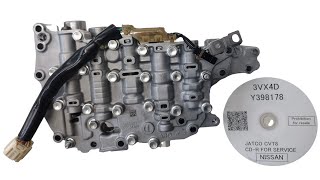
Aftermarket price range: $20-$70 - Transmission Valve Body with TCM
(OEM #Varies by year and model)— Required if the TCM has failed, which is a common underlying cause for a persistent P0720 code on this platform.
Trusted brands: Genuine Nissan (OEM)
OEM price range: $1000-$1800
Aftermarket price range: N/A
Related Codes That Often Appear With This One
- P0715 — This code relates to the Input Speed Sensor. The TCM compares input and output speeds to determine the CVT ratio, so a fault in one can sometimes trigger a code for the other.
- P0500 — This is a generic Vehicle Speed Sensor Malfunction code. Since the output speed sensor data is used for the speedometer, a P0720 fault can also trigger a P0500.
- P1778 — This code relates to the step motor in the CVT. A TSB for other Nissan models (NTB10-150a) links P0720 with P1778, sometimes indicating a need to replace the valve body.
Technical Service Bulletins (TSBs) & Recalls
- While no specific TSB for the Murano and P0720 was found, related TSBs for other Nissan/Infiniti models exist. For example, ITB19-035 for the Q50 advises replacing the entire control valve (TCM) for a P0720 code, not just the sensor. Another TSB, NTB10-150a, links P0720 to other codes on Sentras, sometimes requiring a valve body replacement.
- Bulletin #NTB10150A specifically instructs technicians to replace the transmission control valve assembly (valve body) and reprogram the TCM when P0720 is stored in the Engine or Transmission.
- Bulletin #NTB14019 highlights that moisture and/or corrosion on the Secondary Speed Sensor pins can trigger P0720 and recommends removing the moisture as a primary action.
Platform-Specific Known Issues
- On some Nissan platforms, a P0720 code is a known indicator of a failing Transmission Control Module (TCM), even though the code definition points to the sensor. This can lead to an incorrect diagnosis if only the sensor is replaced.
- A user on a Nissan forum fixed their P0720 code by replacing the TCM, confirming that changing the sensor alone did not solve the problem.
- NHTSA ODI #11115192 describes a situation where a vehicle exhibited OBD II codes P0500 and P0720 while navigating a downward grade.
Mechanic-Grade Diagnostic Values
- Voltage between sensor connector terminals and ground (Key On) — expected: Battery voltage. Failure: No or low voltage indicates a problem with the power supply or ground circuit from the TCM.
- Sensor reference voltage at the TCM — expected: 5 V ± 0.5 V. Failure: A voltage outside this range suggests a problem with the TCM's internal power supply for the sensor circuit.
- Ground circuit resistance at the TCM — expected: < 0.1 Ω. Failure: Higher resistance indicates a poor ground connection, which can cause erratic sensor signals.
Scan Tool Commands That Help
- Nissan CONSULT-II / CONSULT-III: DATA MONITOR for TRANSMISSION — This function is used to observe the live data stream from the output speed sensor ('VHCL/S SE-A/T' or 'VSP SENSOR'). While driving, the technician can verify if the sensor's reported speed increases smoothly and corresponds with the vehicle's actual speed, or if the signal is erratic, stuck, or absent.
Wiring & Ground Locations
- Output Speed Sensor Connector — On the driver's side of the transmission housing, near the rear section. It's a two-wire connector plugging into a small cylindrical sensor held by a single 10mm bolt.. This is the primary point for testing sensor voltage, ground, and signal output. Corrosion or damage here is a common cause of the P0720 code.
- TCM Connector — The location varies by generation. On older models, it may be accessible in the engine bay or under the dash. On newer models, it is integrated into the valve body inside the transmission oil pan.. This is the termination point for the sensor circuit. Technicians perform continuity and short-to-ground tests on the wiring harness between this connector and the sensor connector.
Real Owner Repair Stories
- NICOclub Forums user 'ffrh911' (2004 Infiniti FX45 (shares platform components)) — P0720 code, delayed engagement on acceleration (would not register RPMs until ~3000 RPM), erratic speed reading from the TCM (stuck at 39mph while cruising, jumping to 170mph when stopped).
❌ Tried (didn't work) Replaced the Output Speed Sensor (OSS).
✅ What actually fixed it The user's diagnosis pointed toward a faulty TCM/valve body, as the new sensor did not resolve the illogical speed readings being processed by the TCM. The final fix was not posted, but the evidence strongly indicated TCM failure. - NHTSA ODI #11683803 — An owner reported a dangerous situation in traffic where the vehicle could not accelerate normally. A scan revealed a P0720 Speed Sensor Circuit failure, and the dealer advised replacing the valve body assembly.
- NHTSA ODI #11652917 — A driver experienced limp mode on the highway and could not exceed 40 mph in a 70 mph zone. The vehicle triggered a P0720 code, which the report notes usually points to a valve body or transmission issue.
OEM Part Supersession History
31935-8E005, 31935-8E007→31935-1XF00, 31935-1XF0C— Standard part evolution and consolidation for use across multiple Nissan/Infiniti models.
Heads up: While many aftermarket suppliers list these numbers as interchangeable, it is critical to verify the correct part number by VIN. Using the wrong sensor, even if it fits physically, can result in persistent codes or incorrect readings by the TCM.
Model Year Variations Within This Range
- 2003-2014 (Z50, Z51 Generations): The output speed sensor is an externally-mounted, easily accessible part on the transmission case. Diagnosis and replacement are relatively straightforward.
- 2015-2017 (Z52 Generation): On later model CVTs, some sensors may be integrated differently or have different testing procedures. Furthermore, the TCM is integrated with the valve body inside the transmission pan, making diagnosis of a bad TCM more labor-intensive. A Reddit user noted that for a 2015 Murano valve body swap, programming was a concern.
Diagnostic Flowchart
Other Known Issues on This Vehicle
Issues unrelated to this code that are worth knowing about as an owner of this generation:
- Premature CVT Transmission Failure 🔴 High → Shop Transmission Assembly — Widespread across all generations, particularly earlier models (2003-2010). Can occur at relatively low mileage. Symptoms include shaking, hesitation, and complete failure. (Ref: Nissan extended the CVT warranty for many models, but this has likely expired for most vehicles in this range.)
- Rear Subframe Corrosion/Rust 🔴 High — Common in first and second-generation models (2003-2014), especially in regions with road salt. Can lead to a knocking noise and unsafe handling. Some owners report the frame rotting from the inside out. (Ref: While recalls were issued for Altimas and Maximas of the same era for this issue, a widespread official recall for the Murano is not well-documented, leading to many owner complaints.)
- Power Steering Hose Leak 🔴 High — Affects Z51 generation models (approx. 2009-2014). A faulty hose clamp can lead to a leak. (Ref: NHTSA Campaign ID: 17V184000. A recall was issued for leaking power steering fluid which could cause a loss of steering assist and a fire risk.)
- Failing Engine Mounts 🟠 Medium — Reported in 2003-2015 models, causing vibrations and thumping noises.
- Brake System Problems (2009 model year) 🔴 High — The 2009 model year is noted for brake issues, including soft pedals and ABS actuator failure. (Ref: A recall was issued for brake pedal issues on the 2009 model.)
- Damaged Seat Adjuster Assembly 🟡 Low — Common across many model years (2003-2010, 2016), causing the driver's seat to become unstable or rock.
Used vs. New Parts: Buying Guide for This Vehicle
When a used part is the smart pick: A used output speed sensor from a low-mileage donor vehicle is a reasonable cost-saving measure, as it's a simple electronic component. A used valve body/TCM assembly is a high-risk but high-reward option for a DIYer trying to avoid the high cost of a new unit, but it comes with significant risks.
Donor-vehicle mileage cap: roughly under 80000 miles for the part to have meaningful remaining life.
What to inspect on the donor part:
- For a sensor, ensure the connector pins are clean and free of corrosion.
- For a valve body/TCM, ask for the donor vehicle's VIN to check its history.
- Inspect the transmission fluid from the donor car if possible; dark, burnt, or glittery fluid is a major red flag.
- Avoid parts from vehicles that had a major collision, especially a front-end impact.
OEM-only on this vehicle (don't cheap out):
- Transmission Control Module (TCM) / Valve Body: Strongly recommended to use a new or professionally remanufactured OEM unit. Used units may have the same internal flaws, and cheap aftermarket clones often have software/programming issues that even a dealer cannot resolve.
- CVT Fluid: Absolutely must use Genuine Nissan NS-2 or NS-3 fluid as specified for the vehicle's year. Using universal or incorrect fluid is a primary cause of CVT failure.
Aftermarket brands forum-validated for this vehicle:
- Hitachi (often the Original Equipment Manufacturer)
- NTK/NGK
- Delphi
Brands owners have reported issues with on this vehicle:
- Unnamed, no-brand sensors from online marketplaces should be treated with caution, as their quality control and accuracy can be inconsistent.
Real Owner Stories
Aggregated from forums and TSBs cited above. Mileages and costs reflect what owners reported in those sources.
Nissan/Infiniti 7AT Automatic Transmission
Symptoms: The P0720 code was triggered, suggesting a speed sensor issue, but the sensor was not the actual fault.
What fixed it: Replacing the TCM (Transmission Control Module) which is part of the valve body assembly.
Source hint: Mils Garage Customs on YouTube (P0720 [ Nissan/Infiniti 7at Automatic Transmission Fix ])
Nissan RE7 7AT Transmission
Symptoms: P0720 code persisted even after a new sensor was installed.
What fixed it: Replacing the TCM/Solenoid assembly after following a service bulletin that pointed to the TCM.
Source hint: YouTube Commenter on 'Nissan Code P0720- RE7 and 7AT TCM/Solenoid Changeover'
2003-2017 Nissan Murano (General Forum Report)
Symptoms: P0720 code present; changing the sensor alone did not solve the problem.
What fixed it: Replacing the TCM.
Source hint: vehicle_specific_issues
Related OBD-II Codes
Frequently Asked Questions
I replaced the output speed sensor on my Murano but the P0720 code is still there. Is there a known issue with the TCM?
Does TSB ITB19-035 apply to the P0720 code on my vehicle?
Can I fix the P0720 code on my 2003-2017 Murano myself?
Is there a specific TSB for speed sensor connector issues on Nissan CVTs?
Will changing my transmission fluid help with a P0720 code?
Is there a recall for the CVT issues that cause these codes?
Helpful Videos

We Have This Part in Stock

The information in this article is provided for general reference and educational purposes only. Vehicle specifications, procedures, and part compatibility can vary by production date, trim level, and region. Always consult your vehicle's factory service manual and verify part numbers before purchasing or performing repairs. Safety-critical components such as airbags, seat belts, and braking systems should be installed by a qualified professional.
- Nissan Murano:
- 🧭 Diagnostic Flowchart
- 🎬 Helpful Videos
- 🛍️ Shop This Part
- What's Unique About the 2003-2017 Nissan Murano
- Symptoms You May Notice
- Most Likely Causes
- Rare But Worth Checking
- Diagnosis Steps
- Parts You'll Likely Need
- Related Codes That Often Appear With This One
- Technical Service Bulletins (TSBs) & Recalls
- Platform-Specific Known Issues
- Mechanic-Grade Diagnostic Values
- Scan Tool Commands That Help
- Wiring & Ground Locations
- Real Owner Repair Stories
- OEM Part Supersession History
- Model Year Variations Within This Range
- Other Known Issues on This Vehicle
- Used vs. New Parts: Buying Guide for This Vehicle
- Real Owner Stories
- Nissan/Infiniti 7AT Automatic Transmission
- Nissan RE7 7AT Transmission
- 2003-2017 Nissan Murano (General Forum Report)
- Related OBD-II Codes
- Frequently Asked Questions
- 🎟️ Get 5% Off