

P0720 on 2005-2010 Pontiac G6: Output Speed Sensor Causes and Fixes
P0720 on a Pontiac G6 almost always points to a faulty transmission Output Speed Sensor (OSS), its wiring, or the connector. This can cause harsh shifting, an incorrect speedometer, and poor fuel economy. Replacing the sensor is a common and relatively affordable fix, but the specific part and location depend on whether the car has the 4-speed 4T45E or 6-speed 6T70 transmission.
- P0720 on a Pontiac G6 means the computer is getting a bad signal from the transmission's Output Speed Sensor.
- The most common symptoms are erratic shifting, a non-working speedometer, and the check engine light.
- The fix is usually replacing the sensor, but the difficulty and cost vary greatly depending on if you have the 4-speed (external sensor) or 6-speed (internal sensor) transmission.
- Always check the wiring and connector to the sensor before replacing it, as this is a common and cheaper point of failure.
What's Unique About the 2005-2010 Pontiac G6
The Pontiac G6 was equipped with several different automatic transmissions over its lifespan, most commonly the 4-speed 4T45E (often paired with the 2.4L 4-cylinder and 3.5L V6) and the 6-speed 6T70 (found with the 3.6L and 3.9L V6 engines). While the P0720 code's meaning is consistent, the exact location and replacement procedure for the Output Speed Sensor can vary significantly between these transmissions. On the 4T45E, the sensor is typically external and more accessible. On the 6T70, the OSS is located inside the transmission and requires removing the control valve body cover to access it, making the repair more labor-intensive. Owners often report symptoms like harsh shifting into first and second gear, and in some cases, the vehicle may enter a "limp mode," limiting speed. The issue is frequently the sensor itself or the wiring leading to it, which can become damaged or corroded.
Symptoms You May Notice
- Harsh, erratic, or delayed shifting
- Transmission getting stuck in one gear (limp mode)
- Speedometer reading incorrectly or not working at all
- Check Engine Light is on
- Decreased fuel economy
- Stalling when coming to a stop
- Traction control light may illuminate intermittently
- Cruise control may not function
- Replacing the Input Speed Sensor (ISS) instead of the Output Speed Sensor (OSS).
- Replacing the entire transmission when only a sensor or wiring is at fault.
- Replacing the TCM/PCM before verifying the sensor and circuit are good.
Most Likely Causes
- Faulty Output Speed Sensor (OSS) 🔴 High Probability The sensor is an electronic component exposed to heat, vibration, and contaminated fluid within the transmission, making it a common failure point over time.
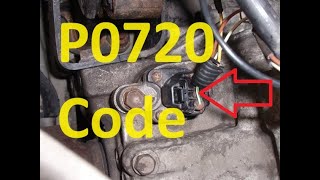
How to confirm: Use a scan tool with live data to monitor the OSS signal while driving. If the signal is erratic, drops out, or doesn't match the vehicle's actual speed, the sensor is likely bad. You can also test 🎬 Watch: How to diagnose and fix the P0720 code the sensor's internal resistance with a multimeter, which should be around 500 Ω ± 10% for some models.
Typical fix: Replace the Output Speed Sensor. This is an external part on the 4T45E but an internal part on the 6T70, requiring more labor.
Est. part cost: $20-$70 - Damaged Wiring or Connector 🟡 Medium Probability The wiring harness to the sensor is located near moving parts and exposed to road debris and fluids, which can cause chafing, breaks, or corrosion in the connector pins, disrupting the signal.
How to confirm: Visually inspect the wiring harness from the sensor to the TCM for any signs of physical damage, corrosion, or loose connections. Perform a continuity and short-to-ground test on the circuit.
Typical fix: Repair the damaged section of the wire or replace the connector pigtail.
Est. part cost: $10-$30 - Low or Contaminated Transmission Fluid ⚪ Low Probability → Shop Transmission Assembly Metal shavings from normal wear can accumulate in the fluid and stick to the magnetic tip of the speed sensor, disrupting its signal. The 6T70 transmission, in particular, is known for potential wave plate failures that can introduce debris into the fluid.
How to confirm: Check the transmission fluid level and condition. If the fluid is dark, smells burnt, or contains visible metal particles, it indicates a problem.
Typical fix: Perform a transmission fluid and filter change. If significant metal is present, internal transmission inspection may be needed.
Est. part cost: $50-$150
Rare But Worth Checking
- Faulty Transmission Control Module (TCM) or Powertrain Control Module (PCM): → Shop Engine Control Module (ECM) This is rare and should only be considered after the sensor and wiring have been thoroughly tested and ruled out. A faulty module can misinterpret a good sensor signal.
Diagnosis Steps
- Connect an OBD-II scanner and confirm the P0720 code. Check for any other pending or active transmission-related codes.
- Use the scanner's live data function to monitor the Output Speed Sensor signal while driving (if safe) or with the drive wheels raised. The reading should be smooth and correspond to vehicle speed.
- Inspect the transmission fluid level and condition. Note any burnt smell or metal particles.
- Locate the Output Speed Sensor. On the 4T45E (4-cyl/3.5L V6), it is typically on the exterior of the transmission case. On the 6T70 (3.6L/3.9L V6), it is internal, requiring removal of the valve body cover for access.
- Visually inspect the sensor's connector and wiring harness for any signs of damage, corrosion, or loose connections.
- Disconnect the sensor and test its resistance with a multimeter. Compare the reading to the manufacturer's specification (e.g., ~500 Ohms). An open or shorted sensor needs replacement.
- If the sensor tests good, check the wiring harness for continuity and for shorts to power or ground between the sensor connector and the TCM.
- If the sensor and wiring are confirmed to be good, the issue may lie with the Transmission Control Module (TCM), which may require professional diagnosis.
Parts You'll Likely Need
- Automatic Transmission Output Shaft Speed Sensor
(OEM #ACDelco 213-4527 (or GM 19332971) for 4T45-E; ACDelco 24256878 for 6T70)— This is the most common component to fail, directly causing the P0720 code. The part number differs between the 4-speed and 6-speed transmissions.
Trusted brands: ACDelco, Dorman, Standard Motor Products
OEM price range: $30-$70
Aftermarket price range: $15-$45
Related Codes That Often Appear With This One
- P0721 — Indicates Output Speed Sensor Circuit Range/Performance issue, a more specific version of the P0720 fault.
- P0722 — Indicates Output Speed Sensor Circuit No Signal, meaning the computer is receiving no data at all from the sensor.
- P0731 - P0735 — These are incorrect gear ratio codes that often appear when the TCM cannot confirm proper shifting because it lacks a reliable output speed signal.
- P0700 — A general transmission fault code that requests the check engine light. It is often stored alongside more specific codes like P0720 to indicate a fault has been registered in the TCM.
Technical Service Bulletins (TSBs) & Recalls
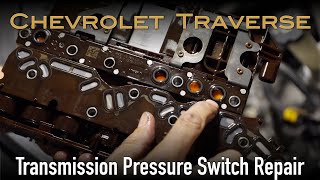
- While no TSBs directly address P0720 specifically, TSB 08-07-30-021E deals with various transmission codes and harsh shifting on 6T70/6T75 transmissions, recommending checking for a broken 3-5-R wave plate, which can create debris that fouls sensors. 🎬 Watch: Understanding speed sensor issues on the 6T70 transmission
Platform-Specific Known Issues
- On G6 models equipped with the 6-speed 6T70 automatic transmission, the output speed sensor is located inside the transmission side cover. Accessing it requires draining the fluid and removing the valve body cover, making the repair significantly more involved than on the 4-speed 4T45E where the sensor is external.
- A forum user on G6ownersclub.com with a 2009 G6 GT (likely 6T70) reported P0720 along with harsh shifting. The fix was replacing the output speed sensor, which was an internal part, confirming the location difference between transmissions.
Mechanic-Grade Diagnostic Values
- Output Speed Sensor (OSS) Resistance — expected: Between 500 and 1500 Ohms (Varies by manufacturer, but this is a common range for passive magnetic sensors).. Failure: A reading of infinite resistance (Open Loop) or near zero Ohms (short circuit).
- OSS Signal Voltage (at TCM connector) — expected: A fluctuating AC voltage that increases with wheel speed when testing a passive sensor.. Failure: No voltage or an erratic, inconsistent voltage signal despite the wheels turning.
- Scan Tool Live Data - Output Speed — expected: A smooth increase in RPM/MPH that corresponds logically with vehicle speed.. Failure: The reading is zero, erratic, or drops out intermittently while the vehicle is moving.
Scan Tool Commands That Help
- Tech2/GDS2: Transmission Data Display — To monitor the live data stream from the Output Speed Sensor in real-time. This is the primary step to see if the TCM is receiving a plausible signal. A reading that is erratic or zero while the vehicle is moving points directly to a problem in the OSS circuit.
- Tech2/GDS2: Fast Learn Procedure — After replacing internal transmission components like the TCM (TEHCM in the 6T70). While not directly for a P0720 fix, if the TCM is replaced as a last resort, this procedure is required to reset and relearn transmission adaptive values.
Wiring & Ground Locations
- G105 / G106 — G105 is on the left rear of the engine (2.4L/3.5L). G106 is on the left rear of the engine (except 3.6L) or right front of the engine (3.6L). Both are typically a stud on the engine block or transmission case.. These are primary ground points for the engine and transmission control systems. A corroded or loose ground at these locations can cause a host of erratic electronic issues, including faulty sensor readings and communication codes, mimicking a failed sensor.
- TCM Connector (4T45E) — The main 49-pin or similar connector at the Transmission Control Module, which is external on 4T45E models.. The OSS signal wires terminate here. For example, on some GM diagrams, the TOSS+ (Transmission Output Speed Sensor Positive) is an ORG/RED wire at pin 25, and TOSS- is a BLK/WHT wire at pin 22. Checking for a signal at these pins can confirm if the signal is reaching the TCM, isolating the problem to the wiring/sensor or the module itself.
- Transmission Harness Splice #107 (4T45E) — Located in the harness conduit for the transmission breakout, approximately 13 inches forward of the main transmission connector, above the cooler lines.. This is a known weak point for water intrusion and corrosion on GM platforms of this era. The splice, often involving a PINK power wire (Circuit 439), can fail and cause multiple transmission codes (P0753, P0758, etc.), and while not directly P0720, a loss of power or reference voltage in the harness can affect multiple sensors.
Real Owner Repair Stories
- g6ownersclub.com forum user (2009 Pontiac G6 GT (3.5L or 3.9L V6)) — Harsh shifting, particularly from 1st to 2nd gear, and the P0720 code.
❌ Tried (didn't work) Initial diagnosis pointed to the sensor.
✅ What actually fixed it The user confirmed the Output Speed Sensor was internal to the transmission (indicating a 6T70). The final fix was replacing this internal sensor, which resolved the shifting problems and cleared the code. - Go-Parts.com Repair Database (2009 Pontiac G6) — Multiple warning lights, transmission not shifting correctly, and sometimes a no-start condition. Codes P0700 and U0101 (Lost Communication with TCM) were present.
❌ Tried (didn't work) The symptoms could have been misdiagnosed as a failed TCM or internal transmission failure.
✅ What actually fixed it The root cause was found to be terminal corrosion within the main transmission harness connector. Repairing the corroded terminals restored communication and proper function, resolving all symptoms and codes.
Model Year Variations Within This Range
- 2005-2010: The primary variation is the transmission fitted. Models with the 2.4L I4 and 3.5L V6 typically use the 4-speed 4T45E, where the OSS is external and easy to access. Models with the 3.6L and 3.9L V6s often use the 6-speed 6T70, where the OSS is an internal component requiring significantly more labor to replace.
Diagnostic Flowchart
Other Known Issues on This Vehicle
Issues unrelated to this code that are worth knowing about as an owner of this generation:
- Electric Power Steering (EPS) Failure 🔴 High — Very common, especially on 2005-2009 models. Can occur at any mileage, often starting around 70,000 miles. (Ref: Recalls 14V153000, 14116, 15V064000. GM extended warranty coverage for this issue.)
- Leaking Sunroof Drain Tubes 🟠 Medium — Common issue where drain tubes clog or disconnect from the sunroof cassette, causing water to leak into the headliner and floorboards.
- Body Control Module (BCM) Connector Issues 🟠 Medium — Corrosion or poor contact at the BCM connectors can cause a wide range of strange electrical problems, including non-functional tail lights. (Ref: Recall 14V252000 addresses a related BCM issue causing brake light malfunctions.)
- Intermediate Steering Shaft Noise 🟡 Low — A clunking or popping noise from the steering column, especially at low speeds. Caused by a poorly lubricated intermediate steering shaft. (Ref: Multiple TSBs exist for lubricating or replacing the shaft.)
- Timing Chain Wear (2.4L Ecotec) 🔴 High — The timing chains, guides, and tensioners on the 2.4L engine can wear prematurely, leading to rattling noises and potential engine failure if not addressed.
Used vs. New Parts: Buying Guide for This Vehicle
When a used part is the smart pick: A used wiring harness pigtail from a junkyard is a smart choice if only the connector is damaged. This provides an OEM-quality connector and wire for splicing. Buying a used sensor is generally not recommended as it's an electronic wear item with an unknown history and high failure rate.
Donor-vehicle mileage cap: roughly under 80000 miles for the part to have meaningful remaining life.
What to inspect on the donor part:
- For a wiring pigtail, ensure there are no signs of corrosion (green or white powder) on the pins.
- Check that the connector's locking tab is intact and functional.
- Inspect the wires for at least 6 inches of length, ensuring they are not brittle, cracked, or previously repaired.
OEM-only on this vehicle (don't cheap out):
- Transmission Control Module (TCM/TEHCM). Aftermarket or improperly programmed used modules frequently cause communication issues on this platform. A new OEM part or a professionally remanufactured unit programmed to the vehicle's VIN is critical.
Aftermarket brands forum-validated for this vehicle:
- ACDelco (OEM)
- Standard Motor Products (SMP)
- Dorman
Brands owners have reported issues with on this vehicle:
- No-name, unbranded sensors from online marketplaces should be avoided. Failure rates are high, and they often have incorrect resistance values, leading to persistent codes and shifting issues.
Real Owner Stories
Aggregated from forums and TSBs cited above. Mileages and costs reflect what owners reported in those sources.
2009 Pontiac G6 GT (6T70 6-speed transmission)
Symptoms: Harsh shifting and a P0720 code.
What fixed it: Replacing the internal output speed sensor located inside the transmission side cover.
Source hint: G6ownersclub.com thread titled 'P0720 - Output Speed Sensor Circuit Malfunction'
2006 Pontiac G6
Symptoms: Harsh shifting, high gas consumption, and eventually entering limp mode.
What fixed it: Repairing damaged wiring to the transmission speed sensor.
Source hint: 2CarPros
Related OBD-II Codes
Frequently Asked Questions
Is the Output Speed Sensor (OSS) easy to replace on my 2009 Pontiac G6 GT with the 3.6L V6?
Could my harsh shifting be related to a broken wave plate instead of just a bad sensor?
Why is my traction control light coming on at the same time as the P0720 code?
Is there a recall for the electrical issues causing my brake lights or tail lights to fail?
Can I check the sensor myself with a multimeter?
Does the Electric Power Steering (EPS) failure on the 2005-2009 G6 trigger the P0720 code?
Helpful Videos

We Have This Part in Stock

The information in this article is provided for general reference and educational purposes only. Vehicle specifications, procedures, and part compatibility can vary by production date, trim level, and region. Always consult your vehicle's factory service manual and verify part numbers before purchasing or performing repairs. Safety-critical components such as airbags, seat belts, and braking systems should be installed by a qualified professional.
- Pontiac G6:
- 🧭 Diagnostic Flowchart
- 🎬 Helpful Videos
- 🛍️ Shop This Part
- What's Unique About the 2005-2010 Pontiac G6
- Symptoms You May Notice
- Most Likely Causes
- Rare But Worth Checking
- Diagnosis Steps
- Parts You'll Likely Need
- Related Codes That Often Appear With This One
- Technical Service Bulletins (TSBs) & Recalls
- Platform-Specific Known Issues
- Mechanic-Grade Diagnostic Values
- Scan Tool Commands That Help
- Wiring & Ground Locations
- Real Owner Repair Stories
- Model Year Variations Within This Range
- Other Known Issues on This Vehicle
- Used vs. New Parts: Buying Guide for This Vehicle
- Real Owner Stories
- 2009 Pontiac G6 GT (6T70 6-speed transmission)
- 2006 Pontiac G6
- Related OBD-II Codes
- Frequently Asked Questions
- 🎟️ Get 5% Off