

P0720 on 2009-2012 Suzuki Equator: Output Speed Sensor Circuit Causes and Fixes
On the 2009-2012 Suzuki Equator, code P0720 almost always indicates a failure of the internal Transmission Control Module (TCM), not the speed sensor itself. The root cause is a well-documented failure of the TCM, which is integrated into the transmission's valve body. The correct fix is to replace the entire valve body assembly inside the transmission. Expect to pay $250-$500 for a remanufactured part and $800-$1,500 for a professional repair.
- Do not assume P0720 means you need a new speed sensor; on this truck, it almost always means you need a new Transmission Control Module (TCM).
- The TCM is part of the valve body assembly, located inside the transmission oil pan. This is not a simple DIY fix.
- Before ordering parts, check your transmission fluid. If it's pink or milky, your radiator has likely failed and contaminated the transmission, requiring a much more extensive repair.
- The most cost-effective solution is typically a remanufactured valve body assembly, which costs significantly less than a new OEM part.
- Always use the correct type of Automatic Transmission Fluid (ATF), such as Nissan Matic-S or a compatible equivalent.
What's Unique About the 2009-2012 Suzuki Equator
The Suzuki Equator is a rebadged Nissan Frontier equipped with a Nissan RE5R05A automatic transmission. On this specific platform, P0720 is notoriously misleading. The root cause is rarely the actual speed sensor but rather a well-documented internal failure of the Transmission Control Module (TCM). The TCM is integrated into the valve body assembly located inside the transmission oil pan, making the repair much more involved than a simple external sensor replacement. Many owners and shops mistakenly replace an external sensor only to have the problem persist, as documented in numerous owner forums.
Symptoms You May Notice
- Transmission gets stuck in a single gear (limp mode), often unable to shift past 3rd gear.
- Harsh, erratic, or delayed gear shifts.
- Check Engine Light is on
- Speedometer works intermittently or not at all.
- Vehicle hesitates or stalls from a stop, especially at traffic lights.
- High engine RPMs with no corresponding gear shift
- Replacing an external vehicle speed sensor. On this platform, the fault is almost always internal to the transmission. There may be an external sensor on the transfer case of 4WD models, but replacing it does not resolve the P0720 code that originates from the TCM.
Most Likely Causes
- Failed Transmission Control Module (TCM) / Valve Body 🔴 High Probability → Shop Transmission Assembly This is a widely known failure point on the Nissan RE5R05A transmission used in the Equator and its platform mates (Frontier, Xterra, Pathfinder). The TCM is integrated with the valve body and its sensitive electronics fail over time due to heat and vibration, falsely triggering the P0720 code. Nissan has issued bulletins for other models instructing technicians to replace the valve body for this code.
How to confirm: After verifying fluid is clean and full, this is the most likely cause. A professional scan tool may show erratic data from the output speed sensor, but the definitive diagnosis is often made by ruling out other simpler causes first. If replacing an external speed sensor (a common misdiagnosis) doesn't work, the internal TCM is the culprit. Many owners report this exact scenario.
Typical fix: Replace the entire transmission valve body assembly, which includes the new TCM and solenoids. The transmission pan must be removed to access it. The replacement part must be the correct design revision for the vehicle and may require programming.
Est. part cost: $250-$600 for a remanufactured assembly, $1000-$1500 for a new OEM part. - Low or Contaminated Transmission Fluid (SMOD) 🟡 Medium Probability → Shop Transmission Assembly A notorious issue on the underlying 2005-2010 Nissan platform was a failure of the radiator's internal transmission cooler, allowing coolant to mix with the transmission fluid (ATF). This contaminated fluid, often called the 'Strawberry Milkshake of Death' (SMOD), quickly destroys the sensitive electronics in the TCM, leading to codes like P0720. This primarily affects 2009-2010 Equators; 2011+ models used a revised radiator design making this failure less common.
How to confirm: Check the transmission fluid dipstick. The fluid should be reddish and clear. If it appears pink, milky, or like a strawberry milkshake, it is contaminated with coolant. Also check for this contamination under the radiator cap.
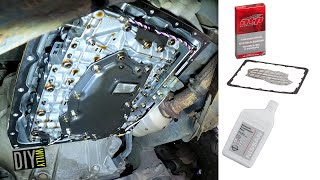
Typical fix: If contaminated with coolant, the radiator, valve body/TCM, and potentially the entire transmission must be replaced, along with a complete fluid flush. This is a very expensive repair. If the fluid is simply low or old, perform a transmission fluid drain and fill with the correct Nissan Matic-S or compatible ATF. 🎬 Watch: DIY guide for a proper transmission fluid service.
Est. part cost: $100-$200 for fluid; $200+ for a new radiator if needed. If SMOD has occurred, repair costs can exceed $5,000. - Damaged Wiring or Connectors ⚪ Low Probability
How to confirm: Visually inspect the main external transmission wiring harness connector for corrosion, pushed-out pins, or damage. A technician can drop the transmission pan to inspect the internal harness for damage, which could be caused by debris, heat, or broken solder joints on the TCM itself.
Typical fix: Repair or replace the damaged section of the wiring harness or the connector. In some cases, technicians have successfully re-soldered broken connections on the TCM, but this is a delicate, often temporary fix.
Est. part cost: $50-$300 depending on the extent of the damage.
Diagnosis Steps
- Read the code with an OBD-II scanner to confirm P0720. Note any other transmission-related codes.
- Check the transmission fluid level and condition. Pull the dipstick and inspect the fluid. If it is pink and milky, you have coolant contamination (SMOD), and the radiator and TCM are likely destroyed. This is most common on 2009-2010 models.
- If the fluid is just low, top it off with the correct fluid type (Nissan Matic-S compatible) and see if the issue resolves. Low fluid can cause shifting problems.
- Inspect the main external transmission wiring harness for any obvious signs of damage, corrosion, or loose connections.
- Given the extremely high probability of TCM failure on this platform, if the fluid and external wiring are okay, the next step is to diagnose the internal components.
- At this point, professional service is recommended. A technician will drop the transmission pan and inspect the internal wiring and valve body.
- The standard, accepted repair is to replace the entire valve body assembly, which contains the new TCM and speed sensor components. Ensure the replacement part is the correct design revision for your vehicle.
Parts You'll Likely Need
- Transmission Valve Body with TCM
(OEM #Varies by VIN. Not a single part number. (e.g., 0260550002, 31705-3DX9A). Must be matched to vehicle.)— This is the most common failure point for code P0720 on this vehicle. The assembly contains the Transmission Control Module (TCM), which fails internally.
Trusted brands: Hitachi (OEM), Rostra, Sunbelt Valve Body Builders
OEM price range: $1000-$1500
Aftermarket price range: $250-$600 (Remanufactured) - Automatic Transmission Fluid (ATF) — Required when replacing the valve body or if the fluid is low/contaminated. The correct type is critical for transmission health. Approximately 8-10 quarts are needed for a valve body replacement.
Trusted brands: Nissan Matic-S, Idemitsu ATF Type J/S, Castrol Transmax Full Synthetic Multi-Vehicle
OEM price range: $15-$25 per quart
Aftermarket price range: $10-$18 per quart - Transmission Pan Gasket — Required when removing the transmission oil pan to access the valve body.
Trusted brands: Fel-Pro, Mahle, Nissan OEM
OEM price range: $25-$40
Aftermarket price range: $15-$25
Related Codes That Often Appear With This One
- P0500 - Vehicle Speed Sensor 'A'
- P1754 - Input Clutch Solenoid Circuit
- P1757 - Front Brake Solenoid Circuit
- P1764 - Direct Clutch Solenoid Valve
Technical Service Bulletins (TSBs) & Recalls
- ITB19-040 (for Infiniti Q50): While not for the Equator directly, this Nissan TSB for a similar transmission confirms the known issue. It instructs technicians to replace the entire control valve assembly (TCM) when P0720 is present, even if diagnostics point to the sensor.
- NTB08-069c: A Nissan TSB related to harsh shifting on the RE5R05A transmission, which can be a symptom accompanying P0720, addressed by software updates or component replacement.
Platform-Specific Known Issues
- A known issue on the underlying Nissan platform is the potential for the radiator's internal transmission cooler to crack, leading to coolant mixing with transmission fluid (SMOD). This contamination rapidly destroys the TCM inside the transmission, causing codes like P0720. This was most prevalent on 2005-2010 models, including the 2009-2010 Equator.
Mechanic-Grade Diagnostic Values
- Solenoid Resistance (All except Low Coast Brake) — expected: 3.3 ohms. Failure: A reading significantly higher or lower than 3.3 ohms indicates a faulty solenoid.
- Low Coast Brake Solenoid Resistance (Two versions exist) — expected: 10-15 ohms or 20-40 ohms. Failure: A reading outside the expected range for the specific version installed.
- Transmission Fluid Temperature Sensor 1 (in sump) — expected: ~6.5k ohms @ 68°F (20°C). Failure: A significant deviation from this resistance value at the specified temperature.
- Transmission Fluid Temperature Sensor 2 (in cooler circuit) — expected: ~4.0k ohms @ 68°F (20°C). Failure: A significant deviation from this resistance value. Note: This sensor was eliminated on some models around mid-2007.
- Output Speed Sensor Bench Test — expected: A DC Hertz signal should be present on pin 2 while turning the output shaft.. Failure: No signal or an erratic signal indicates a faulty sensor.
Scan Tool Commands That Help
- Nissan CONSULT or compatible J2534 device: Accelerator Pedal Released Position Learning — Must be performed after replacing the TCM/valve body or disconnecting the battery to ensure the TCM knows the pedal's zero position.
- Nissan CONSULT or compatible J2534 device: Throttle Valve Closed Position Relearning — Required after TCM/valve body replacement or battery disconnect to calibrate the throttle plate position.
- Nissan CONSULT or compatible J2534 device: Reset Adaptive Strategies / Self-Learning — Crucial after replacing the valve body/TCM. The TCM constantly adapts shift pressures; resetting this data prevents harsh shifting with the new components.
- Nissan CONSULT or NERS software: Write VIN to TCU — Required when installing a new or remanufactured TCM. The TCU is registered to a specific VIN and will not function in another vehicle until it is properly configured and the new VIN is written.
Wiring & Ground Locations
- Main Transmission Connector (Internal TCM Models) — Single green connector on the passenger side of the transmission case.. This is the primary connection point for all electronic signals going to and from the internal TCM, including power, ground, and sensor data. Corrosion or pin damage here can mimic internal failures.
- TCM Solder Joints — Inside the transmission, on the TCM circuit board which is attached to the valve body.. Cracked solder joints on the TCM board are a known failure point due to heat and vibration. These cracks can cause intermittent open circuits for the speed sensor, triggering P0720, especially when the transmission is hot.
- Output Speed Sensor Connector (Internal) — Connects directly to the Park/Neutral Position (PNP) range sensor assembly inside the transmission.. This internal connection can be a point of failure. A bench test involves applying 12V to pin 1 and ground to pin 3 of the sensor's green connector, then checking for a DC hertz signal on pin 2.
Real Owner Repair Stories
- Reddit user in r/q50 (2014 Infiniti Q50 (mechanically similar RE7R01A transmission), 151k miles) — Transmission codes P0500 and P0720.
❌ Tried (didn't work) A second-opinion shop suggested replacing only the output speed sensor and a wheel speed sensor for $1,850.
✅ What actually fixed it Community members strongly advised against the sensor-only repair, citing an Infiniti TSB that mandates replacing the entire valve body for code P0720. The consensus was that replacing just the sensor would be a waste of money as the fault lies within the integrated TCM. The final fix is replacing the complete valve body assembly.
OEM Part Supersession History
Bosch-manufactured TCM→Hitachi-manufactured TCM— Change in OEM supplier around 2007.
Heads up: The programming procedures for Bosch and Hitachi units can differ. Early scan tools and programming software that worked for Bosch units may not work for the newer Hitachi design, sometimes requiring a trip to the dealer for programming.Valve Body with two neutral/reverse accumulators→Valve Body with a single neutral/reverse accumulator— Design simplification and revision by the manufacturer.
Heads up: The valve body separator plate and other internal components are different between designs. The entire valve body assembly must be matched to the vehicle's VIN to ensure compatibility.
Model Year Variations Within This Range
- 2009-2010: These model years are more susceptible to the 'Strawberry Milkshake of Death' (SMOD) due to a radiator design flaw that was corrected in 2011+ models. A P0720 code on these years warrants an immediate and thorough check for coolant in the transmission fluid.
- 2011: Nissan changed the trim level names for the Frontier platform. The base 'XE' became 'S', 'SE' became 'SV', and the top-tier 'LE' became 'SL'. This is a cosmetic change but can cause confusion when ordering parts or looking up service information.
- 2012: Vehicle Dynamic Control (VDC) and 2-Wheel Brake Limited Slip (ABLS) became standard on 4-cylinder models, which were previously only on V6 models. This adds more electronic complexity but is unlikely to be a direct cause of P0720.
Diagnostic Flowchart
Other Known Issues on This Vehicle
Issues unrelated to this code that are worth knowing about as an owner of this generation:
- Radiator Failure causing Coolant/ATF mixing (SMOD) 🔴 High → Shop Radiator — Common on 2009-2010 models with automatic transmission, typically over 60,000 miles. Less common on 2011-2012 due to revised radiator. (Ref: No recall, but was subject of a class-action lawsuit for Nissan models which has since expired.)
- Timing Chain Wear (YD25DDTi & VQ40DE) 🔴 High — More common on high-mileage vehicles (over 100k miles). Can cause rattling noises on startup and eventual engine damage if not addressed.
- Fuel Level Sending Unit Failure 🟠 Medium — Common across the Nissan platform, causing an inaccurate or erratic fuel gauge.
- Front Suspension Control Arm Weld Failure 🔴 High — Specific to a batch of 2010 models. (Ref: NHTSA Recall No. 10V175000)
- Cracked Exhaust Manifolds 🟠 Medium — Can occur on the V6 engine, leading to ticking noises and exhaust leaks.
- Faulty Engine Oil Cooler Bolts 🟠 Medium — Specific to a batch of 2011-2012 models. (Ref: NHTSA Recall No. 12V051000)
Used vs. New Parts: Buying Guide for This Vehicle
When a used part is the smart pick: For this specific repair, a used valve body/TCM from a junkyard is extremely risky and not recommended. The failure is a common design flaw, meaning a used part is likely to have the same issue or fail soon. A 'remanufactured' or 'rebuilt' unit from a reputable supplier is a much smarter choice than used.
Donor-vehicle mileage cap: roughly under 80000 miles for the part to have meaningful remaining life.
What to inspect on the donor part:
- If considering a remanufactured unit, verify the seller is a specialist like Sunbelt, Street Smart Transmission, or IPT.
- Ensure the seller pre-programs the TCM to your vehicle's VIN.
- Confirm the warranty period (a good remanufacturer offers at least a 1-year warranty).
- Verify the seller has tested the unit on a valve body dynamometer (e.g., Superflow AXILINE) to ensure correct pressures and solenoid function.
OEM-only on this vehicle (don't cheap out):
- While the entire valve body assembly is available from quality aftermarket remanufacturers, internal seals and specific bolts are often best sourced from the OEM to ensure proper fit and material quality.
Aftermarket brands forum-validated for this vehicle:
- Sunbelt Valve Body Builders
- Street Smart Transmission
- Import Performance Trans (IPT)
Brands owners have reported issues with on this vehicle:
- Unbranded, untested units from marketplaces like eBay or AliExpress without a clear warranty, VIN programming service, or testing validation.
Real Owner Stories
Aggregated from forums and TSBs cited above. Mileages and costs reflect what owners reported in those sources.
2014 Nissan Frontier
Symptoms: The transmission was getting stuck in gear when warm, but the issue would resolve after restarting the vehicle.
What fixed it: Replacing the external speed sensor with a Nissan part did not fix the issue; the owner was advised that the internal TCM was the likely culprit.
Source hint: r/nissanfrontier - Thread 'P0720 Code' (Feb 2024)
Infiniti Q50
Symptoms: The vehicle had a fault code P0720 and the check engine light was on.
What fixed it: The dealer fixed the issue under the powertrain warranty by replacing the entire transmission valve body.
Source hint: r/q50 - Thread 'Fault code p0720' (Nov 2021)
Related OBD-II Codes
Frequently Asked Questions
My 2010 Equator has a P0720 code and the transmission fluid looks pink and milky. What's happening?
I replaced the external output speed sensor for P0720, but the code came back. What's the real fix?
Is the P0720 problem on my Suzuki Equator the same one I've heard about on Nissan Frontiers?
My mechanic says the whole valve body needs to be replaced for a sensor code. Is this correct?
Does the SMOD (coolant contamination) issue affect my 2012 Equator?
I saw Nissan TSB ITB19-040 mentioned. Does a Nissan bulletin apply to my Suzuki?
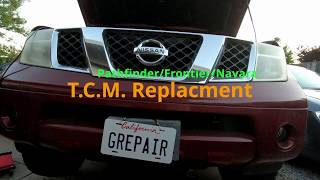
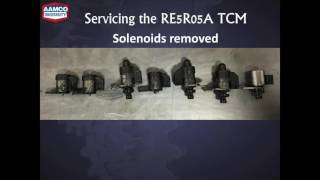
Helpful Videos


We Have This Part in Stock


The information in this article is provided for general reference and educational purposes only. Vehicle specifications, procedures, and part compatibility can vary by production date, trim level, and region. Always consult your vehicle's factory service manual and verify part numbers before purchasing or performing repairs. Safety-critical components such as airbags, seat belts, and braking systems should be installed by a qualified professional.
- Suzuki Equator:
- 🧭 Diagnostic Flowchart
- 🎬 Helpful Videos
- 🛍️ Shop This Part
- What's Unique About the 2009-2012 Suzuki Equator
- Symptoms You May Notice
- Most Likely Causes
- Diagnosis Steps
- Parts You'll Likely Need
- Related Codes That Often Appear With This One
- Technical Service Bulletins (TSBs) & Recalls
- Platform-Specific Known Issues
- Mechanic-Grade Diagnostic Values
- Scan Tool Commands That Help
- Wiring & Ground Locations
- Real Owner Repair Stories
- OEM Part Supersession History
- Model Year Variations Within This Range
- Other Known Issues on This Vehicle
- Used vs. New Parts: Buying Guide for This Vehicle
- Real Owner Stories
- 2014 Nissan Frontier
- Infiniti Q50
- Related OBD-II Codes
- Frequently Asked Questions
- 🎟️ Get 5% Off