

P0720 on 2001-2007 Toyota Highlander: Output Speed Sensor Causes and Fixes
On a 2001-2007 Highlander, code P0720 is almost always a failed Output Speed Sensor on the transmission. This causes a dead or erratic speedometer and harsh shifting. Expect to pay ~$140 for an OEM sensor and ~$40-$90 for an aftermarket one; it's a DIY-friendly fix.
- P0720 on a 2001-2007 Highlander almost always means you need a new Output Speed Sensor.
- Symptoms are serious (erratic
What's Unique About the 2001-2007 Toyota Highlander
For the first-generation Highlander and its Lexus RX300 counterpart, the P0720 code has a very straightforward and common cause: the output speed sensor itself has failed. Unlike some other vehicles where wiring or control modules are frequent culprits, owners on this platform consistently report that replacing the sensor resolves the issue. It's important not to confuse this transmission-mounted sensor with the ABS wheel speed sensors, as P0720 specifically points to the transmission circuit.
Symptoms You May Notice
- Erratic or non-functional speedometer.
- Harsh, jerky, or delayed automatic transmission shifting.
- Transmission gets stuck in one gear (fail-safe or 'limp' mode).
- Check Engine Light is on
- Cruise control does not work.
- Vehicle may stall when coming to a stop.
- Reduced fuel economy.
- Replacing the wrong sensor (e.g., an ABS wheel speed sensor or the input speed sensor). P0720 points specifically to the transmission output sensor.
- Assuming the transmission has failed and needs a complete rebuild. The symptoms can be alarming but are often caused by this simple sensor.
Most Likely Causes
- Faulty Output Speed Sensor 🔴 High Probability The sensor is an electronic component that operates in a high-heat environment and is a well-documented, common failure item across many Toyota models of this era that use the same part.
How to confirm: After visually inspecting the wiring, the most practical test for a DIYer is to replace the sensor. A professional can test the sensor's resistance with a multimeter (should be 560-680 ohms 🎬 See how to test and replace the revolution sensor.) or graph its signal with an oscilloscope. Given the high failure rate, replacement is often the most efficient diagnostic step.
Typical fix: Replace the Output Speed Sensor. The sensor is located on the top/front of the transmission housing and is held in by a single 10mm or 12mm bolt.
Est. part cost: $40-$150 - Damaged Wiring or Connector 🟡 Medium Probability The wiring harness leading to the sensor is exposed to engine bay heat and vibration, which can cause wires to become brittle, frayed, or for the connector to become loose or corroded over time.
How to confirm: Visually inspect the wiring harness leading to the speed sensor for any signs of cracking, melting, or physical damage. Check that the connector is securely plugged in and that the pins are clean and free of corrosion. Wiggle the harness while the engine is running to see if it affects symptoms.
Typical fix: Repair the damaged section of wire or clean/replace the connector pigtail.
Est. part cost: $10-$30 - Low or Dirty Transmission Fluid ⚪ Low Probability → Shop Transmission Assembly While not a direct cause of an electrical circuit code, extremely low or contaminated fluid can cause erratic shifting, internal slippage, and other issues that may indirectly trigger sensor-related codes.
How to confirm: Check the transmission fluid level and condition using the dipstick. The fluid should be at the 'HOT' mark when at operating temperature and should be reddish-pink and not smell burnt.
Typical fix: Top off the fluid with the correct type (Toyota Type T-IV) or perform a drain and fill.
Est. part cost: $15-$60
Rare But Worth Checking
- Metal Shavings on Sensor Tip: The speed sensor has a magnetic tip. In transmissions with high mileage or internal wear, fine metal particles can accumulate on the tip, disrupting its ability to get a clean reading. It's worth removing and cleaning the sensor before buying a new one.
- Faulty Powertrain Control Module (PCM): → Shop Engine Control Module (ECM) A failure of the vehicle's main computer is a possible but very rare cause. This should only be considered after all other possibilities, including the sensor and wiring, have been definitively ruled out by a professional.
Diagnosis Steps
- Read the code with an OBD-II scanner to confirm P0720 is present.
- Check the transmission fluid level and condition. Top up or service if necessary.
- Locate the Output Speed Sensor on the transmission housing. It is typically on top, accessible after removing the air filter box and battery. 🎬 Watch: Step-by-step guide to replacing the sensor on a Highlander. On V6 models, it is near the front of the transaxle, below the throttle body.
- Visually inspect the sensor's connector and wiring for any obvious damage, corrosion, or loose connections.
- If wiring looks good, the most common and effective next step is to replace the sensor. Owners strongly recommend using OEM, Denso, or NGK/NTK parts, as cheaper aftermarket sensors are reported to fail prematurely.
- When replacing, apply a light coat of clean ATF to the new sensor's O-ring before installation.
- Install the new sensor and torque its single bolt to approximately 8 ft-lbs (11.3 Nm).
- Clear the trouble code with the scanner and perform a test drive to ensure the speedometer and shifting have returned to normal.
Parts You'll Likely Need
- Output Speed Sensor (Transmission Revolution Sensor)
(OEM #89413-08020)— This is the primary cause of code P0720 on this vehicle due to internal electronic failure. This part number supersedes 89413-24010, 89411-33010, and 89413-33020.
Trusted brands: Toyota (OEM), Aisin, Denso, NGK/NTK, Standard Motor Products (SMP)
OEM price range: $130-$160.
Aftermarket price range: $40-$90
Related Codes That Often Appear With This One
- P0500 — P0500 refers to a general Vehicle Speed Sensor malfunction. Since the output speed sensor provides the data for vehicle speed, a fault in its circuit can trigger both codes.
- P0722 — P0722 indicates 'Output Speed Sensor Circuit No Signal,' which is a more specific version of P0720, pointing to a complete lack of signal rather than an erratic one.
Platform-Specific Known Issues
- On this platform, the symptoms of a failed output speed sensor (harsh shifting, getting stuck in gear) can be so severe that they are often mistaken for catastrophic transmission failure. 🎬 Watch: How to fix speed sensor issues on Toyota and Lexus. Always diagnose P0720 before condemning the transmission.
- Forum users repeatedly advise against using cheap, unbranded aftermarket sensors. Many report these parts failing within a short period. Sticking to OEM, Denso, or other reputable Japanese brands is highly recommended for reliability.
Mechanic-Grade Diagnostic Values
- Output Speed Sensor internal resistance — expected: 560 - 680 Ohms. Failure: A reading significantly outside this range, or an open/short circuit.
- Continuity between sensor connector and ECM connector — expected: Below 1 Ohm. Failure: High resistance or an open circuit (OL) indicates a broken wire in the harness.
- Resistance between sensor connector pins and body ground — expected: 10 kOhms or higher. Failure: Resistance below 10 kOhms indicates a short to ground in the harness.
- Output Speed Sensor signal voltage (while operating) — expected: Pulsing voltage signal that changes with speed.. Failure: A constant voltage below 0.1V or above 1.9V indicates a circuit malfunction.
Scan Tool Commands That Help
- Toyota Techstream: Data List > Powertrain / Engine and ECT > SPD (NOUT) — This is the primary method for observing the live speed signal being reported by the output speed sensor to the ECM. During a test drive, the value should increase smoothly with vehicle speed. An erratic, jumping, or zero value while the vehicle is moving confirms a fault in the sensor's circuit.
Wiring & Ground Locations
- ECM (Engine Control Module) — Behind the right side of the dashboard, typically accessible by removing the glove box.. The ECM is the destination for the output speed sensor's signal. Technicians need to access its connectors (e.g., connector B39) to perform continuity and short-to-ground tests on the sensor wiring.
- Ground Point Naming Convention — Vehicle-wide. Toyota wiring diagrams use a specific naming convention for ground points: 'E' for Engine Compartment, 'I' for Instrument Panel area, and 'B' for the Body. Knowing this helps a technician quickly locate the relevant ground point (e.g., 'EF' on the cylinder block) when troubleshooting a potential grounding issue in the sensor circuit.
- Sensor Connector S2 / B34 — On the transmission housing, connecting to the output speed sensor.. This is the starting point for all electrical tests. The pins (e.g., B34-1, B34-2) are used to measure sensor resistance directly and serve as the starting point for harness continuity tests back to the ECM.
Real Owner Repair Stories
- YouTube user 'pwnsfer' (Vehicle exhibiting a P0720 code (model not specified, but diagnosis is universal for the code)) — Persistent P0720 check engine light.
❌ Tried (didn't work) Replaced the output speed sensor once., Replaced the output speed sensor a second time with a new Mopar sensor., Cleaned the electrical connector for the sensor.
✅ What actually fixed it The wiring connector/pigtail itself was faulty. The user cut off the old connector, purchased a new wiring kit/pigtail, and spliced it into the harness. This permanently resolved the P0720 code.
OEM Part Supersession History
89413-24010, 89411-33010, 89413-33020→89413-08020— Part consolidation and potential design updates by Toyota over the years.89413-08020 (OEM)→Aftermarket cross-references: Dorman 917-603, NGK/NTK AU0117, Standard Motor Products (SMP) SC153, Wells SU11146— Aftermarket production of equivalent parts.
Heads up: While these parts are designed to be direct replacements, owner and mechanic consensus strongly favors using the OEM Toyota/Denso/Aisin part for long-term reliability.
Model Year Variations Within This Range
- 2001-2007: The Highlander used several transaxle models (U140E/F, U151E/F, U241E), often differing between 4-cylinder and V6 models, and FWD vs. AWD (designated by 'F'). While the P0720 fault points to the same component function (output speed), the exact sensor part number or its designation (e.g., 'No. 1 Revolution Sensor' vs 'No. 2 Revolution Sensor') can vary depending on the specific transmission installed. Always verify the part by VIN.
Diagnostic Flowchart
Other Known Issues on This Vehicle
Issues unrelated to this code that are worth knowing about as an owner of this generation:
- Stripped Cylinder Head Bolt Threads (2.4L 2AZ-FE Engine) 🔴 High — Common on 2002-2006 models, especially after an overheating event. Can occur between 50,000 and 100,000 miles. Toyota revised the block design around 2006-2007 to mitigate this. (Ref: T-SB-0015-11 describes a procedure to repair the threads using inserts.)
- Ruptured VVT-i Rubber Oil Line (3.0L & 3.3L V6 Engines) 🔴 High — Affects V6 models (1MZ-FE, 3MZ-FE) and especially the later 2GR-FE. The rubber portion of the line degrades and can burst, causing rapid and catastrophic oil loss. (Ref: Toyota issued a Limited Service Campaign (LSC) to replace the rubber/metal line with an all-metal line (Part No. 15772-31030).)
- Sludged Engine (3.0L 1MZ-FE V6) 🟠 Medium — More common in early 2001-2003 models if oil change intervals were not strictly followed.
- Faulty Climate Control Module/Knobs 🟡 Low — Owners report air temperature changing on its own due to loose solder joints on the control panel's circuit board.
- Seizing Brake Calipers 🟠 Medium — Can occur if brake maintenance is neglected, leading to sticking calipers, uneven pad wear, and pulling.
Used vs. New Parts: Buying Guide for This Vehicle
When a used part is the smart pick: A used OEM sensor from a reputable salvage yard is a reasonable choice for this repair, especially if sourced from a low-mileage, accident-damaged vehicle. Given the simplicity and external location of the part, it's a low-risk used component.
Donor-vehicle mileage cap: roughly under 100000 miles for the part to have meaningful remaining life.
What to inspect on the donor part:
- No visible cracks or damage to the sensor body.
- Connector pins are clean, straight, and free of corrosion.
- The O-ring is present (but should always be replaced with a new one).
- Ask for the donor vehicle's mileage if possible.
OEM-only on this vehicle (don't cheap out):
- Powertrain Control Module (PCM) - If the PCM is the suspected cause, it should be replaced with a genuine OEM unit or sent to a specialized electronics rebuilder. Aftermarket or improperly programmed modules can cause significant issues.
Aftermarket brands forum-validated for this vehicle:
- Denso (often the original OEM manufacturer)
- Aisin (OEM transmission manufacturer)
- NGK / NTK
- Standard Motor Products (SMP)
- Delphi
Brands owners have reported issues with on this vehicle:
- Unbranded 'white-box' sensors from online marketplaces. Forum and mechanic consensus indicates these have a high premature failure rate.
Real Owner Stories
Aggregated from forums and TSBs cited above. Mileages and costs reflect what owners reported in those sources.
2002 Toyota Highlander
Symptoms: The vehicle had no speedometer functionality and was stuck in 3rd gear.
What fixed it: Replaced the output speed sensor (part #89413-08020).
Source hint: ToyotaNation Forums - P0720 Output speed sensor
2004 Toyota Highlander
Symptoms: Erratic gauge behavior and hard shifting.
What fixed it: Replaced both speed sensors and a portion of the wiring harness.
Source hint: CarKiller Forums - 2004 Highlander P0720
2001-2003 Lexus RX300 (Platform Mate)
Symptoms: Shifting issues and speedometer failure accompanied by multiple codes including P0720, P0725, and P0500.
What fixed it: Replacing the output speed sensor resolved the shifting and speedometer issues.
Source hint: ClubLexus - RX300 - P0720, P0725, P1780, P0500, P0330, P1349
2001-2007 Toyota Highlander
Symptoms: Low output speed sensor code P0720.
What fixed it: Replaced the sensor in 15-20 minutes.
Cost: $17-$17
Source hint: TDR - Trouble code P0720 Low output speed sensor
Related OBD-II Codes
Frequently Asked Questions
My 2002 Highlander is stuck in 3rd gear and the speedometer isn't moving; is my transmission blown?
Which brand of replacement sensor should I use for my Highlander's P0720 code?
Where is the Output Speed Sensor located on the Highlander V6?
What is the correct resistance specification for testing the Highlander's speed sensor?
Is there a TSB for the engine oil leaks mentioned in the known issues for the V6 Highlander?
What type of transmission fluid should I use if I need to top off my 2001-2007 Highlander?
Helpful Videos
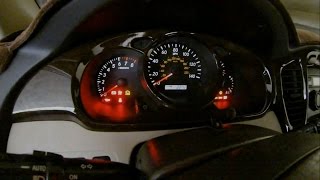
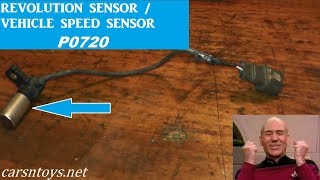

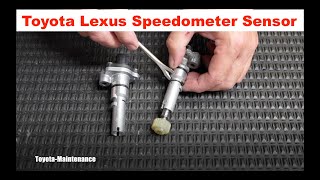
We Have This Part in Stock

The information in this article is provided for general reference and educational purposes only. Vehicle specifications, procedures, and part compatibility can vary by production date, trim level, and region. Always consult your vehicle's factory service manual and verify part numbers before purchasing or performing repairs. Safety-critical components such as airbags, seat belts, and braking systems should be installed by a qualified professional.
- Toyota Highlander:
- 🧭 Diagnostic Flowchart
- 🎬 Helpful Videos
- 🛍️ Shop This Part
- What's Unique About the 2001-2007 Toyota Highlander
- Symptoms You May Notice
- Most Likely Causes
- Rare But Worth Checking
- Diagnosis Steps
- Parts You'll Likely Need
- Related Codes That Often Appear With This One
- Platform-Specific Known Issues
- Mechanic-Grade Diagnostic Values
- Scan Tool Commands That Help
- Wiring & Ground Locations
- Real Owner Repair Stories
- OEM Part Supersession History
- Model Year Variations Within This Range
- Other Known Issues on This Vehicle
- Used vs. New Parts: Buying Guide for This Vehicle
- Real Owner Stories
- 2002 Toyota Highlander
- 2004 Toyota Highlander
- 2001-2003 Lexus RX300 (Platform Mate)
- 2001-2007 Toyota Highlander
- Related OBD-II Codes
- Frequently Asked Questions
- 🎟️ Get 5% Off