

P0720 on 2008-2013 Toyota Highlander: Output Speed Sensor Causes and Fixes
On a 2008-2013 Toyota Highlander, code P0720 almost always points to a failed transmission output speed sensor. This can cause harsh shifting, an erratic speedometer, and prevent cruise control from working. Replacing the sensor is a common and relatively straightforward DIY fix, as it's located on the exterior of the transmission.
- P0720 on a 2008-2013 Highlander is most likely caused by a bad output speed sensor, OEM part number 89413-08020.
- Symptoms are directly related to transmission performance, including harsh shifting, an inoperative speedometer, and disabled cruise control.
- The sensor is located on the outside of the transmission, making it a feasible DIY repair for many owners.
- Always check the wiring and connector to the sensor before replacing it, as this is another common cause.
- Do not confuse the transmission output speed sensor with the ABS wheel speed sensors.
What's Unique About the 2008-2013 Toyota Highlander
For the second-generation Toyota Highlander (2008-2013), which uses the U660E (V6) or U760E (I4) 6-speed automatic transaxle, the P0720 code is a very common fault pointing directly to the output speed sensor. Unlike some vehicles where the sensor is inside the transmission, on this Highlander, it is mounted externally on the transaxle housing, making it much easier to access and replace for a DIY mechanic. It is crucial not to confuse this transmission sensor with the ABS wheel speed sensors, which serve a different purpose for the anti-lock braking system.
🎬 Watch: How to replace an ABS sensor if needed.Symptoms You May Notice
- Harsh, erratic, or delayed automatic shifting.
- Transmission getting stuck in a single gear (limp mode).
- Check Engine Light is on.
- Speedometer needle jumps around, reads incorrectly, or doesn't move at all.
- Cruise control does not work.
- Automatic door locks (which engage at a certain speed) may not work correctly.
- Replacing an ABS wheel speed sensor. The P0720 code specifically refers to the speed sensor on the transmission, not the sensors at the wheels used for the anti-lock brake system.
- Rebuilding or replacing the entire transmission. Because the symptoms involve harsh shifting, some may assume a major mechanical failure when it is often just a simple and inexpensive electronic sensor.
Most Likely Causes
- Failed Output Speed Sensor 🔴 High Probability This is a common failure point for electronic sensors on many vehicles as they age. The sensor is the most frequent culprit for a P0720 code on this platform.
How to confirm: After checking wiring, test the sensor's resistance with a multimeter or observe its signal on an advanced scan tool 🎬 See how to diagnose a P0720 code using a scanner. (should show a smooth increase with speed). The most common confirmation is replacing the sensor and seeing if the code and symptoms resolve.
Typical fix: Replace the output speed sensor. It is typically located on the exterior of the transmission case, held in by a single bolt. 🎬 Watch: Step-by-step guide to replacing the output speed sensor. Access may require removing the air filter box.
Est. part cost: $40-$120 - Damaged Wiring or Connector 🟡 Medium Probability The wiring harness is exposed to engine heat, vibration, and potential road debris, which can lead to chafing, breaks, or corrosion over time, especially at the connector.
How to confirm: Visually inspect the wiring harness and connector leading to the output speed sensor for any signs of damage, corrosion, or loose pins. Perform a continuity test on the wires between the sensor connector and the ECM if no visual damage is found.
Typical fix: Repair the damaged section of wire or replace the connector pigtail. Ensure the connection is secure and protected from the elements.
Est. part cost: $10-$30 - Low or Dirty Transmission Fluid ⚪ Low Probability → Shop Transmission Assembly While not a direct cause of a circuit code, extremely low or contaminated fluid can cause erratic transmission behavior that may, in some cases, be misinterpreted by the system or accompany other codes. These transmissions require Toyota World Standard (WS) fluid.
How to confirm: Check the transmission fluid level and condition according to the owner's manual procedure. The fluid should be at the correct level and pink/red in color, not brown, black, or burnt-smelling.
Typical fix: Perform a transmission fluid drain-and-fill or a full fluid exchange if the fluid is low or degraded. Use only Toyota-specified WS fluid.
Est. part cost: $70-$200
Rare But Worth Checking
- Faulty Powertrain Control Module (PCM) or Transmission Control Module (TCM): → Shop Engine Control Module (ECM) This is very rare. All other possibilities, especially the sensor and its wiring, should be exhaustively ruled out before considering the control module as the cause.
Diagnosis Steps
- Read all stored trouble codes with an OBD-II scanner. Note any other codes that are present, such as P0500 or P0722.
- Check the level and condition of the automatic transmission fluid. Ensure it is full and clean. The Highlander uses Toyota World Standard (WS) fluid.
- Locate the output speed sensor on the outside of the transmission transaxle. It is often visible looking down past the battery and air intake box.
- Carefully inspect the sensor's electrical connector and wiring harness for any signs of damage, corrosion, loose connections, or chafing.
- If wiring appears intact, the most common and cost-effective next step is to replace the output speed sensor. This is the most likely failure point.
- If a new sensor does not fix the issue, perform more advanced circuit testing. Check for the correct reference voltage and a good ground at the connector. Use a multimeter to check for an open or short in the signal wire between the sensor and the ECM/TCM.
- If the sensor and wiring are confirmed to be good, the final possibility is a fault within the Powertrain Control Module (PCM), though this is highly unlikely.
Parts You'll Likely Need
- Automatic Transmission Output Speed Sensor
(OEM #89413-08020 (supersedes 89413-48010, 89413-08010))— This sensor is the most common point of failure for a P0720 code.
Trusted brands: Toyota (OEM), Denso, NGK/NTK, Standard Motor Products (SMP)
OEM price range: $90-$150
Aftermarket price range: $40-$90
Related Codes That Often Appear With This One
- P0500 — P0500 refers to a general Vehicle Speed Sensor (VSS) malfunction. Since the output speed sensor often serves as the primary VSS, these codes frequently appear together.
- P0722 — P0722 indicates 'Output Speed Sensor Circuit No Signal', which is a more specific version of the P0720 fault, pointing directly to a complete loss of signal.
- P0715 — P0715 refers to the Input/Turbine Speed Sensor circuit. A fault in one speed sensor can sometimes cause the computer to flag the other as irrational.
Platform-Specific Known Issues
- Forum user experiences consistently point to the output speed sensor as the primary fix for P0720 accompanied by erratic speedometer and harsh shifting on 2nd generation Highlanders.
- One owner reported replacing both speed sensors and part of the wiring harness to resolve the issue, highlighting that wiring can be a secondary cause. They also noted the speedometer would not register until about 35 MPH, which also affected the automatic door locks.
Mechanic-Grade Diagnostic Values
- Output Speed Sensor internal resistance — expected: 500 Ω ± 10%. Failure: A reading far outside this range indicates a faulty sensor.
- Sensor reference voltage at connector — expected: 5 V ± 0.5 V. Failure: No voltage or voltage outside this range points to a wiring or ECM issue.
- Ground circuit resistance at connector — expected: < 0.1 Ω. Failure: Higher resistance indicates a poor ground connection, which can cause an erratic signal.
- Sensor signal on oscilloscope at 30 mph — expected: A clean, regular pulse train (approx. 2–4 kHz). Failure: An absent, erratic, or noisy waveform indicates a failing sensor or wiring issue.
Scan Tool Commands That Help
- Toyota Techstream: A/T Code Reset (Powertrain -> ECT -> Utility) — This function should be used to reset the transmission's adaptive learning values after a major repair like replacing the valve body or the entire transaxle. It forces the TCM to relearn shift points and pressures.
Wiring & Ground Locations
- J/C A36 & D51 — Behind left kick panel. These are junction connectors where multiple harnesses meet. While not exclusive to the speed sensor, corrosion or a loose connection at these junctions can cause faults in any circuit passing through them, including sensor data lines to the ECM.
- J/C D53 & E24 — Behind right side of dash. Similar to the kick panel junctions, these connectors under the dash are potential points of failure for wiring between the transmission and the control modules. A wiggle test of harnesses near these points can help identify intermittent issues.
OEM Part Supersession History
89411-33010, 89413-24010, 89413-33020, 89413-48010, 89413-08010→89413-08020— Part consolidation and potential design revisions over many model years.
Model Year Variations Within This Range
- 2008-2013: The V6 models are equipped with the U660E automatic transaxle, while the 4-cylinder (I4) models use the U760E. For the P0720 fault, the diagnosis and repair procedure involving the external output speed sensor are virtually identical for both transmissions.
Diagnostic Flowchart
Other Known Issues on This Vehicle
Issues unrelated to this code that are worth knowing about as an owner of this generation:
- VVT-i Oil Line Rupture (V6 Only) 🔴 High — Common on earlier models (pre-2010) with the original rubber hose. Failure can occur without warning, typically at higher mileage (80k+ miles), leading to rapid oil loss and potential engine seizure. (Ref: LSC 90K / T-SB-0094-10: Toyota issued a Limited Service Campaign to replace the rubber hose with an all-metal line.)
- Melting / Sticky Dashboard 🟡 Low — Very common in climates with high heat and humidity. The dashboard surface degrades, becomes shiny, sticky, and may crack over time. (Ref: ZE6: Toyota created a Warranty Enhancement Program to cover the replacement of affected dashboards.)
- Intermediate Steering Shaft Clunk 🟠 Medium — A common issue where a clunking or popping noise is heard from the steering column when turning. It's caused by wear in the intermediate shaft's splines or U-joints. (Ref: T-SB-0034-13: A TSB was released detailing the replacement of the original shaft (p/n 45220-48170) with an updated part (p/n 45220-48171).)
- Water Pump Failure (V6 Only) 🟠 Medium — A frequent failure point on the 2GR-FE engine. Symptoms include a rattling/grinding noise that changes with engine RPM or visible pink/crusted coolant residue on the passenger side of the engine.
- Power Door Lock Actuator Failure 🟡 Low — Common for individual door lock actuators to fail, resulting in one or more doors not locking or unlocking with the power buttons. The lock may move slowly or not at all.
Used vs. New Parts: Buying Guide for This Vehicle
When a used part is the smart pick: For an electronic sensor that is a known common failure point and relatively inexpensive, a used part from a salvage yard is not recommended. The risk of premature failure and the labor involved in replacing it a second time outweigh the small cost savings.
What to inspect on the donor part:
- Not applicable as used sensors are not advised for this repair.
OEM-only on this vehicle (don't cheap out):
- While not strictly 'OEM-only', using a genuine Toyota sensor or one from the original equipment manufacturer (like Denso or NTK) is strongly recommended for reliability and to avoid repeat failures.
Aftermarket brands forum-validated for this vehicle:
- Denso
- NGK/NTK
- Standard Motor Products (SMP)
Brands owners have reported issues with on this vehicle:
- Unnamed or 'white-box' brands from online marketplaces should be avoided, as their quality control and longevity are often questionable.
Real Owner Stories
Aggregated from forums and TSBs cited above. Mileages and costs reflect what owners reported in those sources.
2008-2013 Toyota Highlander
Symptoms: Hard shifting and erratic gauges. The speedometer would not register any speed until the vehicle reached approximately 35 MPH, which also prevented the automatic door locks from engaging.
What fixed it: Replacement of both speed sensors and a portion of the wiring harness.
Source hint: CarKiller Forum - 'error code P0720'
2008-2013 Toyota Highlander V6
Symptoms: Harsh, erratic, or delayed automatic shifting and the transmission getting stuck in a single gear (limp mode).
What fixed it: Replacement of the output speed sensor located on the exterior of the transmission case.
Source hint: vehicle_specific_issues /
Related OBD-II Codes
Frequently Asked Questions
Where is the output speed sensor located on my 2008-2013 Highlander?
My Highlander's speedometer is jumping and the door locks are acting up. Is this related to P0720?
What type of transmission fluid should I use if I'm performing a drain-and-fill to address shifting issues?
Is there a TSB for the clunking noise I hear in the steering while diagnosing my transmission issues?
Could a leak from my V6 Highlander's oil line cause these transmission codes?
Can I use a used speed sensor from a salvage yard to save money?
Helpful Videos
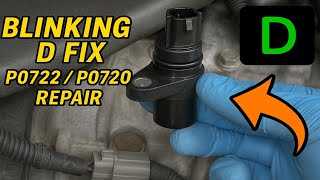
![Transmission Service Required [P0720"Secondary/Output Speed Signal"]](https://img.youtube.com/vi/vDZqH4vwsnU/mqdefault.jpg)
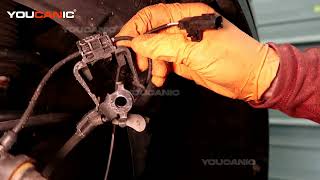
We Have This Part in Stock

The information in this article is provided for general reference and educational purposes only. Vehicle specifications, procedures, and part compatibility can vary by production date, trim level, and region. Always consult your vehicle's factory service manual and verify part numbers before purchasing or performing repairs. Safety-critical components such as airbags, seat belts, and braking systems should be installed by a qualified professional.
- Toyota Highlander:
- 🧭 Diagnostic Flowchart
- 🎬 Helpful Videos
- 🛍️ Shop This Part
- What's Unique About the 2008-2013 Toyota Highlander
- Symptoms You May Notice
- Most Likely Causes
- Rare But Worth Checking
- Diagnosis Steps
- Parts You'll Likely Need
- Related Codes That Often Appear With This One
- Platform-Specific Known Issues
- Mechanic-Grade Diagnostic Values
- Scan Tool Commands That Help
- Wiring & Ground Locations
- OEM Part Supersession History
- Model Year Variations Within This Range
- Other Known Issues on This Vehicle
- Used vs. New Parts: Buying Guide for This Vehicle
- Real Owner Stories
- 2008-2013 Toyota Highlander
- 2008-2013 Toyota Highlander V6
- Related OBD-II Codes
- Frequently Asked Questions
- 🎟️ Get 5% Off