

P0722 on 2013-2019 Ford Taurus: Output Speed Sensor Failure Causes and Fixes
On a 2013-2019 Ford Taurus, code P0722 is almost always caused by a failed internal Output Speed Sensor (OSS), which is part of the transmission's molded lead frame. This is a complex, labor-intensive repair requiring transmission disassembly. Expect a shop cost of $800-$1500.
- P0722 on a 2013-2019 Taurus indicates a total signal loss from the Output Speed Sensor (OSS).
- The primary cause is a failed molded lead frame inside the transmission, which contains the OSS.
- This is NOT a simple DIY repair. The transmission valve body must be removed, making it a complex and labor-intensive job for a professional.
- Symptoms are serious and affect drivability, including harsh shifting and an inoperative speedometer.
- Do not ignore this code, as continued driving can lead to more severe transmission damage.
What's Unique About the 2013-2019 Ford Taurus
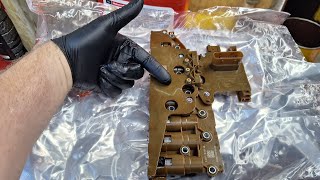
The critical issue for the 2013-2019 Ford Taurus (Sixth Generation) is the location of the Output Speed Sensor (OSS). Unlike in many other vehicles where it's an external, easily accessible part, the OSS is located *inside* the 6F50/6F55 automatic transmission. It is integrated into a component called the molded lead frame, which is attached to the valve body. This internal placement transforms a typically simple sensor replacement into a significant, professional-level repair that involves draining the transmission fluid, dropping the pan, and removing the entire valve body assembly to access the part.
Symptoms You May Notice
- Harsh, erratic, or delayed gear shifting
- Inaccurate or completely dead speedometer (stuck at 0 mph)
- Illuminated Check Engine Light
- Illuminated wrench light on the dashboard
- Cruise control not working
- Vehicle may enter a "limp mode" with limited gear availability (e.g., stuck in 3rd or 5th gear)
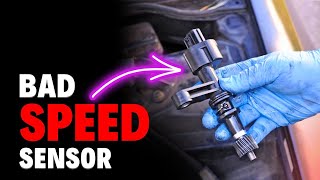
- Odometer display may show dashes instead of mileage 🎬 See how a bad speed sensor affects your vehicle.
- Replacing only the external Input Speed Sensor (ISS) / Turbine Speed Sensor (TSS)
- Replacing the entire transmission without first diagnosing the lead frame
- Blaming the PCM before thoroughly checking the sensor circuit and the sensor itself
- Replacing the valve body when only the lead frame is faulty
Most Likely Causes
- Failed Internal Molded Lead Frame / Output Speed Sensor 🔴 High Probability → Shop Transmission Valve Body The molded lead frame, which contains the OSS and other transmission sensors, is a well-documented failure point in this family of Ford 6-speed automatic transmissions (6F50/6F55). Heat cycles and vibration can cause microscopic cracks in the internal circuitry or the sensor itself to fail over time, leading to a complete loss of signal.
How to confirm: A professional technician will use a high-end scan tool to monitor live data from the transmission sensors. A complete lack of a signal (0 RPM) from the OSS while the vehicle is moving confirms the circuit failure. The diagnosis points to the internal lead frame when external wiring is confirmed to be intact.
Typical fix: Replace the entire molded lead frame assembly inside the transmission. 🎬 Watch this step-by-step 6F50 P0722 diagnostic and teardown video. This service also requires replacing the transmission fluid, filter, and pan gasket. It is also highly recommended to replace the valve body-to-case seals and the main connector sleeve at the same time.
Est. part cost: $150-$300 - Low or Contaminated Transmission Fluid 🟡 Medium Probability → Shop Transmission Assembly Neglected maintenance can lead to fluid breakdown, which causes poor lubrication and overheating. This can affect the operation of electronic components within the transmission, including the sensors on the lead frame. In some instances, as noted in NHTSA ODI #11721793 for a similar Ford transmission, metal shavings may be found in the transmission drain filler plug when P0722 is present.
How to confirm: Check the transmission fluid level and condition via the dipstick. The fluid should be bright red and clear, not brown, black, or have a burnt smell. Note that checking the fluid on these transmissions must be done at a specific operating temperature.
Typical fix: Perform a transmission fluid and filter change using the correct specification fluid (MERCON LV). If the fluid is heavily contaminated, a more thorough flush may be recommended by a professional.
Est. part cost: $50-$150 - Damaged Wiring or Connectors ⚪ Low Probability While less common than internal failure, the external wiring harness leading to the transmission can be damaged by road debris, heat from the exhaust, or corrosion at the main connector, interrupting the signal.
How to confirm: Visually inspect the wiring harness going to the main transmission connector. Check for any frayed wires, loose pins, or corrosion. A multimeter can be used to check for continuity and shorts between the PCM and the transmission connector pins for the OSS circuit.
Typical fix: Repair or replace the damaged section of the wiring harness or the main connector.
Est. part cost: $20-$100
Rare But Worth Checking
- Failed Powertrain Control Module (PCM): → Shop Engine Control Module (ECM) This is very rare. The PCM should only be considered after all other possibilities, including the internal lead frame and wiring, have been definitively ruled out by a professional. According to NHTSA ODI #11640475, one owner replaced the PCM but it did not fix the problem, which was ultimately resolved by a new lead frame.
- Internal Transmission Mechanical Failure: → Shop Transmission Assembly In some cases, a severe internal mechanical issue could cause the code, but this would typically be accompanied by other severe symptoms like loud noises, grinding, or a complete inability to move.
Diagnosis Steps
- Verify the code with a quality OBD-II scanner. Note any other transmission-related codes. NHTSA ODI #11506508 notes that P0722 can sometimes appear alongside U0401 (invalid data from ECM/PCM) and P0316 (misfire at start).
- Check the transmission fluid level and condition. Ensure the fluid is at the correct level at operating temperature (82°C-93°C / 180°F-200°F).
- Inspect the external transmission wiring harness and the main circular connector for any visible damage, corrosion, or loose connections.
- Use an advanced scan tool to monitor the live data PID for the Output Speed Sensor (OSS). If the reading is zero while the vehicle is moving, it points towards a sensor or circuit failure. NHTSA ODI #11716692 describes this as a "pinpoint OSS sensor failure."
- If the external wiring appears intact, perform continuity, resistance, and voltage checks on the OSS circuit between the PCM connector and the transmission connector to rule out a wiring fault.
- If the external wiring and PCM are deemed functional, the fault is almost certainly the internal molded lead frame which houses the OSS. This requires transmission disassembly to replace.
Parts You'll Likely Need
- Transmission Molded Lead Frame Assembly
(OEM #AE8Z-7Z369-F (Motorcraft))— This assembly contains the Output Speed Sensor (OSS) which is the primary cause of the P0722 code on this vehicle. It is not sold as a separate component.
Trusted brands: Motorcraft, Dorman
OEM price range: $200-$300
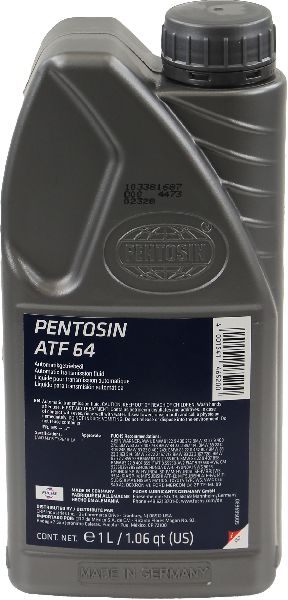
Aftermarket price range: $150-$250 - Automatic Transmission Fluid
(OEM #XT-10-QLVC (Motorcraft MERCON LV))— The transmission must be drained to access the internal lead frame. It must be refilled with the correct specification fluid (MERCON LV). Approximately 6-8 quarts are needed for a pan drop service.
Trusted brands: Motorcraft, Valvoline, Castrol
OEM price range: $8-$12 per quart
Aftermarket price range: $7-$10 per quart - Automatic Transmission Filter Kit
(OEM #FT-188 (Motorcraft))— The filter should always be replaced whenever the transmission pan is removed for service.
Trusted brands: Motorcraft, Wix, ATP
OEM price range: $30-$50
Aftermarket price range: $20-$40 - Transmission Case Connector Sleeve
(OEM #6F3Z-7H103-A (Motorcraft))— This seal for the main electrical connector often becomes brittle and leaks. It is highly recommended to replace it while the valve body is removed to prevent future leaks.
Trusted brands: Motorcraft
OEM price range: $15-$25
Related Codes That Often Appear With This One
- P0720 — P0720 indicates an erratic or intermittent signal from the Output Speed Sensor, while P0722 indicates a complete loss of signal. They often point to the same failing lead frame component. NHTSA ODI #11578725 confirms these codes frequently appear together.
- P0731 — This code means 'Gear 1 Incorrect Ratio.' It can be triggered when the PCM commands a shift but doesn't see the expected change in speed from the faulty OSS, leading it to believe there's a mechanical slip or gear ratio problem.
Technical Service Bulletins (TSBs) & Recalls
- TSB 13-6-8: While for the 6R80 transmission in other vehicles, this TSB directly addresses conditions caused by a faulty molded lead frame, including codes P0720 and P0722, a dead speedometer, and the vehicle starting in 5th gear. It instructs dealers to replace the lead frame.
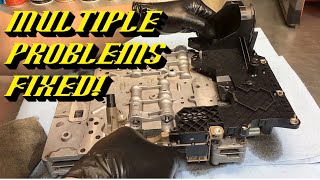
- TSB 11-12-10: This older TSB for the 6F50/6F55 transmission addresses harsh bumps and slips on take-off, 🎬 Watch this 6F50 solenoid and valve body service guide. indicating a history of valve body and control issues in this transmission family.
Platform-Specific Known Issues
- While Ford issued a Customer Satisfaction Program (19N01) for this exact issue on the F-150 and Expedition with the similar 6R80 transmission, no such official program or recall has been widely documented for the 2013-2019 Taurus with the 6F50/6F55 transmission, despite using a similar molded lead frame design prone to failure.
Mechanic-Grade Diagnostic Values
- OSS Power Supply Voltage — expected: Greater than 10 volts. Failure: Voltage below 10V indicates a problem with the power supply from the PCM or wiring.
- OSS Ground Circuit Resistance — expected: Less than 5 ohms. Failure: Resistance greater than 5 ohms indicates a poor ground connection.
Scan Tool Commands That Help
- Ford IDS, Snap-on, Autel, or other professional-grade scan tool: Clear Transmission Adaptive Tables (or similar wording like 'Reset Transmission Adaptives') — This command is mandatory after replacing the molded lead frame or valve body. It erases the TCM's learned shift strategies, which are based on the old, failing part, and allows it to relearn proper shift points with the new component, preventing harsh shifting after the repair. NHTSA ODI #11578725 notes that technicians may also attempt to reprogram the PCM and output shaft speed sensor as a preliminary step.
Wiring & Ground Locations
- C168 — The main 20-pin circular vehicle harness connector at the transmission case.. This is the primary external test point for the OSS circuit. Pin 9 (Brown/Blue wire) is the sensor ground, and Pin 10 (Green/Brown wire) is the OSS signal wire. Pin 20 (Violet/Green wire) is the power supply shared by the TSS and OSS sensors. Testing at these pins can isolate a wiring fault from an internal lead frame failure.
- Main Ground Strap — On the transmission case, located below the brake booster.. A corroded or loose main ground strap can cause a variety of electrical issues, including erratic sensor readings. While not a primary cause for a 'no signal' code, ensuring this ground is clean and tight is a crucial step in diagnosing any electronic fault.
OEM Part Supersession History
AE8Z-7Z369-D→AE8Z-7Z369-F— Part revision and improvement by the manufacturer to address reliability issues.
Heads up: When purchasing, ensure you are getting the latest -F revision, as it is intended to be more durable than the earlier versions it replaces.
Diagnostic Flowchart
Other Known Issues on This Vehicle
Issues unrelated to this code that are worth knowing about as an owner of this generation:
- Internal Water Pump Failure (3.5L V6) 🔴 High — Common after 80,000-120,000 miles. Failure can cause coolant to mix with engine oil, leading to catastrophic engine damage if not caught early.
- Power Transfer Unit (PTU) Overheating/Failure (AWD Models) 🔴 High — Common across all model years. The PTU is located near the hot exhaust, which cooks the 'lifetime' fluid, leading to seal leaks and internal gear failure. Symptoms include a burning gear oil/propane smell and grinding noises.
- Electronic Throttle Body (ETB) Failure 🟠 Medium — Very common issue where the vehicle suddenly enters 'limp-home mode' with a wrench light, causing a dangerous loss of power. Ford had an extended warranty program (13N03) that has since expired. (Ref: 13N03 (Expired))
Used vs. New Parts: Buying Guide for This Vehicle
When a used part is the smart pick: It is strongly advised to NEVER use a used molded lead frame. This part is a known high-failure item due to internal electronic faults caused by heat and vibration. A used part from a junkyard has an unknown history and a high probability of failing shortly after installation, forcing you to pay for the complex labor all over again.
What to inspect on the donor part:
- Not applicable, as used parts are not recommended for this specific repair.
OEM-only on this vehicle (don't cheap out):
- Molded Lead Frame Assembly
Aftermarket brands forum-validated for this vehicle:
- Motorcraft (OEM)
- Dorman (A widely available alternative, though OEM is generally preferred for maximum reliability)
Brands owners have reported issues with on this vehicle:
- Unknown, unbranded parts from online marketplaces should be avoided due to the critical function of this component and the high labor cost involved in replacement.
Real Owner Stories
Aggregated from forums and TSBs cited above. Mileages and costs reflect what owners reported in those sources.
2013 Ford Taurus
Symptoms: The speedometer dropped to zero and the car became stuck in gear.
What fixed it: Replacement of the internal lead frame.
Source hint: TaurusClub.com thread titled '2013 Taurus transmission problems'
2013-2019 Ford Taurus
Symptoms: Harsh shifting and a complete loss of speedometer function.
What fixed it: Replacement of the molded lead frame assembly.
Source hint: Reddit r/FordTaurus
Documented NHTSA Reports
NHTSA ODI #11716692
Symptoms: An owner reported the vehicle had no 1st or 2nd gear until it was shut off and restarted.
What fixed it: A local Ford dealer diagnosed the issue as a "P0722, pinpoint OSS sensor failure" and repaired it with a new lead frame.
NHTSA ODI #11578725
Symptoms: A wrench or illuminated MIL light appeared followed by a solid check engine light; diagnostic codes P0720 and P0722 were retrieved.
What fixed it: The dealership technician initially reprogrammed the PCM and output shaft speed sensor as a diagnostic step.
NHTSA ODI #11640475
Symptoms: Error codes P0721 and P0722 were found on a vehicle with a similar transmission setup.
What fixed it: After an unsuccessful attempt to fix the problem by replacing the PCM, a new lead frame was installed at a cost of approximately $1400.
Related OBD-II Codes
Frequently Asked Questions
Is there a recall or Customer Satisfaction Program for the P0722 code on my 2013-2019 Ford Taurus?
Can I use a used lead frame from a junkyard to fix my Taurus transmission?
Does TSB 13-6-8 apply to the Ford Taurus P0722 code?
Why is my Taurus speedometer stuck at 0 mph and the cruise control not working?
What transmission fluid should I use when replacing the lead frame in my 2013-2019 Taurus?
Could my P0722 code be related to the Electronic Throttle Body (ETB) issue?
Helpful Videos
We Have This Part in Stock




The information in this article is provided for general reference and educational purposes only. Vehicle specifications, procedures, and part compatibility can vary by production date, trim level, and region. Always consult your vehicle's factory service manual and verify part numbers before purchasing or performing repairs. Safety-critical components such as airbags, seat belts, and braking systems should be installed by a qualified professional.
- Ford Taurus:
- 🧭 Diagnostic Flowchart
- 🎬 Helpful Videos
- 🛍️ Shop This Part
- What's Unique About the 2013-2019 Ford Taurus
- Symptoms You May Notice
- Most Likely Causes
- Rare But Worth Checking
- Diagnosis Steps
- Parts You'll Likely Need
- Related Codes That Often Appear With This One
- Technical Service Bulletins (TSBs) & Recalls
- Platform-Specific Known Issues
- Mechanic-Grade Diagnostic Values
- Scan Tool Commands That Help
- Wiring & Ground Locations
- OEM Part Supersession History
- Other Known Issues on This Vehicle
- Used vs. New Parts: Buying Guide for This Vehicle
- Real Owner Stories
- 2013 Ford Taurus
- 2013-2019 Ford Taurus
- Documented NHTSA Reports
- NHTSA ODI #11716692
- NHTSA ODI #11578725
- NHTSA ODI #11640475
- Related OBD-II Codes
- Frequently Asked Questions
- 🎟️ Get 5% Off