

P0722 on 2011-2017 Honda Odyssey: Output Speed Sensor Failure Causes and Fixes
P0722 on a 2011-2017 Odyssey almost always means the transmission output speed sensor has failed. This causes harsh shifting, a dead speedometer, and a flashing 'D' light. Replacing the sensor is the most common fix, costing around $40-$100 for the part. The sensor is located on the transmission housing, and access often requires removing the driver's side wheel and splash shield.
- P0722 on your Odyssey points directly to a problem with the transmission output speed sensor circuit, with the sensor itself being the most likely failure point.
- Key symptoms are a flashing 'D' light, harsh shifting, and a speedometer that doesn't work.
- Do not mistake the transmission output speed sensor (VSS) with the ABS wheel speed sensors; they are different parts with different functions.
- The repair is often straightforward and relatively inexpensive, usually involving replacing the sensor located on the transmission.
- Driving with this issue is not recommended due to unpredictable shifting and lack of a speedometer, which can be unsafe.
What's Unique About the 2011-2017 Honda Odyssey
For the 2011-2017 fourth-generation (RL5) Odyssey, this code is a very common and well-documented issue. The problem is almost always electrical, stemming from a failed sensor or its wiring, rather than a major internal transmission failure. Owners often experience alarming symptoms like harsh shifting and a dead speedometer that seem to indicate a catastrophic transmission problem, but the fix is frequently a simple and relatively inexpensive sensor replacement. Accessing the sensor typically requires removing the driver's side front wheel and inner fender liner to reach it on the side of the transmission housing.
Symptoms You May Notice
- Harsh, erratic, or delayed gear shifts
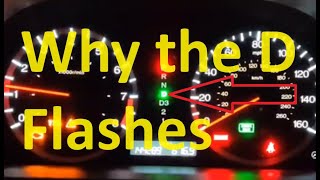
- Flashing 'D' (Drive) indicator light on the dashboard
- Check Engine Light is on
- Speedometer is inoperative or drops to zero while driving
- Cruise control will not engage
- Vehicle may enter 'limp mode' (stuck in 2nd or 3rd gear)
- Reduced fuel economy
- Transmission may not shift into Park correctly, requiring the engine to be turned off
- Replacing the entire transmission. The symptoms can mimic a major mechanical failure, but it's often just a simple electronic sensor.
- Replacing the ABS wheel speed sensors. The vehicle has multiple speed sensors. P0722 specifically refers to the output speed sensor on the transmission, not the sensors at the wheels used for the anti-lock brake system.
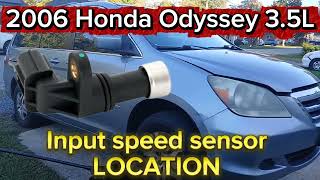
- Replacing the wrong speed sensor. The transmission has both an input (mainshaft) and output (countershaft) speed sensor. They are often located near each other and can look similar. P0722 refers to the output/countershaft sensor. Replacing the input sensor will not fix the code.
Most Likely Causes
- Faulty Transmission Output Speed Sensor (OSS) 🔴 High Probability → Shop Transmission Assembly The sensor is an electronic component that can fail over time due to heat cycles and vibration inherent to its location on the transmission housing. Internal failure of the sensor's coil or electronics will stop it from generating the required pulse signal.
How to confirm: After confirming the wiring is intact and has correct voltage, the sensor itself is the most likely culprit. A scan tool will show 0 RPM from the OSS 🎬 Watch: How to diagnose a P0722 output shaft speed sensor issue while the vehicle is moving. An oscilloscope can also be used to verify the absence of a square wave signal from the sensor while rotating the wheels.
Typical fix: Replace the output speed sensor.
Est. part cost: $40-$110 - Damaged Wiring or Connector 🟡 Medium Probability The wiring harness is exposed to heat, moisture, and potential abrasion under the vehicle, which can lead to breaks, shorts, or corrosion in the wires or connector pins over time.
How to confirm: Visually inspect the wiring harness and connector leading to the output speed sensor for any signs of damage, melting, or corrosion. Use a multimeter to check for continuity and proper voltage at the sensor connector. A "wiggle test" on the harness while monitoring live sensor data can help identify intermittent connections.
Typical fix: Repair the damaged section of the wire or replace the connector pigtail.
Est. part cost: $10-$30 - Deteriorated Transmission Fluid ⚪ Low Probability → Shop Transmission Assembly Honda TSBs 17-043 and 17-044 state that the ATF in these transmissions can deteriorate faster than expected, causing torque converter judder. While this doesn't directly cause a P0722 'no signal' fault, the associated high heat loads can stress electronic components like sensors. Maintaining clean fluid is critical for the overall health and longevity of this transmission.
How to confirm: Check the condition and level of the Honda-specific ATF-DW1 fluid. If it is dark, burnt, or low, it needs service. This is often diagnosed alongside other shifting complaints like judder between 20-60 mph.
Typical fix: Perform a transmission fluid flush (typically 3 drain-and-fill cycles) using genuine Honda ATF-DW1 fluid. A PCM software update may also be required per TSB 17-043 to better manage fluid temperature.
Est. part cost: $80-$150
Rare But Worth Checking
- Faulty Powertrain Control Module (PCM): → Shop Engine Control Module (ECM) This is very rare. All other possibilities, especially the sensor and wiring, should be exhaustively ruled out before considering PCM replacement, as it is expensive and requires programming. A failure of the specific input circuit on the PCM can mimic a failed sensor.
- Damaged Tone Ring: The sensor reads a toothed ring (tone ring) on the output shaft. While highly unlikely, physical damage to this ring inside the transmission could cause a loss of signal. This would be a major mechanical repair.
Diagnosis Steps
- Connect an OBD-II scanner to confirm P0722 is the active code and check for any other transmission-related codes. Record the freeze-frame data.
- Use the scanner's live data function to monitor the Transmission Output Speed Sensor (OSS) PID. While driving safely (or with wheels off the ground), observe if the reading stays at 0 RPM. Compare it to the wheel speed sensor readings, which should be increasing.
- Clear the codes and test drive the vehicle (if safe) to see if the code and symptoms return immediately.
- Perform a thorough visual inspection of the transmission output speed sensor and its connector/wiring. The sensor is on the transmission housing, often near the driver's side axle. Look for obvious signs of damage, corrosion, or loose connections.
- If the wiring looks good, use a multimeter to test for voltage and ground at the sensor's electrical connector with the key in the 'ON' position. Consult a service manual for the specific pinout and expected voltage.
- If power and ground are present, the sensor is the most likely failure point. An oscilloscope can be used to definitively test for a signal pulse from the sensor while rotating the transmission.
- If power or ground is missing, trace the wiring back to the PCM to find the break or short in the circuit.
- After replacing the sensor or repairing the wiring, clear the code and perform another test drive to ensure the fix was successful and the speedometer and shifting have returned to normal.
Parts You'll Likely Need
- Transmission Output Speed Sensor
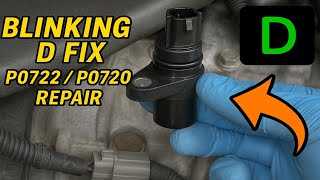
(OEM #28820-PPW-013 (Verify with VIN))— This sensor is the most common point of failure 🎬 Watch: Step-by-step transmission output speed sensor replacement guide for the P0722 code. It directly provides the signal that the PCM reports as missing. Note: Part numbers can be confusing; 28820-PPW-013 is often cited, but some sources may list it as an input sensor for other models. Always confirm the correct part for your specific vehicle's VIN and sensor location (output/countershaft).
Trusted brands: Honda (OEM), NTK, Delphi, Standard Motor Products (SMP)
OEM price range: $70-$125
Aftermarket price range: $40-$80
Related Codes That Often Appear With This One
- P0721 — This code indicates 'Output Speed Sensor Range/Performance'. It can appear if the sensor is failing intermittently or providing an erratic signal before it fails completely and triggers P0722.
- P0756 — This code relates to a Shift Solenoid 'B' performance issue. The PCM may set this code if it cannot verify the gear change requested by the solenoid because it is not receiving a valid speed signal from the OSS.
- P0741 — This code for 'Torque Converter Clutch Circuit Performance or Stuck Off' can be seen on this platform. While often related to fluid or valve body issues, the PCM relies on the OSS signal to properly command the TCC, so a faulty OSS can contribute to TCC-related codes.
Technical Service Bulletins (TSBs) & Recalls
- 17-043: 2014–17 Odyssey: Judder from the Torque Converter Lock-Up Clutch
- 17-044: 2014–17 Odyssey: Judder from the Torque Converter Lock-Up Clutch
Platform-Specific Known Issues
- Honda has issued Technical Service Bulletins (TSB 17-043 and 17-044) for this generation related to transmission judder caused by deteriorated fluid, which requires a fluid flush and sometimes a PCM software update. While not a direct cause for P0722, it highlights the importance of using the correct Honda ATF-DW1 fluid and maintaining fluid quality for overall transmission health.
- A separate major issue for 2011-2013 models is covered by TSB 13-081, which addresses engine misfires (P0301-P0304) caused by oil-fouled spark plugs due to piston ring alignment issues related to the Variable Cylinder Management (VCM) system. Many owners install a 'VCM Muzzler' device to prevent the system from activating, thereby reducing the risk of this issue.
Mechanic-Grade Diagnostic Values
- Sensor Reference Voltage — expected: ~5V at the sensor connector with key on, engine off.. Failure: No voltage or significantly low voltage indicates a problem with the PCM or the wiring from the PCM.
- Sensor Ground Circuit Resistance — expected: Less than 1.0 Ω between the ground pin on the sensor connector and a known good chassis ground.. Failure: High resistance indicates a corroded or broken ground wire, which can cause a 'no signal' fault.
- Sensor Signal Output (Oscilloscope) — expected: A square wave that increases in frequency as the wheels are turned. The amplitude should be steady, typically switching between 0V and 5V.. Failure: A flat line at 0V or 5V, or an erratic/garbled waveform, indicates a failed sensor.
- Wiring Harness Continuity — expected: Less than 1.0 Ω on the power, ground, and signal wires between the sensor connector and the PCM connector.. Failure: Infinite resistance (OL) indicates a broken wire.
Scan Tool Commands That Help
- Honda Diagnostic System (HDS): A/T Data List - Input Shaft Speed vs. Output Shaft Speed — This is the primary diagnostic screen for this issue. With the vehicle on a lift and wheels spinning, a technician can directly compare the two sensor readings. If the Input Shaft reads a speed but the Output Shaft reads 0, it confirms the fault lies within the output sensor's circuit.
Wiring & Ground Locations
- G101 — On the transmission housing, near the top. It serves as a primary ground point for the PCM and various transmission components.. A loose or corroded G101 ground can cause a host of bizarre electrical issues, including intermittent or no-signal faults from sensors like the OSS. Cleaning and tightening this ground is a crucial and often overlooked step in diagnosing electrical transmission codes.
- Output Speed Sensor Connector — On the side of the transmission housing, typically accessed by removing the driver's side wheel and splash shield.. This is the direct connection to the faulty component. It is a 3-pin connector that must be checked for power, ground, and signal. Damage or corrosion here is a common cause of the code.
Real Owner Repair Stories
- Forum user reports (Multiple reports on 2011-2017 Odysseys) — Flashing 'D' light, harsh shifting, speedometer at zero, P0722 code.
❌ Tried (didn't work) Replacing the Output Speed Sensor with a cheap, unbranded aftermarket part.
✅ What actually fixed it The problem persisted until the cheap sensor was replaced with a genuine Honda OEM sensor or a high-quality aftermarket brand like NTK or Delphi. This indicates the PCM can be sensitive to the signal quality of non-OEM sensors. - Forum user reports (2012 Honda Odyssey) — P0722 code returned immediately after replacing the output speed sensor.
❌ Tried (didn't work) Replacing the output speed sensor., Checking wiring continuity to the sensor.
✅ What actually fixed it The user had mistakenly replaced the Input (Mainshaft) Speed Sensor. The two sensors are located near each other and look similar. The code was resolved by locating and replacing the correct Output (Countershaft) Speed Sensor. - Technician diagnostic report (2014 Honda Odyssey) — Persistent P0722, all symptoms present.
❌ Tried (didn't work) Replaced output speed sensor with OEM part., Verified wiring harness continuity, power, and ground from PCM to sensor connector; all tested perfectly.
✅ What actually fixed it The Powertrain Control Module (PCM) was faulty. The internal circuit responsible for processing the signal from the output speed sensor had failed. Replacing and reprogramming the PCM resolved the issue.
OEM Part Supersession History
28820-PPW-013→Varies by application, often 28820-RPC-013 for later models.— Part consolidation and design updates.
Heads up: CRITICAL: 28820-PPW-013 is frequently listed for sale as a generic 'speed sensor' but is often the INPUT (Mainshaft) sensor for many Honda/Acura models from the mid-2000s. Using it in place of the required OUTPUT (Countershaft) sensor will not fix P0722. The correct part number for the output sensor on many 6-speed Odysseys is 28820-RPC-013. Always verify the part number with the vehicle's VIN.
Model Year Variations Within This Range
- 2011-2013: Lower trim levels (LX, EX, EX-L) were equipped with a 5-speed automatic transmission, while only the Touring trim had the 6-speed. The 5-speed and 6-speed transmissions use different speed sensors with different part numbers and locations.
- 2014-2017: All trim levels came standard with the 6-speed automatic transmission. This simplifies diagnosis for these years, as the parts and procedures are consistent across the model line.
Diagnostic Flowchart
Other Known Issues on This Vehicle
Issues unrelated to this code that are worth knowing about as an owner of this generation:
- VCM-Related Engine Misfires & Oil Consumption 🔴 High — Very common across the generation, particularly 2011-2013 models. Can lead to fouled spark plugs and damaged piston rings. (Ref: TSB 13-081 (Warranty Extension for Piston Ring Repair))
- Torque Converter Judder/Shudder 🟠 Medium — Common issue on 2014-2017 models, felt as a vibration during light acceleration between 20-60 mph. Caused by deteriorated ATF. (Ref: TSB 17-043, TSB 17-044)
- Power Sliding Door Failure 🟠 Medium — A widely reported problem where the sliding doors may become inoperative or fail to latch properly. (Ref: Multiple TSBs, e.g., AHM #10115719)
- Prematurely Warped Front Brake Rotors 🟡 Low — Common complaint causing a pulsation or vibration felt through the steering wheel and brake pedal during braking.
- Fuel Pump Failure 🔴 High — Subject to a major recall as the in-tank fuel pump may fail, causing an engine stall while driving. (Ref: NHTSA Recall 23V-858)
Used vs. New Parts: Buying Guide for This Vehicle
When a used part is the smart pick: A used wiring harness pigtail from a junkyard is a smart choice if only the plastic connector is broken and the rest of the harness is fine. A used PCM is a viable, but complex, last resort if the original is confirmed faulty; it will require professional programming.
Donor-vehicle mileage cap: roughly under 80000 miles for the part to have meaningful remaining life.
What to inspect on the donor part:
- For a wiring pigtail, ensure the plastic isn't brittle and the locking tab is intact.
- Check for any signs of corrosion on the metal pins inside the connector.
- Ensure at least 6-8 inches of wire are attached to make splicing easier.
OEM-only on this vehicle (don't cheap out):
- While not strictly 'OEM-only', repair stories strongly suggest avoiding generic, no-name aftermarket sensors. The cost savings are minimal and the risk of incompatibility or premature failure is high. Stick to OEM or top-tier aftermarket brands.
Aftermarket brands forum-validated for this vehicle:
- NTK
- Delphi
- Standard Motor Products (SMP)
- Beck/Arnley
Brands owners have reported issues with on this vehicle:
- Unbranded, low-cost sensors from online marketplaces are frequently reported as being incompatible or failing quickly.
Real Owner Stories
Aggregated from forums and TSBs cited above. Mileages and costs reflect what owners reported in those sources.
2011-2017 Honda Odyssey
Symptoms: The 'D' (Drive) indicator light started flashing on the dashboard and the speedometer became inoperative, dropping to zero while driving.
What fixed it: Replacement of the output/countershaft speed sensor.
Source hint: Odyclub.com: Multiple threads discuss P0722, confirming symptoms like the flashing 'D' light and inoperative speedometer
2014-2017 Honda Odyssey
Symptoms: Vibration or judder felt during light acceleration between 20-60 mph.
What fixed it: Perform a transmission fluid flush (typically 3 drain-and-fill cycles) using genuine Honda ATF-DW1 fluid and a PCM software update.
Cost: $80-$150
Source hint: TSB 17-043: 2014–17 Odyssey: Judder from the Torque Converter Lock-Up Clutch
2011-2013 Honda Odyssey
Symptoms: Engine misfires and oil-fouled spark plugs.
What fixed it: Piston ring repair and spark plug replacement.
Source hint: TSB 13-081 (Warranty Extension for Piston Ring Repair)
Related OBD-II Codes
Frequently Asked Questions
My 2014 Odyssey has a shuddering feeling between 20 and 60 mph; is this related to the P0722 code?
Does the 2011-2017 Honda Odyssey require a specific type of transmission fluid to prevent these issues?
My speedometer dropped to zero and the 'D' light is flashing. Is there a TSB for this on my 2012 Odyssey?
Could my Odyssey's VCM system be causing transmission codes like P0722?
Is the P0722 fix expensive for this generation of Odyssey?
Helpful Videos
We Have This Part in Stock

The information in this article is provided for general reference and educational purposes only. Vehicle specifications, procedures, and part compatibility can vary by production date, trim level, and region. Always consult your vehicle's factory service manual and verify part numbers before purchasing or performing repairs. Safety-critical components such as airbags, seat belts, and braking systems should be installed by a qualified professional.
- Honda Odyssey:
- 🧭 Diagnostic Flowchart
- 🎬 Helpful Videos
- 🛍️ Shop This Part
- What's Unique About the 2011-2017 Honda Odyssey
- Symptoms You May Notice
- Most Likely Causes
- Rare But Worth Checking
- Diagnosis Steps
- Parts You'll Likely Need
- Related Codes That Often Appear With This One
- Technical Service Bulletins (TSBs) & Recalls
- Platform-Specific Known Issues
- Mechanic-Grade Diagnostic Values
- Scan Tool Commands That Help
- Wiring & Ground Locations
- Real Owner Repair Stories
- OEM Part Supersession History
- Model Year Variations Within This Range
- Other Known Issues on This Vehicle
- Used vs. New Parts: Buying Guide for This Vehicle
- Real Owner Stories
- 2011-2017 Honda Odyssey
- 2014-2017 Honda Odyssey
- 2011-2013 Honda Odyssey
- Related OBD-II Codes
- Frequently Asked Questions
- 🎟️ Get 5% Off