

P0722 on 2015-2019 Hyundai Sonata: Output Speed Sensor 'No Signal' Causes and Fixes
On a 2015-2019 Sonata, P0722 is almost always caused by a failed internal transmission wiring harness that contains the output speed sensor. This is not an external sensor; repair requires removing the transmission pan and valve body. Expect a shop cost of $600-$1100. Do not replace the transmission for this code.
- P0722 on a 2015-2019 Sonata means the transmission is not getting a signal from its output speed sensor.
- The cause is almost certainly a failed internal wiring harness, not a simple external sensor.
- The vehicle will go into 'limp mode', getting stuck in 3rd gear, making it unsafe for normal driving.
- This is a complex, labor-intensive repair that requires removing the transmission's valve body and should be performed by a professional.
- Do not let a shop replace the entire transmission; the fix is a well-documented and much cheaper part replacement per Hyundai's own service bulletins.
What's Unique About the 2015-2019 Hyundai Sonata
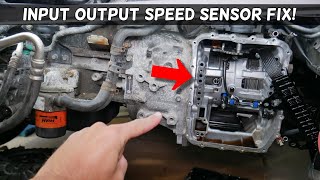
The 2015-2019 Hyundai Sonata (LF generation) with the 6-speed A6MF1 automatic transmission has a unique design for this component. Unlike older vehicles with an easily accessible external sensor, this Sonata integrates the input and output speed sensors into a single wiring harness located inside the transmission oil pan. This harness is a well-documented failure point, as the wiring and plastic become brittle from constant exposure to hot transmission fluid, causing cracks, breaks, and signal loss. This internal design makes the repair significantly more complex and labor-intensive than a simple external sensor swap.
Generation note: This guide covers the seventh generation (LF) of the Hyundai Sonata, produced from 2015 to 2019, specifically those with the 6-speed automatic transmission. The key issue of the internal transmission harness is specific to this generation's design. Older Sonatas (like the 2005-2010 NF generation) had an external sensor that was much easier to replace.
🎬 Watch: How to locate and replace external speed sensorsSymptoms You May Notice
- Check Engine Light is on
- Transmission is stuck in one gear (fail-safe or 'limp' mode, typically 3rd gear)
- Harsh, erratic, or delayed gear shifts
- Inability to accelerate from a stop, or very slow acceleration
- Flashing 'D' (Drive) indicator on the instrument panel
- Speedometer may work intermittently or not at all (though it often uses wheel speed sensors and may function normally)
- Replacing the entire transmission. Hyundai has issued multiple Technical Service Bulletins (TSBs) warning technicians not to replace the transmission for this code, as the fault is almost always the much cheaper internal harness/sensor assembly. One owner on a Reddit forum reported that two shops quoted a full transmission replacement before a third correctly identified the internal sensor issue.
Most Likely Causes
- Failed Internal Transmission Wiring Harness 🔴 High Probability → Shop Transmission Assembly The harness, which includes the input and output speed sensors, is located inside the transmission and is constantly exposed to hot fluid. The plastic and wire insulation become brittle over time, leading to cracks and breaks in the circuit, causing a 'no signal' condition.
How to confirm: A professional technician will use a scan tool to monitor live data from the output speed sensor while driving. A reading of zero RPM when the vehicle is moving confirms no signal. Given the extremely high failure rate of this part documented in Hyundai's own TSBs, this is often a confident diagnosis based on the code alone.
Typical fix: Replace the internal transmission wiring harness (which includes the speed sensors). This requires removing the transmission oil pan and valve body to access the component.
Est. part cost: $70-$150
Rare But Worth Checking
- Damaged External Wiring or Connectors: While the main failure point is internal, the external wiring leading to the transmission could be damaged by road debris or improper service. A visual inspection of the main transmission connector is always a worthwhile first step.
- Faulty Transmission Control Module (TCM) or Powertrain Control Module (PCM): → Shop Engine Control Module (ECM) This is very rare. The TCM/PCM should only be considered after the harness, sensors, and all related wiring have been confirmed to be good. Hyundai TSBs specifically advise against replacing the control module until all other possibilities are exhausted.
Diagnosis Steps
- Connect a professional OBD-II scanner to the vehicle.
- Confirm the presence of P0722 and check for any other related transmission codes like P0717 or P0721.
- Use the scanner's live data function to monitor the 'Output Speed Sensor' data stream while driving. If the reading is stuck at 0 RPM while the vehicle is moving, this confirms a 'no signal' condition.
- Visually inspect the exterior of the transmission and its main electrical connector for any obvious damage, corrosion, or loose connections.
- If the external wiring is intact, the next step is to proceed with the internal harness replacement, as this is the overwhelmingly common failure point per Hyundai TSBs.
- Drain the transmission fluid. Remove the transmission oil pan.
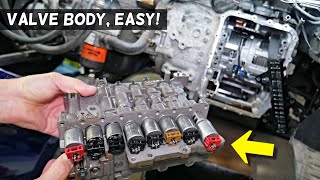
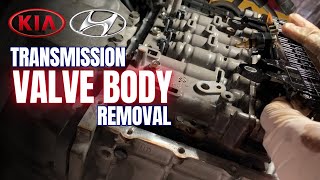
- Carefully remove the transmission valve body. The wiring harness and speed sensors are attached to it. 🎬 See this step-by-step Hyundai 6-speed valve body removal guide
- Replace the internal wiring harness and speed sensor assembly (Part No. 46307-3B650).
- Reinstall the valve body, oil pan (with a new gasket), and refill the transmission with the correct type of fluid (Hyundai SP-IV).
- Clear the trouble codes and perform a test drive to ensure the transmission is shifting correctly and the code does not return. Some procedures may require an adaptive learning reset with a capable scan tool.
Parts You'll Likely Need
- Transmission Internal Wire Harness
(OEM #46307-3B650)— This is the most common failure point. The harness contains the speed sensors and its insulation degrades from heat, causing the 'no signal' fault. This part number supersedes older versions 46307-3B610 and 46307-3B620.
Trusted brands: Hyundai Genuine
OEM price range: $70-$150
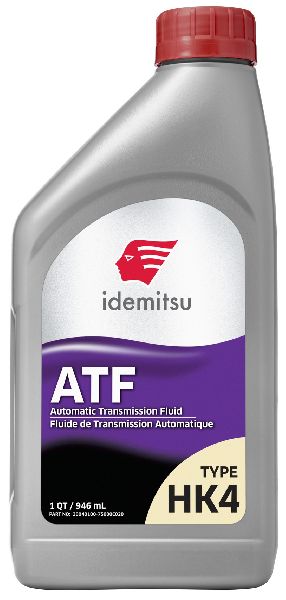
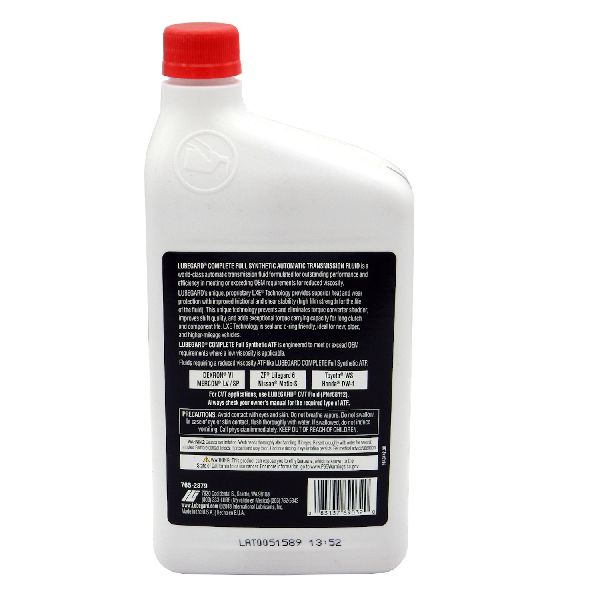
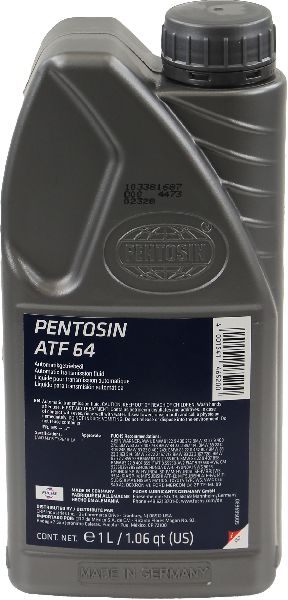
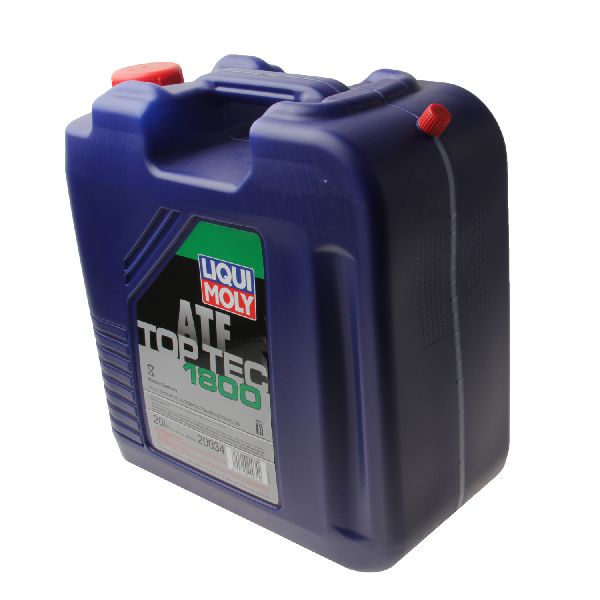
Aftermarket price range: $50-$100 - Transmission Fluid (Hyundai SP-IV) — The transmission must be drained to perform the repair, so it will need to be refilled with approximately 5-6 quarts of new, correct-spec fluid.
Trusted brands: Hyundai Genuine, Idemitsu, ENEOS
OEM price range: $15-$25 per quart
Aftermarket price range: $10-$18 per quart - Transmission Oil Pan Gasket
(OEM #45285-3B610 (for plastic pan))— The oil pan must be removed, and the gasket should always be replaced to prevent leaks. Some models may use RTV sealant instead of a pre-made gasket.
Trusted brands: Hyundai Genuine, Fel-Pro
OEM price range: $20-$40
Aftermarket price range: $15-$30
Related Codes That Often Appear With This One
- P0717 — Stands for 'Input Speed Sensor Circuit No Signal'. The input and output sensors are part of the same internal wiring harness, so it's very common for them to fail together, triggering both codes.
- P0721 — Stands for 'Output Speed Sensor Circuit Range/Performance'. This indicates an erratic or implausible signal rather than a complete loss, but it is caused by the same degrading internal harness.
- P0700 — This is a generic code indicating a transmission system malfunction has been detected. It's an alert from the TCM to the main engine computer that a more specific code, like P0722, has been stored.
Technical Service Bulletins (TSBs) & Recalls
- TSB 14-AT-013: Superseded bulletin that first included the 2015 Sonata (LF) and outlined the repair procedure for P0717, P0721, and P0722, advising against transmission replacement.
- TSB 16-AT-003: Superseded 14-AT-013 to add newer models, reiterating the same repair procedure for the internal harness and sensors.
- TSB 20-AT-008H: A later TSB that, while focused on solenoid codes, references the same family of 6-speed transmissions and internal repair procedures, showing the continued relevance of valve body work.
Platform-Specific Known Issues
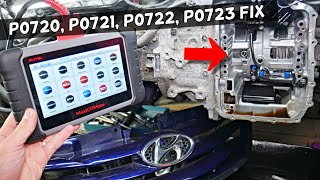
- Hyundai has issued multiple Technical Service Bulletins (TSBs) regarding this issue, including TSB 14-AT-013 and its successors. These bulletins instruct technicians to replace the internal harness/sensor for codes P0717, P0721, and P0722 🎬 Watch: Diagnostic and repair walkthrough for Hyundai P0722 codes, and explicitly state not to replace the entire transmission. The issue is so common that many owners on forums report this as the first and only suspect for these codes.
Mechanic-Grade Diagnostic Values
- Output Speed Sensor Signal Waveform — expected: A clean square wave signal (typically 2-5V amplitude) that increases in frequency as the vehicle speed increases.. Failure: A flat line (no signal) or a very noisy/erratic waveform when viewed on an oscilloscope confirms a fault in the sensor or its circuit.
- Valve Body Harness Connector and Solenoid Bolts Torque — expected: 6-7 lb-ft (8-9 Nm). Failure: Improper torque can lead to leaks or poor electrical connections.
- Detent Spring Bolt Torque — expected: 8-11 lb-ft (11-15 Nm). Failure: Incorrect torque can affect manual shift lever feel and position sensing.
Scan Tool Commands That Help
- Hyundai GDS (Global Diagnostic System): Resetting Auto T/A values — This function must be used after replacing the internal transmission harness and/or valve body. It clears the TCM's learned shift adaptations, forcing it to relearn shift pressures and timing with the new, functional speed sensor signals. Failing to perform this reset can result in continued harsh shifting or erratic behavior even after the hardware is fixed.
- Car Scanner ELM OBD2 Pro (and similar advanced apps): Reset automatic transmission adaptation (6-speed AT) — Some advanced consumer-level scan tools and apps offer a function to reset the adaptive values for the A6MF1 transmission. This can be an alternative for DIYers who do not have access to the dealer-level GDS tool. The procedure typically requires the ignition to be on with the engine off.
Wiring & Ground Locations
- Transmission Main Ground — Typically a bolt on the transmission case or bell housing, connecting a ground strap to the vehicle's chassis.. While the internal harness is the most common failure, a loose or corroded main transmission ground can cause intermittent signal loss for multiple transmission sensors, including the output speed sensor. TSB 09-AT-016 for older Sonatas specifically calls out checking this ground, and the principle remains valid.
- Internal Harness Connector — Inside the transmission, connecting the speed sensor harness to the main solenoid harness on the valve body.. This is a key connection point that is disconnected and reconnected during the repair. The locking tab must be properly depressed and the connector fully seated upon reassembly to ensure a good signal.
Real Owner Repair Stories
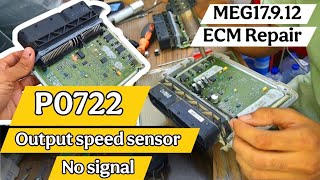
- YouTube channel 'Car Hospital' (Hyundai Accent (with similar MEG17.9.12 ECU logic)) — P0722 Output Speed Sensor Circuit No Signal.
❌ Tried (didn't work) Replacing the output speed sensor with a new part did not resolve the code.
✅ What actually fixed it The technician found that the signal wire for the sensor was only showing 1.3V instead of the expected ~11V. The root cause was a failed engine computer (ECM/PCM) due to leaking internal capacitors. Repairing the ECM restored the correct voltage to the sensor circuit and fixed the problem. - eBay review by lakerfandk88877 (Hyundai with A6MF1 transmission) — Feared the transmission was 'toast'.
✅ What actually fixed it Replacing the internal wiring harness (which includes the speed sensors) and a faulty solenoid brought the transmission back to normal operation. - NHTSA ODI #11696914 (Hyundai Elantra) — An owner reported that while reverse functioned fine, the vehicle required manual shifting for forward gears. A scan revealed code P0722, leading the owner to plan a replacement of the input/output speed sensor to solve the issue.
- NHTSA ODI #11427357 (Hyundai Elantra) — A driver reported that the vehicle would not go into drive at all before the check engine light appeared with code P0722.
- NHTSA ODI #10143151 (Hyundai Accent) — A diagnostic report noted a failed transmission range switch and failed transmission pulse generators, with codes P0700 for a shorted switch and P0722 for an open or shorted output speed sensor (PG-B).
OEM Part Supersession History
46307-3B610, 46307-3B620→46307-3B650— The updated harness is presumed to use improved materials for wire insulation and plastic connectors to better withstand long-term exposure to high-temperature transmission fluid, addressing the root cause of the original parts' failure.
Heads up: While older part numbers will physically fit, installing them is not recommended as they are prone to the same heat degradation failure. Always use the latest superseded part number for the repair.
Model Year Variations Within This Range
- 2015-2019: While the A6MF1 transmission was used throughout this period, Hyundai distinguishes between a 'Generation 1' valve body (8 solenoids) and a 'Generation 2' (7 solenoids) in some TSBs. However, for the P0722 fault, the repair procedure of replacing the internal harness (46307-3B650) is the same for all 2015-2019 Sonatas with the 6-speed automatic.
Diagnostic Flowchart
Other Known Issues on This Vehicle
Issues unrelated to this code that are worth knowing about as an owner of this generation:
- Theta II Engine Seizure/Failure 🔴 High — Widespread across 2.0L and 2.4L GDI engines. Subject of a major class-action lawsuit and recall campaign. Failure can occur suddenly at various mileages. (Ref: NHTSA Campaign 20V746000, Hyundai Recall 198. A settlement extended the powertrain warranty to a lifetime warranty for this specific failure for original and subsequent owners, contingent on a Knock Sensor Detection System (KSDS) software update being performed.)
- Excessive Oil Consumption 🟠 Medium — Commonly reported on the 2.4L and 2.0T Theta II engines, often preceding engine failure. Owners report needing to add oil between changes. (Ref: Related to the engine failure issue but often treated as a separate symptom. No specific recall, but addressed under the engine settlement if it leads to failure.)
- Steering Coupler Failure 🟡 Low — Very common. A flexible rubber coupler in the Motor Driven Power Steering (MDPS) column disintegrates, causing a clicking or thudding noise when turning the wheel. (Ref: Hyundai extended the warranty for this specific part to 10 years/100,000 miles. See TSB 17-ST-002. The part itself is inexpensive, but labor can be significant.)
- Peeling Exterior Paint 🟡 Low — Particularly common on white-painted vehicles. Large flakes of paint can delaminate from the primer, especially on the roof and hood. (Ref: No recall, but Hyundai has offered goodwill repairs on a case-by-case basis for some owners.)
- Turn Signal Malfunction 🟠 Medium — Affects 2015-2017 models. The turn signal may activate in the opposite direction of what the driver intends due to a software issue in the Smart Junction Box (SJB). (Ref: Hyundai Recall 210 (NHTSA Campaign 21V759000) was issued to update the SJB software.)
Used vs. New Parts: Buying Guide for This Vehicle
When a used part is the smart pick: For this specific repair, using a used part is NEVER a smart choice. The failure is caused by heat and age, meaning any used harness from a junkyard has already experienced significant thermal stress and is likely near the end of its life.
What to inspect on the donor part:
- Not applicable, as a used part is not recommended under any circumstances.
OEM-only on this vehicle (don't cheap out):
- Transmission Internal Wire Harness (46307-3B650)
Aftermarket brands forum-validated for this vehicle:
- While some aftermarket options exist, forum discussions and mechanic feedback strongly favor using the Hyundai Genuine OEM part to ensure longevity and avoid premature failure. The high labor cost of the job makes it unwise to save a small amount on a non-OEM part.
Brands owners have reported issues with on this vehicle:
- Some owner reports mention early failures with Dorman-branded replacement harnesses for this application, though experiences may vary.
Real Owner Stories
Aggregated from forums and TSBs cited above. Mileages and costs reflect what owners reported in those sources.
2017 Hyundai Sonata Sport 2.4L — 100000 miles
Symptoms: Owner confirmed getting codes on the platform, discussing general reliability and common failure points at this mileage.
What fixed it: Replacing the internal wiring harness (46307-3B650).
Source hint: Reddit r/Hyundai - 'Yup got this code 2017 Sonata Sport 2.4L at 100,000 miles'
2015-2019 Hyundai Sonata (A6MF1 Transmission)
Symptoms: Check Engine light on, harsh P-R or P-D engagement shock, and the transaxle accelerates in a fixed gear (limp mode).
What fixed it: Replacement of the internal harness/sensor assembly rather than the entire transmission.
Source hint: TSB 14-AT-013 / TSB 16-AT-003
2011-2016 Hyundai Elantra (Platform Mate)
Symptoms: Owner was told they needed a new transmission after getting code P0722, despite the issue being a sensor signal fault.
What fixed it: Replacing the internal sensor harness.
Source hint: Reddit r/Elantra - 'Replaced Transmission, Still Getting Speed Sensor Code – What Next?'
2015-2019 Hyundai Sonata
Symptoms: P0717/P0722 codes, transmission stuck in gear, and erratic shifting.
What fixed it: Replacing the internal wiring harness (46307-3B650).
Cost: $800-$1200
Source hint: Hyundai-Forums.com threads regarding A6MF1 transmission codes
Related OBD-II Codes
Frequently Asked Questions
My 2015 Sonata is stuck in 3rd gear and the 'D' is flashing. Does TSB 14-AT-013 apply to me?
The dealer says I need a whole new transmission for code P0722. Is there a cheaper fix?
What is the specific part number I need to fix the P0722 code on my 6-speed Hyundai?
Is the P0722 code related to the major Theta II engine recalls on the 2015-2019 Sonata?
Why does the internal harness fail so often on this generation of Sonata?
Will I need to reset anything after replacing the internal transmission harness?
Helpful Videos
Used OEM Parts in Stock
New Aftermarket Parts Available


The information in this article is provided for general reference and educational purposes only. Vehicle specifications, procedures, and part compatibility can vary by production date, trim level, and region. Always consult your vehicle's factory service manual and verify part numbers before purchasing or performing repairs. Safety-critical components such as airbags, seat belts, and braking systems should be installed by a qualified professional.
- Hyundai Sonata:
- 🧭 Diagnostic Flowchart
- 🎬 Helpful Videos
- 🛍️ Shop This Part
- What's Unique About the 2015-2019 Hyundai Sonata
- Symptoms You May Notice
- Most Likely Causes
- Rare But Worth Checking
- Diagnosis Steps
- Parts You'll Likely Need
- Related Codes That Often Appear With This One
- Technical Service Bulletins (TSBs) & Recalls
- Platform-Specific Known Issues
- Mechanic-Grade Diagnostic Values
- Scan Tool Commands That Help
- Wiring & Ground Locations
- Real Owner Repair Stories
- OEM Part Supersession History
- Model Year Variations Within This Range
- Other Known Issues on This Vehicle
- Used vs. New Parts: Buying Guide for This Vehicle
- Real Owner Stories
- 2017 Hyundai Sonata Sport 2.4L — 100000 miles
- 2015-2019 Hyundai Sonata (A6MF1 Transmission)
- 2011-2016 Hyundai Elantra (Platform Mate)
- 2015-2019 Hyundai Sonata
- Related OBD-II Codes
- Frequently Asked Questions
- 🎟️ Get 5% Off