

P0722 on 2010-2015 Hyundai Tucson: Output Speed Sensor Failure Causes and Fixes
On a 2010-2015 Tucson with the 6-speed automatic, P0722 is almost always caused by a failed internal transmission wire harness that contains the output speed sensor. This is a complex repair requiring removal of the transmission's valve body. Expect a shop cost between $600 and $1,100.
- P0722 on a 2010-2015 Tucson points to a known issue with an internal transmission wiring harness.
- Do NOT replace the transmission; the fix is to replace the internal harness, which is a much cheaper, albeit complex, repair.
- This is not a beginner-friendly DIY job. The repair involves removing the transmission valve body, which carries a high risk of error.
- The most commonly needed part is the Hyundai Genuine Wire Harness, part number 46307-3B650.
- Budget for $600 to $1,100 for a professional repair, which includes the harness, new gasket, and fresh transmission fluid.
What's Unique About the 2010-2015 Hyundai Tucson
The 2010-2015 Hyundai Tucson (LM generation) uses a 6-speed automatic transmission from the A6MF family (specifically the A6MF1 or A6MF2). In this design, the input and output speed sensors are integrated into a single internal wiring harness located inside the transmission oil pan. Failure of this harness due to degradation from heat and constant exposure to transmission fluid is a very common and well-documented problem, as acknowledged by Hyundai in Technical Service Bulletin (TSB) 14-AT-013. This makes the repair significantly more complex than for vehicles that use a simple, externally-mounted, bolt-on sensor.
Symptoms You May Notice
- Check Engine Light is on
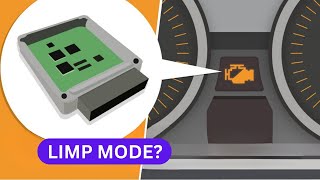
- Transmission is stuck in one gear (typically 3rd gear limp mode 🎬 Watch: What is limp mode and how it works)
- Harsh or delayed gear shifts
- Failure to shift
- Poor or slow acceleration
- Inaccurate or inoperative speedometer
- Flashing 'D' (Drive) indicator on the instrument panel
- Replacing the entire transmission. Hyundai TSB 14-AT-013 specifically warns service technicians not to replace the entire transaxle for this code, as the fault is almost always the much cheaper internal harness/sensor.
- Replacing only an external speed sensor. Technicians unfamiliar with this specific Hyundai A6MF transmission may waste time looking for an external bolt-on sensor that does not exist.
Most Likely Causes
- Failed Internal Transmission Wire Harness 🔴 High Probability → Shop Transmission Assembly This is a well-documented failure point on Hyundai's 6-speed A6MF automatic transmissions. The harness, which contains the speed sensors and temperature sensor, becomes brittle and fails from prolonged exposure to heat and transmission fluid.
How to confirm: A professional scan tool may show codes for both the input (P0717) and output (P0722) speed sensors simultaneously. Diagnosis is confirmed by following the procedure in TSB 14-AT-013, which involves accessing the harness inside the transmission for testing after verifying the external wiring is intact.
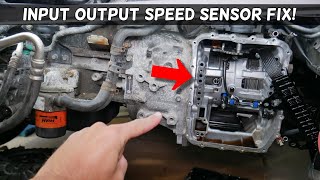
Typical fix: Replace the internal wire harness assembly (Part No. 46307-3B650 🎬 Watch: How to replace the internal speed sensor harness). This requires draining the transmission fluid, removing the transmission oil pan, and removing the valve body to access the harness. A new pan gasket and fresh Hyundai SP-IV fluid are also required.
Est. part cost: $70-$160
Rare But Worth Checking
- Damaged External Wiring or Connectors: Check the wiring harness leading from the transmission case to the TCM for any visible signs of damage, corrosion, or loose connections before performing internal transmission work. This should be the first step after reading the codes.
- Faulty Powertrain/Transmission Control Module (PCM/TCM): → Shop Transmission Assembly This is very rare. Hyundai's own TSB advises that the PCM should only be replaced if the trouble code returns after the internal harness and sensors have been replaced and the external wiring has been verified as good.
- Low or Contaminated Transmission Fluid: → Shop Transmission Assembly In some instances, poor fluid condition has been noted alongside this code; for example, NHTSA ODI #10143151 recorded a P0722 code where the transmission fluid level and condition were also found to be poor.
Diagnosis Steps
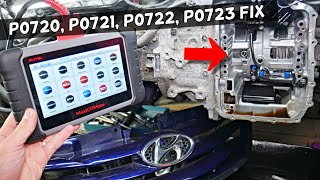
- Scan for all diagnostic trouble codes (DTCs) and record the freeze frame data. Note if P0717 is also present.
- Check the level and condition of the automatic transmission fluid. Ensure the correct fluid (Hyundai SP-IV) is being used.
- Visually inspect the main transmission wiring harness connector for any damage, corrosion, or pushed-out pins.
- Follow the diagnostic procedure outlined in Hyundai TSB 14-AT-013. This will guide a technician through testing the external circuit for continuity and shorts.
- If the external circuit is intact, the next step is internal inspection. Drain the transmission fluid and remove the transmission oil pan.
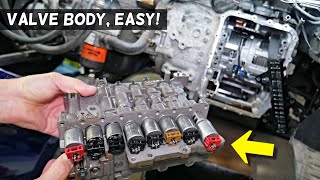
- Remove the transmission valve body to gain access to the internal wiring harness and speed sensors. This is the most labor-intensive step. 🎬 See this step-by-step valve body removal guide
- Disconnect and remove the old internal wiring harness (which includes the speed sensors).
- Install the new wiring harness (Part No. 46307-3B650).
- Reinstall the valve body, a new pan gasket, and the oil pan, torquing all bolts to factory specifications (pan bolts are typically around 7-9 ft-lbs).
- Refill the transmission with the correct amount (approx. 5-6 quarts for a drain and fill) of Hyundai SP-IV fluid.
- Clear all DTCs and perform a test drive to confirm the repair and ensure smooth shifting.
Parts You'll Likely Need
- Internal Transmission Wire Harness
(OEM #46307-3B650)— This is the most common point of failure for this code on this vehicle, as documented in Hyundai service bulletins. It contains the input, output, and fluid temperature sensors. Supersedes part numbers 46307-3B610 and 46307-3B620.
Trusted brands: Hyundai Genuine Parts, Kia Genuine Parts
OEM price range: $100-$160
Aftermarket price range: $70-$120 - Automatic Transmission Pan Gasket
(OEM #45282-26100 (for plastic pan))— A new gasket is required anytime the transmission pan is removed to prevent leaks.
Trusted brands: Hyundai Genuine Parts, Fel-Pro
OEM price range: $20-$40
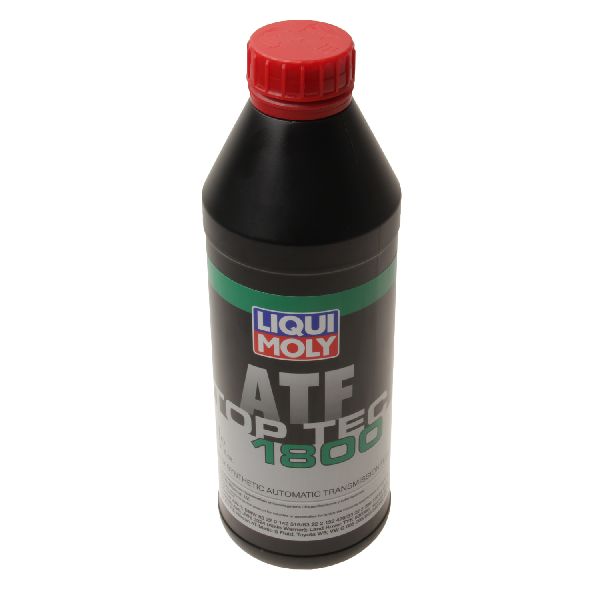
Aftermarket price range: $10-$25 - Hyundai SP-IV Automatic Transmission Fluid
(OEM #00232-19045)— The transmission must be refilled with approximately 5-6 quarts of the correct OEM-specific fluid after the repair.
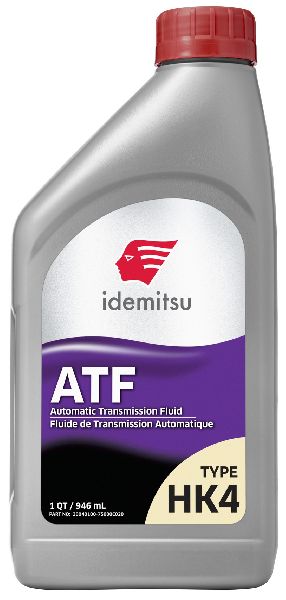
Trusted brands: Hyundai/Kia Genuine SP-IV, Idemitsu, Castrol, Valvoline (must meet SP-IV specification)
OEM price range: $15-$25 per quart
Aftermarket price range: $10-$18 per quart
Related Codes That Often Appear With This One
- P0717 — This code for 'Input Speed Sensor Circuit No Signal' often appears with P0722 because both the input and output sensors are located on the same internal wiring harness that is prone to failure.
- P0721 — This code for 'Output Speed Sensor Range/Performance' indicates an erratic or intermittent signal, which is often a precursor to the complete signal loss indicated by P0722.
- P0711 — This code for 'Transmission Fluid Temperature Sensor 'A' Circuit Range/Performance' can also appear, as the temperature sensor is also part of the same failing internal wire harness.
Technical Service Bulletins (TSBs) & Recalls
- TSB 14-AT-013: Specifically addresses DTCs P0717, P0721, and P0722 for the 2010+ Tucson (LM), Santa Fe, Sonata, Elantra, Accent, Azera, and Veloster. It instructs technicians to replace the internal harness/sensor instead of the entire transaxle.
Platform-Specific Known Issues
- The 6-speed automatic transmission (A6MF1) used in the 2010-2015 Tucson is known for the high failure rate of its internal wiring harness, which contains the speed sensors. This is a widely recognized issue addressed by multiple Hyundai Technical Service Bulletins across a wide range of Hyundai and Kia models sharing this transmission.
Mechanic-Grade Diagnostic Values
- Speed Sensor (ISS/OSS) Power Supply — expected: 9 Volts. Failure: No or low voltage indicates a wiring or TCM power supply issue.
- Transmission Fluid Temperature Sensor Resistance — expected: Approximately 2.5 kΩ at 20°C / 68°F.. Failure: A reading that is significantly different or an open/short circuit indicates a failed sensor. Voltage at 104°F is about 3.2V, and at 302°F is about 0.29V.
- Shift Solenoid Resistance (for reference) — expected: ~5.1 Ω. Failure: Readings outside of this range can indicate a failing solenoid, though this is not a direct cause of P0722.
- Output Speed Sensor Signal (Oscilloscope) — expected: A regular square wave, typically 2-5V amplitude, with frequency increasing with vehicle speed.. Failure: Absence of a waveform confirms a sensor, wiring, or power supply problem.
Scan Tool Commands That Help
- Hyundai GDS (Global Diagnostic System): Resetting Adaptive Values — After replacing the internal harness or any other major transmission component, this function must be used to clear the TCM's learned shift pressures and patterns. Failing to do so can result in harsh or erratic shifting even after the repair is complete.
- Hyundai GDS (Global Diagnostic System): Data Analysis (Live Data) — During diagnosis, monitor Input Speed Sensor and Output Speed Sensor (PG-B) values while driving. The output speed should read 0 at a stop and increase smoothly with vehicle speed. A reading of 0 while the vehicle is moving confirms the 'No Signal' condition.
Wiring & Ground Locations
- Transmission Main Connector — On the top or side of the transmission case. The external vehicle harness connects here.. This is the primary connection point to test the external wiring harness for continuity and shorts back to the TCM before opening the transmission. TSBs instruct to check for damaged or pushed-out pins here.
- 91880-2S100 — This is the OEM part number for the 'Transmission Ground Wiring Assembly' for the 2009-2014 Tucson.. A poor or corroded ground connection for the transmission can cause a wide range of electrical issues, including erratic sensor readings or a complete loss of signal, potentially triggering a P0722 code.
- TCM/PCM Location — While not a common failure point for this code, the TCM/PCM is generally located in the engine bay, often near the firewall or battery, or sometimes under the dashboard.. This is the termination point for the sensor wiring. A technician would need to access its connector to perform a full continuity test of the external harness from the transmission connector to the control module.
OEM Part Supersession History
46307-3B610, 46307-3B620→46307-3B650— Component revision and improvement to address the high failure rate of the original design.
Heads up: The newer part number (46307-3B650) is the correct and most current replacement for all previous versions and should be used for the repair.
Diagnostic Flowchart
Other Known Issues on This Vehicle
Issues unrelated to this code that are worth knowing about as an owner of this generation:
- Theta II Engine Seizure/Failure 🔴 High — Widespread across multiple model years, particularly 2011-2015. Caused by metallic debris from manufacturing leading to connecting rod bearing failure. (Ref: Subject of multiple recalls, warranty extensions, and a major class-action lawsuit (e.g., NHTSA Recall 19V063000).)
- MDPS Steering Coupler Wear 🟠 Medium — Very common. The flexible rubber coupler in the Motor-Driven Power Steering (MDPS) disintegrates over time, causing a distinct clicking or clunking noise when turning the steering wheel. (Ref: Hyundai issued a warranty extension (TXX7 / TSB 17-ST-002) covering the part for 10 years/100,000 miles on many models.)
- ABS Module Fire Risk 🔴 High — Affects a large number of vehicles. The ABS module can internally leak brake fluid, causing an electrical short that can lead to an engine compartment fire, even when the vehicle is parked and off. (Ref: NHTSA Recall 23V-651000. Owners are advised to park outdoors until the recall repair (fuse replacement) is performed.)
- Excessive Oil Consumption 🟠 Medium — Commonly reported for the 2.0L and 2.4L engines. Can be caused by worn piston rings or cylinder walls, leading to engine damage if not monitored closely. (Ref: Related to the broader Theta II engine issues and covered under associated warranty extensions and settlements.)
- Transmission Shifting Problems (General) 🟠 Medium → Shop Transmission Assembly — Aside from the specific P0722 harness failure, owners report issues with rough or delayed shifting.
Used vs. New Parts: Buying Guide for This Vehicle
When a used part is the smart pick: For this specific P0722 repair, using a salvaged or used part is NEVER recommended. The primary cause of failure is the internal wiring harness degrading from heat and chemical exposure over time. A used harness from a junkyard vehicle will have experienced the same conditions and is likely near the end of its own service life, making it an extremely unreliable replacement.
What to inspect on the donor part:
- Not applicable. Do not use a salvaged internal transmission harness for this repair.
OEM-only on this vehicle (don't cheap out):
- Internal Transmission Wire Harness (46307-3B650): Given the high failure rate and the complexity of the labor, using a new OEM or a high-quality, reputable aftermarket part is critical to ensure the repair is done only once.
- Transmission Fluid (SP-IV): Using the correct, OEM-specified fluid is mandatory for the health and longevity of the transmission. Do not substitute with generic ATF.
Aftermarket brands forum-validated for this vehicle:
- For the harness itself, Hyundai/Kia Genuine Parts is the safest choice. Some aftermarket versions exist, but their long-term durability is less documented.
Brands owners have reported issues with on this vehicle:
- Avoid unbranded, no-name harnesses from online marketplaces. The risk of premature failure is high and not worth the small cost savings given the extensive labor involved in the replacement.
Real Owner Stories
Aggregated from forums and TSBs cited above. Mileages and costs reflect what owners reported in those sources.
2011 Hyundai Tucson
Symptoms: Stuck in 3rd gear limp mode with codes P0717 and P0722 present simultaneously.
What fixed it: Mechanic replaced the internal transmission wiring harness after confirming the diagnosis.
Cost: $800-$800
Source hint: Hyundai Forums user report mentioned in common_causes
Documented NHTSA Reports
An owner reported that their vehicle would not go into drive at all, and upon scanning, the code P0722 was found (NHTSA ODI #11427357). Another report described a situation where the vehicle had to be used in manual mode for 1st and 2nd gears, while reverse functioned normally, with an auto parts store identifying error code P0722 (NHTSA ODI #11696914).
Related OBD-II Codes
Frequently Asked Questions
Does Hyundai TSB 14-AT-013 apply to my 2010-2015 Tucson?
What specific part number is needed to fix the P0722 code on a 6-speed Tucson?
My Tucson is stuck in 3rd gear and the 'D' indicator is flashing. Is this related to P0722?
What type of transmission fluid should be used when replacing the internal harness?
Can I just replace the sensor, or do I have to replace the whole harness?
Is the P0722 issue related to the Theta II engine recalls?
Helpful Videos
We Have This Part in Stock


The information in this article is provided for general reference and educational purposes only. Vehicle specifications, procedures, and part compatibility can vary by production date, trim level, and region. Always consult your vehicle's factory service manual and verify part numbers before purchasing or performing repairs. Safety-critical components such as airbags, seat belts, and braking systems should be installed by a qualified professional.
- Hyundai Tucson:
- 🧭 Diagnostic Flowchart
- 🎬 Helpful Videos
- 🛍️ Shop This Part
- What's Unique About the 2010-2015 Hyundai Tucson
- Symptoms You May Notice
- Most Likely Causes
- Rare But Worth Checking
- Diagnosis Steps
- Parts You'll Likely Need
- Related Codes That Often Appear With This One
- Technical Service Bulletins (TSBs) & Recalls
- Platform-Specific Known Issues
- Mechanic-Grade Diagnostic Values
- Scan Tool Commands That Help
- Wiring & Ground Locations
- OEM Part Supersession History
- Other Known Issues on This Vehicle
- Used vs. New Parts: Buying Guide for This Vehicle
- Real Owner Stories
- 2011 Hyundai Tucson
- Documented NHTSA Reports
- Related OBD-II Codes
- Frequently Asked Questions
- 🎟️ Get 5% Off