

P0722 on 2007-2017 Jeep Compass: Output Speed Sensor Failure Causes and Fixes
On a 2007-2017 Jeep Compass, code P0722 almost always points to a failed transmission Output Speed Sensor (OSS) or its wiring. This will cause the vehicle to enter 'limp mode' with harsh shifting. The sensor itself is affordable ($20-$80), but labor costs vary dramatically depending on the transmission type: the easily accessible external sensor on the Jatco CVT vs. the difficult internal sensor on the 6-speed automatic.
- P0722 means the transmission's output speed sensor is not sending a signal to the vehicle's computer.
- The most common symptoms are the Check Engine Light, the transmission being stuck in 'limp mode', and harsh shifting.
- The most likely fix is replacing the faulty Output Speed Sensor (OSS) or repairing its wiring.
- On CVT-equipped models, if the vehicle won't move and you also have a P0717 code, suspect a major internal transmission failure.
- Driving with this code is not recommended as it is unsafe and can lead to more costly transmission damage.
What's Unique About the 2007-2017 Jeep Compass
The first-generation Jeep Compass (MK) was offered with two main automatic transmission types: a Jatco JF011E CVT (Continuously Variable Transmission) in earlier models (approx. 2007-2013) and a conventional Hyundai/Powertech 6F24 6-speed automatic in later years (approx. 2014-2017). The repair for P0722 differs significantly between them. On the 6-speed 6F24, the input and output sensors are a single assembly located *inside* the transmission on the valve body, requiring removal of the pan and valve body to replace—a labor-intensive job. On the Jatco CVT, the sensor is typically an external component mounted to the case, making it much easier to access and replace. However, on the CVT models, a P0722 code, especially when paired with a P0717 (Input Speed Sensor code) and a no-move condition, can indicate a catastrophic internal failure of the CVT's steel belt, a well-documented issue with this transmission.
Symptoms You May Notice
- Check Engine Light is on
- Transmission is stuck in one gear (limp mode)
- Harsh, erratic, or delayed shifting
- Speedometer may not work or behaves erratically
- Vehicle may not move at all (common with internal CVT failure)
- Cruise control is inoperative
- Reduced fuel economy
- Replacing the entire transmission when only the external speed sensor or wiring is at fault.
- Assuming the code is for an internal failure without first testing the sensor and its circuit.
- Replacing the TCM when the sensor or wiring is the actual problem.
Most Likely Causes
- Faulty Transmission Output Speed Sensor (OSS) 🔴 High Probability → Shop Transmission Assembly Sensors are common failure points due to heat cycles and vibration. On CVT models, the magnetic tip can become contaminated with metallic debris from normal wear, blocking its signal. On the 6-speed automatic, the sensor is internal and bathed in fluid, but can still fail electronically.
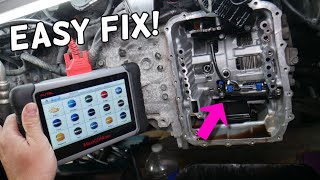
How to confirm: A professional technician will use a scan tool to monitor live data from the sensor. If no speed is reported while the wheels are turning, they will test the sensor's circuit. On the CVT, the sensor can be removed for inspection and cleaning. On the 6-speed, circuit testing is the primary method before committing to internal disassembly.
Typical fix: Replace the output speed sensor. Location and labor vary greatly: external on the CVT (easier), internal on the 6-speed automatic (harder, requires dropping the pan and valve body).
Est. part cost: $20-$80 - Damaged Wiring or Connector 🟡 Medium Probability The wiring harness leading to the transmission is exposed to road debris, moisture, and heat. Wires can break inside the loom, even with no visible external damage. Rodent damage is also a known cause.
How to confirm: Visually inspect the wiring harness for any signs of damage, melting, or corrosion. Perform a continuity test on the sensor's circuit using a multimeter. A common failure point is a few inches from the connector, where wires can chafe or break.
Typical fix: Repair the damaged section of the wiring harness or replace the connector. In one documented case for a platform mate, wires were completely broken inside the harness loom and splicing them fixed both P0717 and P0722 codes.
Est. part cost: $10-$50 - Low or Contaminated Transmission Fluid ⚪ Low Probability → Shop Transmission Assembly While not a direct cause of a 'no signal' fault, extremely dirty fluid on CVT models can contain metallic particles that stick to the magnetic sensor, disrupting its reading. Low fluid levels can cause a variety of shifting problems and codes.
How to confirm: Check the transmission fluid level and condition. The fluid should be at the correct level and appear clean, not dark brown, black, or smell burnt. Note: Many CVT transmissions do not have a traditional dipstick, requiring a special procedure to check.
Typical fix: Perform a transmission fluid drain and fill, or a full fluid exchange if the fluid is heavily contaminated.
Est. part cost: $100-$250 for fluid and filter
Rare But Worth Checking
- Internal CVT Belt Failure: On models equipped with the Jatco CVT, if P0722 is present along with P0717 (Input Speed Sensor No Signal) and the vehicle will not move, it is a very strong indicator that the internal steel drive belt has broken. Metal shavings in the fluid are another confirmation. This is a catastrophic transmission failure requiring a full rebuild or replacement.
- Faulty Powertrain/Transmission Control Module (PCM/TCM): → Shop Transmission Assembly This is very rare. The control module itself can fail, but all other possibilities (sensor, wiring) must be exhaustively ruled out first before condemning the PCM or TCM. A shop replaced a TCM on a Patriot only to find the P0722 code returned, and the root cause was the sensor itself.
Diagnosis Steps
- Connect a professional OBD-II scanner to read the code and check for any other related transmission codes, especially P0700 and P0717.
- Use the scanner to view live data from the output speed sensor while driving (or with wheels raised safely on jack stands). Confirm if the sensor is reporting 0 MPH while the vehicle is moving.
- Inspect the transmission fluid level and condition. On CVT models, check for excessive metallic debris on the drain plug magnet, which could indicate internal damage.
- Visually inspect the entire wiring harness going to the transmission, paying close attention to the connector for the output speed sensor. Look for frayed wires, corrosion, loose pins, or signs of rodent damage.
- If the wiring appears intact, test the sensor's electrical circuit for proper voltage, ground, and continuity using a multimeter and a wiring diagram for the vehicle.
- If the circuit is good, the sensor itself is the most likely culprit. Remove and replace the output speed sensor, noting the different procedures for CVT vs. 6-speed automatic.
- If replacing the sensor does not fix the issue, the problem may be more complex. On CVT models with P0717 also present, suspect a broken belt. On 6-speed models, further internal diagnosis may be needed.
Parts You'll Likely Need
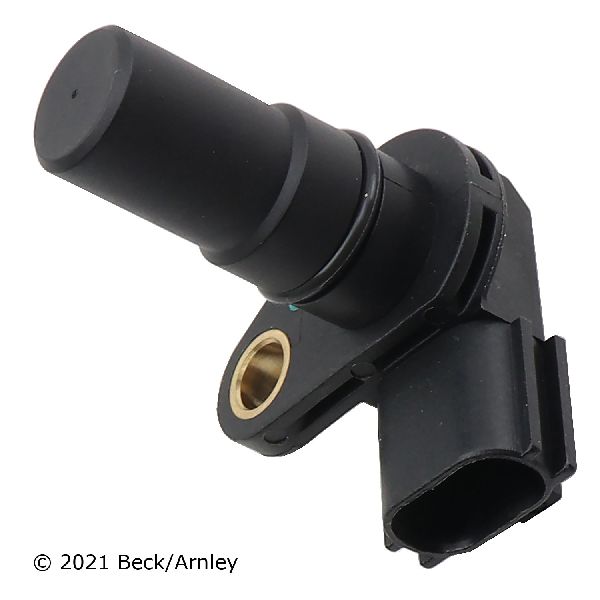
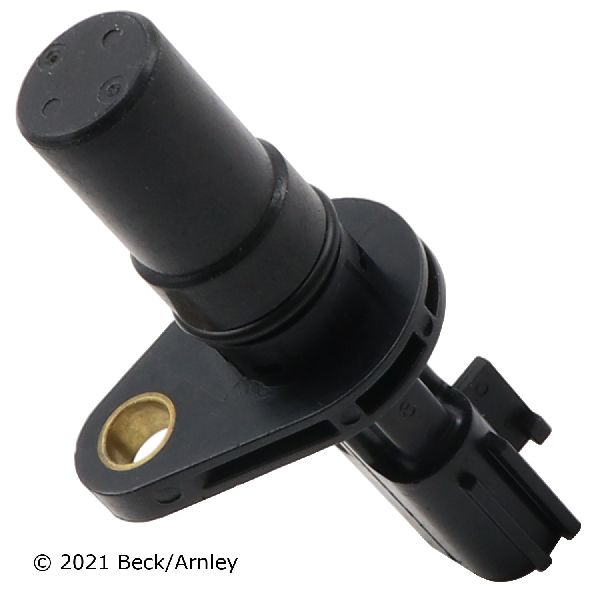
- Transmission Output Speed Sensor — This sensor is the most common point of failure for a P0722 code, as it directly generates the signal that the computer is reporting as missing.
Trusted brands: Mopar, NTK, Delphi, Dorman
OEM price range: $50-$100
Aftermarket price range: $20-$80
Related Codes That Often Appear With This One
- P0700 — This is a general transmission fault code. It means the Transmission Control Module (TCM) has detected a problem and has requested the main engine computer (PCM) to turn on the Check Engine Light. It often appears with any specific transmission code like P0722.
- P0717 — This code is for 'Input Speed Sensor Circuit No Signal'. If both the input and output speed sensor codes appear together, it strongly suggests a wiring harness issue common to both sensors or a major internal transmission failure (like a broken CVT belt).
- P0721 — This code means 'Output Speed Sensor Range/Performance'. It's a related code that can be triggered by similar issues, such as a failing sensor providing an erratic signal rather than no signal at all.
Platform-Specific Known Issues
- CVT Belt Failure: On models with the Jatco CVT, a combination of P0722 and P0717 codes with a no-move condition often points to a broken internal CVT belt, which is a very expensive repair requiring transmission replacement.
- Sensor Location Varies by Transmission: → Shop Transmission Assembly The repair is much more difficult on later models with the 6F24 6-speed automatic, as the sensor is located inside the transmission on the valve body, versus the more accessible external location on the earlier Jatco CVT models.
Mechanic-Grade Diagnostic Values
- CVT Output Speed Sensor Reference Voltage — expected: Approximately 5V at the sensor connector power pin with key on.. Failure: No voltage or significantly lower voltage indicates a problem with the PCM or the wiring.
- CVT Output Speed Sensor Connector Pin Voltages (Key On, Engine Off) — expected: Pin 3 (Power): ~12V, Pin 1 (Ground): Continuity to chassis, Pin 2 (Signal): <0.1V.. Failure: No power on Pin 3, high resistance on Pin 1, or voltage on Pin 2 with the sensor disconnected points to a circuit fault.
- Sensor Ground Circuit Resistance — expected: Less than 5 Ω.. Failure: Resistance higher than 5 Ω indicates a poor ground connection, which can cause signal errors.
- Live Data Scan Tool - Secondary Pulley RPM (CVT Models) — expected: RPM should increase as the vehicle is put in gear and driven.. Failure: If the primary pulley shows RPM but the secondary pulley RPM remains at 0 while in gear, it strongly suggests a broken internal CVT belt.
Scan Tool Commands That Help
- wiTECH or capable aftermarket scanner: Quick Learn / Transmission Service Fast Learn / Adaptive Memory Reset — This function should be performed after replacing the speed sensor, valve body, or performing a fluid service. It forces the TCM to recalibrate shift points and clutch apply pressures, which is critical for smooth operation after a repair.
- wiTECH or equivalent: TCM Flash/Reprogram — If diagnosis confirms the sensor and wiring are good, a software glitch could be the cause. Re-flashing the TCM with the latest factory software can resolve issues where the module incorrectly logs a P0722 code despite a valid sensor signal.
Wiring & Ground Locations
- G102 — On top of the transmission housing.. This is a primary ground point for components on the transmission. A loose or corroded connection here can cause an unstable ground for the speed sensor, leading to intermittent or no signal.
- C106 Connector — Main transmission harness connector.. This is a common failure point for multiple circuits. If both P0717 (Input Speed Sensor) and P0722 (Output Speed Sensor) are present, checking this connector for corrosion or loose pins is a critical diagnostic step before suspecting internal failure.
- T52 / T130 Circuits (CVT) — Wiring between the Output Speed Sensor and the Transmission Control Module (TCM).. These are the official Chrysler circuit designators for the CVT's Output Speed Sensor Signal (T52) and Sensor Ground (T130). A technician would use these identifiers from a wiring diagram to trace and test for opens or shorts in the specific wires.
Real Owner Repair Stories
- YouTube channel 'carlsgarage' (2010 Dodge Caliber 1.8L with CVT (platform mate)) — Vehicle would not shift, stuck in first gear. Codes P0717 and P0722 were present.
❌ Tried (didn't work) Initial thought was internal transmission failure or bad sensors.
✅ What actually fixed it A visual inspection of the wiring harness revealed several wires were completely broken inside the loom, a few inches from the sensor connector. Splicing the broken wires and repairing the harness resolved both codes. - YouTube channel 'T STROUD' (2012 Jeep Compass with CVT) — Vehicle would not move. Codes P0717 (Input Speed Sensor No Signal) and P0722 (Output Speed Sensor No Signal) were stored.
✅ What actually fixed it The mechanic used a scan tool to view live data and observed the primary pulley had an RPM reading, but the secondary pulley RPM was zero, even when in gear. This indicated the secondary pulley was not spinning, leading to the correct diagnosis of a broken internal CVT belt before disassembling the transmission. - Reddit r/MechanicAdvice (2012 Jeep Patriot 2.0L) — Car stopped shifting and threw a P0722 code immediately after hitting a bump in the road.
✅ What actually fixed it The sudden failure after a physical impact pointed directly to a wiring issue. The problem was resolved by fixing a fault in the wiring or connector that had been jarred loose or broken by the bump.
Model Year Variations Within This Range
- 2007-2013 (approx.) with Jatco CVT: When replacing the external output speed sensor on the Jatco JF011E CVT, technicians must pay close attention during removal, as there may be thin shims between the sensor and the transmission case. These shims are critical for correct sensor air gap and must be reinstalled.
- 2014-2017 (approx.) with 6F24 Automatic: The 6F24 6-speed automatic transmission, a design based on the Hyundai A6MF, replaced the earlier CVT. For this transmission, the input and output speed sensors are a single internal assembly located on the valve body, making replacement a much more labor-intensive job requiring draining the fluid and removing the transmission pan and valve body.
Diagnostic Flowchart
Other Known Issues on This Vehicle
Issues unrelated to this code that are worth knowing about as an owner of this generation:
- Front and Rear Subframe Corrosion 🔴 High — Extremely common, especially in regions using road salt. Can occur under 100,000 miles. Chrysler issued a 10-year extended warranty, which has now expired for most vehicles. (Ref: Extended Warranty Program (not a formal recall).)
- Jatco JF011E CVT Overheating and Failure 🔴 High — Very common, with failures often reported between 70,000 and 120,000 miles. Symptoms include whining, loss of power, and a transmission overheat light, particularly during highway driving.
- Electronic Throttle Body Failure 🟠 Medium — Common failure leading to the 'lightning bolt' warning light, limp mode, and stalling. Can happen at various mileages.
- Water Leaks into Cabin 🟡 Low — Often caused by clogged sunroof drains or failing seals around roof racks, leading to wet headliners and potential electrical issues.
- Relay Box / TIPM Corrosion 🟠 Medium — The relay box, located in the driver's side fender well, is prone to water intrusion, causing corrosion and leading to no-start or intermittent electrical problems.
- Prematurely Worn Suspension Components 🟠 Medium — Ball joints, control arm bushings, and struts are known to wear out faster than average, leading to clunking noises and poor alignment.
Used vs. New Parts: Buying Guide for This Vehicle
When a used part is the smart pick: For a high-cost component like a complete transmission assembly or a valve body, a used part from a reputable salvage yard with a known low-mileage donor vehicle can be a cost-effective option. For the speed sensor itself, buying new is always recommended due to its low cost and high failure rate.
Donor-vehicle mileage cap: roughly under 80000 miles for the part to have meaningful remaining life.
What to inspect on the donor part:
- Check the transmission fluid from the donor vehicle if possible. It should be reddish-pink, not black or burnt-smelling.
- Ask for a vehicle history report of the donor to check for accidents or reported maintenance issues.
- Inspect the transmission case for any cracks, damage, or signs of previous repairs.
- Ensure all electrical connectors and sensor housings are intact and not cracked or damaged.
OEM-only on this vehicle (don't cheap out):
- Transmission Control Module (TCM): While rare to fail, replacing with a used TCM can be problematic due to VIN-locking and software incompatibility. A new or professionally reprogrammed OEM unit is the safest choice.
Aftermarket brands forum-validated for this vehicle:
- NTK
- Delphi
- Duralast
- Dorman
Brands owners have reported issues with on this vehicle:
- While no specific brands are universally cited as 'bad', some forum users have reported that particularly sensitive vehicles like Jeeps may not be compatible with certain off-brand or no-name electronics, sometimes causing codes to return. Sticking to well-known aftermarket brands or OEM is a safer bet.
Real Owner Stories
Aggregated from forums and TSBs cited above. Mileages and costs reflect what owners reported in those sources.
2012 Jeep Compass CVT
Symptoms: P0722 and P0717 codes present; live data showed no secondary pulley movement and the vehicle would not move.
What fixed it: Physical inspection confirmed a broken internal belt in the CVT; required transmission replacement.
Source hint: YouTube - '2012 JEEP COMPASS CVT TRANSMISSION PROBLEM: PO722 OUTPUT SHAFT SPEED SENSOR CIRCUIT NO SIGNAL'
2008 Jeep Patriot (Platform Mate)
Symptoms: P0722 code appeared immediately after the Transmission Control Module (TCM) was replaced by another shop.
What fixed it: Circuit testing proved the wiring was intact; the newly installed output speed sensor was found to be faulty out of the box.
Source hint: YouTube - ''08 Jeep Patriot P0722 After TCM Replacement!'
2011 Jeep Compass
Symptoms: Codes P0746 and P0722 with a condition where the vehicle would not move.
What fixed it: Found metal scrapings in the transmission fluid, indicating internal failure.
Source hint: 2CarPros - 'Codes p0746 and P0722? - 2011 jeep compass'
Related OBD-II Codes
Frequently Asked Questions
Is the P0722 code on my Jeep Compass CVT related to the common overheating issue?
I have a 2014 Jeep Compass with the 6-speed automatic; is the sensor replacement easy?
Can a bad battery or wiring cause P0722 on this platform?
My Compass won't move and has codes P0722 and P0717. Is it just a sensor?
Does the subframe corrosion warranty cover my 2012 Compass transmission issues?
Helpful Videos
We Have This Part in Stock

The information in this article is provided for general reference and educational purposes only. Vehicle specifications, procedures, and part compatibility can vary by production date, trim level, and region. Always consult your vehicle's factory service manual and verify part numbers before purchasing or performing repairs. Safety-critical components such as airbags, seat belts, and braking systems should be installed by a qualified professional.
- Jeep Compass:
- 🧭 Diagnostic Flowchart
- 🎬 Helpful Videos
- 🛍️ Shop This Part
- What's Unique About the 2007-2017 Jeep Compass
- Symptoms You May Notice
- Most Likely Causes
- Rare But Worth Checking
- Diagnosis Steps
- Parts You'll Likely Need
- Related Codes That Often Appear With This One
- Platform-Specific Known Issues
- Mechanic-Grade Diagnostic Values
- Scan Tool Commands That Help
- Wiring & Ground Locations
- Real Owner Repair Stories
- Model Year Variations Within This Range
- Other Known Issues on This Vehicle
- Used vs. New Parts: Buying Guide for This Vehicle
- Real Owner Stories
- 2012 Jeep Compass CVT
- 2008 Jeep Patriot (Platform Mate)
- 2011 Jeep Compass
- Related OBD-II Codes
- Frequently Asked Questions
- 🎟️ Get 5% Off