

P0722 on 2012-2013 Mazda MAZDA3: Output Speed Sensor and TCM Guide
On a 2012-2013 Mazda3, code P0722 is most often caused by a software issue in the Transmission Control Module (TCM). A Mazda dealer can reprogram the TCM, which usually fixes the problem. One owner reported paying a dealer around $200 for diagnostics and the TCM software update. If that doesn't work, the next most likely cause is a faulty transmission output speed sensor.
- For a 2012-2013 Mazda3, P0722 is very likely a software issue, not a bad part.
- Always check if your vehicle's VIN is covered by TSB 05-004/15 before replacing any parts.
- The recommended first step is to have a Mazda dealer update the Transmission Control Module (TCM) software, which may cost around $200.
- If a part replacement is needed, the Output Speed Sensor (FN0121550) is the next most likely culprit.
What's Unique About the 2012-2013 Mazda MAZDA3
For the 2012-2013 Mazda3, this code is frequently not a hardware failure. Mazda issued a Technical Service Bulletin (TSB 05-004/15) acknowledging that the P0722 code could be triggered erroneously due to a logic issue in the Transmission Control Module (TCM). This is a well-documented quirk for this specific vehicle and year range, making a TCM software update the primary recommended fix before replacing any parts. The TSB applies to both MZR and SkyActiv engine models within the specified VIN range.
Diagnostic Flowchart
Tap your situation to follow the diagnostic path that matches what you're seeing on this vehicle.
Symptoms You May Notice
- Check Engine Light is on
- A/T (Automatic Transaxle) warning light is on
- "Engine Inspection Required" message on the display
- Harsh, erratic, or delayed shifting
- Transmission stuck in one gear (limp mode)
- Inaccurate or non-functional speedometer
- Decreased fuel economy
- Transmission may seem to slip, where engine RPMs rise without a corresponding increase in vehicle speed
- Replacing the output speed sensor without first checking for the TCM software update specified in the TSB.
- Replacing the entire transmission when the issue is a simple sensor, wiring, or software problem.
- Confusing the Output Speed Sensor (OSS) with the Input/Turbine Speed Sensor (TSS), which is a different part with a similar appearance.
Most Likely Causes
- TCM Control Logic/Software Fault 🔴 High Probability Mazda released Technical Service Bulletin 05-004/15, which supersedes earlier versions, specifically for this issue on 2012-2013 Mazda3s, indicating a known software glitch that falsely triggers the code.
How to confirm: A Mazda dealership or a qualified shop with Mazda-specific tools can check the current TCM software version against the latest available calibration. The TSB applies to VINs between JM1BL**732088 and 814225 (produced up to March 26, 2013).
Typical fix: Reprogramming (re-flashing) the TCM with the 🎬 Watch: Step-by-step guide to replacing the TCM hardware updated software provided by Mazda. This typically costs between $75 and $250. One owner reported paying a dealership about $200 for the diagnostic and TCM update combined.
Est. part cost: $0 - Faulty Transmission Output Speed Sensor (OSS) 🟡 Medium Probability → Shop Transmission Assembly Like any electronic sensor, the OSS can fail over time due to heat and vibration. It is the most likely hardware failure after the TCM software issue is ruled out.
How to confirm: After confirming the TCM software is up to date, a technician can use a scan tool to monitor live data from the OSS. If the sensor shows 0 RPM while the vehicle is moving, or if the signal is erratic, the sensor is likely faulty. It can also be tested with a multimeter for correct voltage (typically a 5V reference) and ground. The sensor is located on the transmission housing, often near the driver's side axle, behind the firewall.
Typical fix: Replace the output speed sensor. This may require draining some transmission fluid.
Est. part cost: $45-$75 - Damaged Wiring or Connectors ⚪ Low Probability Wiring near the transmission is exposed to heat, moisture, and road debris, which can cause corrosion, chafing, or breaks over time.
How to confirm: Visually inspect the wiring harness and connector leading to the output speed sensor for any signs of damage, melting, or corrosion. Perform a continuity test with a multimeter to check for opens or shorts in the circuit between the sensor and the TCM.
Typical fix: Repair or replace the damaged section of the wiring harness or the connector pigtail.
Est. part cost: $10-$50
Rare But Worth Checking
- Faulty Transmission Control Module (TCM): → Shop Transmission Assembly While a software issue is common, the TCM itself can fail internally due to its location on the transmission, which exposes it to heat. This should 🎬 Watch: How to identify and repair a failing TCM only be considered after all other possibilities, including the TSB, sensor, and wiring, have been ruled out. Companies offer repair services for failed TCMs for around $300-$450.
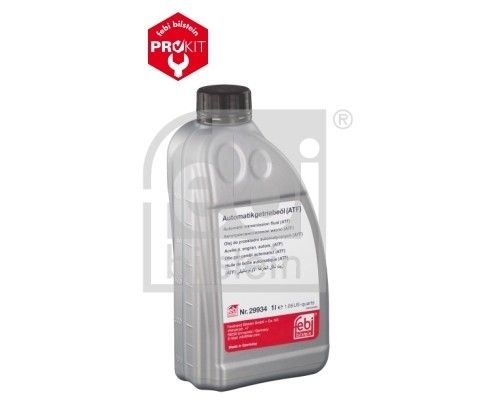
- Low or Dirty Transmission Fluid: → Shop Transmission Assembly Extremely low or contaminated fluid can cause a variety of transmission issues, including erratic sensor readings or internal component failure. It's a simple and important check, though less likely to be the direct cause of a 'no signal' code.
- Faulty Valve Body: → Shop Transmission Valve Body In some cases, if the TCM update does not resolve the issue, the TSB follow-up procedure may point towards replacing the main control valve body, though this is less common for P0722 specifically compared to other transmission codes.
Diagnosis Steps
- Scan the vehicle for all stored trouble codes. Confirm P0722 is present and note any other transmission-related codes.
- Check if the vehicle's VIN falls within the range specified in TSB 05-004/15 (JM1BL**732088 - 814225).
- If the VIN is within range, the primary step is to have a Mazda dealer or qualified shop reprogram the TCM to the latest software version. This is the most probable fix.
- If the code returns after the reprogram, or if the vehicle is outside the TSB range, proceed with further diagnosis.
- Check the transmission fluid level and condition. Top off or change if necessary.
- Visually inspect the output speed sensor's wiring and connector for any signs of damage, corrosion, or loose connections. The sensor is typically on the transmission case, near the driver's side axle area.
- Use a professional scan tool to monitor the output speed sensor's data in real-time while driving. The reading should increase smoothly with vehicle speed. A reading of '0' indicates a problem.
- If the signal is absent, test the sensor's circuit. Disconnect the sensor and check for a 5V reference signal and a good ground at the connector with the ignition on.
- If the circuit has power and ground, test the sensor itself or replace it. The sensor is held by a single bolt.
- If the problem persists after all these steps, the issue may be with the transmission's internal valve body or a hardware failure within the TCM itself, requiring advanced diagnostics or replacement.
Parts You'll Likely Need
- Transmission Output Speed Sensor
(OEM #FN0121550)— This sensor is the most likely hardware component to fail and cause a P0722 code, after the TCM software issue has been ruled out. This part number is widely cross-referenced for Mazda 3, 5, 6, and CX-7 models with the 5-speed automatic transmission.
Trusted brands: Standard Motor Products (917-648), Beck Arnley, Wells, Mazda Genuine Parts
OEM price range: $70-$90
Aftermarket price range: $45-$75
Technical Service Bulletins (TSBs) & Recalls
- 05-004/15: CHECK ENGINE LIGHT AND A/T WARNING LIGHT ON WITH DTC P0722:00. This TSB, which supersedes earlier versions, notes that the TCM control logic was changed to eliminate the concern of a false P0722 code being set. It applies to 2012-2013 Mazda3s with VINs JM1BL**732088 - 814225.
- 05-002/15 & 05-004/19: These related TSBs address other transmission codes (P0842, P0847, etc.) on SkyActiv models caused by contamination in the valve body. While not directly for P0722, they show a pattern of Mazda using TCM reprogramming as a first-line fix fo
Platform-Specific Known Issues
- TCM Software Glitch (TSB 05-004/15): A significant number of 2012-2013 Mazda3 vehicles are prone to setting a false P0722 code due to a glitch in the TCM's control logic. Mazda addressed this with a software update outlined in TSB 05-004/15 (which supersedes 05-004/13). This should always be the first check for vehicles within the affected VIN range.
- Owner Experience: TCM Update Success: A 2013 Mazda3 owner on Reddit reported their AT light and Check Engine light came on. A dealership diagnostic confirmed the P0722 code history. For about $200 total, the dealer updated the TCM software, which had never been done. The owner reported the car drove better afterward and the issue was resolved without replacing the sensor or valve body.
- TCM Hardware Failure Prone: Across the second generation (2010-2013), Mazda3s are known for TCM hardware failure due to the module's placement directly on the hot transmission case. While P0722 is often software-related, a persistent code after a reflash and sensor replacement could indicate a failing TCM. Symptoms include getting stuck in gear and communication codes like U0101.
Mechanic-Grade Diagnostic Values
- Output Speed Sensor (OSS) Signal Waveform — expected: A regular square wave with a 2-5V amplitude. Frequency should increase with speed (e.g., 30-100 Hz at idle in gear).. Failure: Absence of a waveform or an erratic, inconsistent wave pattern when the output shaft is known to be spinning.
Scan Tool Commands That Help
- Mazda IDS (Integrated Diagnostic System): Module Reprogramming — This is the specific function required to apply the software update to the TCM as specified in TSB 05-004/15 to fix the false P0722 code.
- Generic OBD-II Scanner / Manual Procedure: TCM Adaptive Memory Reset — After replacing a sensor or performing other transmission repairs, a reset can help the TCM relearn shift parameters. This can be done with some scan tools or by following a specific procedure, such as disconnecting the battery for at least 30 minutes.
Wiring & Ground Locations
- Main Transmission Ground — A ground wire from the negative battery terminal connects to a bracket on top of the transmission housing.. A poor or loose main ground for the transmission can cause a variety of electrical issues, including erratic sensor readings and communication problems with the TCM.
- Engine Block / Oil Filter Housing Ground — A major ground point is sometimes incorrectly attached to a bolt on the oil filter housing. This location has a gasket that can insulate the ground connection.. An improperly secured ground here can cause widespread CAN bus communication failures (U-codes), which can manifest as a P0722 code if the TCM loses reliable communication.
- Ground Point G104 — Located under the intake manifold.. This is a documented ground point for the engine harness, which includes wiring for various sensors communicating with the PCM/TCM.
Real Owner Repair Stories
- Reddit user comment in /r/mazda3 (2008 Mazda3 S 2.3L (similar generation and known issue)) — Car jolts and downshifts from 5th to 4th gear while cruising. Code P0720 (Output Shaft Speed Sensor Circuit) was present.
❌ Tried (didn't work) Replacing the input speed sensor, Replacing the output speed sensor
✅ What actually fixed it The problem was ultimately resolved by replacing the entire Transmission Control Module (TCM) with a second-hand unit that had matching part numbers.
"I Checked Everything" — The Actual Cause
- While not a smoke test issue, a similar diagnostic dead-end can occur. Technicians may find the OSS sensor and its direct wiring test perfectly fine. The actual cause can be an intermittent or poor main ground connection elsewhere, such as the ground point on the oil filter housing, which can disrupt the entire CAN bus network and cause the TCM to report a sensor signal loss.
When the Usual Fixes Don't Work
- If the primary recommended fix—reprogramming the TCM according to TSB 05-004/15—does not resolve the P0722 code, the issue is not the common software glitch. The official Mazda diagnostic procedure in this case directs the technician to replace the main control valve body. In other instances on this platform, a persistent code after sensor replacement has been traced to a complete hardware failure of the TCM itself, requiring the module to be replaced.
OEM Part Supersession History
FN01-21-550→G4T00190— Part update or manufacturer change.
Heads up: FN01-21-550 is the widely cited OEM number for this application. G4T00190 is listed as an interchange part number. Always verify fitment with VIN before purchasing.
Model Year Variations Within This Range
- 2012-2013: A specific range of vehicles are subject to TSB 05-004/15 for a false P0722 code. The fix is a TCM software update. This applies only to VINs between JM1BL**732088 and 814225, produced up to March 26, 2013. Vehicles outside this range are not covered by the TSB and the cause is more likely to be a hardware failure.
Helpful Videos
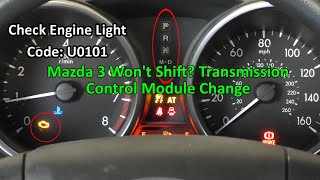
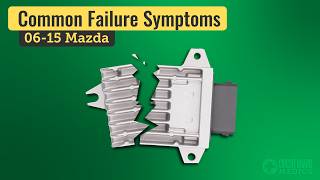
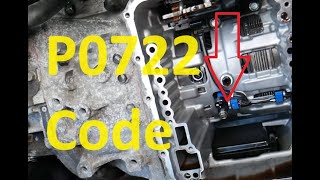
We Have This Part in Stock

The information in this article is provided for general reference and educational purposes only. Vehicle specifications, procedures, and part compatibility can vary by production date, trim level, and region. Always consult your vehicle's factory service manual and verify part numbers before purchasing or performing repairs. Safety-critical components such as airbags, seat belts, and braking systems should be installed by a qualified professional.
- Mazda MAZDA3:
- 🧭 Diagnostic Flowchart
- 🎬 Helpful Videos
- 🛍️ Shop This Part
- What's Unique About the 2012-2013 Mazda MAZDA3
- Symptoms You May Notice
- Most Likely Causes
- Rare But Worth Checking
- Diagnosis Steps
- Parts You'll Likely Need
- Technical Service Bulletins (TSBs) & Recalls
- Platform-Specific Known Issues
- Mechanic-Grade Diagnostic Values
- Scan Tool Commands That Help
- Wiring & Ground Locations
- Real Owner Repair Stories
- "I Checked Everything" — The Actual Cause
- When the Usual Fixes Don't Work
- OEM Part Supersession History
- Model Year Variations Within This Range
- 🎟️ Get 5% Off