

P0722 on 2006-2012 Toyota RAV4: Output Speed Sensor Failure Causes and Fixes
On a 2006-2012 Toyota RAV4, code P0722 is most often caused by a failed transmission output speed sensor (also called the SP2 sensor). This can cause harsh shifting, stalling, an inoperative speedometer, and force the vehicle into limp mode. Replacing the sensor is a common fix, with the part costing between $40 for an aftermarket and $150 for an OEM version.
- P0722 on your RAV4 almost always means the transmission output speed sensor (SP2) has failed or its wiring is damaged.
- Symptoms are serious and include harsh shifting and potential stalling, so you should stop driving the vehicle immediately.
- Before buying a new sensor, inspect the wiring and connector for obvious damage, especially for signs of rodents, as this can be a cheaper fix.
- If you are a confident DIYer, you can replace this sensor yourself by removing the airbox and battery for access.
- Always verify the correct part number for your specific vehicle using your VIN, as several different sensors were used.
What's Unique About the 2006-2012 Toyota RAV4
For the third-generation RAV4 (XA30), the P0722 code is a straightforward issue that typically points directly to the output speed sensor or its wiring. Unlike some vehicles where this code is a symptom of a larger internal transmission failure, on the RAV4 it's most often an external component failure. The sensor itself is located on the top of the transmission housing (on both the U140/U241 4-cylinder and U151 V6 transmissions), making it more accessible for diagnosis and replacement than on vehicles where it is located inside the transmission pan.
Symptoms You May Notice
- Check Engine Light is on
- Harsh, erratic, or delayed gear shifting
- Transmission gets stuck in one gear (limp mode)
- Inaccurate or completely inoperative speedometer
- Vehicle may stall when coming to a stop or while driving
- Decreased fuel economy
- Cruise control may not function
- Replacing the Wheel Speed (ABS) Sensors: P0722 is for the transmission output speed sensor, not the ABS sensors at the wheels. A failing ABS sensor would typically trigger ABS and/or TRAC warning lights, not P0722.
- Condemning the entire transmission: This is an expensive mistake. The cause of P0722 is almost always an inexpensive external sensor or a wiring issue, not a catastrophic internal failure.
Most Likely Causes
- Failed Output Speed Sensor (SP2) 🔴 High Probability The sensor is an electronic component that operates in a high-heat environment and is subject to failure over time from thermal cycling and vibration. It is the most common point of failure for this code.
How to confirm: With a scan tool, check the live data for 'Output Speed (SP2)' while driving; if it remains at 0 RPM while the vehicle is moving, a no-signal condition is confirmed. You can also test the sensor's internal resistance with a multimeter. A factory service manual for a similar Toyota transmission specifies a resistance of 560-680 Ω at 68°F (20°C). A reading of infinity (Open Loop) or zero indicates a failed sensor.
Typical fix: Replace the output speed sensor. The sensor is located on top of the transmission and is held by a single 10mm bolt. Access requires removing the air filter housing and battery.
Est. part cost: $40-$150 - Damaged Wiring or Corroded Connector 🟡 Medium Probability The wiring harness runs along the top of the transaxle and is exposed to heat. More significantly, Toyota's use of soy-based wiring insulation in this era makes it a target for rodents, who may chew through the wires causing a short or open circuit.
How to confirm: Visually inspect the wiring harness leading to the speed sensor for any signs of physical damage, melting, chafing, or evidence of rodent damage (chew marks, nests). Unplug the connector and check the pins for corrosion, moisture, or damage. Perform a continuity test on the wires between the sensor connector and the ECM.
Typical fix: Repair the damaged section of the wiring harness or clean/replace the corroded connector. In cases of rodent damage, this may involve splicing in new sections of wire.
Est. part cost: $10-$50
Rare But Worth Checking
- Faulty Engine Control Module (ECM): → Shop Engine Control Module (ECM) This is very rare. Before condemning the ECM, all other possibilities, including the sensor and the entire wiring harness, must be exhaustively tested and ruled out.
- Internal Transmission Issues: → Shop Transmission Assembly While uncommon for this code to be the primary indicator, an internal mechanical failure, such as a damaged reluctor wheel (tone ring) that the sensor reads, could cause a loss of signal. This would typically be accompanied by other symptoms like loud noises or severe transmission slippage and is not a common failure mode for this specific code on the RAV4.
Diagnosis Steps
- Connect an OBD-II scanner and confirm that P0722 is the primary code. Record any other codes and freeze-frame data.
- Using the scanner's live data function, monitor the 'Output Speed (SP2)' parameter while safely driving the vehicle. If the vehicle speed is above 6 MPH and the SP2 reading is 0, a no-signal condition is confirmed.
- Perform a thorough visual inspection of the output speed sensor and its connector, which is located on the top of the transmission housing. You will need to remove the air filter housing and battery for access. Look for loose connections, damaged/chewed wires, or corrosion.
- If the wiring looks okay, disconnect the sensor and inspect the connector pins for damage or corrosion.
- Test the sensor's internal resistance using a multimeter set to Ohms. Probe the two pins on the sensor. The factory specification for similar Toyota transmissions is 560-680 Ω at 68°F (20°C). A reading of infinity (OL) or 0 indicates a faulty sensor.
- If the sensor tests good, the problem is in the wiring. Check for continuity on both wires from the sensor connector back to the ECM connector. Check for shorts to ground or power. A wiring diagram is essential for this step.
- If the sensor and wiring are confirmed to be good, the issue may be with the ECM, but this is extremely unlikely and should only be considered as a last resort after all other possibilities are exhausted.
Parts You'll Likely Need
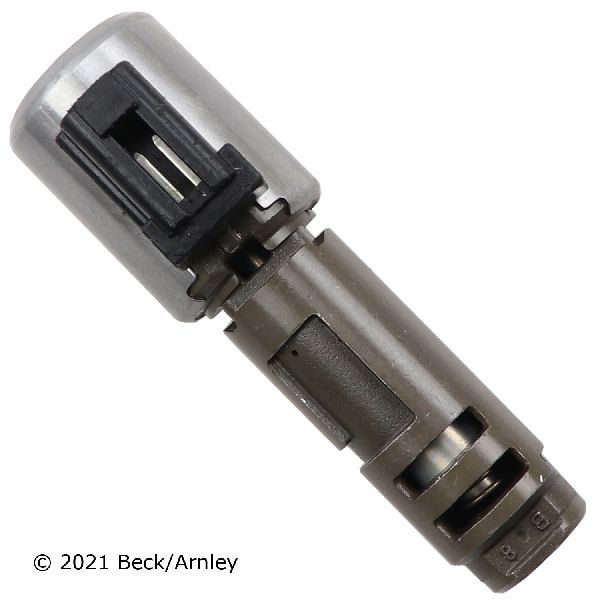
- Transmission Output Speed Sensor (SP2)
(OEM #89413-24010)— This sensor is the most common failure point for a P0722 code. It is an electronic component that wears out over time. Note: Always verify the part number with your vehicle's VIN before ordering, as multiple sensors are used across Toyota models.
Trusted brands: Denso (OEM Manufacturer), NTK, Standard Motor Products (SMP), Beck/Arnley, WVE
OEM price range: $110-$160
Aftermarket price range: $40-$90
Platform-Specific Known Issues
- The location on top of the transmission requires removal of the air filter box and the battery/battery tray to gain access, which adds time and complexity to the repair compared to more exposed sensors. 🎬 See this step-by-step sensor removal and installation guide
- The soy-based wiring insulation used during this period is known to attract rodents, making chewed wires a more likely cause for this code than on other vehicles.
Mechanic-Grade Diagnostic Values
- Output Speed Sensor (SP2) internal resistance — expected: 560 - 680 Ω at 20°C (68°F). Failure: A reading of infinity (Open Loop) or near zero ohms indicates a failed sensor.
- Wiring harness continuity from sensor connector to ECM — expected: Below 1 Ω. Failure: A reading higher than 1 Ω indicates excessive resistance in the wiring.
- Wiring harness short to ground test — expected: 10 kΩ or higher. Failure: A reading below 10 kΩ indicates a short circuit to ground in the harness.
- Live data scan tool reading for 'SPD (SP2)' — expected: Value should increase smoothly with vehicle speed, matching the speedometer.. Failure: Value remains at 0 while the vehicle is moving (above 6 mph).
Scan Tool Commands That Help
- Toyota Techstream: Live Data Monitoring: Powertrain -> Engine and ECT -> Data List -> 'SPD (SP2)' — This is the primary diagnostic step to confirm a 'no signal' condition. While driving, the 'SPD (SP2)' value should mirror the vehicle's actual speed. If it stays at 0 while other speed sensors show movement, it confirms the fault is in the SP2 circuit.
- Toyota Techstream: Utility -> Reset Memory — After replacing the sensor or repairing the wiring, this function should be used to clear the DTC and reset the transmission's learned values. While a standard code clear or disconnecting the battery may work, this ensures the ECM/TCM properly re-learns based on the new, functioning sensor.
Wiring & Ground Locations
- SP2 Sensor Connector — On top of the transmission housing, underneath the air filter housing and battery tray.. This is the primary connection point to inspect for corrosion, damage, or loose pins. A bad connection here will cause a P0722.
- ECM Connectors — Typically located in the engine bay, often near the firewall or inside a protective box.. The wires from the SP2 sensor terminate here. For advanced diagnostics, technicians can back-probe the specific ECM pins (e.g., SP2+ and SP2-) to check for the signal waveform with an oscilloscope directly at the module, confirming if the signal is reaching the ECM.
- Main Engine/Transmission Ground Points — Bolted to the engine block and/or transmission case, and then to the chassis. A key ground is often located near where the engine mates to the transmission.. A corroded or loose ground connection can cause a variety of sensor signal issues, including an intermittent or complete loss of signal for the P0722 code. This is an often-overlooked cause for sensor circuit codes.
OEM Part Supersession History
89413-24010→89413-08020— Standard part number consolidation and revision by Toyota.
Heads up: The part numbers 89413-24010, 89413-08020, 89411-33010, and 89413-33020 are often listed as replacements for each other. It is critical to verify the correct part for your specific RAV4's engine (4-cyl vs V6) and VIN, as there can be subtle differences.
Model Year Variations Within This Range
- 2006-2008: The standard 4-cylinder engine was the 2.4L 2AZ-FE, paired with a 4-speed (U241E) automatic transmission. This engine had known issues with excessive oil consumption.
- 2009-2012: The 4-cylinder engine was upgraded to the more reliable 2.5L 2AR-FE, still paired with a 4-speed (U241E) automatic transmission.
- 2006-2012 (V6 models): All V6 models used the 3.5L 2GR-FE engine paired with a 5-speed (U151E/F) automatic transmission. While the P0722 fault and sensor location are similar, the specific part number for the sensor may differ from the 4-cylinder models, reinforcing the need to check by VIN.
Diagnostic Flowchart
Other Known Issues on This Vehicle
Issues unrelated to this code that are worth knowing about as an owner of this generation:
- Excessive Oil Consumption (2AZ-FE 2.4L Engine) 🔴 High — Very common on 2006-2008 models with the 2.4L engine. Caused by defective piston ring design. (Ref: Toyota issued TSB T-SB-0094-11 and a warranty enhancement program (ZE7) to address this, but it has since expired.)
- Steering Intermediate Shaft Clunk/Noise 🟠 Medium — Common across the generation. A clunking or popping noise is heard/felt in the steering column, especially at low speeds. (Ref: Toyota released an updated steering shaft to fix the problem.)
- Torque Converter Shudder (V6 Models) 🔴 High — A known issue on some V6 models where a shudder or vibration occurs during light acceleration due to torque converter lock-up issues. (Ref: Toyota issued an extended warranty for the torque converter on certain model years.)
- Rear Differential Coupling Growl (4WD Models) 🟠 Medium — A growling noise from the rear of the vehicle may occur due to contamination of the front bearing in the rear differential coupling. (Ref: TSB T-SB-0080-13 was issued to address this repair.)
- Overheated Power Window Master Switch 🔴 High — Insufficient lubrication from the factory could cause the driver's side power window master switch to short circuit, overheat, and potentially melt. (Ref: Toyota issued a recall in 2015 to apply special grease or replace the switch board if necessary.)
Used vs. New Parts: Buying Guide for This Vehicle
When a used part is the smart pick: A used OEM speed sensor from a low-mileage donor vehicle is a reasonable choice. The failure mode is typically electronic wear, not mechanical, so a part from a newer or lower-mileage vehicle can be a cost-effective alternative to a new OEM part. Given the low cost of new aftermarket parts, a used part only makes sense if it's significantly cheaper or more readily available.
Donor-vehicle mileage cap: roughly under 80000 miles for the part to have meaningful remaining life.
What to inspect on the donor part:
- Verify the donor vehicle's mileage if possible.
- Inspect the connector pins for any signs of corrosion, bending, or damage.
- Check the plastic housing for cracks or signs of extreme heat exposure.
- If possible, test the resistance with a multimeter before purchase to ensure it's within the 560-680 Ω range.
OEM-only on this vehicle (don't cheap out):
- Engine Control Module (ECM)
Aftermarket brands forum-validated for this vehicle:
- Denso (often the original OEM supplier)
- NTK
- Standard Motor Products (SMP)
Brands owners have reported issues with on this vehicle:
- Unnamed, no-brand 'white box' parts from online marketplaces should be avoided due to inconsistent quality control and high failure rates for electronic components.
Real Owner Stories
Aggregated from forums and TSBs cited above. Mileages and costs reflect what owners reported in those sources.
2007 Toyota RAV4 V6
Symptoms: The vehicle triggered a P0722 code and entered limp mode.
What fixed it: Replacing the output speed sensor. The repair required removing the battery to gain access to the sensor on top of the transmission.
Source hint: ToyotaNation.com
Toyota RAV4 V6
Symptoms: Harsh shifting and a Check Engine Light.
What fixed it: Replacing the output speed sensor (SP2) located under the airbox. The owner used part number 89413-08020.
Source hint: RAV4World.com
Related OBD-II Codes
Frequently Asked Questions
Where is the Output Speed Sensor (SP2) located on my 2006-2012 RAV4?
Can rodents cause the P0722 code on my Toyota?
What is the correct resistance for a replacement speed sensor?
Is there a TSB for the oil consumption issue on my 2007 RAV4 2.4L?
My V6 RAV4 is shuddering during acceleration; is this related to P0722?
Why is my speedometer not working along with the Check Engine Light?
Helpful Videos
We Have This Part in Stock

The information in this article is provided for general reference and educational purposes only. Vehicle specifications, procedures, and part compatibility can vary by production date, trim level, and region. Always consult your vehicle's factory service manual and verify part numbers before purchasing or performing repairs. Safety-critical components such as airbags, seat belts, and braking systems should be installed by a qualified professional.
- Toyota RAV4:
- 🧭 Diagnostic Flowchart
- 🎬 Helpful Videos
- 🛍️ Shop This Part
- What's Unique About the 2006-2012 Toyota RAV4
- Symptoms You May Notice
- Most Likely Causes
- Rare But Worth Checking
- Diagnosis Steps
- Parts You'll Likely Need
- Platform-Specific Known Issues
- Mechanic-Grade Diagnostic Values
- Scan Tool Commands That Help
- Wiring & Ground Locations
- OEM Part Supersession History
- Model Year Variations Within This Range
- Other Known Issues on This Vehicle
- Used vs. New Parts: Buying Guide for This Vehicle
- Real Owner Stories
- 2007 Toyota RAV4 V6
- Toyota RAV4 V6
- Related OBD-II Codes
- Frequently Asked Questions
- 🎟️ Get 5% Off