

P0722 on 2005-2015 Toyota Tacoma: Output Speed Sensor Failure Causes and Fixes
P0722 on a 2nd Gen Tacoma indicates the transmission's Output Speed Sensor (OSS) is not sending a signal to the engine's computer. This often causes harsh shifting, a non-functional speedometer, disabled cruise control, and the truck entering 'limp mode'. The most common fix is replacing the failed sensor itself, which is a relatively inexpensive part located on the passenger side of the transmission.
- P0722 on a 2005-2015 Tacoma means the ECM isn't getting a signal from the transmission's output speed sensor.
- Symptoms are serious and affect drivability, including harsh shifting, limp mode, and no cruise control.
- The most likely cause is a failed Output Speed Sensor, located on the passenger side of the transmission.
- Before replacing parts, check the sensor's wiring and connector for damage, and verify engine bay ground connections are tight.
What's Unique About the 2005-2015 Toyota Tacoma
For the 2nd Generation Tacoma (2005-2015), there's a key distinction in how vehicle speed is measured compared to older models. While there is a dedicated Output Speed Sensor (OSS) on the transmission that is responsible for this P0722 code, the speedometer on the dashboard often gets its signal from the ABS wheel speed sensors. This can be confusing, as your speedometer might work correctly even with a P0722 code present. The code specifically points to the sensor used by the ECM for transmission control, not necessarily the one for the driver's instrument cluster. The ECM needs this SP2 signal to make logical decisions about shifting; without it, it enters a protective 'limp mode'.
Symptoms You May Notice
- Harsh or delayed gear shifts, often feeling like a 'clunk'.
- Transmission gets stuck in one gear (limp mode).
- Check Engine Light is on.
- Cruise control does not work.
- Vehicle may stall when stopping or at low speeds.
- In some cases, the speedometer may not work or fluctuate, though it can also function normally.
- Traction control light may illuminate. 🎬 See: Symptoms of a bad speed sensor and how to test it
- Replacing the Input Speed Sensor instead of the Output Speed Sensor. On the A750 transmission, the Output sensor (SP2) is on the passenger side, while the Input sensor (turbine speed) is on the driver's side. A Reddit user with a Tundra (which shares the transmission) made this exact mistake.
- Assuming the transmission has failed internally without first diagnosing the sensor and wiring, which are far more common and cheaper to fix.
Most Likely Causes
- Failed Output Speed Sensor (OSS) 🔴 High Probability Like any electronic sensor exposed to heat and vibration under the vehicle, the OSS can fail over time due to internal coil damage or contamination from metallic debris in the transmission fluid.
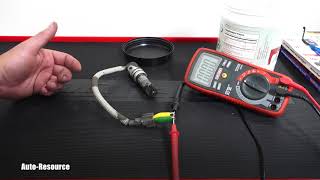
How to confirm: Test the sensor's resistance with a multimeter. At 68°F (20°C), it should be between 560-680 ohms. A reading outside this range indicates a bad sensor. A scan tool showing 0 RPM from the output sensor (PID 'SPD (SP2)') while the vehicle is moving also points 🎬 Watch: Understanding the P0722 output speed sensor code to a failed sensor.
Typical fix: Replace the Output Speed Sensor. On the common A750 automatic transmission, it is located on the right (passenger) side of the transmission housing, toward the rear. It is held in by a single 10mm or 12mm bolt.
Est. part cost: $60-$150 - Damaged Wiring or Connector 🟡 Medium Probability The wiring harness runs under the truck and is exposed to road debris, moisture, and heat from the exhaust. This can lead to corrosion in the connector pins, chafed insulation, or broken wires, especially near the sensor pigtail.
How to confirm: Visually inspect the wiring harness and the connector at the sensor for any signs of damage, corrosion, or loose pins. Perform a continuity test on the two wires 🎬 Watch: How to test a vehicle speed sensor with a multimeter between the sensor connector and the ECM. Wiggle the harness while testing to check for intermittent breaks.
Typical fix: Repair the damaged section of the harness or replace the connector pigtail. Ensure the connector is clean and free of corrosion before reconnecting.
Est. part cost: $15-$50 - Loose or Disconnected Ground Wires ⚪ Low Probability Ground wires in the engine bay can sometimes be disconnected during other service work and not reattached, leading to various electrical faults that are difficult to trace.
How to confirm: Inspect the main ground connections in the engine bay to ensure they are clean and tight. A forum user on TacomaWorld reported that two disconnected grounds on the driver's side of the engine bay were the direct cause of their P0722 and associated stalling/cruise control issues.
Typical fix: Clean and securely reattach any loose ground straps. This is often a zero-cost fix.
Est. part cost: $0-$5
Rare But Worth Checking
- Faulty Engine Control Module (ECM): → Shop Engine Control Module (ECM) This is a rare cause and should only be considered after the sensor and wiring have been thoroughly tested and proven to be good. The factory service manual lists this as the final diagnostic step. An internal failure in the ECM's input circuit can prevent it from reading an otherwise good signal.
- Internal Transmission Issue: → Shop Transmission Assembly In very rare cases, damage to the internal reluctor wheel (tone ring) that the sensor reads can cause a loss of signal. This would require significant transmission repair and would likely be accompanied by other signs of serious internal damage.
Diagnosis Steps
- Read the trouble codes with an OBD-II scanner to confirm P0722 is present.
- Use a scan tool with live data capability to monitor 'Output Speed (SP2)'. Drive the vehicle slowly and check if the reading stays at 0 RPM. If it does, a 'no signal' condition is confirmed.
- Inspect the transmission fluid level and condition. While not a direct cause, low or burnt fluid indicates other potential transmission problems that need to be addressed.
- Raise the vehicle safely. Locate the Output Speed Sensor on the passenger side of the transmission housing, towards the rear of the main case. Visually inspect the sensor's connector and wiring for any obvious damage, corrosion, or loose connections.
- Disconnect the sensor and test its internal resistance using a multimeter. Compare the reading to the specification of 560-680 ohms at 68°F (20°C). If it's out of spec or an open circuit, the sensor is bad.
- If the sensor tests good, test the wiring. Check for continuity on the two wires running from the sensor connector to the ECM connector. Check for any shorts to ground or power.
- Inspect engine bay ground connections, particularly on the driver's side, to ensure they are clean and tight. This was the confirmed fix in at least one documented case.
- If the sensor and wiring are confirmed to be good, the problem may lie with the Engine Control Module (ECM), which is the least likely cause.
Parts You'll Likely Need
- Transmission Output Speed Sensor (SP2)
(OEM #89413-0C011 (supersedes 89413-24010, 89413-0C010))— This sensor is the most common point of failure for a P0722 code, as it directly measures the output shaft speed for the ECM. Part numbers can supersede, so always verify with a dealer using your VIN.
Trusted brands: Toyota (OEM), Denso, Standard Motor Products (SMP)
OEM price range: $120-$180
Aftermarket price range: $60-$110
Platform-Specific Known Issues
- source — A 2005 Tacoma owner on TacomaWorld with code P0722, stalling, and no cruise control found the solution after replacing the sensor with no change. The actual problem was two disconnected ground wires in the engine bay. Reconnecting them solved all symptoms instantly. This highlights the importance of checking simple electrical connections before replacing more parts.
Mechanic-Grade Diagnostic Values
- Output Speed Sensor (SP2) Resistance — expected: 560 - 680 Ω at 20°C (68°F). Failure: A reading outside this range, or an open/infinite reading, indicates a failed sensor coil.
- Oscilloscope Waveform at ECM — expected: A clean AC sine wave that increases in frequency and amplitude with vehicle speed. At 12 mph (20 km/h), the setting is typically 2V/DIV and 20ms/DIV.. Failure: A flat line (no signal) or a noisy/erratic waveform points to a problem in the sensor or wiring.
- Continuity Test from ECM to Sensor Connector — expected: Resistance should be below 1.0 Ω on both the SP2+ and SP2- wires.. Failure: High resistance or an open circuit (OL) indicates a broken wire in the harness.
Scan Tool Commands That Help
- Toyota Techstream: Data List > Powertrain / Engine and ECT > SPD (SP2) — This is the primary live data parameter to monitor while driving. It should mirror the vehicle's speed. If it remains at 0 km/h (0 mph) while the truck is moving, it confirms the 'No Signal' condition reported by the P0722 code.
Wiring & Ground Locations
- ECM Connector E12 (SP2+) — At the Engine Control Module (ECM) in the engine bay. For a 2005-2008 V6, this is typically Pin 26 of connector E12 (Green wire).. This is the positive signal wire from the output speed sensor. Technicians can back-probe this pin to test for the AC signal from the sensor directly at the ECM, bypassing all vehicle wiring to isolate the fault.
- ECM Connector E12 (SP2-) — At the Engine Control Module (ECM). For a 2005-2008 V6, this is typically Pin 34 of connector E12 (Red wire).. This is the negative/ground reference wire for the output speed sensor. Testing between SP2+ and SP2- with an oscilloscope shows the complete sensor signal as the ECM sees it.
- Engine Ground Strap — A braided ground strap is typically located from the rear of the engine (cylinder head area) to the firewall.. A poor engine-to-body ground can create electrical noise and voltage offsets, potentially interfering with low-voltage sensor signals like the one from the SP2 sensor.
- Main Transmission Case Connector — The main circular wiring harness connector on the transmission case. The SP2 sensor wiring passes through this.. Moisture intrusion at this large connector can cause corrosion on multiple pins, including the SP2 circuit, leading to a P0722 code. This is a known issue on A750 transmissions.
Real Owner Repair Stories
- TacomaWorld Forum User (2005 Toyota Tacoma) — P0722 code, random stalling while driving, cruise control not working.
❌ Tried (didn't work) Replacing the output speed sensor.
✅ What actually fixed it Found two disconnected ground wires in the engine bay on the driver's side. Reconnecting these grounds resolved all symptoms and the code did not return. - Tundras.com Forum User (Shared A750F Transmission) (2014 Tundra Platinum 4x4) — Vehicle entered limp mode with a P0722 code.
❌ Tried (didn't work) Initial diagnosis pointed towards the sensor itself.
✅ What actually fixed it The root cause was a completely rotted ground wire located on the passenger side of the transmission. Repairing this wire fixed the issue. - TacomaWorld Forum User (Toyota with A750E/F Transmission) — Multiple transmission solenoid electrical fault codes, including potential for P0722.
❌ Tried (didn't work) Replacing individual solenoids or sensors.
✅ What actually fixed it The weather pack seal on the main external transmission harness connector had failed, allowing moisture to enter and corrode the male terminal pins inside the connector. Replacing the transmission case connector (which is part of the internal harness) and cleaning the external connector terminals resolved the electrical faults.
OEM Part Supersession History
89413-32010, 89413-0C010→89413-0C011— Standard part revision and consolidation by Toyota.
Heads up: The newer part number 89413-0C011 is the correct replacement for the older numbers and is fully compatible with the 2005-2015 Tacoma.
Diagnostic Flowchart
Other Known Issues on This Vehicle
Issues unrelated to this code that are worth knowing about as an owner of this generation:
- Frame Rust/Corrosion 🔴 High — Very common, especially in 'salt belt' states. Affects the entire 2nd generation, but early models (2005-2008) were subject to a specific service campaign. Can lead to frame perforation and structural failure. (Ref: Limited Service Campaign (LSC) E0D for 2005-2008 models; later extended warranty programs.)
- Rear Leaf Spring Fracture 🔴 High — Widespread on 2005-2011 models, leading to a major recall. Corrosion and stress cause spring leaves to snap, which can potentially puncture the fuel tank or damage a brake line. (Ref: NHTSA Campaign ID: 14V604000 (Toyota Recall E02))
- Secondary Air Injection System Failure 🟠 Medium — Common failure, particularly on 2.7L 4-cylinder models but also seen on V6s. The air pump or switching valves fail, often due to moisture intrusion, triggering a check engine light and limp mode. The repair can be expensive. (Ref: Toyota issued an extended warranty for this issue on Tundras/Sequoias and handled some Tacoma cases individually if enough owners reported the problem.)
- Seized Front Brake Caliper Pistons 🟠 Medium — Common in regions with road salt. The caliper pistons (particularly the lower ones) can seize due to corrosion, causing uneven pad wear, pulling, and overheating brakes.
Used vs. New Parts: Buying Guide for This Vehicle
When a used part is the smart pick: A used OEM sensor from a low-mileage donor vehicle is a reasonable choice. Since it's a simple magnetic pickup sensor with no complex internal electronics, failure is often due to age and heat cycles rather than a specific defect. A used part can offer OEM quality for aftermarket prices.
Donor-vehicle mileage cap: roughly under 80000 miles for the part to have meaningful remaining life.
What to inspect on the donor part:
- Check for a clean connector with no corrosion on the pins.
- Ensure the plastic housing is not cracked or showing signs of extreme heat damage.
- If possible, test the resistance with a multimeter before purchase; it should be within the 560-680 ohm range.
- Verify the donor vehicle was not involved in a flood.
OEM-only on this vehicle (don't cheap out):
- Engine Control Module (ECM)
Aftermarket brands forum-validated for this vehicle:
- Denso (often the original OEM manufacturer)
- Standard Motor Products (SMP)
- WVE/NTK
Brands owners have reported issues with on this vehicle:
- No-name, unbranded sensors from online marketplaces should be avoided, as their coil windings and internal magnets may not meet OEM specifications for signal strength and durability, leading to premature failure.
Real Owner Stories
Aggregated from forums and TSBs cited above. Mileages and costs reflect what owners reported in those sources.
2005 Toyota Tacoma
Symptoms: The vehicle was stalling, the cruise control was not working, and the P0722 code was present. Replacing the sensor did not change the symptoms.
What fixed it: Found two disconnected ground wires on the driver's side of the engine bay. Reconnecting them resolved the stalling, cruise control issues, and the error code.
Cost: $0-$5
Source hint: TacomaWorld thread titled 'Code P0722'
2014 Toyota Tundra (A750 Transmission)
Symptoms: Experienced a P0722 code and attempted a DIY repair but initially replaced the wrong sensor.
What fixed it: Identified that the output sensor is on the passenger side, whereas the input sensor is on the driver's side. Correcting the sensor location is vital for the fix.
Source hint: Reddit (r/AskMechanics)
Related OBD-II Codes
Frequently Asked Questions
Where is the Output Speed Sensor located on my Tacoma's A750 transmission?
How can I test if my Tacoma's speed sensor is actually bad before buying a new one?
My Tacoma is stalling at low speeds and the cruise control stopped working; is this related to P0722?
Could a simple wiring issue cause P0722, or do I definitely need a new sensor?
I saw two sensors on the transmission; which one is for the P0722 code?
Is there a specific scan tool value I should look for to confirm the failure?
Helpful Videos

We Have This Part in Stock

The information in this article is provided for general reference and educational purposes only. Vehicle specifications, procedures, and part compatibility can vary by production date, trim level, and region. Always consult your vehicle's factory service manual and verify part numbers before purchasing or performing repairs. Safety-critical components such as airbags, seat belts, and braking systems should be installed by a qualified professional.
- Toyota Tacoma:
- 🧭 Diagnostic Flowchart
- 🎬 Helpful Videos
- 🛍️ Shop This Part
- What's Unique About the 2005-2015 Toyota Tacoma
- Symptoms You May Notice
- Most Likely Causes
- Rare But Worth Checking
- Diagnosis Steps
- Parts You'll Likely Need
- Platform-Specific Known Issues
- Mechanic-Grade Diagnostic Values
- Scan Tool Commands That Help
- Wiring & Ground Locations
- Real Owner Repair Stories
- OEM Part Supersession History
- Other Known Issues on This Vehicle
- Used vs. New Parts: Buying Guide for This Vehicle
- Real Owner Stories
- 2005 Toyota Tacoma
- 2014 Toyota Tundra (A750 Transmission)
- Related OBD-II Codes
- Frequently Asked Questions
- 🎟️ Get 5% Off