

P0729 on 2019-2023 Ford Ranger: Incorrect 6th Gear Ratio Causes and Fixes
On the 2019-2023 Ranger, P0729 almost always points to an issue within the 10R80 transmission, not just a simple sensor. The most common causes are a faulty main control valve body or a known internal mechanical flaw with the CDF drum bushing. Expect a shop repair involving valve body replacement or transmission overhaul, costing between $2,000 and $5,000.
- P0729 on a 2019-2023 Ranger is a serious code that points to an internal transmission problem, not just a bad sensor.
- The most likely culprit is the transmission's main control valve body, which is a known weak point in the 10R80 transmission.
- Always check the transmission fluid level and condition first, as low or burnt fluid can cause a wide range of issues.
- This is not a DIY-friendly repair. Diagnosis and replacement of transmission components should be handled by a qualified professional.
- Ignoring this code can lead to severe and much more expensive transmission damage, including the need for a full rebuild or replacement.
What's Unique About the 2019-2023 Ford RANGER
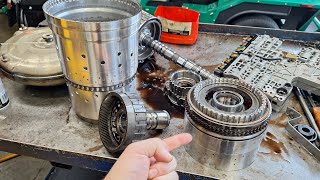
The 2019-2023 Ranger uses the 10-speed 10R80 automatic transmission, which is known for specific, widespread vulnerabilities. 🎬 See: Common failures and problems with the 10R80 transmission Unlike older transmissions where a ratio code might point to a simple speed sensor, on the 10R80, P0729 is frequently a symptom of a more complex internal issue. The two most notorious problems are failures within the main control valve body and a design flaw in the CDF (Clutch C/D/F) drum. The CDF drum has an internal sleeve that is known to 'walk' or migrate out of position, uncovering hydraulic passages and causing a pressure loss that leads to slipping, erratic shifts, and gear ratio codes. Ford has issued multiple Technical Service Bulletins (TSBs) and updated parts in response to these widespread issues, confirming a known pattern of faults often resolved by replacing the valve body or rebuilding the transmission with an updated CDF drum. [TSB 25-2134, TSB 25-2024, 7]
Diagnostic Flowchart
Tap your situation to follow the diagnostic path that matches what you're seeing on this vehicle.
Symptoms You May Notice
- Check Engine Light is on
- Harsh, jerky, or delayed shifting, especially into or out of 6th gear
- Transmission slipping in 6th gear (engine RPMs rise without an increase in vehicle speed)
- Vehicle enters "limp mode," limiting available gears and power
- Thumpy or clunky downshifts when slowing down
- Reduced fuel economy
- A feeling that the transmission is 'hunting' for gears at highway speeds
- Sudden, violent gear engagement after a delay
- Replacing only the input or output speed sensors. While these sensors provide the data, they are rarely the root cause of a P0729 code on the 10R80. The problem is usually how the transmission is mechanically or hydraulically responding to commands, not the sensor itself.
Most Likely Causes
- Faulty Transmission Main Control (Valve Body) 🔴 High Probability → Shop Transmission Assembly The 10R80 transmission is known for issues with sticking valves and solenoid failures within the valve body assembly. This can cause hydraulic pressure losses or cross-leaks, leading to incorrect clutch application times and triggering ratio codes. TSBs for the 10R80 platform confirm this is a common failure point requiring replacement. [TSB 25-2134, TSB 25-2024]
How to confirm: A professional technician will use a high-end scan tool to monitor solenoid command data and line pressures. If pressures are incorrect or solenoids fail active tests, the valve body is suspect.
Typical fix: Replacement of the entire main control valve body assembly, followed by a transmission adaptive learning procedure.
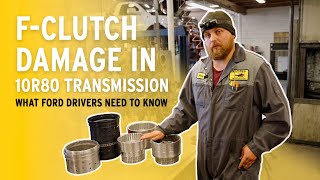
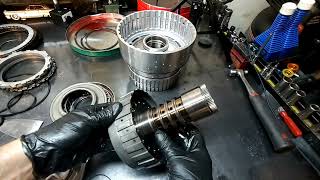
Est. part cost: $400-$1500 - Internal Mechanical Failure (CDF Drum Bushing) 🔴 High Probability Early 10R80 transmissions have a widely documented design flaw where a bushing/sleeve inside the CDF drum assembly can migrate or 'walk' out of position. This uncovers oil passages, causing a critical loss of hydraulic pressure to the clutches it controls. This leads directly to slipping, flares, and incorrect gear ratio codes like P0729. Ford has released at least two updated versions of the drum to correct this flaw.
How to confirm: This is a diagnosis of exclusion that often requires transmission disassembly. If the valve body and fluid are good, this is the next most likely cause. Metal debris in the transmission pan is a strong indicator. A Reddit user reported their dealer diagnosed it after a catastrophic failure on the highway.
Typical fix: Complete transmission rebuild with an updated CDF drum, or replacement of the transmission. Aftermarket solutions like the Sonnax CDF Drum Saver Kit 🎬 Watch: Visual guide to the 10R80 CDF drum failure (129910-01K) exist to repair the original drum.
Est. part cost: $3000-$7000 (for rebuild/replacement) - Low or Contaminated Transmission Fluid 🟡 Medium Probability → Shop Transmission Assembly The 10R80 transmission is very sensitive to fluid level and quality. The specified Mercon ULV fluid is very thin, and any contamination or loss of volume can affect hydraulic pressure and cause shifting issues.
How to confirm: Check the transmission fluid level and condition according to the manufacturer's procedure. The fluid should be red and clear, not dark, burnt-smelling, or containing debris.
Typical fix: Perform a transmission fluid and filter change using the correct OEM fluid (Mercon ULV). Note that this will not fix an underlying mechanical issue like a failed CDF drum.
Est. part cost: $150-$300
Rare But Worth Checking
- Powertrain Control Module (PCM) or Transmission Control Module (TCM) Failure: → Shop Transmission Assembly While less common than mechanical or hydraulic issues, a faulty control module can misinterpret sensor data and set false codes. Some TSBs for other makes with P0729 have been resolved with a TCM software update.
- Damaged Wiring or Connectors: Corrosion or damage to the transmission wiring harness can disrupt signals between the sensors, solenoids, and the TCM, leading to ratio errors.
Diagnosis Steps
- Scan the PCM/TCM for all stored trouble codes. Note any other ratio or solenoid codes, as they are crucial clues.
- Check the transmission fluid level and condition. Ensure it is at the correct level and does not appear dark, burnt, or contain metallic particles.
- Use a professional scan tool to access live transmission data. Monitor the input and output speed sensors to confirm they are reading correctly.
- Review TSBs for the vehicle. TSB 25-2134 and TSB 25-2024 list P0729 among a large group of codes related to harsh shifting from valve body or internal issues. [TSB 25-2134, TSB 25-2024]
- If fluid is good and sensors are reading correctly, the next logical step is to diagnose the main control valve body, which often requires replacement.
- If a new valve body does not resolve the issue, or if there is significant debris in the pan, suspect an internal mechanical failure, most commonly the CDF drum bushing. This requires transmission removal and teardown.
Parts You'll Likely Need
- Transmission Main Control Valve Body
(OEM #JL1Z-7A100-A (verify for specific build date, may supersede L1MZ-7A100-A))— This is a frequent point of failure for ratio and shifting codes on the 10R80 transmission due to sticking valves and failing solenoids.
Trusted brands: Motorcraft
OEM price range: $400-$900
Aftermarket price range: $350-$700 - Updated CDF Drum or Full Transmission Assembly
(OEM #JL3Z-7H351-B)— Required if the CDF drum bushing has failed, which is a common root cause of this code. Often requires a full rebuild or replacement transmission to get the updated part.
Trusted brands: Motorcraft (OEM replacement), Monster Transmission (rebuilt)
OEM price range: $3000-$6000
Aftermarket price range: $2500-$5000 - Sonnax CDF Drum Saver Kit
(OEM #129910-01K)— An aftermarket solution to repair a failed CDF drum without replacing the entire unit. It installs a new, improved sleeve with a locking mechanism to prevent it from walking out of position.
Trusted brands: Sonnax
OEM price range: N/A
Aftermarket price range: $100-$150 - Transmission Fluid and Filter Kit — Required for any service involving the valve body or pan removal. Only the specified Motorcraft Mercon ULV fluid should be used.
Trusted brands: Motorcraft
OEM price range: $150-$250
Aftermarket price range: $100-$200
Related Codes That Often Appear With This One
- P0731-P0735 — These are incorrect gear ratio codes for other gears. Seeing them together with P0729 strongly suggests a systemic problem like a failing valve body, low fluid, or the CDF drum failure, not an issue isolated to one gear.
- P0751, P0756, P0761, P0766 etc. — These are solenoid performance codes. Their presence alongside P0729 is a very strong indicator that the main control (valve body) is failing, as it houses these solenoids. Multiple Ford TSBs group all of these codes together as symptoms of the same underlying valve body or internal hydraulic leak issues. [TSB 25-2134, TSB 25-2024, 36]
Technical Service Bulletins (TSBs) & Recalls
- TSB 23-2250: This bulletin addresses harsh/delayed engagement or shifts and lists a large group of DTCs, including P0729. It points towards overhauling the main control valve body as a potential fix.
- Unnamed TSB (Supersedes others): A widely-referenced TSB for 2019-2023 Rangers (and other models) directly attributes harsh shifts and a long list of codes (including P0729) to the 'axial movement of the CDF clutch cylinder sleeve causing hydraulic circuit leaks.' This bulletin confirms the CDF drum issue is a recognized root cause requiring internal transmission overhaul.
Platform-Specific Known Issues
- CDF Drum Bushing Migration: The most significant known issue with the 10R80 is the tendency for the CDF drum's internal bushing to slide out of place, causing hydraulic leaks that starve clutches of pressure. This leads to a cascade of shifting problems and ratio codes. A user on Reddit reported this exact failure on their 2019 Ranger at 68,000 miles, which occurred at highway speed and required a major repair. Another owner on Ranger5G.com documented a complete transmission failure near 100k miles that started with harsh shifts and ended with the truck being undrivable.
- Valve Body Failures: → Shop Transmission Valve Body Sticking valves and faulty solenoids in the main control (valve body) are another extremely common source of problems, leading to harsh shifts, delayed engagement, and various trouble codes including P0729. These issues are often addressed by replacing the entire valve body assembly.
Mechanic-Grade Diagnostic Values
- 6th Gear Ratio — expected: 1.275:1. Failure: A deviation beyond the manufacturer-specified tolerance (often +/- 5%) from the expected ratio when comparing input RPM to output RPM in 6th gear.
- Transmission Shift Solenoid Resistance — expected: 5.0 - 6.0 Ohms (General value for 10R80 CIDAS solenoids). Failure: A reading outside of this range indicates a faulty solenoid coil.
Scan Tool Commands That Help
- FORScan / Ford IDS: Clear Transmission Adaptive Tables — This service function should be performed after replacing the valve body, solenoids, or the entire transmission, or after a fluid change. It erases the learned hydraulic values, forcing the TCM to relearn clutch fill times and pressures.
- FORScan / Ford IDS: Transmission Adaptive Learning Drive Cycle — This specific, multi-step driving procedure MUST be performed after clearing the adaptive tables to allow the TCM to properly relearn shift strategies on a level road. Failure to perform this cycle is a common reason for continued poor shift quality after a repair.
- FORScan: Halt Transmission Adaptive Learning — Some owners and tuners use this function to lock in the learned shift adapts after a successful drive cycle, preventing the TCM from learning bad habits over time that can lead to slushy or harsh shifts. This is an advanced function and should be used with caution.
Wiring & Ground Locations
- Driver's Side Kick Panel Ground — Behind the driver's side interior kick panel. This is a substantial metal grounding point used for various modules, including the OEM trailer brake controller harness.. A poor ground at this location can cause intermittent electrical issues for various control modules. While not a direct cause of P0729, verifying major grounds is a key step in diagnosing any electronic fault code.
Real Owner Repair Stories
- Ranger6G Forum user 'RANGER PRIDE' (2019 Ford Ranger) — Transmission performance was getting progressively worse as mileage increased.
❌ Tried (didn't work) Not specified, but the user's concern grew over time.
✅ What actually fixed it The user lost confidence in the transmission's long-term reliability and ultimately traded the vehicle in, stating they felt it was a matter of time before it 'grenaded.' Their new 2024 model with the 10R60 transmission is reported to be much better.
OEM Part Supersession History
HL3Z-7H351-A, JL3Z-7H351-A→JL3Z-7H351-B— The updated part (JL3Z-7H351-B) is the revised CDF drum/hub assembly. It features a machined lip or 'dam' on the inner half of the drum that physically prevents the problematic internal bushing from migrating or 'walking' out of position, which was the root cause of the hydraulic leak and subsequent shift failures.
Model Year Variations Within This Range
- 2023: The 2023 model year Rangers began using the new, updated CDF drum from the factory to address the widespread shifting issues and failures seen in earlier models.
- 2019-2023: All 5th Generation Ford Rangers sold in North America from 2019-2023 are equipped with the 2.3L EcoBoost engine and the 10R80 transmission. The next generation, starting in 2024, switched to the 10R60 transmission.
Helpful Videos
We Have This Part in Stock


The information in this article is provided for general reference and educational purposes only. Vehicle specifications, procedures, and part compatibility can vary by production date, trim level, and region. Always consult your vehicle's factory service manual and verify part numbers before purchasing or performing repairs. Safety-critical components such as airbags, seat belts, and braking systems should be installed by a qualified professional.
- Ford RANGER:
- 🧭 Diagnostic Flowchart
- 🎬 Helpful Videos
- 🛍️ Shop This Part
- What's Unique About the 2019-2023 Ford RANGER
- Symptoms You May Notice
- Most Likely Causes
- Rare But Worth Checking
- Diagnosis Steps
- Parts You'll Likely Need
- Related Codes That Often Appear With This One
- Technical Service Bulletins (TSBs) & Recalls
- Platform-Specific Known Issues
- Mechanic-Grade Diagnostic Values
- Scan Tool Commands That Help
- Wiring & Ground Locations
- Real Owner Repair Stories
- OEM Part Supersession History
- Model Year Variations Within This Range
- 🎟️ Get 5% Off