

P0729 on 2020-2023 Ford Transit: Gear 6 Incorrect Ratio Causes and Fixes
On a 2020-2023 Ford Transit, code P0729 almost always points to a known internal transmission failure involving the CDF clutch drum. This is not a simple DIY fix and typically requires professional transmission repair or overhaul, which can be costly. The failure is due to a bushing that walks out of place, causing a loss of hydraulic pressure.
- P0729 on a 2020-2023 Ford Transit is a serious code that points to a known, specific mechanical failure inside the 10-speed transmission.
- The most likely cause is a faulty CDF clutch drum bushing, an issue addressed by Ford in multiple Technical Service Bulletins.
- Do not waste money replacing external sensors, solenoids, or just changing the fluid; the problem is almost certainly internal.
- The correct fix involves removing the transmission to install an updated CDF clutch drum assembly.
- This is a complex and labor-intensive repair that should be handled by a qualified transmission specialist.
What's Unique About the 2020-2023 Ford TRANSIT
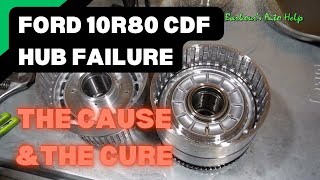
The Ford Transit from this era uses a 10-speed automatic transmission (the 10R80) which is known to have a specific, widespread design flaw. A bushing inside the 'CDF' clutch drum can slide out of its bore, uncovering fluid passages and allowing a critical Teflon seal to fail, causing a major loss of hydraulic pressure. This design flaw leads to a host of shifting problems and triggers numerous trouble codes, including P0729. Ford has issued multiple Technical Service Bulletins (TSBs) 🎬 Watch: A breakdown of the 10-speed CDF clutch drum flaw. acknowledging this exact problem, with TSB 24-2254 being the most current. Transmissions built after August 15, 2022, are less likely to have this issue as they should contain the updated part from the factory.
Diagnostic Flowchart
Tap your situation to follow the diagnostic path that matches what you're seeing on this vehicle.
Symptoms You May Notice
- Check Engine Light (Malfunction Indicator Lamp) is on.
- Harsh, jerky, or delayed shifts, particularly involving 3rd, 5th, and 6th gear.
- Banging or popping sounds when the transmission attempts to shift.
- Transmission may slip, where the engine revs higher but the vehicle doesn't accelerate accordingly.
- Transmission may enter "limp mode," getting stuck in one gear to prevent further damage.
- Flared shifts, especially on the 3-5 upshift.
- Loss of 10th gear.
- Reduced fuel economy at highway speeds.
- Replacing shift solenoids or the entire valve body without first investigating the known CDF clutch drum issue. This can be a costly and ineffective repair, as the root cause is mechanical pressure loss.
- Performing a transmission fluid flush and 'adaptive learn reset' with the expectation it will fix the problem. While a reset can temporarily change shift behavior, it cannot fix the underlying hydraulic leak from the failed seal.
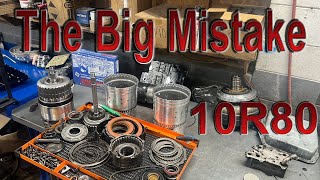
- Blaming the issue on a faulty TCM or software glitch 🎬 See this overview of common 10R80 transmission failures and problems. when it is a well-documented mechanical part failure.
Most Likely Causes
- Worn or Migrated CDF Clutch Drum Bushing 🔴 High Probability → Shop Transmission Clutch Pressure Plate This is a well-documented design and manufacturing flaw in early 10R80 transmissions. The press-fit bushing in the CDF drum can walk out of its bore due to normal heat cycles. This movement allows the edge of the bushing to slice into a nearby Teflon sealing ring or simply uncovers hydraulic passages, causing a catastrophic loss of hydraulic pressure to the C, D, and F clutch packs.
How to confirm: Definitive diagnosis requires transmission disassembly to visually inspect the CDF clutch drum for a migrated bushing and a damaged/sliced Teflon seal. The presence of multiple gear ratio codes (P0731-P0736, etc.) alongside P0729 strongly suggests this failure, as outlined in TSB 24-2254.
Typical fix: The transmission must be removed and partially disassembled to replace the faulty CDF clutch drum with an updated part. Ford has released a redesigned drum (Part #JL3Z-7H351-B) with a machined lip that physically prevents the bushing from moving. 🎬 Watch: How the updated CDF hub fixes the migration issue. Some owners report that dealers or transmission shops also replace the valve body as a precautionary measure.
Est. part cost: $250-$470 for the updated drum assembly. - Low or Dirty Transmission Fluid ⚪ Low Probability → Shop Transmission Assembly While possible, this is rarely the root cause for P0729 on this platform. The symptoms are almost always linked to the mechanical CDF drum failure. Changing the fluid will not fix a migrated bushing.
How to confirm: Check the transmission fluid level and condition using the manufacturer's procedure. The fluid must be Ford MERCON ULV. Fluid that is dark, burnt, or contains excessive metallic debris indicates internal wear, likely from the CDF drum failure.
Typical fix: Perform a transmission fluid and filter change. This is a necessary maintenance step but is highly unlikely to solve the P0729 code if the CDF drum is the root cause.
Est. part cost: $150-$300 for fluid and filter. - Faulty Main Control Valve Body ⚪ Low Probability → Shop Transmission Valve Body Sticking valves in the valve body can cause harsh shifting and generate codes, and Ford has issued TSBs for this issue (like TSB 20-2403 for some 2020 models). However, for a gear ratio error like P0729, especially when accompanied by other ratio codes, the valve body is a secondary suspect to the CDF drum. Often, debris from the primary failure contaminates the valve body, leading to its replacement during the drum repair.
How to confirm: This is a process of elimination. If the CDF drum is inspected and found to be the updated version or in good condition, then valve body testing would be the next step. This is a professional-level diagnosis. Newer TSBs for other models (like TSB 25-2018 for the F-150) describe a pressure test procedure using a VCMM to calculate CDF drum leakage, which can condemn the drum without full disassembly.
Typical fix: Replacement of the main control valve body and reprogramming. This is often done in conjunction with the CDF drum replacement.
Est. part cost: $800-$1500
Rare But Worth Checking
- Faulty Transmission Control Module (TCM): → Shop Transmission Assembly A software or hardware fault in the TCM is extremely rare for this code. Owners and mechanics on forums almost never report the TCM as the final solution for this problem. Misdiagnosing it as a bad TCM can be a very expensive mistake.
Diagnosis Steps
- Scan the TCM for all stored diagnostic trouble codes. Note if P0729 is accompanied by other gear ratio or clutch apply time codes listed in Ford's TSB 24-2254.
- Check the transmission fluid level and condition. The correct fluid is MERCON ULV. The fluid level should be checked when the transmission is at operating temperature (206°F to 215°F). Dark or debris-filled fluid is a strong indicator of internal mechanical failure.
- Review Technical Service Bulletins. TSB 24-2254 directly addresses this code and points to the CDF clutch drum sleeve causing hydraulic leaks.
- If multiple related codes are present and the vehicle was built before August 2022, inform the customer that internal transmission inspection is the required next step to confirm the common CDF drum failure.
- The definitive step is to remove the transmission and disassemble it to inspect the CDF clutch drum for a walked/migrated bushing and damaged seals, as shown in TSBs and numerous online repair videos.
Parts You'll Likely Need
- CDF Clutch Drum Assembly (Updated Design)
(OEM #JL3Z-7H351-B (supersedes JL3Z-7H351-A and HL3Z-7H351-A))— This is the root cause of the failure. The original drum allows a bushing to migrate, causing pressure loss. The updated part has a machined lip to prevent this.
Trusted brands: Motorcraft (Ford OEM)
OEM price range: $250-$470
Aftermarket price range: N/A (OEM part is recommended) - Transmission Fluid and Filter Kit
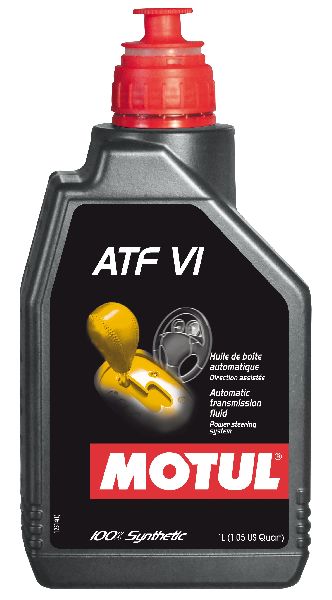
(OEM #Fluid: XT-12-QULV (MERCON ULV))— Will be required as part of the transmission disassembly and reassembly process. Using the correct MERCON ULV fluid is critical.
Trusted brands: Motorcraft
OEM price range: $150-$250
Aftermarket price range: $80-$150 - Main Control Valve Body
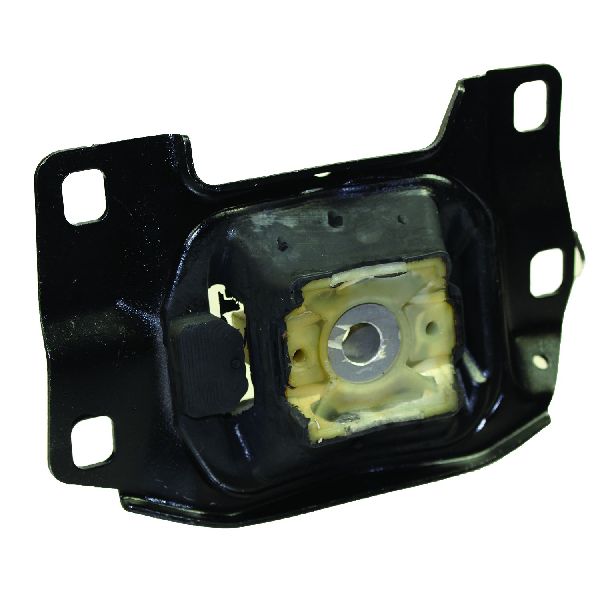
(OEM #L1MZ-7A100-A (example, part varies by specific model/year))— Often replaced as a precaution or if it has been contaminated with debris from the initial failure. Some TSBs call for its replacement for related symptoms.
Trusted brands: Motorcraft
OEM price range: $800-$1500
Aftermarket price range: N/A
Related Codes That Often Appear With This One
- P0731-P0736 — These are incorrect gear ratio codes for other gears. Their presence alongside P0729 strongly points to the systemic pressure loss caused by the failing CDF clutch drum, as all these codes are listed in TSB 24-2254.
- P2700-P2708 — These codes relate to transmission clutch apply time and performance. They are also listed in the TSBs related to the CDF drum failure and indicate the clutches are not engaging correctly due to the pressure loss.
Technical Service Bulletins (TSBs) & Recalls
- TSB 24-2254: The most current bulletin. It explicitly lists P0729 and points to the axial movement of the CDF clutch cylinder sleeve as the cause, recommending inspection and replacement.
- TSB 21-2377: An older, superseded bulletin that also connected P0729 with drivability symptoms.
Platform-Specific Known Issues
- A widespread and well-documented failure of the 10R80 transmission's CDF clutch drum affects 2020-2022 models. TSB 24-2254 confirms that DTCs including P0729 may be stored due to "axial movement of the CDF clutch cylinder sleeve causing hydraulic circuit leaks."
- Owner experiences confirm this is a common failure. One F-150 owner on f150forum.com shared photos of the migrated bushing and resulting damaged seal, with a repair bill of $4,400.
- A transmission shop professional in a YouTube video by National Transmission specifically highlights the 2021 Ford Transit as a vehicle they see with this failure, demonstrating the old drum versus the updated Ford part with the machined lip to prevent the bushing from walking.
Mechanic-Grade Diagnostic Values
- Shift Solenoids (A-F), TCC Solenoid, and PC Solenoids (A-C) resistance — expected: 5.0-5.4 ohms at 68°F (20°C). Failure: A reading outside of this range indicates a faulty solenoid coil.
- Turbine, Intermediate, and Output Speed Sensors resistance — expected: 325-485 Ohms @ 70°F. Failure: Readings outside this range suggest a failed speed sensor.
- Transmission Fluid Temperature (TFT) Sensor — expected: Varies by temperature (e.g., 37k-16k Ohms from 69°F-104°F). Failure: A resistance reading that does not correlate with the transmission's temperature points to a bad sensor.
- Transmission Fluid Level Check Temperature — expected: 206°F to 215°F (96°C to 101°C). Failure: Checking the fluid at the wrong temperature will lead to an inaccurate level reading, which can mask or mimic other problems.
Scan Tool Commands That Help
- Ford IDS (Integrated Diagnostic System) or FORScan: Clear Transmission Adaptive Tables — This must be performed after any major transmission repair, such as replacing the valve body or CDF drum, to force the TCM to relearn shift points from a baseline. It is often misdiagnosed as a fix on its own, but it is a required final step of the actual mechanical repair.
- Ford IDS (Integrated Diagnostic System): Transmission Characterization/Solenoid IDN — This function is required when replacing the main control valve body. It writes the 13-digit solenoid body strategy number from the new valve body to the TCM. Failure to do this will result in improper transmission operation and may set other codes like P163E.
- Ford IDS (Integrated Diagnostic System): PCM - Transmission Accelerated Main Control Break In — Mentioned in TSB 20-2403 for harsh shifting on some 2020 models due to sticking valves. This routine cycles the solenoids to attempt to free them up. It is used as a diagnostic step before replacing the valve body on vehicles with low mileage.
Wiring & Ground Locations
- TCM / PCM Fuse — The Body Control Module (BCM) fuse box, located in the passenger compartment, contains the fuse for the Transmission Control Module.. While extremely unlikely to be the cause of P0729 given the known mechanical issues, a loss of power to the TCM would cause a host of communication codes and a no-shift condition, which could be misinterpreted in early diagnosis.
- Main Transmission Connector — On the exterior of the transmission case, connecting the main vehicle harness to the internal transmission components like the lead frame, sensors, and solenoids.. A visual inspection for corrosion or damage here is a basic step, although P0729 is almost never caused by an external wiring fault. It's more relevant for codes specific to a single sensor or solenoid circuit.
Real Owner Repair Stories
- National Transmission YouTube Channel (2021 Ford Transit with 10R80 Transmission) — Clunking when shifting into 3rd, 5th, or 8th gear, both on upshift and downshift. This was the first sign of transmission failure.
❌ Tried (didn't work) The video focuses on the direct diagnosis of the known failure, bypassing ineffective steps like fluid changes or software resets.
✅ What actually fixed it The transmission was disassembled, and the migrated CDF drum bushing was identified. The original drum was replaced with the updated Ford part (JL3Z-7H351-B) which has a machined lip to prevent the bushing from moving. This was presented as the permanent, long-term fix.
OEM Part Supersession History
HL3Z-7H351-A, JL3Z-7H351-A→JL3Z-7H351-B— The original drum designs allowed the internal bushing to 'walk' out of its bore. The updated JL3Z-7H351-B part features a machined lip that acts as a physical stop, preventing the bushing from migrating and causing hydraulic leaks.
Model Year Variations Within This Range
- 2020-2022: Vehicles built before approximately August 15, 2022, are more susceptible to the CDF clutch drum failure. Models built after this date are more likely to have the updated drum (JL3Z-7H351-B) from the factory, which has a machined lip to prevent the bushing from migrating.
Helpful Videos

We Have This Part in Stock


The information in this article is provided for general reference and educational purposes only. Vehicle specifications, procedures, and part compatibility can vary by production date, trim level, and region. Always consult your vehicle's factory service manual and verify part numbers before purchasing or performing repairs. Safety-critical components such as airbags, seat belts, and braking systems should be installed by a qualified professional.
- Ford TRANSIT:
- 🧭 Diagnostic Flowchart
- 🎬 Helpful Videos
- 🛍️ Shop This Part
- What's Unique About the 2020-2023 Ford TRANSIT
- Symptoms You May Notice
- Most Likely Causes
- Rare But Worth Checking
- Diagnosis Steps
- Parts You'll Likely Need
- Related Codes That Often Appear With This One
- Technical Service Bulletins (TSBs) & Recalls
- Platform-Specific Known Issues
- Mechanic-Grade Diagnostic Values
- Scan Tool Commands That Help
- Wiring & Ground Locations
- Real Owner Repair Stories
- OEM Part Supersession History
- Model Year Variations Within This Range
- 🎟️ Get 5% Off