

P0729 on 2013-2017 Honda Accord V6: 6th Gear Ratio Error Causes and Fixes
On a 2013-2017 Honda Accord V6, code P0729 is most often caused by low/dirty transmission fluid or a faulty 6th gear clutch pressure switch. Start with a transmission fluid service using Honda DW-1 fluid. If that doesn't work, replacing the pressure switch is a common fix, costing around $190 at a shop.
- This code only applies to 2013-2017 Honda Accord V6 models with the 6-speed automatic.
- Always start your diagnosis by checking the transmission fluid. Use only genuine Honda DW-1 ATF.
- The most likely failed part is the 6th gear clutch pressure switch, which is a relatively inexpensive and accessible part to replace.
- Do not immediately assume the transmission is failing. A methodical diagnosis starting with the cheapest and most common causes can save you thousands of dollars.
- Driving with a slipping transmission can quickly lead to catastrophic failure. Address this code promptly.
What's Unique About the 2008-2017 Honda Accord
This code is specific to the 9th Generation Honda Accord V6 (2013-2017), which is equipped with a 6-speed automatic transmission. The earlier 8th Generation (2008-2012) V6 models used a 5-speed automatic and will not set this code. For these 9th Gen models, the issue is frequently traced back to either the condition of the transmission fluid—as Honda transmissions are famously sensitive to fluid type and quality—or the failure of a specific clutch pressure switch that monitors the hydraulic circuit for 6th gear. These single-wire switches are mounted externally on the transmission case and have a notable failure rate.
🎬 Watch: Learn how Honda pressure switches function and failGeneration note: The specified vehicle range (2008-2017) covers the 8th (2008-2012) and 9th (2013-2017) generations of the Honda Accord. However, the P0729 code for a 6th gear ratio error is only applicable to the 9th generation V6 models, as they were the first to feature a 6-speed automatic transmission. The 8th generation V6 has a 5-speed automatic and cannot set this code.
Symptoms You May Notice
- Check Engine Light is on
- Transmission hesitates or refuses to shift into 6th gear
- Harsh or jerky shifting, especially into or out of higher gears
- Vehicle feels like it's slipping out of gear at highway speeds
- Engine RPM is higher than usual at highway speeds
- Reduced fuel economy
- Sudden drops in RPMs or inability to shift smoothly
- Replacing the input or output speed sensors. While these sensors provide the data, they rarely fail. The P0729 code indicates the ratio *between* their readings is wrong, which points to a physical slip, not a sensor error.
- Assuming the entire transmission needs to be replaced immediately. Always start with the simplest and most common fixes: fluid and pressure switches.
Most Likely Causes
- Low, Dirty, or Incorrect Transmission Fluid 🔴 High Probability → Shop Transmission Assembly Honda automatic transmissions are known to be highly sensitive to fluid condition and type. The wrong fluid (anything other than genuine Honda DW-1 ATF) or fluid that is broken down can cause hydraulic pressure issues, preventing proper clutch engagement.
How to confirm: Check the transmission fluid level and condition using the dipstick. The fluid should be at the correct level, pinkish-red, and not smell burnt. Dark brown or black fluid indicates a problem and the need for service.
Typical fix: Perform at least one, but preferably three, transmission fluid 'drain and fills' using only genuine Honda DW-1 ATF to replace most of the old fluid. This is often the first and most successful repair attempt.
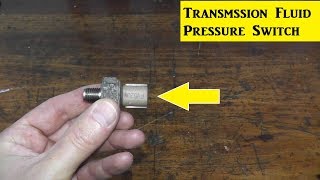
Est. part cost: $40-$120 (for 4-12 quarts of fluid) - Faulty 6th Gear Clutch Pressure Switch 🟡 Medium Probability These electronic switches monitor hydraulic pressure for each clutch pack. They are mounted externally on the transmission and are a known failure point. They can fail electronically or become clogged with debris over time, sending incorrect signals to the TCM.
How to confirm: A technician can use a high-end scan tool to monitor the switch's data in real-time. The switch can also be tested for voltage (typically 5V or 12V with key on, engine off). Given the relatively low cost, replacement is often a practical diagnostic step if the fluid is good.
Typical fix: Replace the specific oil pressure switch responsible for the 6th gear clutch circuit. The switch is external and relatively easy to access.
Est. part cost: $80-$130 (OEM), $40-$80 (Aftermarket) - Clogged Transmission Fluid Passages or Faulty Valve Body ⚪ Low Probability → Shop Transmission Assembly If transmission fluid is not changed regularly, sludge and debris can build up and clog the small passages within the transmission valve body or the shift solenoids themselves, preventing the correct hydraulic pressure from reaching the 6th gear clutch pack.
How to confirm: This typically requires professional diagnosis, involving pressure testing of the transmission's hydraulic circuits. It is often diagnosed after fluid and pressure switches have been ruled out.
Typical fix: The valve body may need to be removed, cleaned, and inspected. In some cases, a shift solenoid on the valve body may need replacement, or the entire valve body assembly.
Est. part cost: $200-$800 (for solenoids or a remanufactured valve body)
Rare But Worth Checking
- Worn 6th Gear Clutch Pack: This is an internal transmission failure, usually resulting from long-term operation with bad fluid or high mileage. If the fluid is burnt and contains excessive metal shavings, this is a likely cause, requiring a transmission rebuild or replacement.
- Failing Transmission Control Module (TCM): → Shop Transmission Assembly While rare, the TCM itself can fail or have software glitches. This should only be considered after all other mechanical and hydraulic causes have been definitively ruled out.
Diagnosis Steps
- Check the transmission fluid level and condition. If it is low, top it off with Honda DW-1 ATF and check for leaks. If it is dark, burnt, or overdue for service, proceed with a fluid change.
- Perform a 'drain and fill' of the transmission fluid with Honda DW-1 ATF. Drive the vehicle for a short period to circulate the new fluid, then repeat the process two more times for best results. Clear the code and test drive to see if the issue is resolved.
- If the code returns, use a scan tool to monitor live data from the transmission pressure switches while driving to identify if the 6th gear switch is reading incorrectly.
- Locate and inspect the wiring and connector for the 6th gear clutch pressure switch for any damage or corrosion. Test for 5V or 12V at the connector with the key on, engine off.
- If wiring is intact and fluid is clean, replace the 6th gear clutch pressure switch. 🎬 See this step-by-step pressure switch replacement walkthrough Ensure the sealing washer is transferred or replaced and torque to specification (typically very low, around 8-14 ft-lbs).
- If the problem persists after replacing the switch, the issue is likely more complex, such as a clogged valve body or internal transmission wear, and requires professional diagnosis.
Parts You'll Likely Need
- Automatic Transmission Fluid
(OEM #08200-9008 (DW-1))— Correct, clean fluid is the most critical factor for Honda transmission health and the first step in fixing this code.
Trusted brands: Honda (Genuine)
OEM price range: $10-$15 per quart
Aftermarket price range: N/A (OEM Recommended) - AT Oil Pressure Switch (6th Clutch)
(OEM #28600-R97-003)— This switch is a common failure point that directly causes the P0729 code when it sends incorrect pressure readings to the TCM.
Trusted brands: Honda (Genuine), Standard Motor Products, Vemo
OEM price range: $80-$130
Aftermarket price range: $40-$80
Related Codes That Often Appear With This One
- P0730 — This code means 'Incorrect Gear Ratio' in general. Seeing it with P0729 confirms a gear slipping issue that the TCM has flagged.
- P0848 — This code relates to a 'Transmission Fluid Pressure Sensor/Switch 'B' Circuit High'. This could point directly to an electrical failure of the pressure switch associated with the 6th gear clutch.
Technical Service Bulletins (TSBs) & Recalls
- TSB 17-017: Addresses a judder from the torque converter lock-up clutch caused by deteriorated transmission fluid. The fix is a software update and fluid flush.
Platform-Specific Known Issues
- Torque Converter Judder: → Shop Automatic Transmission Torque Converter Many 9th Gen Accord V6 models were subject to TSB 17-017, which addresses a judder felt between 20-60 mph. The cause was found to be prematurely deteriorated transmission fluid, not a faulty torque converter. The fix involves a PCM software update to better manage transmission temperatures and a transmission fluid flush. While not directly causing P0729, it highlights the transmission's sensitivity to fluid condition.
Mechanic-Grade Diagnostic Values
- Voltage at the single-wire connector of any transmission clutch pressure switch — expected: 5V or 12V DC with the key on, engine off. Failure: No voltage at the connector points to a wiring or TCM issue. If voltage is present, the switch itself is presumed faulty.
Scan Tool Commands That Help
- Honda Diagnostic System (HDS) or equivalent professional scanner: TCM / PCM Reset — After replacing a component like a pressure switch or performing a fluid service, this command can clear learned adaptations and reset the transmission's control logic.
- Honda Diagnostic System (HDS) or equivalent professional scanner: Shift Solenoid Active Tests (A, B, C, D, E) — To individually command each shift solenoid on and off to verify its mechanical and electrical operation without removing the valve body. This helps isolate a specific faulty solenoid if the cause is not a pressure switch.
Wiring & Ground Locations
- G101 — On older Honda models, this primary ECU ground is often located on the thermostat housing or intake manifold plenum. For the 9th Gen Accord, it is typically found in the engine bay on the driver's side, potentially on the cylinder head or near the thermostat housing.. A poor ECU ground can cause a wide range of erratic electronic behaviors and false sensor readings. While not a direct cause, verifying G101 is clean and tight is a crucial step in diagnosing any electronic transmission code, as it ensures the TCM has a stable power ground.
Real Owner Repair Stories
- Reddit user on r/accord (Honda Odyssey (same V6/6-speed AT as Accord)) — Transmission system problem warning light, potentially accompanied by code P0848.
❌ Tried (didn't work) Not specified, but the user suggests a specific part replacement based on common failures.
✅ What actually fixed it The user identified the common fix for these symptoms as replacing the 'Pressure switch B (third circuit clutch)'. This highlights the pattern of pressure switch failures on this powertrain causing various transmission codes.
OEM Part Supersession History
28600-R97-003, 28600-R97-013→28600-R36-004— The reason for supersession is not officially documented, but it is common for manufacturers to update electronic components like switches to improve durability, change suppliers, or refine internal design to prevent premature failure.
Model Year Variations Within This Range
- 2016-2017: The Accord received a mid-cycle refresh for the 2016 model year, which included revised styling and potentially updated software calibrations for the engine and transmission. While the core mechanical components related to P0729 remained the same, it's possible that later models have slightly different TCM logic or are eligible for software updates (like TSB 17-017) that earlier models are not.
Diagnostic Flowchart
Other Known Issues on This Vehicle
Issues unrelated to this code that are worth knowing about as an owner of this generation:
- Starter Motor Grinding / Failure 🟠 Medium — Common on 2013-2015 V6 models, often occurring around 50,000 miles. (Ref: TSB 16-002)
- Variable Cylinder Management (VCM) Oil Consumption 🟠 Medium — Affects V6 engines across many model years. Can lead to fouled spark plugs and misfires. A class-action lawsuit extended the warranty for this issue on some models. (Ref: TSB 11-033 (for earlier models, but concept applies))
- Torque Converter Judder 🟡 Low → Shop Automatic Transmission Torque Converter — Common on 2013-2017 V6 models, felt as a vibration between 20-60 mph. (Ref: TSB 17-017)
- VTC Actuator Rattle on Cold Start (4-Cylinder) 🟠 Medium — Primarily affects the 4-cylinder K24 engine, not the V6. A brief, loud rattle upon startup. (Ref: TSB 09-010)
Used vs. New Parts: Buying Guide for This Vehicle
When a used part is the smart pick: For this specific code, a used AT Oil Pressure Switch from a low-mileage donor vehicle could be a cost-effective option, as it is an external part and relatively easy to replace. A complete used valve body assembly could also be considered if a clogged passage is suspected and a new unit is prohibitively expensive.
Donor-vehicle mileage cap: roughly under 75000 miles for the part to have meaningful remaining life.
What to inspect on the donor part:
- Verify the donor vehicle's VIN to ensure it had the same V6 and 6-speed automatic transmission.
- Check for any signs of external damage or corrosion on the switch or its connector.
- If possible, inquire about the donor vehicle's maintenance history; a well-maintained transmission is a better source for parts.
- For a valve body, look for clean fluid passages and avoid any units with visible sludge or metal debris.
OEM-only on this vehicle (don't cheap out):
- Automatic Transmission Fluid (ATF). Using anything other than Genuine Honda DW-1 fluid is a major risk and a common cause of transmission problems on this platform.
Aftermarket brands forum-validated for this vehicle:
- Standard Motor Products (SMP) for the AT Oil Pressure Switch.
Brands owners have reported issues with on this vehicle:
- No-name, unbranded electronic sensors and switches from online marketplaces should be avoided due to high rates of out-of-box failure.
Real Owner Stories
Aggregated from forums and TSBs cited above. Mileages and costs reflect what owners reported in those sources.
9th Generation Honda Accord V6
Symptoms: The transmission was throwing a P0729 code. Owners on the forum confirmed the car was having trouble with the 6th gear ratio.
What fixed it: Performing a 3x drain-and-fill with Honda DW-1 ATF or replacing one of the external transmission pressure switches.
Source hint: driveaccord.net
2011-2017 Honda Odyssey
Symptoms: Identical P0729 symptoms to the Accord V6, involving gear ratio errors in the 6-speed automatic transmission.
What fixed it: Fixes pointed to either fluid service or pressure switch failure.
Source hint: odyclub.com
2013-2017 Honda Accord V6
Symptoms: A judder or vibration felt between 20-60 mph, often associated with transmission performance issues.
What fixed it: A PCM software update to manage transmission temperatures and a transmission fluid flush.
Source hint: TSB 17-017
Related OBD-II Codes
Frequently Asked Questions
Does TSB 17-017 apply to my Accord V6 if I'm experiencing transmission issues?
Can I use any high-quality synthetic transmission fluid to fix P0729?
Is the 6th gear clutch pressure switch a common failure on the Accord V6?
My Accord is also consuming oil; is this related to the transmission code?
What is the recommended torque for the 6th gear clutch pressure switch?
Does the Honda Odyssey share this same 6th gear issue?
Helpful Videos
We Have This Part in Stock




The information in this article is provided for general reference and educational purposes only. Vehicle specifications, procedures, and part compatibility can vary by production date, trim level, and region. Always consult your vehicle's factory service manual and verify part numbers before purchasing or performing repairs. Safety-critical components such as airbags, seat belts, and braking systems should be installed by a qualified professional.
- Honda Accord:
- 🧭 Diagnostic Flowchart
- 🎬 Helpful Videos
- 🛍️ Shop This Part
- What's Unique About the 2008-2017 Honda Accord
- Symptoms You May Notice
- Most Likely Causes
- Rare But Worth Checking
- Diagnosis Steps
- Parts You'll Likely Need
- Related Codes That Often Appear With This One
- Technical Service Bulletins (TSBs) & Recalls
- Platform-Specific Known Issues
- Mechanic-Grade Diagnostic Values
- Scan Tool Commands That Help
- Wiring & Ground Locations
- Real Owner Repair Stories
- OEM Part Supersession History
- Model Year Variations Within This Range
- Other Known Issues on This Vehicle
- Used vs. New Parts: Buying Guide for This Vehicle
- Real Owner Stories
- 9th Generation Honda Accord V6
- 2011-2017 Honda Odyssey
- 2013-2017 Honda Accord V6
- Related OBD-II Codes
- Frequently Asked Questions
- 🎟️ Get 5% Off