

P0729 on 2020-2023 Lincoln Aviator: Gear 6 Incorrect Ratio Causes and Fixes
On a 2020-2023 Aviator, P0729 almost always points to an internal transmission problem with the 10-speed 10R60/10R80 automatic. The most common fix, outlined in multiple Lincoln TSBs, is the replacement of the main control valve body and a subsequent software relearn procedure. In some cases, a more serious internal failure of the CDF clutch hub may be the cause. This is a professional-level repair.
- P0729 on a 2020-2023 Aviator is a serious code that points to a known issue with the 10-speed transmission.
- The most likely culprit is a faulty main control valve body, a repair documented in multiple manufacturer TSBs.
- Do not ignore this code or its symptoms (harsh shifting, clunking); doing so can lead to catastrophic transmission failure.
- This is not a DIY-friendly repair. It requires professional-level tools and expertise for both diagnosis and the subsequent module programming.
- Always check for other transmission codes, as P0729 is rarely an isolated issue.
What's Unique About the 2020-2023 Lincoln AVIATOR
The 2020-2023 Aviator uses a 10-speed (10R60 or 10R80) automatic transmission that has known issues with harsh and delayed shifting. Ford and Lincoln have released numerous Technical Service Bulletins (TSBs) that directly link code P0729 and related symptoms to problems with the transmission's main control valve body and, in some cases, the CDF clutch cylinder sleeve. A class-action lawsuit has also been filed concerning the performance of the 10R80 transmission, highlighting widespread owner complaints about harsh shifting, hesitation, and potential safety risks.
Diagnostic Flowchart
Tap your situation to follow the diagnostic path that matches what you're seeing on this vehicle.
Symptoms You May Notice
- Harsh or delayed shifts, particularly into 6th gear.
- Jerky or clunking engagement when shifting from Park to Drive or Reverse.
- Illuminated Malfunction Indicator Lamp (Check Engine Light).
- Transmission may feel like it's slipping; engine RPMs rise without a corresponding increase in vehicle speed.
- Vehicle may enter "limp mode," restricting available gears to prevent further damage.
- Reduced fuel economy at highway speeds.
- A feeling of the transmission 'hunting for gears' or shifting erratically.
- Replacing only the input or output speed sensors. While these sensors provide the data, the P0729 code on this platform is more often caused by the TCM's interpretation of that data or a mechanical/hydraulic failure to achieve the correct ratio, not a faulty sensor itself.
- Replacing a single shift solenoid. The manufacturer TSBs consistently point to issues within the entire valve body assembly, and the recommended repair is to overhaul or replace the complete unit 🎬 See how to replace the valve body in this transmission., not just one component.
Most Likely Causes
- Faulty Transmission Main Control (Valve Body) 🔴 High Probability → Shop Transmission Assembly Multiple TSBs (including the superseding TSB 23-2250) identify sticking valves within the main control valve body as a primary cause for these symptoms on the 10R60/10R80 transmission. Cross-leaks within the valve body can starve clutches of necessary line pressure.
How to confirm: Diagnosis requires following the specific procedures in TSB 23-2250, which includes a PCM/TCM software check, a 'Main Control Break In' routine with a diagnostic tool (FDRS), and if that fails, an overhaul (cleaning and inspection) of the valve body itself.
Typical fix: Replacement or overhaul of the main control valve body assembly, followed by a transmission adaptive learning drive cycle.
Est. part cost: $800-$1500 - Internal Mechanical Failure (CDF Clutch Hub) 🟡 Medium Probability TSB 23-2250 explicitly mentions "axial movement of the CDF clutch cylinder (7H351) sleeve" as a potential cause alongside the valve body. The bushing in the CDF drum is known to walk out of position, uncovering an oil passage and causing fluid pressure loss, which leads to shifting problems. An updated CDF hub (Part No. JL3Z-7H351-B) was designed by Ford to prevent this migration.
How to confirm: This is typically diagnosed after the valve body has been ruled out. It requires a complete transmission teardown and inspection to physically see the displaced bushing on the CDF drum. A user on Reddit described this exact failure on their 10R80, diagnosed by a dealer.
Typical fix: A partial or complete transmission rebuild to replace the CDF clutch drum with the updated part, or a full transmission replacement.
Est. part cost: $2000-$7000+ - Low or Contaminated Transmission Fluid 🟡 Medium Probability → Shop Transmission Assembly While not specific to the platform, the complexity of the 10R80 makes it sensitive to fluid level and condition. Burnt or contaminated fluid can cause valves to stick and solenoids to malfunction.
How to confirm: Check the transmission fluid level and condition. This transmission does not have a traditional dipstick and must be checked at a specific temperature from underneath the vehicle, typically requiring a lift. 🎬 Watch: How to check fluid levels using the under-vehicle dipstick. The fluid should be red and clear, not brown, black, or smelling burnt.
Typical fix: Perform a transmission fluid drain-and-fill using the correct Motorcraft MERCON ULV fluid. If the fluid is very dark or has debris, a more significant internal problem like a valve body or CDF drum failure is likely.
Est. part cost: $150-$300 - TCM/PCM Software Issues ⚪ Low Probability TSB 23-2250 lists software and the 'transmission solenoid ID strategy' as a possible cause. The computer's adaptive learning may fail to compensate for normal hardware break-in over time, requiring a reset or update.
How to confirm: A dealer or qualified shop can check for the latest available software calibrations for the Powertrain Control Module (PCM) or Transmission Control Module (TCM) using a tool like FDRS.
Typical fix: Reprogramming the module to the latest software version and performing the adaptive learning drive cycle.
Est. part cost: $0-$250
Diagnosis Steps
- Scan the PCM and TCM for all stored diagnostic trouble codes. Note any other gear ratio (P073x) or clutch performance (P270x) codes, as they are often related per TSB 23-2250.
- Check for relevant Technical Service Bulletins (TSBs) using the vehicle's VIN. TSB 23-2250 is the most current and comprehensive bulletin for this issue, superseding several previous ones.
- Verify the transmission fluid level and condition are correct. The fluid should be red and clear, not brown, black, or smelling burnt. Use only Motorcraft MERCON ULV fluid.
- Follow the diagnostic procedure outlined in TSB 23-2250. This starts with a software check and may proceed to a guided 'PCM - Transmission Accelerated Main Control Break In' routine using the Ford Diagnosis and Repair System (FDRS).
- If the break-in routine fails to resolve the symptoms, the TSB directs the technician to overhaul (clean and inspect) the main control valve body.
- If a new or overhauled valve body does not resolve the issue, a more severe internal mechanical failure, such as the CDF clutch cylinder sleeve, is likely, requiring transmission removal and teardown for inspection.
Parts You'll Likely Need
- Transmission Main Control Assembly (Valve Body) — This is the most common point of failure for this code on the 2020-2023 Aviator, as documented by multiple manufacturer TSBs.
Trusted brands: Motorcraft
OEM price range: $800-$1500
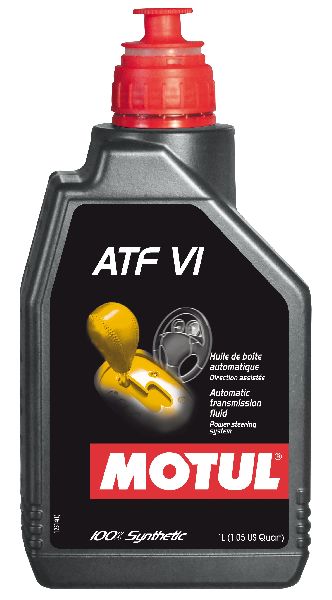
Aftermarket price range: $600-$1200 - Automatic Transmission Fluid
(OEM #Motorcraft MERCON ULV)— Required when replacing the valve body or servicing the transmission.
Trusted brands: Motorcraft
OEM price range: $15-$25 per quart
Aftermarket price range: $10-$20 per quart - CDF Clutch Cylinder (Drum)
(OEM #JL3Z-7H351-B (Updated Part))— The second most likely cause after the valve body, due to a known design flaw with the bushing migrating. TSB 23-2250 also lists this as a potential cause.
Trusted brands: Motorcraft
OEM price range: $150-$250
Related Codes That Often Appear With This One
- P0731-P0735 — These codes represent incorrect gear ratios for gears 1 through 5. They frequently appear with P0729, indicating a systemic transmission problem rather than an issue with a single gear, as listed in TSB 23-2250.
- P2700-P2705 — These codes relate to clutch application time and performance. Their presence alongside P0729 reinforces that the issue is hydraulic or mechanical within the transmission, often tied to the valve body's ability to control the clutches, as noted in TSB 23-2250.
Technical Service Bulletins (TSBs) & Recalls
- TSB 23-2250: The most current and comprehensive bulletin. It supersedes previous versions and lists software, sticking valves in the main control, and/or axial movement of the CDF clutch cylinder sleeve as potential causes for a wide range of DTCs including P0729.
- TSB 21-2434: (Superseded) Addressed harsh/delayed engagement and shifts, listing P0729 among the potential codes.
Platform-Specific Known Issues
- A known history of harsh or delayed shifting on the 10R60/10R80 10-speed transmission, leading to multiple TSBs from Ford/Lincoln.
- The primary documented cause for these issues, including code P0729, is sticking valves within the main control (valve body).
- A secondary, but also documented, cause is the axial movement of the CDF clutch cylinder sleeve, which was addressed with a redesigned part.
Mechanic-Grade Diagnostic Values
- Shift Solenoid Resistance — expected: 5.0 - 5.4 Ohms at 20°C (68°F). Failure: A reading outside of this range indicates a faulty solenoid coil.
- Torque Converter Clutch (TCC) Solenoid Current — expected: Proportional; Low pressure at low current (50 mA), high pressure at high current (850 mA).. Failure: Current readings that do not correspond with commanded pressure or are out of this range suggest a solenoid or wiring issue.
- Line Pressure Control (LPC) Solenoid Current — expected: Inversely proportional; High pressure at low current (50 mA), low pressure at high current (850 mA).. Failure: Current readings that do not correspond with commanded pressure or are out of this range suggest a solenoid or wiring issue.
Scan Tool Commands That Help
- Ford Diagnosis and Repair System (FDRS): PCM - Transmission Accelerated Main Control Break In — This routine is a key diagnostic step in TSB 23-2250. It is used to cycle specific clutches after a software check to see if the shifting issue can be resolved before resorting to mechanical repairs like overhauling the valve body.
- Ford Diagnosis and Repair System (FDRS): Program Solenoid Strategy Number — This programming is required anytime the valve body, transmission assembly, or TCM/PCM is replaced to ensure the control module has the correct calibration data for the specific solenoids installed.
Real Owner Repair Stories
- Reddit user in r/f150 (Ford F-150 with 10R80 transmission) — Initially harsh upshifts/downshifts. Later developed a 2-3 second delay when shifting from Park to Drive/Reverse.
❌ Tried (didn't work) A software reflash and replacement of some parts per a TSB did not fix the initial harsh shifting., After the CDF drum was replaced, very hard shifts into 3rd gear appeared, which were not resolved by adaptive learning.
✅ What actually fixed it The delayed engagement was fixed by replacing the CDF drum. The subsequent hard shifting issue was fixed by replacing the valve body assembly. The user noted that after the valve body replacement, the tech did not add enough fluid, which caused issues until it was corrected. The final result was the smoothest shifting since owning the vehicle.
OEM Part Supersession History
HL3Z-7H351-A, JL3Z-7H351-A→JL3Z-7H351-B— The original CDF clutch drum design allowed an internal sleeve/bushing to slide out of position, uncovering fluid passages and causing pressure loss and erratic shifting. The updated part, JL3Z-7H351-B, has a machined lip on the inner half of the drum to physically prevent the sleeve from moving.
Heads up: Use of the improved CDF drum in factory production of the 10R80 began on August 16, 2022.
Model Year Variations Within This Range
- 2020: Valve bodies in 2020 and earlier models may contain a 'gain control valve' designed to allow finer control of the D and E clutches. This valve was eliminated in 2021 and later Ford valve bodies. While aftermarket controllers may not use this valve, it is important for OEM applications to use the correct valve body for the vehicle.
- Late 2022-2023: Vehicles produced after August 16, 2022, are more likely to have the updated CDF drum (JL3Z-7H351-B) from the factory, which was designed to prevent the common bushing migration failure. This may make the CDF drum a less frequent cause of failure on later models compared to 2020-early 2022 vehicles.
Helpful Videos

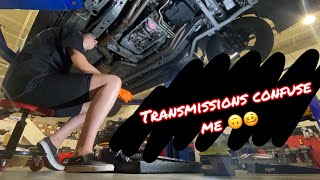


We Have This Part in Stock


The information in this article is provided for general reference and educational purposes only. Vehicle specifications, procedures, and part compatibility can vary by production date, trim level, and region. Always consult your vehicle's factory service manual and verify part numbers before purchasing or performing repairs. Safety-critical components such as airbags, seat belts, and braking systems should be installed by a qualified professional.
- Lincoln AVIATOR:
- 🧭 Diagnostic Flowchart
- 🎬 Helpful Videos
- 🛍️ Shop This Part
- What's Unique About the 2020-2023 Lincoln AVIATOR
- Symptoms You May Notice
- Most Likely Causes
- Diagnosis Steps
- Parts You'll Likely Need
- Related Codes That Often Appear With This One
- Technical Service Bulletins (TSBs) & Recalls
- Platform-Specific Known Issues
- Mechanic-Grade Diagnostic Values
- Scan Tool Commands That Help
- Real Owner Repair Stories
- OEM Part Supersession History
- Model Year Variations Within This Range
- 🎟️ Get 5% Off