

OBD-II Code P0730: Incorrect Gear Ratio
The Ultimate Guide to Understanding, Diagnosing, and Fixing P0730
- Check your transmission fluid level and condition immediately; low or burnt fluid is the #1 cause of a P0730 code and costs under $200 to fix.
- Stop driving the vehicle immediately to prevent a $300 solenoid repair from escalating into a $4,000 complete transmission rebuild.
- Scan the Transmission Control Module (TCM) for gear-specific codes like P0731 or P0741 to pinpoint the exact failing circuit before buying any parts.
- Search for manufacturer Technical Service Bulletins (TSBs) for your specific year and model, as vehicles like the 2017-2022 Hyundai Elantra have known software updates that fix this code for free.
What Does P0730 Mean?
Your Powertrain Control Module (PCM) or Transmission Control Module (TCM) detects a mismatch between the engine's speed and the transmission's output speed. This discrepancy, known as transmission slippage, indicates the transmission is not in its commanded gear due to a hydraulic, mechanical, or electronic fault.
Technical definition: The SAE/OBD-II definition for P0730 is "Incorrect Gear Ratio." The TCM sets this code when it calculates the transmission's gear ratio by comparing the Input Speed Sensor RPM to the Output Speed Sensor RPM and finds the result falls outside the manufacturer's predefined parameters for the currently commanded gear.
🎬 Watch: A quick overview of the P0730 transmission fault code.Can I Drive With P0730?
No — Do Not Drive. Driving with a P0730 code rapidly escalates a minor issue, like a faulty solenoid, into catastrophic internal transmission damage requiring a $3,000+ rebuild. The transmission shifts erratically, loses power suddenly, or fails to move altogether, creating a significant safety risk in traffic. In most cases, the vehicle enters 'limp mode', locking you into a single gear and drastically reducing speed to protect the drivetrain.
Common Causes
- Low, Dirty, or Restricted Transmission Fluid (Very Common) — Low fluid starves the transmission of the hydraulic pressure required to engage clutches and bands. Dirty, degraded fluid clogs the internal filter, valve body passages, and solenoids, severely impeding hydraulic function.
- Faulty Shift Solenoids (Common) — Shift solenoids are computer-controlled valves that direct fluid to execute gear changes. A clogged, shorted, or stuck solenoid prevents the correct gear from engaging, causing an immediate ratio mismatch.
- Faulty Input/Output Speed Sensors (Common) — The TCM relies on these sensors to calculate the gear ratio. A failed sensor or damaged wiring provides an erratic signal, causing the TCM to falsely trigger a P0730 code even if the transmission is mechanically sound.
- Defective Valve Body (Common) — The valve body is the hydraulic brain of the transmission. Warping, cracks, or internal blockages from sludge prevent it from routing hydraulic pressure to the correct clutch packs, leading to slippage.
- Failed Torque Converter (Less Common) — A failing torque converter clutch (TCC) or damaged internal stator fins slip excessively under load. This creates a discrepancy between engine speed and transmission input speed that the TCM flags as a gear ratio error.
- Internal Mechanical Failure (Less Common) — Worn-out clutch packs, broken bands, a failing transmission oil pump, or damaged planetary gear sets physically prevent the transmission from holding a gear. This requires a complete rebuild. 🎬 Watch: A mechanic explains why gear ratio codes happen.
- Faulty Transmission Control Module (TCM) or Wiring (Less Common) — Corroded connectors, a bad ground wire, or internal TCM hardware faults disrupt communication, causing the computer to miscalculate ratios and throw false codes.
Symptoms
- Transmission Slipping or Delayed Shifting — The engine revs up without a corresponding increase in vehicle speed. You experience harsh, erratic, or severely delayed gear engagements.
- Vehicle Fails to Move or Loses Power — The transmission fails to engage any gear, leaving the vehicle unable to move from a stop, or suddenly loses all motive power while driving.
- Vehicle Enters 'Limp Mode' (also visible on scanner) — The TCM forces the transmission into a single default gear (usually 2nd or 3rd) to prevent further damage, severely limiting acceleration and capping top speed around 30-40 mph.
- Check Engine and Transmission Warning Lights (also visible on scanner) — The Malfunction Indicator Lamp (MIL) illuminates. A dedicated transmission temperature light also triggers if the internal slipping generates excessive heat.
Diagnostic Flowchart
Tap your situation to follow the diagnostic path that matches what you're seeing on this code.
Common Fixes & Costs
- Transmission Fluid and Filter Change — Parts: $50-$150, Labor: $150-$300, ~1.5 hr book time (Intermediate)
- Replace Shift Solenoid(s) or Solenoid Pack
— Parts: $50-$350, Labor: $200-$500, ~2.5 hr book time
(Intermediate)
Honda Odyssey (1999-2005): OEM 28500-P6H-013, 28400-P6H-013 (Alt: Standard Motor Products TCS79)
Dodge/Chrysler (41TE/62TE): OEM Mopar 68376696AA (Alt: Dorman 609-043) - Replace Input/Output Speed Sensors — Parts: $40-$100, Labor: $100-$200, ~1.0 hr book time (Intermediate)
- Replace Torque Converter — Parts: $300-$800, Labor: $600-$1,200, ~7.0 hr book time (Professional)
- Transmission Rebuild or Replacement — Parts: $1,500-$4,000, Labor: $1,500-$3,000, ~10.0 hr book time (Professional)
DIY vs Professional
- Transmission Fluid and Filter Change 🟢 Beginner
Tools: Socket set, drain pan, funnel, torque wrench - Replace Speed Sensors 🟢 Beginner
Tools: Socket set, multimeter, jack stands - Replace Shift Solenoid(s) 🟢 Beginner
Tools: Socket set, torque wrench, multimeter, drain pan, service manual - Replace Torque Converter / Transmission Rebuild 🟢 Beginner
Tools: Engine hoist, transmission jack, full professional tool set
Used vs. New Parts: Buying Guide
When a used part is worth it: Buy a used transmission assembly from a low-mileage donor vehicle only if the cost of a remanufactured unit exceeds the value of your car. Never buy used shift solenoids or speed sensors.
Donor-vehicle mileage cap: roughly under 70000 miles for the part to have meaningful remaining life.
Donor quality checklist:
- Verify the donor vehicle was rear-ended or totaled for reasons unrelated to the drivetrain.
- Match the transmission part number and bellhousing bolt pattern exactly.
- Ensure the salvage yard drained the fluid and sealed the ports to prevent moisture contamination.
Decision logic:
- If The part is a shift solenoid, sensor, or valve body → Buy new OEM or high-quality aftermarket. Used electronics have high failure rates and the labor to replace them is too expensive to risk.
- If The part is a torque converter → Buy a quality remanufactured unit. Avoid used converters as they trap contaminated fluid from the donor transmission.
- If The vehicle is over 15 years old and the budget is tight → A used transmission assembly from a reputable salvage yard with a 90-day warranty is the most financially viable option.
Warranty tradeoff: Used transmissions include a 30-90 day parts-only warranty. Remanufactured transmissions include a 1-3 year warranty that often covers replacement labor if the unit fails.
Worst-case if a used part fails: $1,500 in repeat labor costs to remove and replace a defective used transmission.
What Happens If You Wait — Timeline
- 0-1 month: Intermittent slipping or RPM 'flares' during shifts. Fluid begins to overheat and degrade. Clutches become slightly glazed. (MPG impact: 1-5%% · Added cost: $0 - $100 in wasted fuel. A fluid change or single solenoid replacement ($200-$500) fixes the issue.)
- 1-3 months: Slipping becomes frequent. The vehicle enters 'limp mode' intermittently. Fluid turns dark and smells burnt. Worn clutch material circulates in the system. (MPG impact: 5-15%% · Added cost: $300 - $1,200. The torque converter clutch sustains heat damage and requires replacement.)
- 3-6 months: Severe slipping and harsh engagement. Circulating clutch material clogs the filter and valve body, starving the transmission of hydraulic pressure. (MPG impact: 15-25%% · Added cost: $1,500 - $3,500. A simple fix is impossible; a valve body replacement or partial rebuild is required.)
- 6+ months: Catastrophic failure. The transmission loses all ability to move the vehicle. The oil pump fails or clutch packs completely burn out. (MPG impact: N/A (Vehicle is undrivable)% · Added cost: $3,000 - $7,000. Requires a complete transmission rebuild or replacement.)
Cost of Not Fixing It
- 0-1 month: Intermittent slipping decreases fuel economy by 5-15% and overheats the fluid, destroying its lubricating properties. (Added cost: $50-$150 in wasted fuel.)
- 1-3 months: Slipping causes severe wear on internal clutch packs. The torque converter sustains heat damage. The vehicle unpredictably enters 'limp mode'. (Added cost: $800-$2,500. A simple solenoid fix escalates into requiring a torque converter and valve body replacement.)
- 3+ months: Catastrophic internal failure. Worn clutches shed debris that destroys the oil pump, leading to a complete loss of hydraulic pressure. The vehicle becomes undrivable. (Added cost: $3,000-$7,000. The repair requires a full transmission rebuild or replacement.)
Diagnosis Steps
- Check the Transmission Fluid
With the vehicle warm and on a level surface, check the fluid level and condition per the owner's manual. Low fluid directly causes low pressure. Fluid that is black, smells burnt, or contains metallic particles confirms internal mechanical damage.
Tools: Rag, Gloves, Funnel (Beginner) - Scan for All Powertrain Codes
Use a scanner capable of reading the TCM. Confirm P0730 and look for companion codes. Gear-specific codes (P0731-P0736) pinpoint the fault to a specific gear circuit. Solenoid codes (e.g., P0751) or TCC codes (P0741) isolate the exact failing component.
Tools: OBD-II Scanner (with TCM support) (Beginner) - Analyze Live Scan Tool Data
Monitor live data PIDs while driving. Compare Input Speed Sensor RPM, Output Speed Sensor RPM, and commanded gear. If Input RPM spikes by more than 200 RPM without a proportional increase in Output RPM during a shift, you have confirmed a real-time mechanical slip.
Tools: Advanced Scan Tool (Advanced) - Inspect Wiring and Test Speed Sensors
Visually inspect the transmission wiring harness and speed sensor connectors for corrosion or broken wires. Use a multimeter to check the internal resistance of the input and output speed sensors against factory specs (typically 500-1500 Ohms).
Tools: Flashlight, Multimeter, Jack Stands (Intermediate) - Test Shift Solenoids (Resistance & Function)
Disconnect the solenoid wiring harness (often requires removing the transmission pan). Measure resistance across the solenoid terminals with a multimeter (typically 12-30 Ohms). Next, apply 12V power to the terminals to listen for a definitive 'click', confirming the internal plunger moves freely.
Tools: Multimeter, 12V Power Source, Socket Set, Drain Pan (Advanced) - Check Transmission Line Pressure
Connect a 300-400 PSI pressure gauge to the transmission's line pressure test port. Check pressure at idle in Park, Drive, and Reverse. Low pressure across all gears confirms a weak pump, clogged filter, or major internal leak.
Tools: Transmission Pressure Gauge Kit, Service Manual (Professional) - Perform Torque Converter Stall Test
With wheels chocked and brakes firmly applied, shift into Drive and apply full throttle for NO MORE THAN 5 SECONDS. If the maximum RPM reached exceeds the manufacturer's spec (e.g., >2,800 RPM), it confirms severe internal transmission slippage requiring a rebuild.
Tools: Tachometer, Service Manual, Wheel Chocks (Professional)
When This Code Triggers (Freeze-Frame Conditions)
- Engine Coolant Temp: 170-210°F (Sets when the transmission fluid reaches normal operating temperature and thins out, exposing internal pressure leaks.)
- Engine RPM: 1500-3000 RPM (Occurs during light to moderate acceleration when the TCM actively compares input and output sensor readings.)
- Vehicle Speed: 30-60 mph (Triggers during upshifts at city or highway speeds, where a slip between gears becomes mathematically apparent to the TCM.)
- Commanded Gear: Any gear (often 2-3 or 3-4 shift) (Logs the exact moment the TCM commands a shift and the resulting RPM ratio fails to match the expected value.)
Related Codes
- P0700 — A generic informational code stating the TCM has detected a fault and requested the Check Engine Light. It always accompanies P0730 and requires no separate diagnosis.
- P0731-P0736 — Specific gear ratio codes (e.g., P0731 for 1st gear). If present alongside P0730, they isolate the exact failing gear circuit, drastically narrowing your diagnostic focus.
- P0741 — Indicates the Torque Converter Clutch is stuck off. If the TCC slips when it should be locked, it triggers an RPM mismatch and sets P0730. Focus diagnosis entirely on the torque converter and TCC solenoid.
- P0729 — Indicates an incorrect ratio specifically in 6th gear. Like P0731-P0736, it directs your diagnosis to the solenoids and clutches responsible for 6th gear engagement.
Climate & Environmental Factors
- Cold Weather: Extreme cold thickens transmission fluid, slowing hydraulic functions and delaying gear engagement. This triggers a temporary P0730 code that resolves once the transmission reaches operating temperature.
- High Heat: Stop-and-go traffic in extreme heat accelerates fluid breakdown. Overheated fluid loses its lubricating and hydraulic properties, directly causing slippage and internal wear.
- High Humidity / Coastal Air: Transmissions draw in humid air as they cool. Moisture contaminates the fluid, degrades internal seals, and promotes rust on steel components, while salty air corrodes external electrical connectors.
How to Talk to a Mechanic About This Code
Say this: "I have a P0730 Incorrect Gear Ratio code and the transmission is slipping. I'd like to book a diagnostic appointment. Please start by checking the fluid condition, scanning the TCM for gear-specific codes, and viewing live data from the speed sensors. I want to rule out solenoids and sensors before assuming it needs a rebuild."
This directs the shop to perform a logical, step-by-step diagnosis, preventing them from immediately quoting a $4,000 transmission rebuild. It proves you are an informed customer who requires data before approving major repairs.
Avoid saying:
- 'My car is shifting funny, can you fix it?'
- 'My check engine light is on, I think it needs a new transmission.'
- 'Just replace whatever is broken.'
Questions to ask before authorizing the repair:
- Was the fluid burnt or full of metal shavings?
- Were there any other codes stored in the TCM besides P0730?
- Did the live data from the input and output speed sensors confirm a mechanical slip?
- If you recommend a solenoid replacement, did you test its resistance to confirm it failed?
- If you recommend a rebuild, what were the results of the line pressure test?
Where to Take It: Dealer vs Independent vs Chain
- Dealer:
Recommended only if the vehicle is under warranty or has a known TSB requiring a dealer software update.
Best for: Vehicles under powertrain warranty., Newer vehicles (2017+) where manufacturer TSBs or software updates are the required fix., Complex transmissions like VW/Audi DSG requiring specialized calibration tools.
Downsides: Highest labor rates ($150-$250/hr)., Dealers prefer replacing entire transmission assemblies rather than repairing internal components. (Typical cost: +50% vs. baseline) - Independent Shop:
The best choice. A dedicated transmission specialist has the expertise to repair internal components (like valve bodies) rather than forcing a full replacement.
Best for: Out-of-warranty vehicles., Shops that specialize exclusively in transmission repair and rebuilding., Common vehicles (Honda, Toyota, Ford) with well-documented fixes.
Downsides: Quality varies widely; you must vet the shop's reviews., May lack dealer-level software for brand-new models. (Typical cost: +0% vs. baseline) - Chain Shop:
AVOID. P0730 requires a level of diagnostic expertise and specialized equipment that chain lube shops do not possess.
Best for: Only for a basic transmission fluid and filter change.
Downsides: Technicians lack deep diagnostic experience for complex internal transmission work., Quick to recommend a full replacement from a third-party rebuilder without a thorough diagnosis. (Typical cost: -10% vs. baseline)
When to Walk Away From the Repair
If the estimated repair cost exceeds 50% of the car's private-party value, strongly consider selling or trading in the vehicle instead of repairing it.
- Car worth $5000, fix is $3500: Walk away. The repair cost is 70% of the car's value. It is a poor financial decision.
- Car worth $15000, fix is $3500: Fix it. The repair cost is 23% of the vehicle's value and well below the 50% threshold.
- Car worth $3000, fix is $3000: Walk away. The repair cost equals the car's value. You will never recoup this cost.
What Scan Tool You Need for This Code
Minimum: A scanner that reads manufacturer-specific TCM codes and displays live data for transmission input/output speeds and fluid temperature.
A basic $20 code reader only shows the P0730 from the engine computer. It cannot access the TCM for specific gear codes or view the live sensor data required to confirm a mechanical slip.
Budget: XTOOL A30M (~$90) — Connects to your smartphone via Bluetooth to read TCM codes and live data streams for sensor speeds. Offers limited bidirectional capability to test solenoids.
Mid-range: Foxwell NT510 Elite (~$180) — Provides dealer-level diagnostics for one car brand. Offers robust live data graphing and strong bidirectional control to command shift solenoids on and off.
Professional: Autel MaxiCOM MK808S (~$450) — A full-featured tablet with extensive bidirectional controls. Performs advanced functions like a 'transmission adaption' reset, which is mandatory after replacing internal components.
Rent vs buy: Buy. Auto parts stores rent basic scanners that lack the transmission-specific live data and bidirectional functions required to diagnose P0730.
How to Clear the Code After You Fix It
- Use an OBD-II scan tool to clear the diagnostic trouble codes (DTCs) from both the PCM and TCM.
- Perform a transmission drive cycle to allow the TCM to relearn shift adaptations and confirm the fix.
- Re-scan the vehicle to ensure the P0730 code does not return.
Drive cycle (~20 minutes): 1. Cold start and idle for 3 minutes. 2. Drive in stop-and-go traffic for 10 minutes, ensuring smooth accelerations through all gears. 3. Accelerate to a steady 55-60 mph and maintain for 5 minutes. 4. Safely coast down to 20 mph without braking, then stop. This allows the TCM to verify the repair.
Readiness monitors affected: Comprehensive Component Monitor
Before emissions retest: drive at least 50 miles to fully set monitors.
Watch out for:
- Disconnecting the battery does not reliably clear TCM codes and resets all emissions monitors, guaranteeing an inspection failure.
- If the mechanical slip is not fixed, the code returns within the first 5 minutes of the drive cycle.
Will This Fail Emissions / State Inspection?
Yes — this code typically fails an OBD-II emissions inspection.
- California: An illuminated Check Engine Light due to a P0730 code results in an automatic failure of the smog check's OBD-II inspection.
- New York: The NYS vehicle inspection includes an OBD-II scan. An active P0730 code is immediate grounds for an emissions test failure.
- Texas: In the 17 counties requiring emissions testing, an illuminated MIL from a P0730 code causes the vehicle to fail the OBD portion of the inspection.
Most Commonly Affected Vehicles
- Honda Odyssey, Accord, Civic (1999-2005) — Notorious for automatic transmission failures. P0730 indicates worn clutch material has clogged internal filter screens, starving the 2nd or 3rd gear clutch packs of pressure.
- Dodge/Chrysler/Jeep Vehicles with 41TE/A604 & 62TE Transmissions (1990-2014) — Prone to P0730 due to a failing solenoid pack. Replacing the external solenoid pack assembly is the definitive fix for the vast majority of these cases.
- Ford E-Series, F-Super Duty, F-150 (2009-2016) — Subject to TSB 16-0057. P0730, especially alongside P0751, indicates a failed weld on the coast clutch cylinder, requiring transmission removal and internal repair.
- Hyundai/Kia Elantra, Venue, Accent, Rio, Forte (2017-2022) — Models with the IVT transmission are subject to TSBs 23-01-019H and 20-01-047H. The mandatory first step is a TCU software update at a dealership before replacing any hard parts.
- Nissan Altima, Maxima, Sentra, Rogue (2007-2015) — Early generation CVTs frequently throw P0730 due to a failing valve body or internal belt damage. Check for extended warranty coverage through Nissan before paying out of pocket.
- Chevrolet Malibu, Cruze (2016-2020) — TSB 19-NA-201 states a false P0730 triggers if the vehicle is rolled or towed with the engine off. Verify freeze frame data shows 0 RPM before beginning diagnostics.
- Volkswagen/Audi GTI, Jetta, A3, TT (2006-2013) — On 6-speed DSG models, P0730 points to a failure in the Mechatronic unit (housing the TCM, valve body, and solenoids), requiring an expensive module replacement.
- Subaru Forester, Outback, Impreza (2012-2018) — On high-mileage CVTs, P0730 indicates a failing torque converter lock-up solenoid or valve body. Using non-Subaru CVT fluid guarantees shifting issues.
Manufacturer-Specific Notes
- Ford: TSB 16-0057 for 2009-2016 TorqShift transmissions states that P0730 combined with P0751 indicates a broken weld on the coast clutch cylinder, causing a sudden loss of movement.
- Hyundai/Kia: Do not replace parts on 2017+ IVT transmissions without checking TSBs. A mandatory TCU software update at the dealer is required first; if the code returns, the transmission is replaced under warranty.
- Honda: On 1999-2005 models, P0730 almost always requires a full transmission rebuild. Worn clutch material permanently clogs the internal, non-serviceable solenoid filter screens.
- General Motors: A false P0730 sets on 2016-2020 models if the vehicle is pushed while the engine is off. Technicians must check freeze frame data for 0 engine RPM to prevent unnecessary repairs.
- Nissan: Nissan extended the warranty on millions of 2007-2015 CVTs to 10 years/120,000 miles. Always check with a dealer about warranty coverage before authorizing a $4,000 CVT replacement.
Real Owner Stories
2018 Subaru Forester with 150K miles
Check engine light illuminated with P0730. The owner had never changed the CVT fluid, fearing old myths that changing high-mileage fluid causes slipping.
What they tried:
- Ignored the code initially.
- Sought forum advice when the vehicle entered limp mode.
Outcome: Experts clarified that the 'don't change old fluid' myth applies to traditional automatics, not CVTs. The owner performed a fluid change, which resolved the code, proving degraded fluid was the sole cause.
Lesson: Never neglect CVT fluid changes. Degraded fluid loses its friction modifiers, causing the steel belt to slip and trigger a P0730 code.
2007 Jeep Grand Cherokee CRD
The vehicle randomly popped out of gear at highway speeds, throwing a P0730 code.
What they tried:
- Avoided a shop quote for a $4,000 transmission replacement.
- Researched the Mercedes-built transmission and tested the internal conductor plate.
Outcome: The owner replaced the speed sensors located on the internal conductor plate for $150. This completely solved the P0730 code and restored normal shifting.
Lesson: A generic P0730 code does not guarantee mechanical failure. Faulty speed sensors mimic catastrophic failure but are a highly affordable repair.
2004 Honda Civic with 162K miles
Two years after a transmission rebuild, P0730 returned alongside slow shifts and dirty fluid.
What they tried:
- Checked the fluid and noted heavy contamination.
- Asked mechanics if a simple solenoid swap would fix it.
Outcome: Mechanics confirmed that dirty fluid combined with P0730 shortly after a rebuild indicates the internal clutch packs are disintegrating again. A simple fix was impossible.
Lesson: If you have a P0730 code and your fluid is full of black or metallic debris, the transmission is actively destroying itself. Solenoids will not fix mechanical disintegration.
How to Prevent This Code From Triggering
- Change transmission fluid and filter at recommended intervals. (Every 30,000 to 60,000 miles.) — Old fluid loses its hydraulic properties and friction modifiers, leading to overheating, accelerated clutch wear, and slipping.
- Use the exact OEM-specified transmission fluid. (Every time fluid is added or changed.) — Different transmissions require specific fluid formulations. Using the wrong fluid causes immediate clutch chatter, slipping, and seal damage.
- Install an auxiliary transmission cooler. (One-time installation for towing vehicles.) — Excess heat is the #1 cause of transmission failure. An auxiliary cooler maintains optimal fluid temperature (175°F), preventing fluid breakdown.
- Check fluid level periodically. (Monthly.) — Low fluid directly causes low hydraulic pressure and slipping. Catching a leak early prevents catastrophic internal damage.
Frequently Asked Questions
Does a P0730 code always mean I need a new transmission?
No. It frequently indicates low fluid, a faulty $50 speed sensor, or a bad shift solenoid. Always perform a thorough diagnosis before condemning the entire transmission.
What is the most common misdiagnosis for a P0730 code?
Assuming a catastrophic internal failure and replacing the transmission without checking the basics. Always verify fluid condition, scan for specific TCM codes, and test speed sensors first.
Can I just clear the P0730 code and keep driving?
You can clear it, but it returns immediately once the TCM detects the slip again. Driving with an active P0730 causes severe internal damage and is highly dangerous.
What's the difference between P0730 and P0731?
P0730 is a generic code meaning a slip occurred but wasn't isolated to one gear. P0731 specifically identifies a slip in 1st gear, narrowing the diagnostic focus to 1st gear components.
Can a bad battery or ground cause a P0730 code?
Yes. Low or unstable voltage corrupts sensor signals, causing the TCM to make incorrect calculations. Always ensure your battery and alternator are healthy during diagnosis.
How much does it cost to fix a P0730 code?
Costs range from $200 for a fluid change to $850 for a solenoid pack replacement. If the transmission requires a full rebuild or replacement, expect to pay between $3,000 and $7,000.
Is it cheaper to rebuild or replace a transmission?
A rebuild ($2,000-$4,000) is cost-effective if damage is limited to clutches and seals. A remanufactured replacement ($3,500-$7,000) is better for catastrophic damage or if you want a comprehensive nationwide warranty.
Key Takeaways
- Check your transmission fluid level and condition immediately; low or burnt fluid is the #1 cause of a P0730 code and costs under $200 to fix.
- Stop driving the vehicle immediately to prevent a $300 solenoid repair from escalating into a $4,000 complete transmission rebuild.
- Scan the Transmission Control Module (TCM) for gear-specific codes like P0731 or P0741 to pinpoint the exact failing circuit before buying any parts.
- Search for manufacturer Technical Service Bulletins (TSBs) for your specific year and model, as vehicles like the 2017-2022 Hyundai Elantra have known software updates that fix this code for free.
Helpful Videos
Shop the Parts Behind P0730
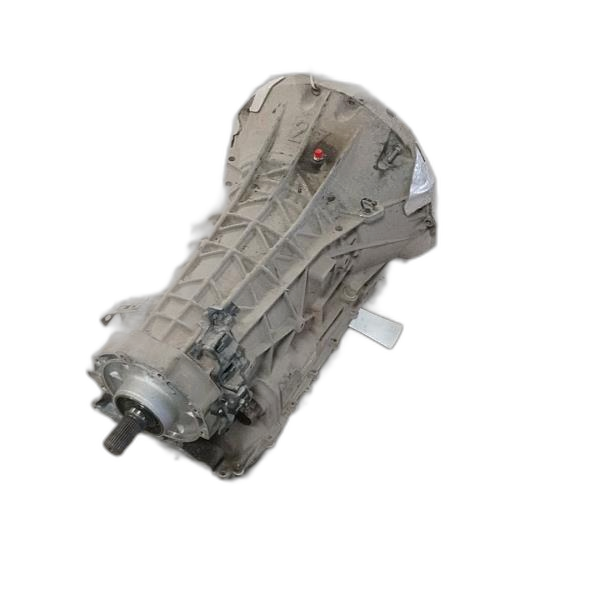
Below are the parts most often responsible for code P0730, ranked by how frequently each one is the actual culprit (per the diagnosis above). Tap any to see what we have for your vehicle.





The information in this article is provided for general reference and educational purposes only. Vehicle specifications, procedures, and part compatibility can vary by production date, trim level, and region. Always consult your vehicle's factory service manual and verify part numbers before purchasing or performing repairs. Safety-critical components such as airbags, seat belts, and braking systems should be installed by a qualified professional.
- 🧭 Diagnostic Flowchart
- 🎬 Helpful Videos
- 🛍️ Shop This Part
- What Does P0730 Mean?
- Can I Drive With P0730?
- Common Causes
- Symptoms
- Common Fixes & Costs
- DIY vs Professional
- Used vs. New Parts: Buying Guide
- What Happens If You Wait — Timeline
- Cost of Not Fixing It
- Diagnosis Steps
- When This Code Triggers (Freeze-Frame Conditions)
- Related Codes
- Climate & Environmental Factors
- How to Talk to a Mechanic About This Code
- Where to Take It: Dealer vs Independent vs Chain
- When to Walk Away From the Repair
- What Scan Tool You Need for This Code
- How to Clear the Code After You Fix It
- Will This Fail Emissions / State Inspection?
- Most Commonly Affected Vehicles
- Manufacturer-Specific Notes
- Real Owner Stories
- 2018 Subaru Forester with 150K miles
- 2007 Jeep Grand Cherokee CRD
- 2004 Honda Civic with 162K miles
- How to Prevent This Code From Triggering
- Frequently Asked Questions
- Does a P0730 code always mean I need a new transmission?
- What is the most common misdiagnosis for a P0730 code?
- Can I just clear the P0730 code and keep driving?
- What's the difference between P0730 and P0731?
- Can a bad battery or ground cause a P0730 code?
- How much does it cost to fix a P0730 code?
- Is it cheaper to rebuild or replace a transmission?
- Key Takeaways
- 🎟️ Get 5% Off