

P0730 on 2005-2014 Chrysler 300: Incorrect Gear Ratio Causes and Fixes
On a 2005-2014 Chrysler 300, code P0730 is most often caused by a faulty transmission conductor plate, especially in models with the NAG1 5-speed transmission. Other common causes are low/dirty fluid or a leaking electrical connector. Expect to pay $200-$500 for a conductor plate replacement.
- P0730 on a Chrysler 300 means the transmission is slipping.
- For models with the 5-speed NAG1 transmission (most 2005-2012), the most likely cause is a failed conductor plate inside the transmission.
- Always start diagnosis by checking the transmission fluid level and condition, though it requires a special tool.
- Replacing the cheap 13-pin electrical connector sleeve is recommended whenever servicing the transmission to prevent future leaks.
- This is not a DIY-friendly repair for beginners; professional service is recommended due to the complexity of transmission work.
What's Unique About the 2005-2014 Chrysler 300
The 2005-2014 Chrysler 300 spans two generations and multiple transmissions. The first generation (2005-2010) and some early second-gen models primarily use the Mercedes-Benz NAG1 (W5A580 / 722.6) 5-speed automatic. On these cars, P0730 is very frequently caused by the failure of the transmission's conductor plate, which houses the speed sensors. Later second-gen models (around 2012+) began using the ZF 8-speed automatic (845RE), where issues are more likely related to the fluid, mechatronic unit, or software. For NAG1-equipped cars, other common triggers include software glitches that can be fixed with a dealer reflash (see TSB 21-033-14 and Bulletin #21-005-13) and corroded rear ABS tone rings giving false speed readings.
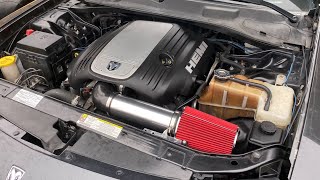
Generation note: This range covers the first generation (LX, 2005-2010) and the start of the second generation (LD, 2011-2014). The LX and early LD models typically have the NAG1 5-speed transmission, where conductor plate failure is a primary cause. Later LD models may have the 8-speed automatic, where causes are more generalized. The V6 models received the 8-speed starting in 2012, while the 5.7L HEMI V8 models kept the NAG1 5-speed until the 2015 model year.
Symptoms You May Notice
- Check Engine Light or Transmission Warning Light illuminated
- Vehicle enters 'limp mode' (stuck in 2nd or 3rd gear)
- Harsh, erratic, or delayed shifts
- Transmission slipping (engine revs up but vehicle doesn't accelerate accordingly)
- Inability to shift into certain gears
- Reduced fuel economy
- Replacing the entire transmission when only the conductor plate or a solenoid is faulty.
- Replacing the TCM when the actual problem is a fluid leak or a bad sensor providing incorrect data to the module.
- Assuming an internal transmission failure when the root cause is a corroded rear ABS tone ring sending a bad speed signal.
Most Likely Causes
- Faulty Conductor Plate (NAG1 Transmission) 🔴 High Probability The conductor plate in the Mercedes-designed NAG1 transmission is a well-documented failure point. It contains the input and output speed sensors, and cracks in its plastic housing or circuitry lead to incorrect readings, often setting codes P0715 or P0721 as well.
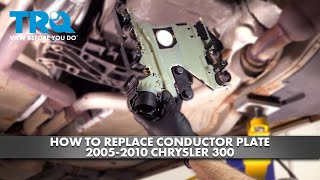
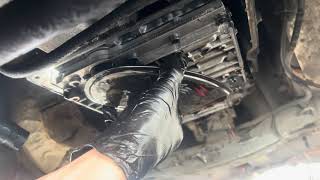
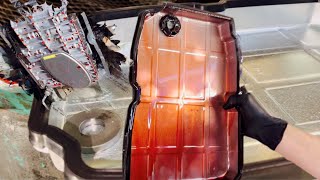
How to confirm: A professional scan tool can monitor the input/output speed sensor data in real-time. If one or both sensors show erratic or no readings, the conductor plate is the likely culprit. Visual inspection of the plate for cracks after removing the valve body is also definitive. This is a messy but achievable DIY for experienced individuals. 🎬 Watch: Step-by-step NAG1 conductor plate replacement guide
Typical fix: Replace the transmission conductor plate, the 13-pin connector sleeve, transmission filter, and fluid. This is often done as a single service.
Est. part cost: $100-$250 - Low or Dirty Transmission Fluid 🔴 High Probability → Shop Transmission Assembly The NAG1 transmission does not have a dipstick, making fluid level checks less straightforward for owners. Leaks, particularly from the 13-pin electrical connector, are common and can lead to a low fluid condition causing hydraulic pressure loss and slipping.
How to confirm: Check the fluid level using a special service dipstick tool (not included with the vehicle). The fluid level must be checked at a specific temperature (usually 80°C / 176°F). 🎬 Watch: How to service your NAG1 transmission correctly Inspect the fluid's condition; if it's dark brown, black, or smells burnt, it's degraded. The correct fluid is crucial: use ATF meeting MB 236.14 spec, not ATF+4.
Typical fix: Perform a transmission fluid and filter service. If the fluid was low, identify and repair the source of the leak (often the connector sleeve).
Est. part cost: $80-$150 - Leaking 13-Pin Electrical Connector Sleeve (NAG1) 🟡 Medium Probability The O-rings on the connector sleeve (Part # 68021352AA) that plugs into the conductor plate are known to degrade and leak transmission fluid. This not only causes fluid loss but can also allow fluid to wick up the wiring harness into the TCM, causing further electrical issues.
How to confirm: Visually inspect the round 13-pin connector on the front passenger side of the transmission for signs of ATF fluid leakage.
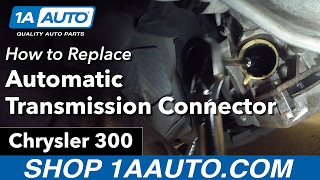
Typical fix: Replace the connector sleeve. This is a low-cost part (typically under $20) and should be replaced anytime the transmission pan is dropped for service. 🎬 See how to replace the 13-pin connector sleeve
Est. part cost: $10-$25 - Faulty Shift Solenoid or Valve Body 🟡 Medium Probability → Shop Transmission Valve Body
How to confirm: A diagnostic scan tool can perform solenoid tests. A mechanic can also check the resistance of the solenoids from the TCM connector. Issues with the valve body often require professional diagnosis based on hydraulic pressure tests.
Typical fix: Replace the specific faulty solenoid or the entire valve body/mechatronic unit.
Est. part cost: $200-$800
Rare But Worth Checking
- Faulty ABS / Wheel Speed Sensor or Tone Ring: → Shop ABS Wheel Speed Sensor The TCM uses wheel speed sensor data as a secondary source for output speed. On LX platform vehicles, the rear ABS tone rings are highly susceptible to corrosion and cracking. A damaged tone ring sends an erratic signal to the ABS module, which is then passed to the TCM, triggering a false P0730. This is a very common issue and will usually be accompanied by ABS/ESP warning lights.
- TCM Software Glitch: Chrysler/Dodge issued TSB #21-033-14 for platform mates like the Dodge Charger/Challenger, which advises that an erroneous P0730 code can be fixed with a TCM software update. This is a strong possibility if no mechanical or electrical faults are found and should be investigated before replacing expensive parts.
- Internal Mechanical Failure: If the transmission fluid is full of clutch material or metal shavings, it points to a severe internal problem like worn clutch packs or a failing planetary gear set, requiring a full rebuild or replacement.
Diagnosis Steps
- Check the transmission fluid level and condition. For NAG1 transmissions, this requires a special dipstick tool and checking at the correct operating temperature (80°C). Note any leaks, especially around the 13-pin electrical connector.
- Scan the TCM for all stored trouble codes. Note if any specific gear ratio codes (P0731-P0735) or sensor codes (P0715, P0721, ABS codes) are present.
- Check for Technical Service Bulletins (TSBs). Specifically, TSB 21-033-14 and Bulletin #21-005-13 suggest a TCM reflash may solve the issue on some models.
- Inspect Rear ABS Tone Rings. Visually inspect the tone rings on the rear axle shafts for rust, swelling, or cracks. This is a very common cause of false P0730 codes on this platform.
- Using a capable scan tool, monitor the live data for the transmission input, output, and wheel speed sensors while driving. Look for erratic signals, dropouts, or readings that don't make sense.
- If sensor data is faulty (especially on a NAG1), the next step is to drop the transmission pan and valve body to inspect and replace the conductor plate and 13-pin connector.
- If sensor data appears normal, investigate shift solenoids and the valve body for issues.
- If fluid is low, top it off with the correct MB 236.14 spec fluid, clear codes, and test drive. If the code returns, find and fix the leak.
Parts You'll Likely Need
- Transmission Conductor Plate
(OEM #52108308AC)— This is the most common point of failure for this code on Chrysler 300s with the NAG1 5-speed transmission, as it houses the speed sensors that detect the gear ratio.
Trusted brands: Mopar, Standard Motor Products (SMP), Dorman, Vaico
OEM price range: $200-$300
Aftermarket price range: $100-$200 - Transmission Fluid and Filter Kit
(OEM #Filter Kit: 52108325AA, Fluid: 68218058AC (MB 236.14 Spec))— Low or dirty fluid is a primary cause of slipping. A fluid and filter change is the first step in diagnosis and a necessary part of replacing the conductor plate. Using the correct fluid is critical.
Trusted brands: Mopar, Shell ATF 134, Fuchs Titan ATF 4134, Wix (Filter)
OEM price range: $100-$180
Aftermarket price range: $70-$120 - Transmission Electrical Connector Sleeve
(OEM #68021352AA)— The O-rings on this part are a common leak point, leading to low fluid levels and potential electrical issues if fluid wicks into the harness.
Related Codes That Often Appear With This One
- P0700 — This is a general transmission fault code indicating the TCM has stored a more specific code, like P0730. It will almost always be present.
- P0715 — This code indicates a fault with the Input/Turbine Speed Sensor circuit. Since this sensor is part of the conductor plate on NAG1 transmissions, P0715 is a strong indicator that the conductor plate has failed.
- P0721 — This code indicates a fault with the Output Speed Sensor circuit. Like P0715, this points directly to a likely conductor plate failure on NAG1 models.
- C102A, U1417 — These are ABS and communication codes related to wheel speed sensors. If P0730 appears with these, the root cause is very likely a faulty wheel speed sensor or tone ring, not the transmission itself.
Technical Service Bulletins (TSBs) & Recalls
- While no specific TSB for the 300 and P0730 was found, Chrysler TSB 21-005-13 was issued for other models to correct an erroneous P0730 code by reprogramming the TCM.
- Bulletin #21-005-13 involves updating the Transmission Control Module (TCM) software for cases where customers indicate MIL illumination for P0730 - Incorrect Gear Ratio.
Mechanic-Grade Diagnostic Values
- NAG1/722.6 Solenoid Resistance (from TCM connector) — expected: Line Pressure Solenoid (Pins 38 to 36): ~5.5 Ohms. 1-2/4-5 Shift Solenoid (Pins 38 to 14): ~4.5 Ohms. 2-3 Shift Solenoid (Pins 38 to 16): ~4.5 Ohms. 3-4 Shift Solenoid (Pins 38 to 15): ~4.5 Ohms. TCC Lockup Solenoid (Pins 38 to 17): ~2.7 Ohms.. Failure: Readings that are open (infinite resistance) or shorted (zero resistance) indicate a failed solenoid or wiring issue.
- NAG1 TCM System Voltage — expected: Above 9.0 volts with engine running.. Failure: If voltage drops below 8.5 volts, the TCM may enter a temporary limp mode and set a fault. This can indicate a charging system or wiring issue, not necessarily a transmission problem.
- NAG1 Speed Sensor Supply Voltage — expected: Between 4.8 and 7.2 volts.. Failure: Voltage outside this range will set a specific sensor supply DTC and can contribute to incorrect ratio calculations.
Scan Tool Commands That Help
- Chrysler wiTECH: Reset Adaptive Values — This function should be used after replacing the valve body, conductor plate, or overhauling the transmission to clear the learned clutch fill times and pressures.
- Chrysler wiTECH: Quick Learn — This procedure is performed after resetting adaptive values or to remedy poor shift quality. It forces the TCM to perform a series of tests to learn the new clutch application characteristics. It is required for certain repairs on the 8-speed and is a good practice on the NAG1 after major work.
- Generic OBD-II / Key Cycle: TCM Reset (Pedal Method) — As a simple first step, some owners report success by turning the ignition to 'On' (not start), slowly pressing the accelerator to the floor and holding for 10-15 seconds, then turning the ignition off before restarting. This can sometimes clear temporary adaptive memory glitches.
Wiring & Ground Locations
- TCM Connector (NAG1) — Under the driver's side dash, typically below the steering column.. This is the brain of the transmission. It's also a critical access point for testing solenoid and sensor circuits without dropping the transmission pan. Pin 38 is the common power feed for the solenoids, which can be tested against other pins for resistance.
- 13-Pin Transmission Connector (NAG1) — On the front passenger side of the transmission case, pointing upwards.. This is the single connection point between the vehicle's wiring harness and the internal transmission electronics (conductor plate). It is a notorious leak point, and fluid contamination here can cause a host of electrical faults, including P0730.
- Rear Wheel Speed Sensor Connector — At each rear wheel hub.. The TCM uses wheel speed data as a reference for the vehicle's output speed. A corroded or damaged rear ABS tone ring or faulty wheel speed sensor can send an incorrect signal, making the TCM believe the gear ratio is wrong when the transmission is perfectly fine.
Real Owner Repair Stories
- YouTube user 'G Auto Repair' (2012 Chrysler 300C 5.7L with 5-speed NAG1 transmission) — P0730 Incorrect Gear Ratio, transmission goes into limp mode.
❌ Tried (didn't work) The technician initially suspected an internal transmission issue or a problem with the conductor plate.
✅ What actually fixed it The technician noticed an ABS light was also on and that the live data for the right rear wheel speed sensor was erratic. After replacing the faulty right rear wheel speed sensor, both the ABS code and the P0730 code were resolved, and the transmission shifted normally. - NHTSA ODI #11405676 — An owner reported that after a flare between gears, the vehicle would get stuck in 3rd gear or limp mode with a check engine light and DTCs P0730 through P0735.
OEM Part Supersession History
52108308AB→52108308AC— Revision and improvement of the conductor plate assembly.
Heads up: The newer part number (52108308AC) is the correct replacement for the older version.
Model Year Variations Within This Range
- 2012-2014: The 8-speed ZF 845RE transmission was introduced for V6 models in 2012. However, V8 (5.7L HEMI) models continued to use the 5-speed NAG1 transmission until the 2015 model year facelift. This is a critical distinction, as the cause of P0730 is very different between the two transmissions.
- 2012: TSB 21-033-14 specifically calls out 2012 models with the W5A580 (NAG1) transmission for a potential software update to fix an erroneously set P0730 code.
Diagnostic Flowchart
Other Known Issues on This Vehicle
Issues unrelated to this code that are worth knowing about as an owner of this generation:
- Shifter Stuck in Park ('Pink Thingy' Failure) 🔴 High — Extremely common on 2005-2007 models. A small plastic hook on the shift interlock lever breaks, immobilizing the vehicle. (Ref: No recall, but a widely known failure. The fix is an inexpensive aftermarket metal replacement part (e.g., Dorman 924-706).)
- HEMI (5.7L/6.1L) MDS Lifter Failure 🔴 High — Common issue, often appearing between 70,000 and 130,000 miles. Caused by a combination of lubrication issues and lifter design. Leads to a distinct 'HEMI tick' and eventually a misfire (P0300). (Ref: No recall, but numerous TSBs exist for related symptoms. The ultimate fix is often a camshaft and lifter replacement, sometimes with an MDS delete kit.)
- Front Suspension Noise (Tension Struts/Control Arms) 🟠 Medium — Very common. The bushings on the front tension struts and control arms wear out, causing clunking, popping, or groaning noises over bumps and during turns.
- Alternator Failure 🔴 High — Common across all engines. The alternator can fail without warning, often causing a burning smell and a sudden loss of all electrical power while driving. (Ref: Recall N02 for some 2011-2014 models with 160-amp alternators.)
- Warped Interior Door Panels 🟡 Low — Common on first-generation (2005-2010) models, especially in hot climates. The adhesive fails, causing the upper section of the interior door panel to lift and warp.
Used vs. New Parts: Buying Guide for This Vehicle
When a used part is the smart pick: For this repair, used parts are generally not recommended for the key electronic components. However, a complete used transmission assembly from a low-mileage, verified-running donor vehicle can be a cost-effective alternative to a full rebuild if internal mechanical failure is confirmed.
Donor-vehicle mileage cap: roughly under 80000 miles for the part to have meaningful remaining life.
What to inspect on the donor part:
- For a complete transmission: Check the donor vehicle's VIN to confirm it was not from a flood or severe accident vehicle. Ask for video of the donor car running and driving if possible. Inspect the fluid from the donor transmission; if it's dark, burnt, or contains metal, reject it.
- For a valve body: Inspect for any cracks, scoring on the bores, or signs of heavy sludge. It's a gamble without knowing the donor's history.
OEM-only on this vehicle (don't cheap out):
- Transmission Conductor Plate: Aftermarket versions have a high failure rate. Given the labor involved to access it, using a genuine Mopar or OEM-supplier (like Siemens/VDO) part is strongly advised to avoid repeat repairs.
- Transmission Electrical Connector Sleeve: This is an inexpensive part; there is no reason to use a used one. Always use a new OEM or quality aftermarket part with fresh O-rings.
Aftermarket brands forum-validated for this vehicle:
- Fluid: Shell ATF 134, Fuchs Titan ATF 4134 (Meets MB 236.14 spec)
- Filter Kits: Wix, Mann-Filter, Mahle
Brands owners have reported issues with on this vehicle:
- Unbranded or 'white box' conductor plates from online marketplaces are a significant risk and a common source of premature failure.
Real Owner Stories
Aggregated from forums and TSBs cited above. Mileages and costs reflect what owners reported in those sources.
2013 Chrysler 300
Symptoms: Vehicle was losing power while driving.
What fixed it: Repairing a significant oil leak.
Cost: $1000-$1000
Source hint: Reddit r/Chrysler300: P0730 code
2006 Chrysler 300C
Symptoms: P0730, limp mode, and other codes including P0700 and P0715.
What fixed it: Replacing the conductor plate, 13-pin connector, filter, and fluid.
Source hint: 300CForums.com: P0730 Incorrect Gear Ratio
2005 Chrysler 300C
Symptoms: P0730 and P0884 (Power Up at Speed) codes.
What fixed it: Diagnostic focus on conductor plate and checking the TCM for fluid wicking/contamination from the 13-pin connector.
Source hint: LXForums.com: P0730 and P0884 codes help!!
Related OBD-II Codes
Frequently Asked Questions
Can I check the transmission fluid level myself on my Chrysler 300 with the NAG1 transmission?
Is there a software update for the P0730 code on the Chrysler 300?
What specific transmission fluid should I use for my 2005-2014 Chrysler 300 to avoid gear ratio codes?
Could a problem with my brakes or axles cause a P0730 code?
What is the '13-pin connector' issue I keep reading about?
My Chrysler 300 is stuck in 2nd or 3rd gear; is this related to P0730?
Helpful Videos

We Have This Part in Stock

The information in this article is provided for general reference and educational purposes only. Vehicle specifications, procedures, and part compatibility can vary by production date, trim level, and region. Always consult your vehicle's factory service manual and verify part numbers before purchasing or performing repairs. Safety-critical components such as airbags, seat belts, and braking systems should be installed by a qualified professional.
- Chrysler 300:
- 🧭 Diagnostic Flowchart
- 🎬 Helpful Videos
- 🛍️ Shop This Part
- What's Unique About the 2005-2014 Chrysler 300
- Symptoms You May Notice
- Most Likely Causes
- Rare But Worth Checking
- Diagnosis Steps
- Parts You'll Likely Need
- Related Codes That Often Appear With This One
- Technical Service Bulletins (TSBs) & Recalls
- Mechanic-Grade Diagnostic Values
- Scan Tool Commands That Help
- Wiring & Ground Locations
- Real Owner Repair Stories
- OEM Part Supersession History
- Model Year Variations Within This Range
- Other Known Issues on This Vehicle
- Used vs. New Parts: Buying Guide for This Vehicle
- Real Owner Stories
- 2013 Chrysler 300
- 2006 Chrysler 300C
- 2005 Chrysler 300C
- Related OBD-II Codes
- Frequently Asked Questions
- 🎟️ Get 5% Off