

P0730 on 2012 Dodge Charger: Incorrect Gear Ratio Causes and Fixes
For a 2012 Dodge Charger, code P0730 often points to a software issue in the Transmission Control Module (TCM) or a corroded rear ABS tone ring. Before suspecting major transmission failure, check for Technical Service Bulletins (TSBs) regarding a TCM reflash (like #21-033-14). Also, inspect the transmission fluid level/condition and the rear tone rings, as a bad wheel speed signal is a very common trigger for this code.
- For a 2012 Dodge Charger, P0730 is very often a software issue that can be fixed with a TCM reflash from a dealer.
- Always check for ABS codes, specifically for rear wheel speed sensors, as a corroded ABS tone ring is a known cause for P0730 on this car.
- Do not immediately assume the transmission has failed; the most common causes are software, fluid, or ABS-related.
- Driving with this code is risky and can lead to much more expensive transmission damage.
What's Unique About the 2012-2012 Dodge CHARGER
For the 2012 Dodge Charger and other LX platform vehicles (Chrysler 300, Dodge Magnum) equipped with the Mercedes-designed W5A580/NAG1 5-speed transmission, P0730 is frequently caused by external factors rather than internal transmission failure. Dodge released multiple Technical Service Bulletins (TSBs) advising that a simple software update to the Transmission Control Module (TCM) can resolve this code. Furthermore, the rear ABS tone rings are highly susceptible to corrosion, which provides a false output speed signal to the TCM, tricking it into setting a P0730 code. This makes a dealer reflash and a tone ring inspection primary diagnostic steps.
Diagnostic Flowchart
Tap your situation to follow the diagnostic path that matches what you're seeing on this vehicle.
Symptoms You May Notice
- Check Engine Light is on
- Vehicle enters "limp mode" (often stuck in 2nd or 3rd gear)
- Transmission slipping between gears
- Harsh or delayed shifting
- Failure to shift into or out of a gear
- Vehicle loses forward motion, but RPMs flare when pressing the gas.
- Reduced fuel economy.
- ABS and traction control lights may illuminate if the cause is wheel speed sensor or tone ring related.
- Replacing the entire transmission when only a TCM software update was needed.
- Replacing wheel speed sensors when the actual fault is the corroded tone ring the sensor reads.
- Assuming internal failure before checking for the much more common and less expensive software, fluid, and tone ring issues.
- Using the incorrect transmission fluid (like ATF+4) during a service, which can cause shifting problems on the NAG1 transmission.
Most Likely Causes
- Transmission Control Module (TCM) Software Outdated 🔴 High Probability → Shop Transmission Assembly Manufacturer TSBs #21-033-14 and #21-005-13 directly call out a software issue for this code on this model year, stating the code can be set erroneously.
How to confirm: A Dodge dealership or a well-equipped independent shop can check the current software version of the TCM against the latest available version using a wiTECH scan tool.
Typical fix: Selectively erasing and reprogramming the TCM with the updated software file, often referred to as a "flash." This is a non-mechanical repair.
Est. part cost: $0 - Failed or Corroded Rear ABS Tone Ring 🔴 High Probability In rust-prone areas, the rear ABS tone rings on the axle shafts can corrode, swell, crack, and fall apart. The TCM uses the rear wheel speed sensors (which read these rings) to calculate the transmission's output speed. A bad signal causes the TCM to believe there is a gear ratio error, triggering P0730 along with ABS codes.
How to confirm: Scan for ABS codes (like C102A) along with P0730. 🎬 Watch: How to fix P0730 and related ABS codes. A code for a rear wheel speed sensor is a strong indicator. Visually inspect the tone ring by removing the wheel speed sensor and looking into the hole or by removing the axle shaft.
Typical fix: Replace the corroded tone ring. The ring is pressed onto the CV axle shaft. 🎬 See how to install new ABS tone rings yourself. While some aftermarket rings can be installed separately, the OEM repair is to replace the entire rear axle half-shaft.
Est. part cost: $20-$400 - Low or Dirty Transmission Fluid 🟡 Medium Probability → Shop Transmission Assembly The W5A580/NAG1 transmission is sensitive to fluid level and condition. Neglected maintenance can lead to low fluid, which prevents proper hydraulic pressure needed for gear engagement.
How to confirm: Check the transmission fluid level and condition. The fluid should be at the correct level, reddish, and not smell burnt. This vehicle does not have a dipstick and requires a special tool and a temperature-based chart to check accurately. The correct fluid is critical (meets MB 236.14 spec), not ATF+4.
Typical fix: Perform a transmission fluid and filter change using the correct specification fluid (e.g., Shell ATF 134, Mopar P/N 68218058AC).
Est. part cost: $100-$200 - Failing Conductor Plate ⚪ Low Probability The conductor plate is a known failure point on the Mercedes-designed NAG1 transmission. It houses the internal speed sensors and solenoids. A failure of the sensors on this plate can directly cause P0730.
How to confirm: This requires advanced diagnostics with a scan tool to monitor internal transmission speed sensor data. If the input or output speed sensor readings are erratic or zero, the conductor plate is a likely culprit.
Typical fix: Replace the conductor plate, which is located inside the transmission on top of the valve body. This repair typically includes a new connector sleeve, filter, and pan gasket. 🎬 Watch: Step-by-step NAG1 transmission conductor plate replacement guide.
Est. part cost: $150-$350
Rare But Worth Checking
- Failing Shift Solenoid or Valve Body: → Shop Transmission Valve Body While less common than the conductor plate, an individual shift solenoid can fail or the valve body can become blocked with debris, preventing proper gear engagement. This usually requires testing with a high-end scan tool.
- Internal Transmission Failure: → Shop Transmission Assembly This is the worst-case scenario. If all other causes are ruled out, the issue may be worn clutch packs, a failing internal pump, or other mechanical damage inside the transmission, requiring a rebuild or replacement.
Diagnosis Steps
- Check for Technical Service Bulletins (TSBs). For this vehicle, TSB #21-033-14 is highly relevant and should be the first check.
- Scan for all codes in the TCM and ABS modules using a capable OBD2 scanner. Note any wheel speed sensor codes.
- If ABS codes are present, diagnose them first. This is critical. Visually inspect the rear ABS tone rings for corrosion, swelling, or physical damage.
- If no ABS codes are present, check the transmission fluid level and condition. This requires a special dipstick tool and a fluid temperature chart for the NAG1 transmission. Ensure the fluid is the correct type (MB 236.14 spec), not ATF+4.
- If fluid level and condition are good, contact a dealership to verify if the TCM software is up to date per TSB #21-033-14. If not, have the TCM reflashed.
- If the code persists, use a scan tool to monitor transmission input and output speed sensor data in real-time while driving. Erratic or missing signals may point to a failing conductor plate.
- If all sensors and software are good, perform advanced hydraulic tests, such as commanding solenoids and monitoring line pressures, to check for a faulty valve body or solenoid.
- If all electronic and hydraulic tests pass, suspect internal transmission damage.
Parts You'll Likely Need
- Transmission Control Module (TCM) Reprogramming — A known software glitch is a primary cause for P0730 on this vehicle, as documented by Dodge TSB #21-033-14.
OEM price range: $125-$250
Aftermarket price range: N/A - Rear Axle Half-Shaft (with Tone Ring)
(OEM #04578719AD (Varies by differential/model))— The ABS tone ring is prone to corrosion and is integrated with the axle shaft. A faulty signal from this ring is a very common cause of P0730.
Trusted brands: Mopar, Dorman (offers aftermarket rings), Autopart Premium
OEM price range: $400-$600
Aftermarket price range: $100-$250 - Transmission Fluid and Filter Kit (NAG1/W5A580)
(OEM #Fluid: 68218058AC; Filter Kit: 52108325AA)— Low or degraded fluid is a common cause of transmission slipping. Using the correct fluid (MB 236.14 spec) is critical for the NAG1 transmission.
Trusted brands: Mopar, Blauparts, Eurol, Pentosin
OEM price range: $150-$250
Aftermarket price range: $80-$150 - Transmission Conductor Plate Kit
(OEM #52108308AC)— A known failure point on the NAG1 transmission that houses the speed sensors. A faulty sensor on the plate can cause P0730.
Trusted brands: Mopar, Febi, Meyle
OEM price range: $200-$350
Aftermarket price range: $100-$200
Related Codes That Often Appear With This One
- C102A — This is a code for the Left Rear Wheel Speed Sensor Circuit, often caused by a corroded tone ring, which can directly trigger P0730.
- C102B — This is a code for the Right Rear Wheel Speed Sensor Circuit, also commonly caused by a corroded tone ring.
- P0731-P0735 — These are gear-specific ratio error codes (e.g., P0731 - Gear 1 Incorrect Ratio). They point to slipping in a specific gear, whereas P0730 is a more general incorrect ratio fault.
Technical Service Bulletins (TSBs) & Recalls
- 21-033-14: FLASH: MIL Illumination For P0730 And Transmission Shift Enhancements.
- 21-005-13: FLASH: MIL Illumination For P0730 - Incorrect Gear Ratio (Superseded by 21-033-14).
Platform-Specific Known Issues
- The 2012 Dodge Charger is subject to TSB #21-033-14, which states that the Check Engine Light for P0730 can be caused by a software issue and fixed by reprogramming the Tr
Mechanic-Grade Diagnostic Values
- NAG1 Transmission Fluid Level vs. Temperature — expected: Fluid level on special tool dipstick must correlate to fluid temperature. Example: ~65-68 mm at 176°F (80°C).. Failure: Level is too high or too low for a given transmission fluid temperature, read via a scan tool.
- NAG1 Conductor Plate Solenoid Resistance — expected: Approximately 5.5 Ohms when tested from the TCM connector (e.g., between common pin 38 and solenoid-specific pins like 36).. Failure: Resistance is significantly higher (e.g., 86 Ohms as seen in one case), lower, or open circuit.
Hidden / Shadow Codes Worth Checking
- 2203: N3 Input Speed Sensor Circuit, High Resistance. This is a manufacturer-specific code providing more detail than the generic P0730, pointing directly at the conductor plate speed sensor circuit. (see via Older dealer-level scan tools like the DRB III or early StarSCAN. Modern tools may report this as a sub-code or event data.)
Scan Tool Commands That Help
- wiTECH: TCM Reprogram/Flash — Used to apply software updates as specified in TSBs #21-033-14 and #21-005-13 to resolve erroneous P0730 codes. Requires wiTECH software release 13.03 or higher.
- Professional Scan Tool: Shift Solenoid Actuation Test — To individually command each shift solenoid on and off to verify its electrical and mechanical function, helping to isolate a single faulty solenoid from a broader conductor plate or valve body issue.
- Professional Scan Tool: Torque Converter Stall Speed Test — To determine if the transmission is slipping mechanically. The test measures the maximum engine RPM achieved at full throttle with the transmission in drive and brakes applied. If the RPM exceeds specification, it indicates internal slippage (e.g., worn clutches).
Wiring & Ground Locations
- Transmission Control Module (TCM) — Located at the left end of the dash, under the instrument panel below the steering wheel.. This is the module that sets the code. All sensor inputs and solenoid outputs run through its connectors, making it a central point for electrical testing.
- G120 — A primary ground point located under the driver's seat.. The TCM relies on a solid ground connection for accurate sensor readings and solenoid control. A poor connection at G120 can cause erratic behavior and trigger various transmission codes, including P0730.
- G901a — A ground point located in the left front of the engine compartment.. This is another key ground in the transmission control circuit. Corrosion or a loose connection here can lead to intermittent electrical issues for the TCM.
- TCM Connector C1 — The main harness connector at the Transmission Control Module.. Technicians can perform remote testing of the conductor plate's sensors and solenoids from this connector without dropping the transmission pan, by measuring resistance across specific pins (e.g., Pin 38 and Pin 36).
Real Owner Repair Stories
- YouTube user 'Fix It All' (Dodge Charger with P0730, C102A, and other ABS codes.) — Transmission in limp mode, ABS and traction control lights on, check engine light on. Scan tool showed left rear wheel speed at 0 km/h.
❌ Tried (didn't work) The user immediately suspected the tone ring based on the codes and climate, bypassing other diagnostics.
✅ What actually fixed it The rear ABS tone ring had corroded, cracked, and fallen apart. The user removed the axle shaft, cleaned the mounting surface, and installed a new aftermarket tone ring. This resolved the limp mode and cleared all associated codes. - YouTube user 'That Car Guy' (Dodge Charger with NAG1 5-speed transmission.) — Transmission going into limp mode due to a lost input speed sensor signal (N3 sensor). Scan tool data for the N3 sensor would show an erratic high RPM (9,999) before cutting out.
✅ What actually fixed it Replaced the entire transmission conductor plate, which houses the input (N2) and output (N3) speed sensors. After replacement, a test drive confirmed the N3 speed sensor provided a stable reading and the limp mode issue was resolved. - YouTube user 'CDE 197' (2012 Chrysler 300S with NAG1 transmission.) — Transmission shifting issues and fault codes.
✅ What actually fixed it The transmission filter was found to be severely clogged with clutch material. The user replaced the conductor plate, transmission filter, and fluid. After the repair, a scan showed the TCM passed with no fault codes.
"I Checked Everything" — The Actual Cause
- A common scenario for this code is passing all internal transmission hydraulic and mechanical tests, only to find the root cause was an external electronic signal. Specifically, a corroded rear ABS tone ring provides a faulty output speed signal to the TCM, which misinterprets it as an internal gear ratio slip and sets P0730.
OEM Part Supersession History
52108308AB→52108308AC— Revision and improvement of the part by the manufacturer.
Model Year Variations Within This Range
- 2012 (Early Production): Per TSB #21-005-13, 2012 Charger models built on or before June 5, 2012 (MDH 0605XX) are specifically called out for the P0730 software glitch. Models built after this date likely have the updated TCM software from the factory, making the software fix less likely to be the cause.
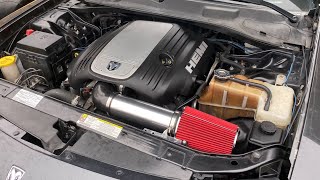
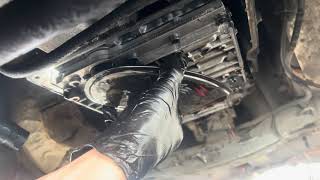
Helpful Videos

We Have This Part in Stock


The information in this article is provided for general reference and educational purposes only. Vehicle specifications, procedures, and part compatibility can vary by production date, trim level, and region. Always consult your vehicle's factory service manual and verify part numbers before purchasing or performing repairs. Safety-critical components such as airbags, seat belts, and braking systems should be installed by a qualified professional.
- Dodge CHARGER:
- 🧭 Diagnostic Flowchart
- 🎬 Helpful Videos
- 🛍️ Shop This Part
- What's Unique About the 2012-2012 Dodge CHARGER
- Symptoms You May Notice
- Most Likely Causes
- Rare But Worth Checking
- Diagnosis Steps
- Parts You'll Likely Need
- Related Codes That Often Appear With This One
- Technical Service Bulletins (TSBs) & Recalls
- Platform-Specific Known Issues
- Mechanic-Grade Diagnostic Values
- Hidden / Shadow Codes Worth Checking
- Scan Tool Commands That Help
- Wiring & Ground Locations
- Real Owner Repair Stories
- "I Checked Everything" — The Actual Cause
- OEM Part Supersession History
- Model Year Variations Within This Range
- 🎟️ Get 5% Off