

P0730 on 2009-2014 Ford E-250: Incorrect Gear Ratio and TorqShift Fixes
On a 2009-2014 Ford E-250 with a TorqShift 5R110W transmission, P0730 almost always points to a known internal transmission failure, not just a bad sensor. A Ford Technical Service Bulletin (TSB 16-0057) identifies a faulty coast clutch cylinder and mechanical diode as the root cause, requiring a significant repair that involves removing the transmission for partial disassembly.
- For a 2009-2014 E-250, P0730 is very likely caused by a specific internal transmission failure detailed in Ford TSB 16-0057.
- Do not assume the fix is a simple solenoid replacement, especially if codes P0751 or P2700 are also present.
- The repair requires removing the transmission to replace the coast clutch cylinder and one-way clutch, making it a job for a professional.
- Always check the transmission fluid level and condition first, but be prepared for a more significant mechanical repair.
- Confirming the transmission's build date is a key step in diagnosing this issue correctly.
What's Unique About the 2009-2014 Ford E-250
Unlike many vehicles where P0730 might be caused by low fluid or a simple solenoid, the Ford E-250 in this year range with the TorqShift 5R110W transmission has a known weakness. Ford issued a Technical Service Bulletin (TSB 16-0057) that directly links this code (often with P0751 and P2700) to a failure of the internal coast clutch cylinder and the coast one-way clutch (OWC) mechanical diode. [TSB160057, 16-0057, 24] This means the fix is typically more involved than on other vehicles, requiring removal and partial transmission disassembly to access these internal components. [TSB160057, 16-0057]
Diagnostic Flowchart
Tap your situation to follow the diagnostic path that matches what you're seeing on this vehicle.
Symptoms You May Notice
- Check Engine Light or flashing transmission/wrench light on the dash.
- Transmission slipping (engine RPMs increase but vehicle speed does not).
- Harsh, erratic, or delayed shifting, particularly the 3-5 upshift.
- Vehicle enters "limp mode," often getting stuck in a single gear.
- Inability to engage certain gears, or a total loss of forward and reverse gears.
- Noticeable loss of power and poor acceleration.
- A sudden "boom" or bang from the transmission, followed by a failure to move. 🎬 Watch: What causes a total loss of movement in this transmission.
- Replacing only the Shift Solenoid 'A' (for code P0751) without addressing the underlying mechanical coast clutch failure. The TSB makes it clear the solenoid code is a symptom, not the root cause 🎬 Watch: Why you shouldn't just replace the solenoid for this code. in this case. [TSB160057, 16-0057, 24]
- Replacing the entire transmission without confirming the specific internal failure. While sometimes necessary, the targeted repair outlined in the TSB can be more cost-effective if the rest of the transmission is in good condition.
- Performing a transmission fluid flush hoping to clear the code. While correct fluid level and condition are critical, this will not repair the broken mechanical components (coast clutch cylinder or diode).
Most Likely Causes
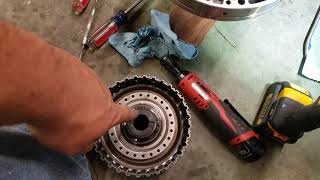
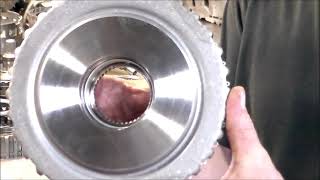
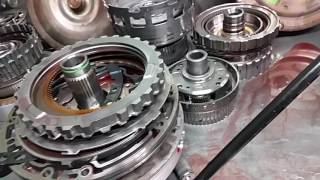
- Failed Coast Clutch Cylinder and/or One-Way Clutch (OWC) 🔴 High Probability → Shop Automatic Transmission Coast Clutch Hub This is a known issue documented by Ford in Technical Service Bulletin TSB 16-0057 for TorqShift transmissions built on or before 12/15/2015. [TSB160057, 16-0057] The weld on the coast clutch cylinder can fail 🎬 Watch: See a teardown of the failed coast clutch cylinder., causing a pressure leak, or the mechanical diode (a type of one-way clutch) can break.
How to confirm: A professional technician would confirm by verifying the presence of DTCs P0730, P0751, and/or P2700, checking the transmission build date, and performing a pressure test on the coast clutch circuit using a special air test plate (Ford tool 307-457) with the valve body removed. A hissing sound during the test indicates a leak at the clutch cylinder weld.
Typical fix: The transmission must be removed and partially disassembled to replace the Coast Clutch Cylinder and the Coast One-Way Clutch assembly. [TSB160057, 16-0057] This is a targeted repair, not a full rebuild, unless other damage is found.
Est. part cost: $200-$400 - Low or Contaminated Transmission Fluid 🟡 Medium Probability → Shop Transmission Assembly
How to confirm: Check the transmission fluid level and condition using the dipstick. The fluid should be at the correct level, red in color, and not have a burnt smell. If it's low, dark, or smells burnt, it indicates a problem such as internal clutch wear or overheating, which could be a symptom of the coast clutch failure.
Typical fix: Top off the fluid or perform a complete transmission fluid and filter change. Use only the recommended fluid type (Motorcraft MERCON SP or MERCON LV, depending on the specific model year and build date). A fluid change alone will not fix the mechanical failure described in the TSB.
Est. part cost: $100-$250 - Failed Shift Solenoid or Solenoid Body ⚪ Low Probability → Shop Transmission Valve Body
How to confirm: A diagnostic scan tool can be used to command individual solenoids to check for response. Resistance checks can also be performed on the solenoid's electrical circuit. This is often done after ruling out fluid issues. However, for this specific platform, TSB 16-0057 indicates that a solenoid code like P0751 is a symptom of the mechanical coast clutch failure, not the root cause. [TSB160057, 16-0057, 24]
Typical fix: Replace the specific faulty solenoid or the entire solenoid body assembly. In the context of P0730 on this vehicle, replacing the solenoid pack without addressing the internal coast clutch issue is a common misdiagnosis and will not solve the problem.
Est. part cost: $70-$500
Rare But Worth Checking
- Faulty Transmission Control Module (TCM): → Shop Transmission Assembly While possible, a faulty TCM is much less common than the mechanical coast clutch failure. This should only be considered after all other mechanical and hydraulic causes have been definitively ruled out. Sometimes a software update (reflash) can solve shifting issues, but it will not fix a mechanical break.
- Damaged Wiring or Connectors: Corrosion or damage to the wiring harness leading to the transmission can cause communication errors and trigger this code. A visual inspection of the harness is a necessary diagnostic step, especially on work vans that see harsh conditions.
Diagnosis Steps
- Check and verify the trouble codes with an OBD-II scanner. Note if P0751 or P2700 are also present, as this strongly points to the TSB issue. [TSB160057, 16-0057, 24]
- Check the transmission fluid level and condition. If low, top off and check for leaks. If dirty or burnt, a fluid and filter change is a good first step, but may not solve the underlying issue.
- Reference TSB 16-0057. Check the transmission build date, which is located on a tag on the driver's side of the transmission case. If built on or before 12/15/2015, the coast clutch failure is highly likely. [16-0057]
- If the TSB applies, the next step for a professional is to perform an air pressure test on the coast clutch port with the valve body removed to confirm the internal leak before removing the transmission.
- If the TSB applies and the leak is confirmed, the only fix is to follow the service procedure, which involves removing the transmission for internal inspection and repair. [TSB160057, 16-0057]
- If the TSB does not apply (e.g., later build date), proceed with standard diagnostics: test solenoid circuits, check for wiring issues, and perform hydraulic pressure tests.
Parts You'll Likely Need
- Coast Clutch Cylinder
(OEM #7C3Z-7G387-B)— This is the primary failure point identified in Ford's TSB 16-0057 for the P0730, P0751, and P2700 codes. Its weld is known to fail. [TSB160057, 16-0057, 8, 10, 21, 22, 25]
Trusted brands: Motorcraft
OEM price range: $90-$140
Aftermarket price range: $40-$80 - Coast One-Way Clutch (Mechanical Diode)
(OEM #7C3Z-7A089-A)— This part is replaced along with the coast clutch cylinder as per the TSB repair procedure. It is prone to mechanical failure. This part number supersedes 5C3Z-7A089-BA and 5C3Z-7A089-CA.
Trusted brands: Motorcraft
OEM price range: $95-$150
Aftermarket price range: $80-$120 - Transmission Filter and Pan Gasket Kit
(OEM #8C3Z-7A098-D)— Required for any service that involves opening the transmission, including the TSB repair.
Trusted brands: Motorcraft, Wix, ATP
OEM price range: $40-$70
Aftermarket price range: $20-$50 - Main Control Gasket
(OEM #8C3Z-7C155-A)— This gasket is required when removing the valve body/solenoid body to perform the diagnostic air test, and as part of the TSB repair.
Trusted brands: Motorcraft
OEM price range: $20-$40
Aftermarket price range: $15-$30
Related Codes That Often Appear With This One
- P0751 — Stands for "Shift Solenoid 'A' Performance/Stuck Off." On this platform, TSB 16-0057 links this code directly to the same internal coast clutch failure that causes P0730. The TCM flags the solenoid because it cannot achieve the commanded gear state due to the mechanical failure. [TSB160057, 16-0057, 24]
- P2700 — Stands for "Transmission Friction Element 'A' Apply Time Range/Performance." This code also points to a clutch application problem and is cited in TSB 16-0057 as being caused by the failing coast clutch assembly. [TSB160057, 16-0057, 24]
Technical Service Bulletins (TSBs) & Recalls
- TSB 16-0057: Torqshift Transmission - Malfunction indicator lamp (MIL) diagnostic trouble codes (DTCS) P0751, P0730 and/or P2700. This is the primary document identifying the coast clutch failure. This TSB supersedes an earlier version, TSB 12-3-15.
- TSB 12-3-15: An earlier version of the bulletin covering 2009-2011 models with the same issue, later expanded and updated by TSB 16-0057.
Platform-Specific Known Issues
- Ford Technical Service Bulletin TSB 16-0057 specifically calls out 2009-2016 E-Series vans with the TorqShift transmission for exhibiting codes P0730, P0751, and/or P2700 due to a faulty coast clutch cylinder and one-way clutch in transmissions built on or before 12/15/2015. [TSB160057, 16-0057]
Mechanic-Grade Diagnostic Values
- Line Pressure at Idle — expected: Park/Neutral: 50 psi, Reverse: 100 psi, Drive: 70 psi, Manual 1/2/3: 80 psi. Failure: Pressures below these specifications can indicate a worn pressure regulator valve, a faulty PCA solenoid, or other internal leaks. Do not perform a stall speed test if idle pressures are low.
- Line Pressure at Stall Speed (WOT for <5 seconds) — expected: Reverse: 320 psi, Drive: 320 psi, Manual 3: 260 psi, Manual 2: 215 psi. Failure: Significantly lower pressures indicate major internal leaks or a failing pump. This test should only be performed if idle pressures are correct.
- Electronic Pressure Control (EPC) Solenoid 'A' (PCA) Resistance — expected: 5.1 - 5.8 Ω. Failure: A resistance reading outside of this range indicates a faulty solenoid.
- Transmission Fluid Temperature (TFT) Sensor Resistance — expected: 37k - 100k Ω at 32°-68°F (0°-20°C); 0.54k - 0.8k Ω at 267°-302°F (131°-150°C). Failure: Resistance values that do not correspond with the fluid temperature indicate a faulty TFT sensor.
Hidden / Shadow Codes Worth Checking
- 141 (flashed code): This is the manually retrieved flash code equivalent of the OBD-II code P0730, indicating a gear ratio error has been detected by the PCM. (see via On LCF series trucks with the 5R110W, place the ignition ON (engine OFF), shifter in '2', and press the Tow/Haul button 4 times in 4 seconds. The 'Check Trans' light will flash the code.)
Scan Tool Commands That Help
- Ford IDS (Integrated Diagnostic System): Datalogger — To monitor live data PIDs such as Turbine Shaft Speed (TSS), Output Shaft Speed (OSS), commanded gear, and solenoid duty cycles to confirm the slip condition that triggers P0730.
- Ford IDS (Integrated Diagnostic System): Clear DTCs — After performing the TSB repair, any stored DTCs like P0730, P0751, and P2700 must be cleared from the PCM.
- Ford IDS (Integrated Diagnostic System): Transmission Characterization / Solenoid IDN — After replacing the solenoid body or reflashing the PCM, this procedure must be run to perform an adaptive strategy update to prevent harsh engagements.
Wiring & Ground Locations
- C175T — This is the main 50-pin connector at the Powertrain Control Module (PCM).. This connector carries the signals for the Turbine Shaft Speed (TSS) sensor (Pin 16), Output Shaft Speed (OSS) sensor (Pin 25), and Transmission Fluid Temperature (TFT) sensor (Pin 19), all of which are critical for the TCM to calculate gear ratios and detect faults like P0730.
- G101 / G103 — Varies by year, but typically found on the right front fender/radiator support (G101) or on the firewall/cowl above the brake booster (G103).. These are primary ground points for the Engine Control Module (ECM) and Transmission Control Module (TCM). A poor ground at these locations can cause erratic sensor readings and incorrect transmission behavior, potentially triggering false codes.
Real Owner Repair Stories
- Ford Truck Enthusiasts Forums (2006 Ford F-250 with 5R110W, 180k miles) — On acceleration, engine revs but vehicle does not move. Flashing tow/haul light. Total loss of forward and reverse gears. Code P0730 present.
❌ Tried (didn't work) The user initially hoped to diagnose and fix it themselves due to budget constraints.
✅ What actually fixed it A transmission shop rebuilt the transmission. The fix included replacing a sheared drum gear with an updated welded version, installing a new solenoid body and shift kit, and replacing the filter with the updated 6.4L style pan and filter. This confirms a catastrophic internal mechanical failure as the root cause.
OEM Part Supersession History
Mercon SP (XT-6-QSP)→Mercon LV (XT-10-QLVC)— Ford issued Special Service Message 21114 stating that Mercon LV should be used for all service (top-off and full replacement) in TorqShift transmissions from 2003-2008.
Heads up: While the original spec was Mercon SP, Ford has approved Mercon LV as a direct replacement and the two fluids are mixable in the 5R110W transmission.
Model Year Variations Within This Range
- 2003-2009: Vehicles in this range were originally filled with Mercon SP transmission fluid. Per Ford SSM 21114, issued in late 2009, Mercon LV is the recommended service fluid for all TorqShift transmissions, and it can be mixed with the older SP fluid. Later models would have been factory-filled with Mercon LV.
Helpful Videos
We Have This Part in Stock

The information in this article is provided for general reference and educational purposes only. Vehicle specifications, procedures, and part compatibility can vary by production date, trim level, and region. Always consult your vehicle's factory service manual and verify part numbers before purchasing or performing repairs. Safety-critical components such as airbags, seat belts, and braking systems should be installed by a qualified professional.
- Ford E-250:
- 🧭 Diagnostic Flowchart
- 🎬 Helpful Videos
- 🛍️ Shop This Part
- What's Unique About the 2009-2014 Ford E-250
- Symptoms You May Notice
- Most Likely Causes
- Rare But Worth Checking
- Diagnosis Steps
- Parts You'll Likely Need
- Related Codes That Often Appear With This One
- Technical Service Bulletins (TSBs) & Recalls
- Platform-Specific Known Issues
- Mechanic-Grade Diagnostic Values
- Hidden / Shadow Codes Worth Checking
- Scan Tool Commands That Help
- Wiring & Ground Locations
- Real Owner Repair Stories
- OEM Part Supersession History
- Model Year Variations Within This Range
- 🎟️ Get 5% Off