

P0730 on 2009-2014 Ford F-150: Incorrect Gear Ratio Causes and Fixes
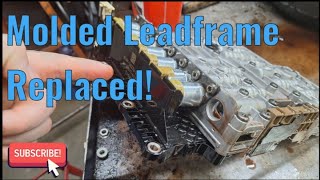
On a 2009-2014 Ford F-150 with a 6R80 transmission, code P0730 is almost always caused by a failed molded lead frame inside the transmission. This part contains the speed sensors, and its failure is a well-documented issue leading to erratic shifting. Ford has issued recalls and warranty extensions for this part. The standard fix is to replace the lead frame, bulkhead connector, filter, and fluid.
- P0730 on a 2009-2014 F-150 almost always points to a failed molded lead frame in the 6R80 transmission.
- Symptoms are often more severe than just a Check Engine Light, including sudden, dangerous downshifts.
- Do not drive the vehicle. Have it towed to a repair shop to prevent further damage and ensure safety.
- The correct repair involves replacing the lead frame, filter, pan gasket, and bulkhead connector sleeve with OEM Motorcraft parts and refilling with MERCON LV fluid.
- This is a complex repair best left to a professional technician experienced with Ford transmissions.
What's Unique About the 2009-2014 Ford F-150
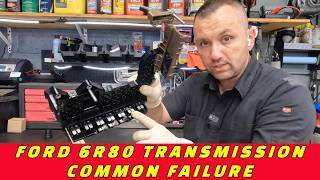
The 2009-2014 Ford F-150 primarily uses the 6R80 automatic transmission, which is based on a ZF design. This transmission's most notorious weak point is the molded lead frame. This single component, located on the valve body inside the transmission, houses the input/turbine speed sensor (TSS), the output speed sensor (OSS), the transmission fluid temperature sensor, and the transmission range sensor (PRNDL switch). Due to heat cycles and vibration, the electrical traces within the lead frame—particularly for the OSS sensor—can crack, causing a loss of signal. This failure is the most common reason for a P0730 code on this truck, often causing dramatic symptoms like a sudden, violent downshift to 1st gear at highway speeds. The problem is so widespread that Ford issued Customer Satisfaction Program 19N01 (warranty extension) for 2011-2013 models and Safety Recall 24S37 for 2014 models to address the issue.
Symptoms You May Notice
- Check Engine Light or wrench light is on
- Harsh, erratic, or delayed shifting
- Sudden, unexpected downshift to a low gear (e.g., 1st or 2nd) while driving
- Transmission gets stuck in one gear (limp mode)
- Gear selector indicator (PRNDL) on the dashboard disappears or shows dashes
- Vehicle may not start because the range sensor (part of the lead frame) doesn't know the truck is in Park
- Speedometer reads 0 mph while moving, or behaves erratically
- Replacing the entire transmission without first diagnosing the lead frame.
- Replacing only the shift solenoids when the root cause is the lead frame's sensor readings.
- Assuming a PCM/TCM failure when it is actually receiving bad data from the lead frame sensors.
- Performing a fluid flush hoping to fix the issue, when the electronic lead frame is the true cause.
Most Likely Causes
- Failed Molded Lead Frame 🔴 High Probability → Shop Transmission Valve Body The lead frame, which contains the OSS, TSS, and range sensors, is a known high-failure part on the 6R80 transmission. Thermal stress and vibrations cause internal electrical connections to fracture, leading to intermittent or total signal loss from the sensors.
How to confirm: Use a high-end scan tool to monitor live data from the Transmission Input Speed Sensor (TSS) and Output Speed Sensor (OSS). A signal that drops to zero, is erratic, or is absent entirely during a test drive is a definitive sign of a failing lead frame. Ford's Customer Satisfaction Program 19N01 and Safety Recall 24S37 specifically list DTCs P0720, P0722, and/or P0731 as confirmation for a lead frame issue.
Typical fix: Replace the molded lead frame (OEM Part # AL3Z-7G276-D), transmission filter, pan gasket, and the bulkhead connector sleeve seal. Refill with 9-10 quarts of fresh MERCON LV fluid. The OEM lead frame part AL3Z-7G276-D supersedes older versions AL3Z-7G276-A and AL3Z-7G276-B.
Est. part cost: $150-$400 - Low or Dirty Transmission Fluid 🟡 Medium Probability → Shop Transmission Assembly While not a specific prone issue, neglected maintenance can lead to low fluid from leaks (often at the bulkhead connector sleeve) or fluid breakdown, causing pressure issues and slipping.
How to confirm: Check the transmission fluid level and condition via the small, hard-to-access dipstick on the passenger side of the transmission case. The fluid should be at the correct level, red in color, and not smell burnt. Low fluid indicates a leak that must be found and fixed.
Typical fix: If low, top off with Motorcraft MERCON LV fluid and inspect for leaks, especially at the bulkhead connector sleeve. If the fluid is dark or smells burnt, perform a fluid and filter change, but be aware this is unlikely to solve a P0730 code if the lead frame has already failed.
Est. part cost: $100-$200 - Faulty Valve Body or Shift Solenoids ⚪ Low Probability → Shop Transmission Valve Body
How to confirm: This is difficult to diagnose without professional tools. A technician can perform pressure tests and use a scan tool to command individual solenoids to check for proper operation. Debris in the transmission pan can also indicate a valve body or solenoid issue.
Typical fix: Replace the faulty solenoid or the entire valve body assembly. This is often done in conjunction with a lead frame replacement since the valve body must be removed to access it.
Est. part cost: $300-$800
Rare But Worth Checking
- Internal Mechanical Failure: If the transmission fluid contains a large amount of metal shavings or clutch material, it could indicate a more severe internal failure, such as a worn clutch pack, a failing torque converter, or other hard parts. In this case, a simple parts replacement will not suffice, and a transmission rebuild or replacement is likely necessary. This is far less common than the lead frame failure for this specific code.
Diagnosis Steps
- Scan for all DTCs. Codes P0720, P0722, or P0731 alongside P0730 make the molded lead frame the primary suspect.
- Inspect the transmission fluid level and condition. The fluid should be full, clean, and red. Low or burnt fluid indicates a problem that needs to be addressed, but is not likely the root cause of P0730 on this truck.
- Use a scan tool to monitor live data for the Input Speed Sensor (TSS) and Output Speed Sensor (OSS) while driving. Any dropouts, erratic readings, or a complete lack of signal from the OSS sensor points directly to a faulty lead frame.
- Inspect the transmission's main electrical connector (the bulkhead connector) for fluid leaks or corrosion. A leaking connector sleeve is common and can cause electrical issues, and should be replaced during the lead frame service regardless.
- If the above steps point to the lead frame, the next step is to drop the transmission pan and valve body to replace it.
- If the lead frame and fluid seem fine (which is unlikely), further professional diagnosis of the valve body, solenoids, and internal mechanical components is required.
Parts You'll Likely Need
- Molded Lead Frame
(OEM #AL3Z-7G276-D)— This is the most common failure point for the 6R80 transmission that causes code P0730. It contains the speed sensors that provide critical data to the TCM. This part number supersedes AL3Z-7G276-A and AL3Z-7G276-B.
Trusted brands: Motorcraft, Dorman
OEM price range: $250-$400
Aftermarket price range: $150-$300 - Transmission Filter Kit (Filter and Pan Gasket)
(OEM #BL3Z-7A098-A (Filter), BL3Z-7A191-C (Gasket))— Must be replaced whenever the transmission pan is removed for service.
Trusted brands: Motorcraft, Wix, ATP
OEM price range: $40-$70
Aftermarket price range: $25-$50 - Transmission Bulkhead Connector Sleeve
(OEM #6L2Z-7G276-AA)— This seal is prone to leaking and should always be replaced when the valve body is removed to prevent future leaks and electrical problems. A leak here can mimic sensor issues.
Trusted brands: Motorcraft
OEM price range: $20-$40
Aftermarket price range: $15-$30 - Automatic Transmission Fluid
(OEM #XT-10-QLVC)— The transmission must be refilled with the correct fluid after the repair. The 6R80 transmission requires Motorcraft MERCON LV fluid. You will need approximately 9-10 quarts for a pan drop and lead frame replacement.
Trusted brands: Motorcraft, Valvoline MaxLife LV, Castrol Transmax LV
OEM price range: $10-$15 per quart
Aftermarket price range: $8-$12 per quart
Related Codes That Often Appear With This One
- P0720 — This code indicates a fault in the Output Speed Sensor (OSS) circuit. Since the OSS is integrated into the molded lead frame, this code is a strong pointer to lead frame failure.
- P0722 — This code means the Output Speed Sensor (OSS) circuit has no signal, a common and direct symptom of a failed lead frame. This code, along with P0720 and P0731, was a primary qualifier for replacement under Ford's warranty extension program 19N01 and is a key indicator for recall 24S37.
- P0731 — This code indicates an incorrect ratio for 1st gear. It often appears with P0730 as the TCM detects slipping across multiple gears, often stemming from the same root cause. It was also a qualifying code for Ford's service programs.
Technical Service Bulletins (TSBs) & Recalls
- Customer Satisfaction Program 19N01: Extended warranty coverage for the molded lead frame on 2011-2013 F-150, Expedition, and Navigator models.
- Safety Recall 19S07: PCM reprogram to prevent sudden downshift on 2011-2013 F-150s. A software patch for a hardware problem.
- Safety Recall 24S37: Full lead frame replacement for affected 2014 F-150 models experiencing OSS sensor faults.
- Bulletin #TSB160057: A manufacturer service bulletin notes that vehicles equipped with a Torqshift transmission may exhibit a MIL with DTCs P0751, P0730 and/or P2700.
- Bulletin #16-0057: Manufacturer records indicate that vehicles equipped with a TorqShift® transmission built on or before 12/15/2015 may exhibit DTCs P0751, P0730 and/or P2700.
Platform-Specific Known Issues
- Ford issued Customer Satisfaction Program 19N01 for 2011-2013 F-150s, extending the warranty for the molded lead frame to 10 years or 150,000 miles.
- Ford issued Safety Recall 24S37 in June 2024 for 2014 F-150 models for the same sudden downshift issue. The fix involves a PCM software update to prevent the downshift, plus a diagnostic test to see if the lead frame also needs replacement.
Mechanic-Grade Diagnostic Values
- TSS/OSS Sensor Resistance — expected: 325-485 Ohms @ 70°F. Failure: Reading outside of this range, or an open/short circuit.
- Shift Solenoid A, B, C, D Resistance — expected: 16-45 Ohms. Failure: Reading outside of this range.
- Shift Solenoid E (SSE) Resistance (units built after 11/03/2010) — expected: Approx. 18 Ohms. Failure: Significantly different reading. Note that earlier models used a different solenoid with ~10.5 Ohms resistance.
- Pressure Control (PC) Solenoid A, B, C Resistance — expected: 3.3-7.5 Ohms. Failure: Reading outside of this range.
- Torque Converter Clutch (TCC) Solenoid Resistance — expected: 9-16 Ohms. Failure: Reading outside of this range.
- Battery Voltage during PCM Reprogramming — expected: 12.6 - 13.5 Volts. Failure: Voltage outside this range can cause PCM programming to fail.
Hidden / Shadow Codes Worth Checking
- P1500: Vehicle Speed Sensor Intermittent. While not a hidden code, its presence alongside P0720, P0722, and P0731 was used by Ford dealers as a qualifying DTC for the 24S37 recall action, making it a strong indicator of the OSS/lead frame fault. (see via Standard OBD-II scan tool.)
Scan Tool Commands That Help
- Ford IDS / FORScan: Clear Transmission Adaptive Tables — This must be performed after replacing the lead frame or valve body to reset the transmission's learned shift strategy. Failure to do so can result in continued harsh or erratic shifting as the TCM uses old, incorrect data.
- Ford IDS: PCM Reprogram — As part of Recall 24S37 for 2014 models, the PCM is reprogrammed with updated software (IDS Release 130.05 or higher) that prevents a sudden downshift to 1st gear if the OSS signal is lost. This is a preventative software fix.
- Ford IDS / High-End Scan Tool: Adaptive Learning Drive Cycle — After clearing the adaptive tables, a specific drive cycle is required for the TCM to relearn shift points and clutch pressures. This involves a series of gentle accelerations and stops to allow the transmission to adapt smoothly.
Wiring & Ground Locations
- C175T — The middle connector of the three large connectors for the Powertrain Control Module (PCM), located on the passenger side firewall.. This is the main connector for the transmission harness. Technicians can perform resistance and voltage tests on the speed sensor and solenoid circuits at these pins without having to access the transmission directly. For example, on 2004-2010 models, the OSS sensor can be tested between pins 3 and 41.
- Body-to-Frame Ground — Under the truck, along the frame rail, often below the driver's door area.. These trucks are known for corrosion at the main body-to-frame ground points. A poor ground can cause a wide range of intermittent electronic issues, including erratic PCM/TCM behavior that could potentially mimic sensor failures. Checking and cleaning these grounds is a crucial step in any electrical diagnosis.
- Passenger Kick Panel Grounds — Behind the plastic kick panel on the passenger side, near the fuse box.. This is another common ground point location that can corrode, especially in northern climates. Since the PCM is nearby on the firewall, ensuring these grounds are clean and tight is important for stable computer operation.
Real Owner Repair Stories
- YouTube channel 'Pine Hollow Auto Diagnostics' (2017 Ford F-150 w/ 6R80) — Stuck in 5th/6th gear, multiple transmission codes (P0706, P0707, etc.).
❌ Tried (didn't work) Initial diagnosis pointed towards a full transmission replacement due to metal particles found in the transmission pan.
✅ What actually fixed it The customer insisted on only replacing the molded lead frame. The mechanic discovered the transmission range sensor, which is part of the lead frame, was covered in ferrous metal filings, causing it to send incorrect gear position data. Replacing only the lead frame resolved all symptoms and codes, despite the metal in the pan. - Ford F150 Forum user report (2010 Ford F-150) — Transmission fluid leak from the main electrical bulkhead connector.
❌ Tried (didn't work) Applying RTV sealant as a temporary fix failed after six months.
✅ What actually fixed it The user replaced the bulkhead connector sleeve (pass-through connector). They noted the new OEM part had much larger, harder O-rings and was very difficult to install. The final solution was to use a small piece of wood and a hammer to gently tap the new sleeve fully into place, which allowed the locking tab to engage correctly and seal the leak. - Ford F150 Forum user report (2013 F-150, 147,000 miles) — Initially had code P0720 (OSS fault). After replacing the lead frame, new codes P0770/P0771 (Shift Solenoid E fault) appeared with violent shuttering and bucking.
❌ Tried (didn't work) Replacing the molded lead frame, bulkhead connector, and valve body seal did not fully resolve the transmission issues.
✅ What actually fixed it The user's report ends while still diagnosing, but the experience serves as a critical real-world example that a lead frame replacement may uncover or be accompanied by separate solenoid or valve body issues. Other users in the thread suggested the next step was to replace the entire valve body assembly, as the solenoid fault appeared after the initial repair.
OEM Part Supersession History
AL3Z-7G276-A, AL3Z-7G276-B→AL3Z-7G276-D— The original 'A' and 'B' revisions of the molded lead frame had a high failure rate. The 'D' revision is an updated design to improve the reliability of the integrated speed sensors.
Heads up: The older revisions should be avoided entirely. Only the 'D' revision or a reputable aftermarket equivalent should be used for replacement.Unknown (version with red O-rings)→6L2Z-7G276-AA (version with black O-rings)— The original bulkhead connector sleeve was prone to leaking. The updated part with black O-rings provides a much tighter and more reliable seal.
Heads up: Ford TSB 11-3-25 specifies using only the new sleeve with black O-rings. Users report the new part is significantly harder to install due to the tighter fit, sometimes requiring gentle tapping to seat fully.
Model Year Variations Within This Range
- 2011-2014: For the 2011 model year, the 6R80 transmission was revised. A one-way clutch was added to improve 1-2 upshifts and 2-1 downshifts. This update also included changes to the transmission case and valve body.
- 2009-2010 vs 2011-2014: The Shift Solenoid E (SSE) was changed on units built after November 3, 2010. The resistance changed from ~10.5 ohms on earlier models to ~18 ohms on later models. The solenoids are not interchangeable due to calibration differences.
- 2014 only: 2014 models are covered by Safety Recall 24S37, issued in 2024. The primary fix is a PCM software update to prevent the sudden downshift from occurring, with a secondary diagnostic to determine if the lead frame hardware also needs replacement. This differs from the earlier 19N01 program for 2011-2013 models, which focused on hardware replacement.
Diagnostic Flowchart
Other Known Issues on This Vehicle
Issues unrelated to this code that are worth knowing about as an owner of this generation:
- Fuel Pump Fuse 27 Melting 🔴 High — Very common across 2009-2014 models. The undersized fuse terminal overheats, melting the fuse and fuse box, causing a crank/no-start or stalling. (Ref: TSB 15-0137 instructs technicians to relocate the circuit to a larger fuse slot using a kit (Part No. WT56872).)
- 3.5L EcoBoost (Gen 1) Timing Chain Stretch 🔴 High — Common on 2011-2014 models, often presenting as a rattling noise on cold starts ('death rattle'). Can lead to performance loss and engine damage if ignored. (Ref: Multiple TSBs exist. The repair is costly, involving replacement of chains, phasers, and tensioners.)
- 5.0L Coyote (Gen 1) Intake Valve Wear 🟠 Medium — Affects 2011-2014 models, causing excessive wear on intake valve faces, leading to poor sealing, loss of compression, and engine misfires. (Ref: No specific recall, but Ford later used updated, hardened valves in production and for service parts.)
- Electronic Throttle Body Failure 🟠 Medium — Common across all engines in the 2009-2014 range. A faulty throttle body can cause the truck to enter 'limp mode' with sudden power loss or stalling. Often triggers DTC P2112. (Ref: No recall, but it is a widely reported failure. The fix is to replace the entire throttle body assembly.)
- 3.5L EcoBoost Intercooler Condensation 🟠 Medium — Primarily on 2011-2012 models, especially in humid climates. Moisture can build up in the intercooler and get ingested by the engine during hard acceleration, causing a sudden stumble or misfire. (Ref: Ford addressed this with a redesigned intercooler and various software updates/deflectors.)
Used vs. New Parts: Buying Guide for This Vehicle
When a used part is the smart pick: For a major assembly like the entire transmission, a low-mileage used unit from a reputable salvage yard can be a cost-effective option, especially if sourced from a newer (e.g., 2013-2014) donor vehicle. However, for the specific parts related to the P0730 fix, used parts are generally not recommended.
Donor-vehicle mileage cap: roughly under 80000 miles for the part to have meaningful remaining life.
What to inspect on the donor part:
- For a full transmission, check the fluid color and smell if possible. Bright red and no burnt smell is a good sign.
- Verify the transmission TAG ID on the case to ensure it's compatible with your truck's engine and drivetrain (4x4 vs 4x2).
- Ask for a vehicle history report on the donor vehicle to check for accidents or flood damage.
OEM-only on this vehicle (don't cheap out):
- Molded Lead Frame: This is the highest-failure electronic part with a known design flaw. Buying a used one is extremely risky as it likely has the same defect or is near the end of its life. Always buy the latest OEM revision (AL3Z-7G276-D) new.
- Bulkhead Connector Sleeve: This is an inexpensive rubber and plastic seal. The cost savings of a used part are negligible, and a new, updated OEM part is critical to prevent leaks.
Aftermarket brands forum-validated for this vehicle:
- Motorcraft (OEM): The most recommended brand for all electronic and sealing components for this repair to ensure compatibility and longevity.
Brands owners have reported issues with on this vehicle:
- Unbranded/No-Name eBay/Amazon Lead Frames: While significantly cheaper, many forum users report premature failures or out-of-the-box issues with non-reputable aftermarket electronic parts. The labor involved in this repair is too significant to risk using a low-quality part.
Real Owner Stories
Aggregated from forums and TSBs cited above. Mileages and costs reflect what owners reported in those sources.
2013 Ford F-150
Symptoms: Experienced a sudden downshift while driving; the dealer quoted a high price for repair as the vehicle was out of the warranty extension period.
What fixed it: Lead frame replacement.
Cost: $1400-$1600
Source hint: Reddit (r/f150)
2013 Ford F-150
Symptoms: Sudden downshifting issues; concerned about how the dealer's software flash for the TSB would interact with custom engine tunes.
What fixed it: Flashing the software per the TSB.
Source hint: Ford Truck Enthusiasts Forum
2011-2013 Ford F-150
Symptoms: Sudden downshift to a low gear (1st or 2nd) while driving, loss of gear indicator, and speedometer reading 0 mph while moving.
What fixed it: Replacement of the molded lead frame and a PCM software update.
Source hint: Safety Recall 19S07 / Customer Satisfaction Program 19N01
Related OBD-II Codes
Frequently Asked Questions
Is there an extended warranty for the lead frame issue on my 2011-2013 F-150?
My 2014 F-150 suddenly downshifted to 1st gear while on the highway; is there a recall for this?
What specific part number should be used to fix the P0730 and lead frame issues on the 6R80 transmission?
Can a software update fix the sudden downshifting problem described in Safety Recall 19S07?
Does the lead frame failure affect the gear selector display on the dashboard?
Will my truck fail to start if the lead frame is faulty?
Helpful Videos

We Have This Part in Stock

The information in this article is provided for general reference and educational purposes only. Vehicle specifications, procedures, and part compatibility can vary by production date, trim level, and region. Always consult your vehicle's factory service manual and verify part numbers before purchasing or performing repairs. Safety-critical components such as airbags, seat belts, and braking systems should be installed by a qualified professional.
- Ford F-150:
- 🧭 Diagnostic Flowchart
- 🎬 Helpful Videos
- 🛍️ Shop This Part
- What's Unique About the 2009-2014 Ford F-150
- Symptoms You May Notice
- Most Likely Causes
- Rare But Worth Checking
- Diagnosis Steps
- Parts You'll Likely Need
- Related Codes That Often Appear With This One
- Technical Service Bulletins (TSBs) & Recalls
- Platform-Specific Known Issues
- Mechanic-Grade Diagnostic Values
- Hidden / Shadow Codes Worth Checking
- Scan Tool Commands That Help
- Wiring & Ground Locations
- Real Owner Repair Stories
- OEM Part Supersession History
- Model Year Variations Within This Range
- Other Known Issues on This Vehicle
- Used vs. New Parts: Buying Guide for This Vehicle
- Real Owner Stories
- 2013 Ford F-150
- 2013 Ford F-150
- 2011-2013 Ford F-150
- Related OBD-II Codes
- Frequently Asked Questions
- 🎟️ Get 5% Off