

P0730 on 2015-2020 Ford F-150: Incorrect Gear Ratio Causes and Fixes
On 2015-2017 F-150s with the 6-speed 6R80 transmission, this code is almost always caused by a faulty transmission lead frame, a known issue covered by recalls (19S07, 26S28) and a warranty extension (19N01). For 2017-2020 models with the 10-speed 10R80, causes are more varied, often starting with low fluid or software issues addressed by TSBs like 18-2274, but can also indicate internal issues like a failed CDF drum.
- For 2015-2017 F-150s, P0730 is a major safety warning. The cause is likely a faulty lead frame that can cause a sudden, dangerous downshift.
- Check your VIN for recall 26S28. Do not drive the vehicle if you experience symptoms; have it towed to a shop.
- For 2017-2020 models with the 10-speed transmission, the first step is to check transmission fluid level and condition, and to see if a software update is available.
- This is not a DIY-friendly repair. Internal transmission work should be left to qualified professionals.
- Always use the specific Motorcraft transmission fluid (MERCON LV or ULV) recommended for your transmission.
What's Unique About the 2015-2020 Ford F-150
For the 2015-2017 F-150s equipped with the 6R80 6-speed automatic, this code is strongly linked to a well-documented failure of the internal transmission lead frame. This issue was so widespread it prompted major recalls (like Ford recall 19S07 and the more recent 26S28) due to the risk of sudden, dangerous downshifts to first gear at highway speed. Later models (2017-2020) using the 10R80 10-speed transmission do not share this specific lead frame problem, and the causes for P0730 are more general, often related to fluid condition, software (per TSB 18-2274), or internal valve body/clutch issues, most notably a failing CDF drum.
Symptoms You May Notice
- Check Engine Light or Wrench Light illuminated
- Transmission slipping (engine RPMs rise without increase in speed)
- Harsh, erratic, or delayed shifting
- Sudden, unexpected downshift, sometimes to 1st or 2nd gear at highway speed
- Vehicle enters 'limp mode' (stuck in one gear)
- Loss of speedometer reading or gear indicator display (PRNDL shows dashes)
- Vehicle will not start in Park, but may start in Neutral
- Decreased fuel efficiency
- Replacing only the output speed sensor without addressing the root cause, which is the entire molded lead frame assembly on 6R80 models. The sensor itself is integrated into the lead frame.
- Condemning the entire transmission for a rebuild when the issue is a replaceable lead frame, valve body, or a simple fluid/filter service.
- On 10R80 models, immediately assuming a major mechanical failure without first checking for and applying available TSB software updates, which resolve many shifting complaints.
Most Likely Causes
- Failed Molded Lead Frame (2015-2017 6R80 Models) 🔴 High Probability → Shop Transmission Valve Body A well-documented design and manufacturing flaw where electrical connections on the lead frame degrade from heat and vibration, causing signal loss from the Transmission Range Sensor (TRS) and Output Speed Sensor (OSS). This was the subject of Ford recalls 19S07, 26S28 and Customer Satisfaction Program 19N01.
How to confirm: Scan for related codes like P0720, P0722 (Output Speed Sensor), or P0731 (Incorrect 1st Gear Ratio). A technician can monitor sensor data with a scan tool to confirm signal loss from the OSS. The issue is so common that if the symptoms match (especially sudden downshift), this is the prime suspect. A no-start in Park that starts in Neutral is another classic symptom.
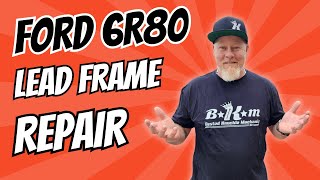
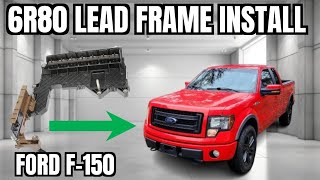
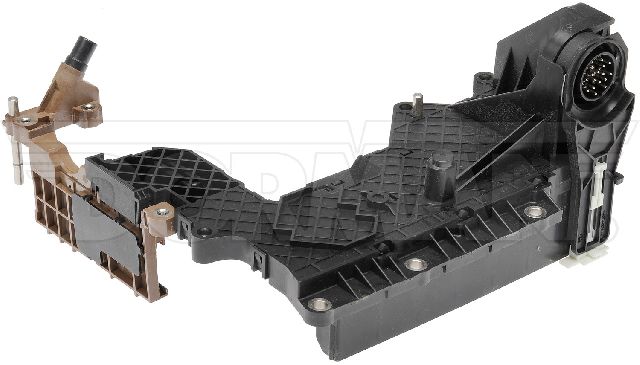
Typical fix: Replacement of the molded lead frame assembly (Part # AL3Z-7G276-D), transmission filter, pan gasket, and bulkhead connector sleeve, followed by a 🎬 Watch: Step-by-step 6R80 lead frame replacement guide fluid refill with ~8.5-10 quarts of Motorcraft MERCON LV fluid. A PCM software update as part of the recall is also required.
Est. part cost: $200-$500 - Low or Contaminated Transmission Fluid 🟡 Medium Probability → Shop Transmission Assembly Fluid level can become low due to leaks, often from the bulkhead connector sleeve on the 6R80. Fluid can also degrade over time, losing its hydraulic properties. On the 10R80, using the wrong fluid (anything other than MERCON ULV) can cause rapid damage.
How to confirm: Check the transmission fluid level and condition according to the owner's manual procedure. Fluid should be bright red and not smell burnt. Dark, brown, or burnt-smelling fluid indicates a problem. Note that many of these trucks do not have a traditional dipstick, making this check difficult for a DIYer.
Typical fix: If low, top off fluid and inspect for leaks. If dirty or burnt, perform a fluid and filter change. Note that burnt fluid may signify deeper mechanical issues like worn clutches.
Est. part cost: $100-$250 for fluid and filter - TCM Software/Calibration Issue (10R80 Models) 🟡 Medium Probability Early 10R80 transmissions had known software issues causing poor shift quality. TSB 18-2274 and the later TSB 21-2145 were released to address harsh shifting with a PCM reprogram. This can sometimes manifest as a P0730 if the slip is detected during a harsh shift event.
How to confirm: A Ford dealership or qualified shop can check if the vehicle's PCM/TCM software is up to date and if any TSBs apply by checking the vehicle's VIN in the OASIS system.
Typical fix: Reprogramming the Powertrain Control Module (PCM) to the latest calibration. The dealer will advise that the adaptive learning must reset, which may cause firm shifts for several days.
Est. part cost: $0 if under warranty/recall, otherwise $100-$300 for shop labor for reprogramming. - Faulty Valve Body or Shift Solenoid ⚪ Low Probability → Shop Transmission Valve Body
How to confirm: Requires advanced diagnostics with a scan tool to command solenoids and monitor pressure. A technician may perform a pressure test. For the 10R80, issues with the valve body are a known problem area that can lead to a variety of shifting complaints and codes.
Typical fix: Replacement of the specific faulty solenoid or the entire valve body assembly. On the 6R80, this is often done at the same time as the lead frame since the valve body must be removed to access it.
Est. part cost: $300-$1200
Rare But Worth Checking
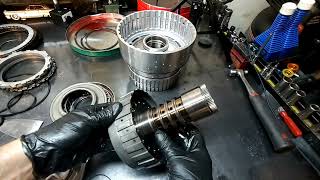
- Internal Mechanical Failure (e.g., 10R80 CDF Drum): If fluid and electronics are ruled out, the issue could be worn clutch packs, a failing torque converter, or other internal hard parts. On the 10R80 transmission, a known failure point is the 'F' clutch cylinder or 'CDF drum,' which can crack or have its internal sleeve slide out of position, causing fluid pressure loss and severe shifting issues between multiple gears, 🎬 Watch: Understanding the 10R80 CDF drum failure potentially leading to a P0730 code. This is a worst-case scenario requiring a transmission rebuild or replacement.
- Damaged Wiring Harness: Damage to the wiring between the PCM/TCM and the transmission can cause signal loss, mimicking an internal component failure. Always inspect the harness for corrosion, chafing, or damage, especially near the main transmission connector and where it may rub against the frame or engine components.
Diagnosis Steps
- Check and verify the transmission fluid level and condition. Low, dirty, or burnt fluid must be addressed first. Use MERCON LV for 6R80 and MERCON ULV for 10R80.
- Scan the PCM/TCM for all stored trouble codes. Note any codes that accompany P0730, as they provide critical clues (e.g., P0720, P0722 strongly suggest a lead frame issue on a 6R80).
- For 2015-2017 models, check the vehicle's VIN for recalls 19S07 and 26S28, and Customer Satisfaction Program 19N01. If the recall is open or symptoms match (sudden downshift), the lead frame is the primary suspect.
- Inspect the transmission's external wiring harness and connectors for any visible damage, corrosion, or fluid intrusion. The bulkhead connector sleeve is a common leak point. Also inspect the main body-to-frame ground wire, which is known to corrode and cause widespread electrical issues.
- With a professional scan tool, monitor live data from the input (TSS) and output (OSS) speed sensors while driving to see if there are dropouts or erratic readings. A dropout from the OSS is a smoking gun for lead frame failure.
- For 10R80 models, check for applicable TSBs (like 18-2274 or 21-2145) and ensure the PCM/TCM software is on the latest calibration before proceeding to hardware diagnosis.
- If electronic issues are ruled out, a technician will need to perform transmission line pressure tests to check for hydraulic problems.
- If all other diagnostics fail, internal inspection of the valve body, solenoids, and mechanical components (clutches, CDF drum, torque converter) is necessary.
Parts You'll Likely Need
- Molded Lead Frame (for 6R80)
(OEM #AL3Z-7G276-D)— This is the most common point of failure on 2015-2017 F-150s with the 6R80 transmission, causing P0730 and sudden downshifts. It is a genuine Ford part.
Trusted brands: Motorcraft (Ford)
OEM price range: $200-$350
Aftermarket price range: $150-$250 (Use with caution, owner reports indicate high failure rates) - Automatic Transmission Fluid
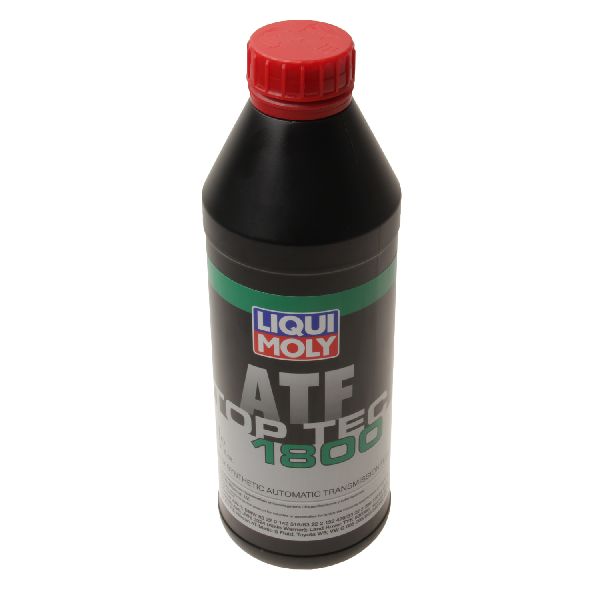
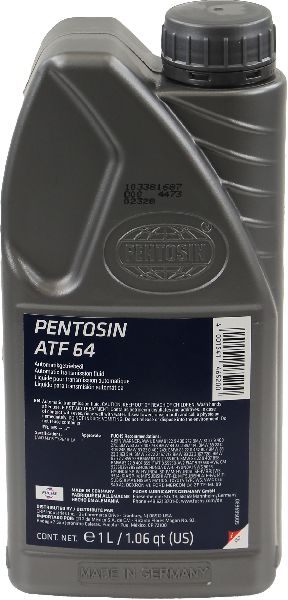
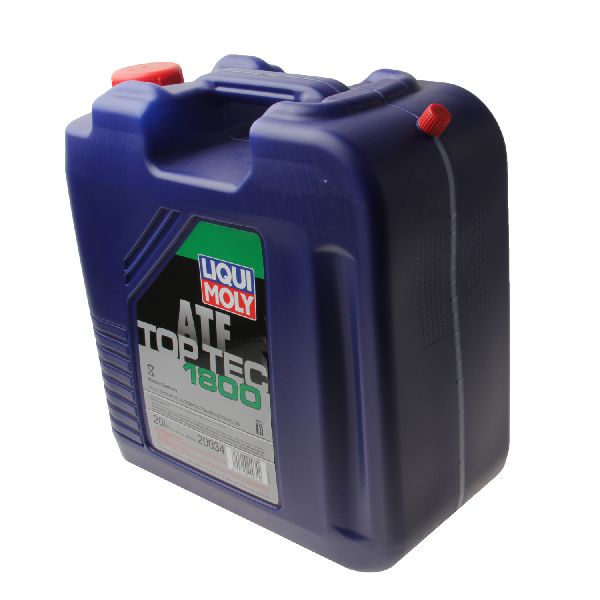
(OEM #XT-10-QLVC (MERCON LV for 6R80), XT-12-QULV (MERCON ULV for 10R80))— Required for any service involving dropping the transmission pan. Using the correct fluid is critical for transmission health. 6R80 service requires ~8.5 quarts.
Trusted brands: Motorcraft
OEM price range: $8-$15 per quart
Aftermarket price range: $7-$12 per quart - Transmission Filter Kit (with Pan Gasket)
(OEM #BL3Z-7A098-A (Filter for 6R80), BL3Z-7A191-C (Gasket for 6R80))— Should be replaced any time the transmission pan is removed for service, such as a lead frame replacement.
Trusted brands: Motorcraft
OEM price range: $30-$60
Aftermarket price range: $20-$40 - Bulkhead Connector Sleeve (for 6R80)
(OEM #AL3Z-7G276-A (often part of lead frame kit))— This sleeve provides the electrical connection through the transmission case. The O-rings are a very common leak point and it should always be replaced during a lead frame service.
Trusted brands: Motorcraft
OEM price range: $20-$40
Aftermarket price range: $15-$25
Related Codes That Often Appear With This One
- P0720 — Output Speed Sensor (OSS) Circuit Malfunction. The OSS is part of the molded lead frame on the 6R80, so a failure of the lead frame often triggers both codes. This code specifically points to a fault in the sensor's circuit.
- P0722 — Output Speed Sensor (OSS) Circuit No Signal. This is a more severe version of P0720, indicating a complete loss of the OSS signal. This is a very strong indicator of a failed lead frame on 6R80 models and is one of the specific codes Ford looks for to authorize a warranty replacement under program 19N01.
- P0731 - P0736 — Incorrect Gear Ratio for a specific gear (1st, 2nd, etc.). These codes often accompany P0730, helping to pinpoint which gear circuit is experiencing the slip. For example, P0731 points to a slip when 1st gear is commanded.
Technical Service Bulletins (TSBs) & Recalls
- 6R80 Sudden Transmission Downshift - Powertrain Control Module Reprogramming: → Shop Transmission Assembly This was Ford's primary software-based fix for the sudden downshift issue. Dealers reprogram the PCM to prevent the transmission from shifting to 1st gear if the OSS signal is lost. It was a 'band-aid' fix that didn't replace the failing hardware unless specific codes were present.
- Transmission Molded Leadframe Extended Coverage: → Shop Transmission Assembly This program extended the warranty on the molded lead frame to 10 years or 150,000 miles. It allowed for free replacement of the lead frame if the vehicle exhibited the sudden downshift and stored specific DTCs like P0720, P0722, or P0731.
- 10R80 Transmission - Harsh/Bumpy Shift And/Or Engagement Concerns: → Shop Transmission Assembly For 2018 F-150s with the 10R80 transmission, this TSB instructs dealers to reprogram the PCM to address complaints of harsh upshifts, downshifts, and engagement. It also notes the transmission has an 'adaptive learning' strategy that may cause firm shifts for a few days after the reset.
- Unexpected Downshift, Lead Frame Replacement: A more recent recall action specifically for 2015-2017 F-150s that expands on previous efforts. The remedy involves a PCM recalibration and, if certain trouble codes are found, replacement of the transmission lead frame.
- TorqShift Transmission DTCs: → Shop Transmission Assembly Manufacturer TSB Bulletin #16-0057 and Bulletin #TSB160057 note that vehicles equipped with a TorqShift transmission may exhibit a MIL with DTCs P0751, P0730, and/or P2700.
Platform-Specific Known Issues
- Recall 19S07 / 19V-075: This recall provided a software update to the PCM to prevent the 6R80 transmission from downshifting into first gear if the OSS sensor failed, mitigating the immediate safety risk but not fixing the underlying hardware.
- Customer Satisfaction Program 19N01: This program extended the warranty on the 6R80 molded lead frame to 10 years/150,000 miles, allowing for a free hardware replacement if specific codes (P0720, P0722, etc.) were present.
- Recall 26S28 / 26V-237: A more recent and comprehensive recall for 2015-2017 F-150s that involves a PCM recalibration and, if DTCs are present, a replacement of the lead frame, effectively superseding some earlier programs for this specific vehicle range.
Mechanic-Grade Diagnostic Values
- 6R80 Shift Solenoids (SSA, SSB, SSC, SSD) Resistance — expected: 16 - 45 Ohms. Failure: A reading outside this range indicates a faulty solenoid coil.
- 6R80 Pressure Control (PC) Solenoids Resistance — expected: 3.3 - 7.5 Ohms. Failure: A reading outside this range indicates a faulty solenoid coil.
- 6R80 Turbine (TSS), Intermediate (ISS), and Output (OSS) Speed Sensors Resistance — expected: 325 - 485 Ohms @ 70°F. Failure: A reading outside this range suggests a faulty sensor. Since these are part of the lead frame, this points to lead frame replacement.
- 10R80 All Solenoids Resistance — expected: 5.0 - 5.4 Ohms @ 68°F (20°C). Failure: A reading outside this range indicates a faulty solenoid. Note that these are tested at the solenoid itself, not through the vehicle harness.
- 6R80 Main Line Pressure — expected: ~65 PSI at idle in Drive, 180-220 PSI at 2500 RPM in Drive.. Failure: Pressure that lags significantly during shifts or does not meet spec can indicate a weak pump, internal leaks, or faulty pressure control solenoids.
Hidden / Shadow Codes Worth Checking
- Mode $06, TID $A2-$AF: Ford uses Mode $06 to display results from non-continuous monitors. While specific TIDs for P0730 are not explicitly documented in public sources, a technician would look for failing test results under transmission-related Test IDs (TIDs), which for Ford are often in the $A2 through $AF range for shift solenoid mechanical checks. A test result value that is near or exceeds the maximum limit, even without setting a hard code, can indicate a pending failure. (see via Requires a scan tool capable of displaying Generic OBD-II Mode $06 data. The tool must be able to translate the hexadecimal Test IDs (TID) and Component IDs (CID) into meaningful descriptions.)
Scan Tool Commands That Help
- Ford IDS, FORScan: PID Data Monitoring (TSS_SRC, OSS_SRC) — When diagnosing a suspected 6R80 lead frame failure. Monitor the Turbine Shaft Speed (TSS) and Output Shaft Speed (OSS) PIDs while driving. Any dropouts, erratic readings, or a value of zero from the OSS while the vehicle is moving is a definitive sign of a failing lead frame.
- Ford IDS, FORScan: KAM (Keep Alive Memory) Reset — After performing repairs or as a first step in troubleshooting erratic shifting on 10R80 models. This clears the transmission's adaptive learning tables, forcing it to relearn shift strategies. This can sometimes resolve minor shift quality issues but will not fix a hardware fault.
- Ford IDS, FORScan: Transmission Characterization Update / Solenoid Body Strategy Data Download — This is mandatory after replacing the valve body or entire transmission on a 10R80. The new valve body has a unique 13-digit solenoid strategy ID on a sticker, which must be programmed into the PCM/TCM. Failure to do this will result in poor shifting and may set codes like P163E.
Wiring & Ground Locations
- Main Body-to-Frame Ground — Typically located on the frame rail under the driver's side door area. It is a cable running from the body to the frame.. This is a critical ground point for many vehicle systems. It is highly susceptible to corrosion, especially in salt-belt regions. A poor connection here can cause a host of bizarre, seemingly unrelated electrical issues, including erratic transmission behavior, communication codes, and no-start conditions that can be misdiagnosed as a failed PCM or transmission component.
- Firewall Ground Strap — Connects from the firewall to the back of the engine, typically on the passenger side just below the intake manifold mating surface.. Provides a primary ground path for the engine and its sensors. A loose or corroded connection here can introduce electrical noise and voltage drops, potentially affecting sensor readings that the PCM relies on for transmission control.
- 6R80 Bulkhead Connector (C1575) — The main round electrical connector on the passenger side of the 6R80 transmission case.. This is the single point of connection for all transmission electronics to the vehicle harness. The internal sleeve is a common leak point, and fluid intrusion can corrode pins. Technicians will test sensor and solenoid circuits by checking for resistance and voltage at the pins of this connector.
Real Owner Repair Stories
- Reddit user post in r/f150 (2018 F-150 EcoBoost, 145,000 miles) — Crazy shift problems, 'floating gears then slamming into others', even attempted to shift into 1st gear at 80mph.
❌ Tried (didn't work) Transmission relearn procedure, Valve body replacement
✅ What actually fixed it The user found TSB 22-2428 which helped diagnose the root cause as a failed CDF (Clutch 'F' / 'D') drum. The internal sleeve had slid, causing catastrophic fluid pressure loss. The final fix was the replacement of the CDF drum with the updated part.
"I Checked Everything" — The Actual Cause
- A common pattern on F-150s is for technicians to chase electronic ghosts, replacing sensors or modules, when the root cause is a simple but corroded body-to-frame ground wire. A technician reported a crank-no-start issue where the cause was a ground wire under the driver's door that had rotted through. After cleaning the contact point and attaching a new eyelet, the truck started and ran perfectly. This type of fault can cause low voltage or floating grounds for control modules, leading to unpredictable behavior that can mimic a P0730 fault.
OEM Part Supersession History
AL3Z-7G276-A, AL3Z-7G276-B→AL3Z-7G276-D— The original molded lead frames for the 6R80 transmission had a high failure rate due to internal connection issues. The -D revision is the updated part designed to be more durable.
Heads up: While AL3Z-7G276-D is the correct service part number, the actual part inside the box may be stamped with an engineering number like MB3P-7G276-AA. This can cause confusion, but as long as it is a genuine Ford part with the correct service number on the box, it is the correct component.
Model Year Variations Within This Range
- 2015-2017 (6R80) vs 2017-2020 (10R80): The entire diagnosis path is different. P0730 on a 6R80 almost always points to the molded lead frame. On a 10R80, the lead frame is not the issue; diagnosis starts with software (TSBs) and fluid, then moves to the valve body and potential internal issues like the CDF drum.
Diagnostic Flowchart
Other Known Issues on This Vehicle
Issues unrelated to this code that are worth knowing about as an owner of this generation:
- Frozen Door Latches 🟠 Medium — Common in cold climates. A recall (18N03) was issued to install new shields and lubricate latches. (Ref: Recall 18N03)
- Panoramic Moonroof Rattle/Leaks 🟡 Low — Very common. TSBs exist for replacing the track assembly or addressing clogged drain tubes. (Ref: TSB 16-0033, TSB 18-2339)
- IWE System Failure (4x4) 🟠 Medium — Common issue causing a grinding/growling noise from the front hubs. Often caused by a vacuum leak in the lines or a faulty check valve.
- 5.0L V8 Coyote Oil Consumption 🔴 High — Affects some 2018-2020 models. A TSB was issued involving a PCM reprogram and a new dipstick, but some engines required replacement. (Ref: TSB 19-2365)
- Warped Dashboard (Upper) 🟡 Low — Common in hot climates. The dash material can pull away and warp near the defrost vents. This is a cosmetic issue.
Used vs. New Parts: Buying Guide for This Vehicle
When a used part is the smart pick: For this specific repair, using used parts is generally not recommended. A used complete transmission assembly from a low-mileage, verified-running donor vehicle may be a cost-effective alternative to a full rebuild, but individual components are high-risk.
Donor-vehicle mileage cap: roughly under 50000 miles for the part to have meaningful remaining life.
What to inspect on the donor part:
- Verify the donor vehicle's VIN to check for open recalls.
- If possible, get video of the donor vehicle running and driving.
- Inspect the transmission fluid from the donor; if it's dark, burnt, or full of metal, walk away.
- For a 10R80, ensure the donor is a later model (2019+) to reduce the chance of inheriting early CDF drum or valve body issues.
OEM-only on this vehicle (don't cheap out):
- Molded Lead Frame (6R80): This is a known high-failure part. Aftermarket versions are known to have communication and quality control issues. Only use a new, genuine Ford part (AL3Z-7G276-D).
- CDF Drum (10R80): Ford has updated this part multiple times to correct the sleeve migration issue. A used part will have the original defect. Only a new OEM part ensures you get the latest, most durable version.
- Valve Body / Solenoids: Due to the precise calibration and strategy ID programming required for the 10R80, using a new or professionally remanufactured OEM valve body is critical for success.
Aftermarket brands forum-validated for this vehicle:
- For this specific set of common failures, there are no widely-trusted aftermarket brands that consistently outperform the updated OEM components. Sticking with genuine Ford or Motorcraft parts is the safest bet.
Brands owners have reported issues with on this vehicle:
- Unbranded or 'white-box' molded lead frames sold on platforms like Amazon and eBay. Forum stories frequently report these parts failing immediately or being dead-on-arrival, requiring the job to be done a second time with an OEM part.
Real Owner Stories
Aggregated from forums and TSBs cited above. Mileages and costs reflect what owners reported in those sources.
2015-2017 Ford F-150
Symptoms: Attempted a DIY replacement of the lead frame using an aftermarket part purchased from Amazon, but the part failed to communicate with the truck's computer.
What fixed it: A dealership had to re-do the entire job using an OEM Ford lead frame and proper programming.
Cost: $800-$800
Source hint: f150forum.com: '6R80 Trans 2011+ Mol
Related OBD-II Codes
Frequently Asked Questions
My 2016 F-150 suddenly downshifted to 1st gear on the highway. Is there a recall for this?
I have a P0730 code and my truck won't start in Park, but it starts in Neutral. What is the likely cause?
Is there an extended warranty for the transmission lead frame on 2015-2017 models?
My 2018 F-150 with the 10-speed transmission is shifting harshly. Is there a software fix?
Can I use any transmission fluid to top off my 2019 F-150?
What parts should I replace along with the lead frame to ensure a proper repair?
Helpful Videos
We Have This Part in Stock



The information in this article is provided for general reference and educational purposes only. Vehicle specifications, procedures, and part compatibility can vary by production date, trim level, and region. Always consult your vehicle's factory service manual and verify part numbers before purchasing or performing repairs. Safety-critical components such as airbags, seat belts, and braking systems should be installed by a qualified professional.
- Ford F-150:
- 🧭 Diagnostic Flowchart
- 🎬 Helpful Videos
- 🛍️ Shop This Part
- What's Unique About the 2015-2020 Ford F-150
- Symptoms You May Notice
- Most Likely Causes
- Rare But Worth Checking
- Diagnosis Steps
- Parts You'll Likely Need
- Related Codes That Often Appear With This One
- Technical Service Bulletins (TSBs) & Recalls
- Platform-Specific Known Issues
- Mechanic-Grade Diagnostic Values
- Hidden / Shadow Codes Worth Checking
- Scan Tool Commands That Help
- Wiring & Ground Locations
- Real Owner Repair Stories
- "I Checked Everything" — The Actual Cause
- OEM Part Supersession History
- Model Year Variations Within This Range
- Other Known Issues on This Vehicle
- Used vs. New Parts: Buying Guide for This Vehicle
- Real Owner Stories
- 2015-2017 Ford F-150
- Related OBD-II Codes
- Frequently Asked Questions
- 🎟️ Get 5% Off