

P0730 on 2007-2017 Jeep Compass: Incorrect Gear Ratio Causes and Fixes
On a 2007-2017 Jeep Compass with a CVT transmission, code P0730 most often points to low or contaminated transmission fluid. A fluid and filter change is the first step. If that doesn't work, the issue could be a failing valve body, a faulty Transmission Control Module (TCM), or internal CVT damage, which are more expensive repairs. This code indicates the transmission is slipping or failing to achieve the commanded gear ratio.
- P0730 on a 2007-2017 Compass with a CVT means the transmission is slipping or not achieving the correct drive ratio.
- Always start by checking the CVT fluid level and condition. Use only the specified Mopar CVTF+4 fluid.
- Driving with this code is not recommended as it can lead to severe, expensive damage to the CVT.
- If a fluid change doesn't fix the issue, the problem is likely more complex, involving the valve body, TCM, or internal mechanical failure, and requires professional diagnosis.
- Before replacing the entire transmission, ensure the TCM has been checked for software updates and ruled out as the cause.
What's Unique About the 2007-2017 Jeep Compass
The first-generation (MK) Jeep Compass (2007-2017) primarily used a Jatco JF011E Continuously Variable Transmission (CVT), also known as the CVT2. Unlike traditional automatic transmissions with fixed gears, a CVT uses a steel belt and pulley system to create a continuous range of ratios. Code P0730 on this platform is often a sign of problems unique to these early CVTs, such as extreme sensitivity to fluid condition, overheating, valve body failures, or wear on the internal belt and pulleys, rather than a specific gear clutch failing. These transmissions were used in a wide variety of vehicles, leading to a broad knowledge base about their common failures.
Generation note: This guide covers the first generation (MK) Jeep Compass from 2007-2017. Note that the 2017 model year was a transition year; some 2017 models are the second-generation (MP) Compass, which uses different 6-speed or 9-speed automatic transmissions. This guide specifically applies to models with the Jatco JF011E CVT, which are the vast majority of first-generation vehicles.
Symptoms You May Notice
- Check Engine Light or Transmission Warning Light is on
- Vehicle enters 'limp mode', limiting speed and engine RPM
- Slipping sensation, where engine RPMs increase without a corresponding increase in vehicle speed
- Delayed or harsh engagement when shifting into Drive or Reverse
- Poor acceleration or inability to accelerate past a certain speed
- Whining or humming noise from the transmission
- Worse than usual fuel economy
- Shuddering or jerking during acceleration or deceleration
- Engine RPM stays unusually high at highway speeds
- Replacing the entire transmission when the problem is only low fluid, a faulty external sensor, or a faulty TCM.
Most Likely Causes
- Low, Burnt, or Incorrect CVT Fluid 🔴 High Probability CVTs are highly sensitive to fluid level and condition. The fluid provides the hydraulic pressure needed to adjust the pulleys. Old, incorrect, or low fluid loses its properties, causing slippage, overheating, and pressure issues.
How to confirm: Check the transmission fluid level and condition. The fluid should be at the correct level, clear, and not smell burnt. Note that these models do not have a traditional dipstick; checking the level requires a special procedure and often a specific dipstick tool. The level is checked with the vehicle running and at a specific fluid temperature. A missing dipstick tube cap is a common issue.
Typical fix: Perform a transmission fluid and filter(s) change using the OEM-specified fluid (Mopar CVTF+4). This is often the first and most successful repair attempt.
Est. part cost: $100-$200 - Failing Valve Body or Solenoids 🟡 Medium Probability → Shop Transmission Valve Body The valve body directs hydraulic fluid to control the transmission. A stuck pressure control solenoid or clogged passage in the valve body is a known failure point on the JF011E, preventing the CVT from achieving the correct ratio.
How to confirm: A technician can perform pressure tests and use a scan tool to command solenoids and check their response. This often requires dropping the transmission pan for inspection. Finding excessive metal debris in the pan points to a larger mechanical failure.
Typical fix: Replacement of the faulty solenoid or the entire valve body assembly. Remanufactured valve bodies are a common repair.
Est. part cost: $400-$1000 - Faulty Transmission Control Module (TCM) 🟡 Medium Probability → Shop Transmission Assembly The TCM can fail internally or have software glitches that prevent it from correctly controlling the CVT's ratio. In some documented cases, a faulty TCM was the root cause even after the transmission was replaced, as it was unable to command the full range of gear ratios.
How to confirm: A professional scan tool is needed to check for communication with the TCM and any specific TCM-related fault codes. Diagnosis involves testing wiring and ruling out all other possibilities. A key indicator can be observing the commanded vs. actual gear ratio on the scan tool during a road test.
Typical fix: The TCM may need to be reprogrammed by a dealer or replaced with a new or remanufactured unit. A used TCM has also been used as a successful fix.
Est. part cost: $300-$800 - Internal CVT Mechanical Failure ⚪ Low Probability The steel belt or pulleys inside the CVT can wear out, stretch, or break, especially at higher mileage or if fluid maintenance is neglected. This prevents the transmission from functioning correctly.
How to confirm: This is usually a diagnosis of last resort after all other electronic and hydraulic causes have been ruled out. Finding significant metal shavings in the transmission fluid pan is a strong indicator of internal damage.
Typical fix: The transmission will need to be rebuilt by a specialist or replaced with a new or remanufactured unit.
Est. part cost: $2500-$5000
Rare But Worth Checking
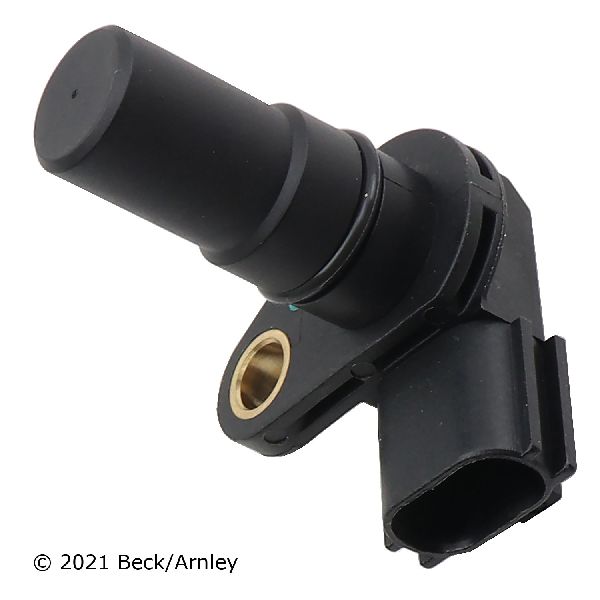
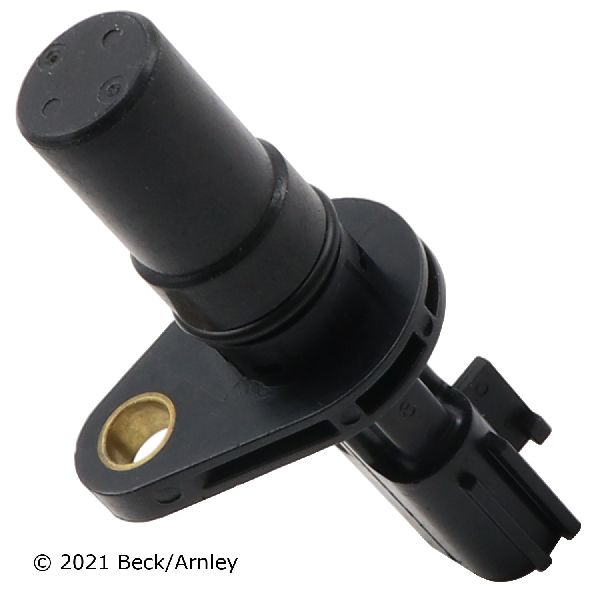
- Faulty Input/Output Speed Sensors: → Shop Automatic Transmission Speed Sensor
Diagnosis Steps
- Check the transmission fluid level and condition. This is the most common and cheapest fix. Ensure the correct OEM-specified fluid is used. This requires a special procedure as there is no factory dipstick.
- Use an advanced scan tool to check for any other transmission-related codes. Note any codes for solenoids, speed sensors, or the TCM itself.
- Monitor live data on the scan tool. Compare the input RPM, output RPM, and the commanded vs. actual gear ratio during a test drive to confirm the slip.
- Inspect the transmission wiring harness and connectors for any visible damage, corrosion, or loose connections.
- If the fluid is fine, have a technician perform a line pressure test to check the health of the transmission's hydraulic system.
- If possible, check for any available TCM software updates from a Jeep dealership. While less common for this specific model than others, software fixes for P0730 are known to exist for other Jeeps.
- If electronic and hydraulic tests pass, the issue is likely internal to the CVT, such as a failing valve body, TCM, or mechanical components like the belt/pulleys.
Parts You'll Likely Need
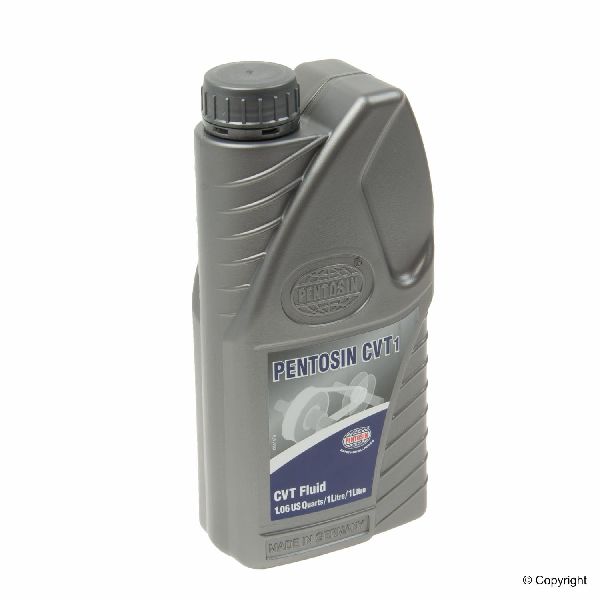
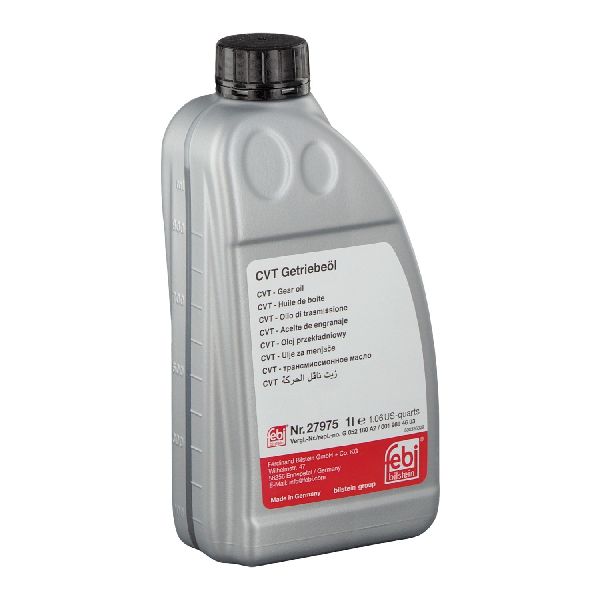
- CVT Fluid
(OEM #Mopar CVTF+4 (Part # 5191184AB, 5191184AA, 68004937EA))— The most common cause of P0730 is low or degraded fluid. Using the correct fluid is critical for CVT operation.
Trusted brands: Mopar
OEM price range: $25-$35 per quart
Aftermarket price range: $15-$25 per quart - Transmission Control Module (TCM) — Internal failure or software corruption in the TCM can cause incorrect ratio commands, leading to this code. It has been documented as the ultimate failure point even after a transmission replacement.
Trusted brands: Mopar, Cardone, Dorman
OEM price range: $600-$900
Aftermarket price range: $300-$500 - CVT Assembly (Remanufactured) — In cases of severe internal mechanical failure (worn belt, pulleys), replacing the entire transmission is often the most viable repair.
Trusted brands: Certified Transmission, Jasper
OEM price range: $3500-$5000+
Aftermarket price range: $2500-$4000
Related Codes That Often Appear With This One
- P0700 — P0700 is a generic code indicating that the Transmission Control Module (TCM) has stored a fault. It almost always appears with more specific transmission codes like P0730.
- P0741 — This code relates to the Torque Converter Clutch (TCC) circuit. A problem with the torque converter can cause ratio errors and trigger P0730.
- P0777 — This code points to a pressure control solenoid being stuck on. Solenoid issues are a direct cause of incorrect ratio problems. A related code, P1777, specifically points to a stepper motor malfunction.
- P0766 — This code for 'Secondary Pressure Solenoid Stuck Off' has been seen alongside P0730 in a Jeep Patriot with the same JF011E transmission, pointing towards a valve body or control issue.
Technical Service Bulletins (TSBs) & Recalls
- TSB 21-033-14: While not for the Compass specifically, this TSB for other 2012 Jeep models (Wrangler, Grand Cherokee) with different transmissions addresses an erroneous P0730 code that can be fixed by reprogramming the TCM, indicating that software fixes for this code are a known possibility within the brand.
- TSB 21-015-13: This TSB, superseded by 21-033-14, also addressed P0730 software fixes, reinforcing the history of this code being caused by software issues on Jeep vehicles.
Platform-Specific Known Issues
- The Jatco JF011E CVT used in the first-generation Compass is known to be sensitive and can develop issues, particularly if fluid changes are neglected.
- A diagnostic case study on a 2013 Jeep Patriot with the same transmission and P0730 code found the ultimate cause to be a faulty Transmission Control Module (TCM), even after the transmission itself was replaced. The technician noted the engine RPM would not drop below 3800 on the highway.
Mechanic-Grade Diagnostic Values
- Stepper Motor Winding Resistance — expected: Approximately 15 Ohms between center pin (2 or 5) and outer pins (1, 3 or 4, 6); 30 Ohms between outer pins (1 and 3 or 4 and 6).. Failure: Readings outside of a 5 Ohm tolerance from the expected values indicate a faulty stepper motor winding.
- Pressure Control Solenoids (A & B) Resistance — expected: 3.0 - 7.0 Ohms. Failure: A reading outside this range indicates a failed solenoid.
- Torque Converter Clutch Solenoid Resistance — expected: 3.0 - 7.0 Ohms. Failure: A reading outside this range indicates a failed solenoid.
- Lock-Up Selector Solenoid Resistance — expected: 17.0 - 38.0 Ohms. Failure: A reading outside this range indicates a failed solenoid.
- CVT Fluid Temperature Sensor Resistance — expected: ~6.5 kOhms at 20°C (68°F) or ~0.9 kOhms at 80°C (176°F). Failure: Resistance values that do not correspond with the fluid temperature indicate a faulty sensor.
Scan Tool Commands That Help
- Professional Scan Tool (e.g., wiTECH, Autel, J-scan): TCM Adaptation Reset / Relearn — This is mandatory after replacing the transmission, valve body, or TCM. It allows the control module to learn the new components' hydraulic and mechanical characteristics. Failure to perform this can cause continued shifting problems.
- Professional Scan Tool (e.g., wiTECH): TCM Reprogramming/Software Update — After installing a new or remanufactured transmission, the TCM must be flashed with the latest software available from the manufacturer to ensure compatibility and proper function.
Wiring & Ground Locations
- TCM Ground Path (Jeep Specific) — For Jeep Compass/Patriot models, solenoid resistance checks should use terminal 6 in the main transmission case connector as the ground path.. Using the transmission case as a ground, which is standard for Nissan/Mitsubishi versions of this transmission, will yield incorrect resistance readings for the solenoids on Jeep models, leading to misdiagnosis.
- Transmission Harness Chafe Point (General) — While a TSB for this specific model and year range was not found, similar Chrysler/Jeep platforms have known issues with the transmission harness rubbing against sharp edges of the PCM/TCM mounting bracket.. A shorted wire in the harness can cause erratic solenoid behavior, incorrect sensor readings, or loss of communication with the TCM, all of which can trigger a P0730 code.
Real Owner Repair Stories
- Certified Transmission Case Study (2013 Jeep Patriot AWD 2.4L (Same JF011E Transmission)) — Transmission warning light, high RPM on the highway (stuck at 3800 RPM), P0730 and P0766 codes.
❌ Tried (didn't work) Replacing the entire transmission with a remanufactured unit.
✅ What actually fixed it The root cause was a faulty Transmission Control Module (TCM) that was unable to command a gear ratio lower than 0.7 (the target was 0.45). Replacing the TCM resolved the issue. - Reddit user on r/GrandCherokee (2007 Jeep Grand Cherokee CRD (different transmission, but same code and similar diagnostic principle)) — P0730 code, randomly popping out of gear at highway speeds (>55mph).
❌ Tried (didn't work) The owner was facing a potential transmission swap.
✅ What actually fixed it The problem was solved by replacing the input/output speed sensors located behind the valve body.
When the Usual Fixes Don't Work
- In one documented case involving a Jeep Patriot with the same JF011E transmission, a P0730 code persisted even after the entire transmission was replaced with a remanufactured unit. The common fixes, including fluid and mechanical parts, were addressed by the new transmission. The ultimate cause was a faulty Transmission Control Module (TCM) that was incapable of commanding the full range of gear ratios, proving that the issue can be purely electronic and external to the transmission housing itself.
OEM Part Supersession History
Valve Body with one pressure sensor→Valve Body with two pressure sensors— Design update by Jatco for improved pressure monitoring and control.
Heads up: A two-sensor valve body can be used in a vehicle that originally had a one-sensor design (the second sensor is just ignored), but a one-sensor valve body CANNOT be used in a vehicle that requires two sensors. All Chrysler/Jeep applications of the JF011E use the two-sensor valve body.
Model Year Variations Within This Range
- 2011-2017: A facelift in 2011 introduced a more sophisticated exterior design, interior refinements, and a retuned suspension with a larger rear sway bar. While the core JF011E CVT remained, software calibrations and potentially the valve body design may differ between pre- and post-facelift models. Always verify part compatibility with the vehicle's VIN.
Diagnostic Flowchart
Other Known Issues on This Vehicle
Issues unrelated to this code that are worth knowing about as an owner of this generation:
- Front and Rear Subframe Corrosion 🔴 High — Very common, especially in salt-belt regions. Can become structurally unsafe. (Ref: Chrysler extended the warranty to 10 years for this issue on many vehicles, but many owners missed the window. Not a formal recall.)
- Water Leaks from Sunroof/Roof Area 🟠 Medium — Extremely common for models equipped with a sunroof. Clogged drain tubes cause water to leak into the cabin via the dome light or A-pillars. (Ref: A TSB exists for 2011-2016 models regarding this issue.)
- Electronic Throttle Body Failure 🔴 High — A significant number of owners report failure, causing the vehicle to enter limp mode with the electronic throttle control (lightning bolt) light flashing. (Ref: A recall was issued for some models concerning this issue.)
- Suspension Component Wear 🟠 Medium — Premature failure of front struts, control arms, and ball joints is commonly reported.
- Electrical Issues (TIPM / Relay Box) 🔴 High — The relay box, located in the driver's side wheel well, is prone to moisture and corrosion, leading to no-start or intermittent stalling conditions. The Totally Integrated Power Module (TIPM) can also cause various electrical gremlins.
Used vs. New Parts: Buying Guide for This Vehicle
When a used part is the smart pick: A used valve body or Transmission Control Module (TCM) from a low-mileage donor vehicle can be a cost-effective option, as these parts are often replaced as assemblies. Given the high cost of new OEM units, a tested part from a reputable salvage yard is a viable repair strategy, especially if the failure is confirmed to be electronic and not due to widespread mechanical wear.
Donor-vehicle mileage cap: roughly under 80000 miles for the part to have meaningful remaining life.
What to inspect on the donor part:
- Verify the donor vehicle's VIN to ensure model year and 2WD/4WD compatibility.
- Ask for any available service history of the donor vehicle, specifically looking for transmission fluid changes.
- Inspect the transmission case connector pins on a used TCM for any corrosion or damage.
- For a valve body, check that all solenoids are present and connectors are intact.
OEM-only on this vehicle (don't cheap out):
- CVT Fluid: While some high-quality aftermarket fluids exist, the risk of incompatibility and catastrophic failure is high. Sticking with Mopar CVTF+4 is the safest choice to guarantee correct frictional properties.
Aftermarket brands forum-validated for this vehicle:
- Remanufactured Valve Bodies: Companies specializing in transmission components, such as Sonnax, offer kits to rebuild or improve the stock valve body, addressing known failure points.
- Remanufactured Transmissions: Brands like Certified Transmission and Jasper are known for providing complete, remanufactured CVT units that often include updates to address original design flaws.
- CVT Fluid (Use with caution): Brands like Valvoline, Castrol, and Idemitsu offer universal or specific-application CVT fluids that many owners use successfully post-warranty, but this carries some risk.
Brands owners have reported issues with on this vehicle:
- Unknown or 'white box' eBay valve bodies or solenoids. These often lack proper testing and can be defective out of the box, leading to wasted labor and time.
Real Owner Stories
Aggregated from forums and TSBs cited above. Mileages and costs reflect what owners reported in those sources.
2013 Jeep Compass — 155000 miles
Symptoms: The vehicle entered limp mode after a transmission overheat event. The owner reported the P0730 code and suspected a clogged filter while shops were quoting a full replacement.
What fixed it: The owner suspected a clogged filter as a potential fix for the limp mode and P0730 code following the overheat.
Source hint: Reddit r/MechanicAdvice - "Is my jeep done for?"
2011 Jeep Patriot
Symptoms: The owner reported laggy shifting and the P0730 code, noting a common issue with a missing or broken dipstick tube.
What fixed it: Checking fluid levels via the dipstick tube (often found broken or missing).
Source hint: Reddit r/JeepPatriot - "PO730 code"
2013 Jeep Patriot
Symptoms: The engine RPM would not drop below 3800 on the highway. The vehicle had P0730 and P0766 codes.
What fixed it: Replacing the Transmission Control Module (TCM) after a full transmission replacement failed to resolve the issue.
Source hint: Certified Transmission Case Study: "Jeep CVT P0730-P0766"
Related OBD-II Codes
Frequently Asked Questions
How do I check the transmission fluid level on my 2007-2017 Jeep Compass since there is no dipstick?
Can a software update fix the P0730 code on my Jeep?
What specific transmission fluid should I use for my Compass CVT?
Is the P0730 code always a sign that I need a new transmission?
Does the Jeep Compass share this CVT issue with other vehicles?
Helpful Videos

We Have This Part in Stock

The information in this article is provided for general reference and educational purposes only. Vehicle specifications, procedures, and part compatibility can vary by production date, trim level, and region. Always consult your vehicle's factory service manual and verify part numbers before purchasing or performing repairs. Safety-critical components such as airbags, seat belts, and braking systems should be installed by a qualified professional.
- Jeep Compass:
- 🧭 Diagnostic Flowchart
- 🎬 Helpful Videos
- 🛍️ Shop This Part
- What's Unique About the 2007-2017 Jeep Compass
- Symptoms You May Notice
- Most Likely Causes
- Rare But Worth Checking
- Diagnosis Steps
- Parts You'll Likely Need
- Related Codes That Often Appear With This One
- Technical Service Bulletins (TSBs) & Recalls
- Platform-Specific Known Issues
- Mechanic-Grade Diagnostic Values
- Scan Tool Commands That Help
- Wiring & Ground Locations
- Real Owner Repair Stories
- When the Usual Fixes Don't Work
- OEM Part Supersession History
- Model Year Variations Within This Range
- Other Known Issues on This Vehicle
- Used vs. New Parts: Buying Guide for This Vehicle
- Real Owner Stories
- 2013 Jeep Compass — 155000 miles
- 2011 Jeep Patriot
- 2013 Jeep Patriot
- Related OBD-II Codes
- Frequently Asked Questions
- 🎟️ Get 5% Off