

P0730 on 2005-2010 Pontiac G6 2.4L: Incorrect Gear Ratio Causes and Fixes
On a 2005-2010 Pontiac G6 with the 2.4L engine, code P0730 is most often caused by failing shift solenoids or a bad pressure control solenoid inside the 4T45-E transmission. A fluid and filter change is the first step, but expect a potential solenoid replacement costing $300-$650. This is a known issue on the 4T45-E transmission shared with the Chevy Cobalt and Saturn Ion.
- P0730 on your G6 means the transmission is slipping, which is a serious issue that requires immediate attention.
- The first and easiest step is to check the transmission fluid level and condition. Low or burnt fluid is a common trigger.
- On this specific 4T45-E transmission, the problem is very often a failed shift solenoid or pressure control solenoid, which can be replaced without removing the entire transmission.
- Do not drive the vehicle. What might be a several-hundred-dollar solenoid repair can quickly become a multi-thousand-dollar transmission rebuild if ignored.
- Check if your vehicle was affected by safety recalls for the transmission shift cable (14152C) and BCM wiring (13036), as these are known issues on the G6 platform.
What's Unique About the 2005-2010 Pontiac G6
The Pontiac G6 with the 2.4L engine uses the GM 4T45-E automatic transmission. While many issues can cause a P0730 code, this specific transmission is known for failures of the pressure control solenoid (PCS) and delamination of the direct clutch piston seal, as noted in ATRA Technical Bulletin #622. These are more specific and common points of failure on this platform compared to just generic transmission slippage. This issue is identical on its platform-mates, the Chevrolet Cobalt and Saturn Ion.
Symptoms You May Notice
- Check Engine Light illuminated
- Transmission slipping (engine revs high between shifts)
- Harsh, erratic, or delayed gear shifts
- Vehicle may feel sluggish or lack power
- Transmission may get stuck in one gear (limp mode)
- Reduced fuel economy
- Transmission may slip into neutral unexpectedly
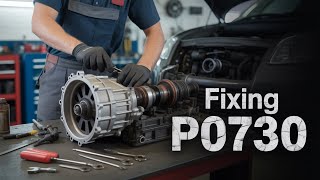
- Replacing the input or output speed sensors. While these sensors are used to detect the problem, they are rarely the cause of a P0730 code. The code indicates a real, mechanical slip, not a false sensor reading. 🎬 Watch: Learn more about P0730 causes and fixes
- Replacing the entire transmission without first testing the solenoids. Solenoid replacement is a much cheaper repair that often resolves the issue.
Most Likely Causes
- Low or Dirty Transmission Fluid 🔴 High Probability → Shop Transmission Assembly This is the most common starting point for any P0730 code. The 4T45-E is sensitive to fluid level and condition. As these vehicles age, leaks from cooler lines or axle seals become more common, leading to low fluid levels that cause pressure loss and slipping.
How to confirm: Check the transmission fluid. Models from 2005-2006 often have a dipstick. For 2007-2010 models, GM removed the dipstick, requiring a level check via a plug on the side of the transmission case with the engine running and level. 🎬 Watch: How to check the transmission fluid level on 2.4L models The fluid should be red and not smell burnt.
Typical fix: Perform a transmission fluid and filter change using DEXRON-VI fluid.
Est. part cost: $50-$100 - Faulty Shift Solenoid(s) 🔴 High Probability → Shop Transmission Valve Body The 4T45-E transmission's shift solenoids are a very frequent failure point. They are electro-hydraulic valves that control gear changes, and they can get clogged with debris or fail electrically, leading to codes like P0751 or P0756 alongside P0730.
How to confirm: A professional scan tool can detect electrical faults in a specific solenoid circuit. Otherwise, diagnosis involves removing the transmission side cover to test the resistance of each solenoid with a multimeter.
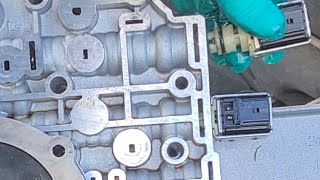
Typical fix: Replace the faulty shift solenoid(s) (typically 'A' and 'B'). Due to the high labor cost to access them, it is strongly recommended to replace all solenoids (Shift A/B, TCC, and PCS) as a complete kit. 🎬 See this step-by-step 4T45-E shift solenoid replacement walkthrough
Est. part cost: $40-$120 for individual solenoids, $100-$200 for a complete kit. - Faulty Pressure Control Solenoid (PCS) 🟡 Medium Probability → Shop Transmission Valve Body ATRA Technical Bulletin #622 specifically identifies a faulty PCS as a primary cause for P0730 on the 4T45-E transmission. This solenoid regulates the main hydraulic pressure, and its failure directly leads to slipping and harsh shifts. Forum users have reported intermittent hard shifting that was diagnosed as a failing PCS even without a specific code.
How to confirm: A technician can use a scan tool to monitor commanded vs. actual line pressure while using a pressure gauge connected to the transmission's line pressure port.
Typical fix: Replace the Pressure Control Solenoid. This requires removing the transmission side cover and is typically done along with the other solenoids.
Est. part cost: $50-$150 - Internal Mechanical Failure (Direct Clutch) 🟡 Medium Probability The same ATRA TSB for the 4T45-E points to "direct clutch piston seal delamination" as another top cause for P0730. This allows hydraulic pressure to leak past the clutch piston, causing severe slipping, particularly in 3rd and 4th gear.
How to confirm: This is diagnosed by exclusion. If fluid, wiring, and all solenoids test good, an internal mechanical failure is the likely cause. This may be confirmed by finding clutch material in the transmission pan during a fluid service.
Typical fix: The transmission must be removed from the vehicle and completely disassembled to replace the failed clutch pack and seals. Often, a full rebuild or replacement with a remanufactured unit is the most cost-effective solution.
Est. part cost: $1500-$3500
Rare But Worth Checking
- Faulty Transmission Control Module (TCM): → Shop Transmission Assembly While uncommon, the TCM itself can fail, causing incorrect commands or misinterpreting sensor data. This should only be considered after all other transmission components and wiring have been ruled out.
- Damaged Wiring Harness: Check the wiring harness leading to the transmission for any signs of chafing, corrosion, or damage, which could cause intermittent connection to the solenoids or sensors. GM has issued bulletins for other codes on this transmission related to harness issues.
Diagnosis Steps
- Check the transmission fluid level and condition. On 2007+ models, this requires using a check plug on the side of the case. Top off or replace if low, dark, or burnt-smelling.
- Use an OBD-II scanner to check for any other transmission-related codes that could pinpoint the fault, such as specific solenoid codes (P0751, etc.).
- Inspect the transmission wiring harness and connectors for any visible damage, corrosion, or loose connections.
- With a professional scan tool, observe live data for input/output speed sensors to confirm slippage, and monitor which gear is commanded versus the actual calculated ratio.
- If a solenoid is suspected, begin the process of removing the driver's side wheel, CV axle, and battery tray to access the transmission side cover.
- Once the side cover is removed, test the resistance of each shift solenoid and the PCS with a multimeter. Compare the readings to the manufacturer's specifications.
- If solenoids test good, inspect for internal mechanical damage, starting with the direct clutch seals as noted in TSB #622. This step typically requires a transmission specialist.
Parts You'll Likely Need
- Transmission Shift Solenoid Kit (A & B)
(OEM #24227792)— These solenoids are the most common failure points in the 4T45-E transmission that directly cause the P0730 code. They are typically replaced as a pair or full set.
Trusted brands: ACDelco, Delphi, Rostra
OEM price range: $80-$120 (Kit)
Aftermarket price range: $40-$70 (Kit) - Pressure Control Solenoid (PCS)
(OEM #24225825)— Specifically cited in ATRA technical bulletin #622 as a leading cause of P0730 on this transmission due to its role in regulating hydraulic pressure.
Trusted brands: ACDelco, Bosch
OEM price range: $60-$100
Aftermarket price range: $40-$80 - Transmission Filter and Gasket Kit
(OEM #24203590)— This should be replaced any time the transmission pan or side cover is removed for service. A clogged filter can also cause low pressure issues.
Trusted brands: ACDelco, ATP, Wix
OEM price range: $25-$40
Aftermarket price range: $15-$30 - DEXRON-VI Automatic Transmission Fluid — This is the required fluid type for the 4T45-E transmission. Using the correct fluid is critical for proper operation. A fluid and filter change requires approximately 7-8 quarts.
Trusted brands: ACDelco, Valvoline, Castrol
OEM price range: $8-$12 per quart
Aftermarket price range: $7-$10 per quart
Related Codes That Often Appear With This One
- P0700 — P0700 is a general Transmission Control System Malfunction code. It simply tells the main engine computer that the TCM has stored a fault, which in this case is P0730.
- P0731-P0735 — These are gear-specific incorrect ratio codes (e.g., P0731 for 1st gear). They often accompany the general P0730 code and can help narrow down when the slip is occurring.
- P0751, P0756, etc. — These are electrical fault codes for specific shift solenoids (e.g., P0751 for Shift Solenoid 'A' Performance/Stuck Off). If you see one of these, it strongly points to a solenoid issue rather than a purely mechanical one.
Technical Service Bulletins (TSBs) & Recalls
- ATRA Technical Bulletin #622: Specifically for the 4T40E/4T45E transmission, this bulletin identifies 'Slips in 3rd & 4th; no 3rd or 4th; Possible DTC 0730'. It lists the two most common causes as 'Direct clutch piston seal delamination' and a faulty 'Pressure Control solenoid (PCS)'.
Platform-Specific Known Issues
- GM Safety Recall 14152C: Affects 2005-2008 models with the 4-speed automatic. The transmission shift cable can fracture, making it
Mechanic-Grade Diagnostic Values
- Shift Solenoid (A or B) Resistance — expected: 10 - 11 ohms. Failure: A reading significantly higher (open circuit) or lower (short circuit) than the expected range indicates a failed solenoid coil.
- TCC PWM Solenoid Resistance — expected: 10 - 15 ohms. Failure: Readings outside this range suggest an electrical failure within the solenoid.
- Pressure Control Solenoid (PCS) Resistance — expected: ~5 ohms. Failure: A significantly different reading points to a faulty PCS.
- Transmission Fluid Temperature (TFT) Sensor Voltage/Resistance — expected: Varies with temperature. For example, a P0712 (Low Voltage) code sets if resistance is ≤ 43.19 ohms.. Failure: The TCM will set a fault code if the sensor's resistance/voltage reading is out of its expected range for a set period, indicating a short or open circuit.
Hidden / Shadow Codes Worth Checking
- Internal TCM Fault Counters: The TCM uses internal counters to track intermittent faults before setting a hard code. For example, a solenoid circuit fault like P0973 may only be set after the TCM detects the failure 44 out of 50 times in its diagnostic check cycles. This logic prevents codes from being set due to momentary glitches. (see via This internal logic is not directly visible as a 'shadow code' on most scanners, but a dealer-level tool like a GM Tech2 or GDS2 can monitor the conditions that lead to a code being set, providing insight into intermittent issues.)
Scan Tool Commands That Help
- GM Tech2 / GDS2 or equivalent professional scanner: Solenoid Cleaning Procedure — If a solenoid is suspected of sticking due to debris rather than being electrically faulty, a capable scan tool can command the TCM to cycle the solenoids rapidly while the system is pressurized. This can sometimes dislodge small particles and restore normal function, potentially avoiding a repair.
- GM Tech2 / GDS2 or equivalent professional scanner: Reset Transmission Adapts / TAPs Reset — After replacing solenoids, the valve body, or the entire transmission, the Transmission Adaptive Pressures (TAPs) must be reset. This clears the learned values the TCM was using to compensate for the old, worn parts and allows it to learn the characteristics of the new components for smooth shifting.
Wiring & Ground Locations
- TCM Main Ground Splice Pack — Bolted to the top of the transmission housing, typically under the battery and battery tray.. This is a critical ground point for both the Engine Control Module (ECM) and Transmission Control Module (TCM). The wires in this splice pack are known to corrode and break at the ring terminal, causing a loss of ground to the TCM. This can lead to numerous erratic transmission codes, including P0730, and no-start conditions.
- G105 / G106 — On the left (driver's side) rear of the engine block for the 2.4L LE5 engine.. These are primary engine and control module ground points. A loose or corroded connection at these locations can cause erratic voltage and sensor readings, potentially impacting TCM operation and causing false codes.
- Transmission Control Module (TCM) — Located in the engine compartment, to the left of the engine, near the driver's side strut tower.. Knowing the physical location is essential for inspecting the module and its connectors for corrosion or damage, and for performing wiring tests.
- 20-Way Transmission Case Connector — The main round connector on the transmission itself where the external harness connects.. This is the primary interface for all electronic controls. Pin E is the ignition voltage feed to the internal components. Testing for power and ground at this connector is a key diagnostic step.
Real Owner Repair Stories
- Edmunds Car Forums user (2006 Pontiac G6 2.4L) — Very hard shifting from 1st to 2nd and through all gears, feeling like a major transmission failure. The check engine light would come on intermittently with code P0010.
❌ Tried (didn't work) The owner drove with the condition for over a year, assuming it was a complex transmission issue.
✅ What actually fixed it The root cause was a poor electrical connection at the intake camshaft position actuator solenoid (OCV). The user removed the connector, cleaned the two pins on the solenoid with sandpaper until they were shiny, and reconnected it. This restored proper camshaft timing, which in turn stopped the TCM from commanding maximum line pressure, resolving all harsh shifting.
"I Checked Everything" — The Actual Cause
- In cases of harsh shifting that mimics a P0730 fault, a full transmission diagnostic (solenoids, fluid, pressure) may show no issues. The actual cause can be an engine-side problem, such as a faulty camshaft position actuator or its connector. A poor connection can cause incorrect cam timing, leading the TCM to command maximum line pressure as a protective measure, which results in severe, jerky shifts that are misdiagnosed as an internal transmission failure.
OEM Part Supersession History
24214360→24225825— Updated design for the Pressure Control Solenoid (PCS).
Heads up: The new part is a direct replacement for the old one.24212690→24227792— Updated design for the TCC/Shift Solenoid.
Heads up: The new part is a direct replacement for the old one.
Model Year Variations Within This Range
- 2007-2010: GM removed the transmission fluid dipstick starting in the 2007 model year. Fluid level checks on these later models must be performed via a check/fill plug on the side of the transmission case, which is less convenient than using a dipstick.
Diagnostic Flowchart
Other Known Issues on This Vehicle
Issues unrelated to this code that are worth knowing about as an owner of this generation:
- Electric Power Steering (EPS) Failure 🔴 High — Very common, often occurs between 70,000-120,000 miles. Can cause a sudden and dangerous loss of power assist while driving. (Ref: Multiple recalls issued, including NHTSA 14V153 and GM recall N140115, to replace the torque sensor or entire steering column.)
- Timing Chain Guide/Tensioner Failure 🔴 High — Common on the 2.4L LE5 engine. The primary symptom is a distinct metallic rattling noise for 2-3 seconds on a cold startup. Failure to address can lead to catastrophic engine damage. (Ref: Multiple TSBs exist. A common failure point is the bolt breaking on a guide, causing the chain to become loose.)
- Faulty Camshaft Position Actuator Solenoids (VVT Solenoids) 🟠 Medium — Common failure item. Can cause a rough idle, stalling, and Check Engine Light with codes P0010, P0011, P0013, or P0014. Often caused by infrequent oil changes. (Ref: No specific recall, but a very well-documented problem.)
- Failing Front Wheel Hub Bearings 🟠 Medium — Fairly common. Symptoms include a humming or roaring noise that gets louder with vehicle speed and may change when turning. (Ref: null)
- Shift Cable Failure 🔴 High — Widespread issue affecting many GM vehicles of this era. The plastic tab on the shift cable end can fracture, causing the gear indicator to show an incorrect gear (e.g., 'Park' when still in 'Drive'), creating a rollaway risk. (Ref: Yes, multiple recalls including NHTSA 14V-224 and 12V-460.)
Used vs. New Parts: Buying Guide for This Vehicle
When a used part is the smart pick: For a complete transmission replacement due to internal mechanical failure, a low-mileage used 4T45-E from a reputable salvage yard can be a cost-effective alternative to a full rebuild. Ensure the donor vehicle is a compatible model (e.g., Chevy Cobalt, Saturn Ion) with the same engine.
Donor-vehicle mileage cap: roughly under 80000 miles for the part to have meaningful remaining life.
What to inspect on the donor part:
- Ask for a vehicle history report on the donor car to check for accidents or maintenance records.
- If possible, inspect the transmission fluid from the donor. It should be reddish and not smell burnt.
- Obtain at least a 90-day warranty from the salvage yard.
- Check the main electrical connector for any bent or corroded pins before purchase.
OEM-only on this vehicle (don't cheap out):
- Shift Solenoids (A/B)
- Pressure Control Solenoid (PCS)
- Transmission Control Module (TCM)
Aftermarket brands forum-validated for this vehicle:
- Rostra (for solenoids, if OEM is unavailable)
- Valvoline, Castrol (for DEXRON-VI fluid)
Brands owners have reported issues with on this vehicle:
- Unbranded, no-name solenoid kits from online marketplaces are a significant risk due to the high labor cost of replacement. It is better to pay more for a warrantied OEM or reputable aftermarket part than to risk a premature failure.
Real Owner Stories
Aggregated from forums and TSBs cited above. Mileages and costs reflect what owners reported in those sources.
2006 Pontiac G6 2.4L
Symptoms: The owner was quoted for a solenoid replacement and noted the high labor involved in the repair.
What fixed it: Replacement of shift solenoids (recommended as a complete pack rather than individually).
Cost: $1600-$1600
Source hint: r/MechanicAdvice - 2006 Pontiac G6 Shift Solenoids
2006 Pontiac G6 2.4L
Symptoms: Intermittent, severe hard shifting even without a specific fault code immediately present.
What fixed it: Diagnosis of a failing Pressure Control Solenoid (PCS), a common failure on this model.
Source hint: 2CarPros - 2006 Pontiac G6 Please Help! - Pressure Control out w/no co
Related OBD-II Codes
Frequently Asked Questions
How do I check the transmission fluid on my 2008 Pontiac G6 2.4L since there is no dipstick?
Is there a specific technical bulletin for the P0730 code on the 4T45-E transmission?
My 2006 G6 is shifting hard but not throwing a code yet; could this still be the Pressure Control Solenoid?
Should I replace just one shift solenoid or the whole set on my G6?
Is there a recall for the transmission on 2005-2008 Pontiac G6 models?
What kind of transmission fluid should I use for a fluid change on my 2.4L G6?
Helpful Videos


We Have This Part in Stock

The information in this article is provided for general reference and educational purposes only. Vehicle specifications, procedures, and part compatibility can vary by production date, trim level, and region. Always consult your vehicle's factory service manual and verify part numbers before purchasing or performing repairs. Safety-critical components such as airbags, seat belts, and braking systems should be installed by a qualified professional.
- Pontiac G6:
- 🧭 Diagnostic Flowchart
- 🎬 Helpful Videos
- 🛍️ Shop This Part
- What's Unique About the 2005-2010 Pontiac G6
- Symptoms You May Notice
- Most Likely Causes
- Rare But Worth Checking
- Diagnosis Steps
- Parts You'll Likely Need
- Related Codes That Often Appear With This One
- Technical Service Bulletins (TSBs) & Recalls
- Platform-Specific Known Issues
- Mechanic-Grade Diagnostic Values
- Hidden / Shadow Codes Worth Checking
- Scan Tool Commands That Help
- Wiring & Ground Locations
- Real Owner Repair Stories
- "I Checked Everything" — The Actual Cause
- OEM Part Supersession History
- Model Year Variations Within This Range
- Other Known Issues on This Vehicle
- Used vs. New Parts: Buying Guide for This Vehicle
- Real Owner Stories
- 2006 Pontiac G6 2.4L
- 2006 Pontiac G6 2.4L
- Related OBD-II Codes
- Frequently Asked Questions
- 🎟️ Get 5% Off