

P0730 on 2005-2007 Saturn Ion: Incorrect Gear Ratio Causes and Fixes
On a 2005-2007 Saturn Ion, code P0730 is most often caused by low or dirty transmission fluid or failing shift solenoids in the 4T45-E transmission. Start by checking the fluid. If the fluid is fine, the next most likely cause is a faulty solenoid, which is a common failure point on this vehicle and its platform mates like the Chevy Cobalt.
- Do not drive the vehicle. P0730 indicates a serious transmission slip that can quickly lead to catastrophic failure.
- Start with the simplest fix: check the transmission fluid level and condition. This is the number one cause of this code.
- If the fluid is fine, the most likely culprit on your Saturn Ion is a faulty shift solenoid or pressure control solenoid inside the transmission.
- Be aware of potential electrical issues with the Transmission Control Module (TCM), as they are a known quirk of this platform and can cause these symptoms.
- A full transmission rebuild is the worst-case scenario; solenoids, fluid, or electrical issues are more probable and much cheaper to fix.
What's Unique About the 2005-2007 Saturn Ion
The 2005-2007 Saturn Ion uses the GM 4T45-E automatic transmission. While the P0730 code is generic, this specific transmission has well-documented failure points that commonly trigger it. Failing 1-2 and 2-3 shift solenoids are a particularly frequent issue on the Ion and its platform mates (Chevy Cobalt, Pontiac G5). Additionally, these vehicles can suffer from electrical issues with the Transmission Control Module (TCM), such as bad grounds, which can mimic or cause serious transmission faults.
Symptoms You May Notice
- Check Engine Light is on
- Transmission slipping (engine RPMs rise without an increase in speed)
- Harsh, delayed, or erratic shifting
- Vehicle gets stuck in one gear (limp mode)
- Failure to shift into gear or delayed engagement
- Loss of power and poor acceleration
- Decreased fuel economy
- In some cases, a 'POWER STR' message may appear on the dash if the TCM is malfunctioning, though this is more commonly associated with the separate power steering issue.
- Replacing only the input or output speed sensors. While these sensors provide the data for the P0730 calculation, they are not the most common failure point for this code on this transmission; the problem is usually hydraulic (solenoids, fluid) or mechanical (clutches).
- Immediately assuming the transmission needs a full rebuild. A fluid change or solenoid replacement is a much more common and less expensive fix that should be investigated first.
Most Likely Causes
- Low or Dirty Transmission Fluid 🔴 High Probability → Shop Transmission Assembly General maintenance issue, but the 4T45-E is sensitive to fluid level and condition for proper hydraulic pressure. Contaminated fluid can clog the filter or solenoid screens.
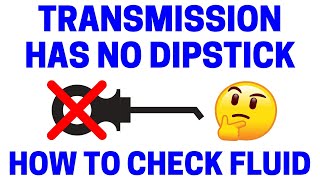
How to confirm: Check the transmission fluid level and condition. The fluid should be at the correct level, pink/red in color, and not smell burnt. Note: This vehicle does not have a traditional dipstick. The level is checked via a plug on the side of the transmission case while the engine is running and the fluid is warm. This can be a difficult and messy procedure. 🎬 Watch: How to check transmission fluid with no dipstick
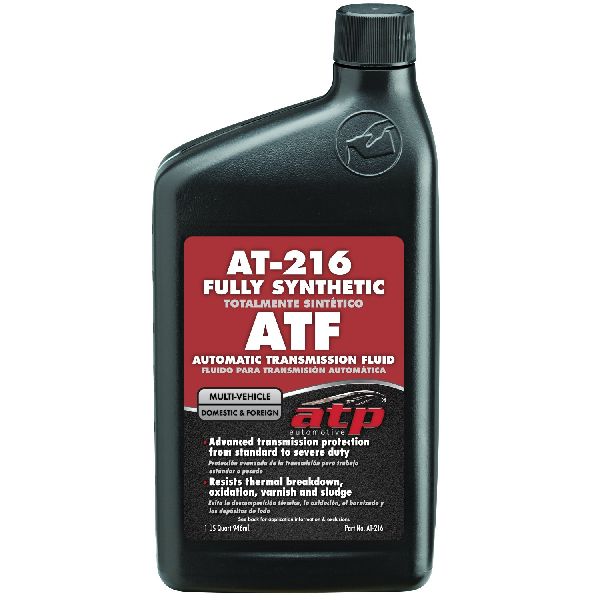
Typical fix: Top off the fluid or perform a transmission fluid and filter change. Use fluid that meets DEXRON-VI specifications.
Est. part cost: $50-$120 - Faulty Shift Solenoids or Pressure Control Solenoid (PCS) 🔴 High Probability → Shop Transmission Valve Body Shift solenoids are a known, widespread failure point on the 4T45-E transmission used in the Ion and similar GM vehicles. Debris can clog the small orifices in the solenoids, causing them to stick.
How to confirm: Use a professional scan tool to check for solenoid-specific trouble codes (e.g., P075x, P09xx). Solenoids can also be tested for resistance with a multimeter (typically 20-30 ohms when cool) after dropping the transmission side cover. A stuck solenoid is a very common finding.
Typical fix: Replace the faulty solenoid(s). It is common practice to replace the 1-2 and 2-3 shift solenoids (often sold as a kit) and the Pressure Control Solenoid (PCS) at the same time. This requires removing the transmission side cover, which can be difficult with the transmission in the vehicle. 🎬 See this step-by-step shift solenoid replacement walkthrough
Est. part cost: $60-$200 - Faulty Transmission Control Module (TCM) 🟡 Medium Probability → Shop Transmission Assembly Saturn Ions are known to experience TCM issues, often related to poor grounding, which can cause a wide range of erratic transmission behavior and communication codes. A bad ground can cause voltage fluctuations that confuse the module.
How to confirm: Diagnosis is complex. Look for other codes like U-series (communication) codes, or symptoms like cycling door locks. A mechanic will check for solid power and ground connections at the TCM connector pins. Cleaning and securing the main TCM ground point on the chassis is a common diagnostic step.
Typical fix: Repairing the ground connection (the 'ground mod' is a well-known fix in forums) or replacing the TCM. A replacement TCM will need to be programmed to the vehicle's VIN.
Est. part cost: $50 (for wiring repair) - $400 (for a programmed TCM)
Rare But Worth Checking
- Broken Internal Feed Pipe: This is a specific mechanical failure within the 4T45-E where a fluid feed pipe for the forward clutch breaks. It typically results in a complete loss of all forward gears, but reverse still works. It's worth checking if you remove the side cover, as the broken pipe is often visible.
- Internal Mechanical Failure (Clutch Packs): A GM Technical Service Bulletin for the 4T45-E mentions that delamination of the direct clutch piston seal can cause slipping in 3rd/4th gear and a P0730 code. Significant clutch material in the pan is a clear sign of this, requiring a complete transmission rebuild.
Diagnosis Steps
- Check the transmission fluid level and condition. This requires accessing the check plug on the side of the transmission with the engine running. If it's low, top it off and check for leaks. If it's dark, burnt, or contains excessive metal shavings, serious internal damage is likely.
- Use an OBD-II scanner capable of reading transmission codes. Check for P0700 and any other specific solenoid (P075x), pressure (P09xx), or specific gear ratio (P073x) codes.
- If fluid is okay and no other codes are present, a fluid and filter change is a reasonable next step, as a clogged filter can cause low pressure.
- If the problem persists, the next step is to remove the transmission side cover to inspect and test the shift solenoids and Pressure Control Solenoid (PCS). Check their resistance with a multimeter (should be 20-30 ohms). Visually inspect solenoid screens for debris.
- While the side cover is off, visually inspect for a broken internal feed pipe.
- If solenoids test good, investigate the TCM. Check for good power, ground, and communication at the module's connector. Clean and tighten the main TCM ground strap to the chassis.
- If all electronic and accessible components check out, a line pressure test should be performed with a pressure gauge to check for internal hydraulic leaks or a weak pump.
- If pressure tests fail or there is evidence of widespread internal debris in the pan, the transmission will likely need to be removed for a rebuild or replacement.
Parts You'll Likely Need
- Automatic Transmission Shift Solenoid Kit (A & B)
(OEM #24227792 (Superseded by 24207236 for individual solenoids))— These are the most common failure points inside the 4T45-E that cause slipping and incorrect gear ratio codes. They are typically replaced as a pair.
Trusted brands: ACDelco, Delphi, Rostra
OEM price range: $80-$120
Aftermarket price range: $40-$70 - Automatic Transmission Pressure Control Solenoid (PCS)
(OEM #24225825)— This solenoid regulates the main hydraulic pressure in the transmission. Its failure leads to poor shifting, slippage, and can trigger a P0730 code. It is often replaced with the shift solenoids.
Trusted brands: ACDelco, Bosch, Sonnax (offers improved versions)
OEM price range: $60-$90
Aftermarket price range: $30-$50 - Automatic Transmission Filter Kit
(OEM #24203590)— A fluid and filter change is the first step in diagnosis and is required when replacing internal components like solenoids. The kit typically includes the filter and pan gasket.
Trusted brands: ACDelco, Wix, ATP
OEM price range: $30-$50
Aftermarket price range: $15-$30
Related Codes That Often Appear With This One
- P0700 — P0700 is a general code meaning the Transmission Control Module (TCM) has stored a fault. It's an alert that tells you to scan the TCM for more specific codes, like P0730.
- P0751, P0752, P0756, P0757 — These are codes for Shift Solenoid 'A' and 'B' performance or stuck positions. Their presence strongly points to a solenoid issue as the root cause of the P0730.
- P0731-P0735 — These codes indicate an incorrect gear ratio in a specific gear (1st, 2nd, etc.). They can help pinpoint when the slip is occurring, further aiding diagnosis.
Technical Service Bulletins (TSBs) & Recalls
- GM Technical Bulletin #622 (ATRA): Mentions that P0730 on a 4T45-E can be caused by a faulty Pressure Control Solenoid (PCS) or direct clutch piston seal delamination.
- GM Service Bulletin (un-numbered forum reference): A bulletin advises
Platform-Specific Known Issues
- The 4T45-E transmission is known for shift solenoid failures, making it a primary suspect for a P0730 code on this vehicle.
- Electrical issues, particularly bad grounds to the Transmission Control Module (TCM), can cause a host of shifting problems and codes that may be misdiagnosed as internal transmission failure.
Mechanic-Grade Diagnostic Values
- 1-2 and 2-3 Shift Solenoid Resistance — expected: 20-40 ohms when at room temperature.. Failure: A reading significantly outside this range, or an open (infinite) or shorted (zero) reading, indicates a failed solenoid.
- Pressure Control Solenoid (PCS) Resistance — expected: 3.5 - 6.0 ohms when at room temperature.. Failure: A reading outside this much tighter range indicates a faulty PCS. Note that this is a different specification than the shift solenoids.
- TCM Power and Ground Pins (at TCM connector) — expected: Pin 32: Battery voltage at all times. Pin 31: Battery voltage with ignition ON. Pin 49: Less than 0.1 volts (good ground).. Failure: No voltage on power pins or voltage greater than 0.1V on the ground pin indicates a wiring or ground issue that must be fixed before condemning the TCM.
Scan Tool Commands That Help
- GM Tech 2 / High-end bidirectional scanner: Solenoid Output Control — After checking fluid, a technician can use this function to command each shift solenoid (A and B) and the PCS on and off while monitoring line pressure or listening for a click. This can confirm if a solenoid is electrically functional and responding to commands without having to remove it from the transmission.
- GM Tech 2 / High-end bidirectional scanner: Transmission Adaptive Pressure Learning — This procedure should be performed after replacing the transmission, TCM, or major internal components like the valve body or solenoids. It allows the TCM to learn the hydraulic characteristics of the new parts to ensure smooth shifts and prevent future codes. Failure to perform this can lead to harsh shifting.
Wiring & Ground Locations
- G105 (or G103 on some diagrams) — On a transmission mounting stud, typically at the lower left rear of the engine, above or near the starter.. This is a primary ground point for the Engine Control Module (ECM) and Transmission Control Module (TCM). Corrosion or looseness at this specific point is a well-documented cause of erratic transmission behavior, communication codes, and can trigger a false P0730.
- Transmission Main Connector — A large, round or rectangular connector on the top or side of the transmission case where the main vehicle harness connects to the internal transmission harness.. This is the single point of failure for all electronic signals to and from the transmission. The harness near this connector can chafe against the engine or subframe, causing intermittent shorts or open circuits for solenoid power, ground, or sensor data, leading to a P0730.
Real Owner Repair Stories
- YouTube video by 'Mr. Fix It' (Chevy Cobalt with 4T45-E (same platform/transmission)) — Vehicle has reverse gear, but no forward gears at all. Does not attempt to move in Drive.
❌ Tried (didn't work) The previous owner was told it needed a full transmission rebuild.
✅ What actually fixed it The internal forward clutch feed pipe had broken at its braised joint. This is a small metal tube inside the side cover of the transmission. The fix involved dropping the side pan, replacing the ~_20 pipe, a new filter, and fresh fluid. The transmission then worked perfectly. - SaturnFans forum user (2005 Saturn Ion 2.2L) — P0730 code, erratic shifting, and other strange electrical issues like flickering dash lights.
❌ Tried (didn't work) Considered replacing solenoids or TCM.
✅ What actually fixed it The problem was a corroded main ground wire at the transmission stud (G105/G103). The user removed the nut, cleaned the terminal, the stud, and the transmission case surface with a wire brush until shiny, then re-secured it. All transmission and electrical issues were resolved.
OEM Part Supersession History
24212690→24227792— Part revision or manufacturer change for the TCC PWM solenoid, which is often replaced during a solenoid service.
Heads up: While this specific part is for the TCC solenoid, it highlights the frequent part number changes. Always verify the latest part number with a GM dealer using the vehicle's VIN before ordering any transmission component.
Model Year Variations Within This Range
- 2005-2007: For the 2005 model year, the 4T45-E automatic transmission became the sole automatic option, replacing the problematic CVT and the Aisin 5-speed used in 2003-2004 models.
- 2006-2007: Starting in 2006, GM began recommending DEXRON-VI fluid for all 4T45-E transmissions, which is fully backward compatible. While a 2005 model may have been factory-filled with DEXRON-III, any service or repair should use the superior DEXRON-VI fluid.
Diagnostic Flowchart
Other Known Issues on This Vehicle
Issues unrelated to this code that are worth knowing about as an owner of this generation:
- Electric Power Steering (EPS) Failure 🔴 High — Very common. Can be intermittent at first, often triggered by turning the wheel while stationary or at low speeds. A 'PWR STR' message appears on the dash. (Ref: GM Recall #14118 / NHTSA #14V153000; GM also had a special coverage extension.)
- Faulty Ignition Switch 🔴 High — Extremely common. The switch can move out of the 'Run' position if bumped or with a heavy keychain, causing the engine to shut off while driving and disabling airbags. (Ref: Part of the massive GM ignition switch recall (GM Recall #14299 / NHTSA #14V047000).)
- Timing Chain Wear and Failure 🔴 High — Common, especially on earlier 2003-2005 models but affects all years. Caused by an inadequate oiler nozzle design, leading to chain stretch and guide failure. Symptoms include a rattle on cold start. (Ref: GM TSB #03-06-01-017 describes an updated oiler nozzle.)
- Key Stuck in Ignition 🟡 Low — Common issue, often related to a faulty shifter mechanism or the ignition lock cylinder itself. (Ref: GM Recall #14435 / NHTSA #14V400000.)
- Ignition Module/Coil Failure 🟠 Medium — A frequent cause of a Check Engine Light and misfires. Reported by many owners.
Used vs. New Parts: Buying Guide for This Vehicle
When a used part is the smart pick: A complete, low-mileage used transmission from a junkyard is a viable option only if diagnosis has confirmed catastrophic internal mechanical failure (e.g., cracked case, widespread metal debris) where a rebuild would be more expensive. For solenoid or fluid-related issues, new parts are always the better choice.
Donor-vehicle mileage cap: roughly under 100000 miles for the part to have meaningful remaining life.
What to inspect on the donor part:
- Use a service like car-part.com to find units from yards that list mileage and offer a warranty (typically 90 days).
- If possible, inspect the donor vehicle for severe front-end damage which can shock the transmission.
- Ask the yard if they can drain a small fluid sample. It should be reddish-pink, not black or smelling burnt.
- Ensure the donor vehicle has the same engine (2.2L or 2.4L) as final drive ratios can differ, although they are often interchangeable in a pinch.
OEM-only on this vehicle (don't cheap out):
- Transmission Control Module (TCM) - While a used one might work, it is electronically tied to the original car. A new or professionally remanufactured TCM that is programmed to your car's VIN is a much safer bet to avoid compatibility and communication issues.
Aftermarket brands forum-validated for this vehicle:
- Solenoids: ACDelco (OEM), Rostra, Delphi
- Valve Body Repair/Upgrade Kits: Sonnax
- Filters: Wix, ACDelco, ATP
Brands owners have reported issues with on this vehicle:
- Unbranded, ultra-low-cost solenoid 'kits' from online marketplaces. These are notorious for high DOA (Dead On Arrival) rates and premature failure, forcing you to do the labor-intensive job twice.
Real Owner Stories
Aggregated from forums and TSBs cited above. Mileages and costs reflect what owners reported in those sources.
2005 Saturn Vue 2.2L (4T45-E)
Symptoms: The vehicle threw a P0757 code (Shift Solenoid B Stuck On). The diagnostic process involved checking for debris in the solenoid and valve body.
What fixed it: Checking for and clearing debris within the solenoid and valve body as per GM diagnostic steps.
Source hint: SaturnFans.com Forum: '05 vue with 2.2 & 4t45e'
2005-2007 Saturn Ion (4T45-E)
Symptoms: Forward clutch failure resulting in no forward gears, although reverse still worked.
What fixed it: Repairing a broken internal feed pipe.
Source hint: SaturnForum.com: 'Interesting Notes about the 4T45E Transmission'
Related OBD-II Codes
Frequently Asked Questions
How do I check the transmission fluid level on my 2005-2007 Saturn Ion to see if it's causing the P0730 code?
My Ion is showing a 'POWER STR' message along with shifting issues. Are these related to the P0730 code?
Is there a specific technical bulletin for P0730 on the 4T45-E transmission?
I heard about a 'ground mod' for Saturn Ions. Can this fix my transmission code?
Are the shift solenoids in my 2.2L Ion easy to replace?
Could my P0730 code be related to the timing chain rattle I hear on cold starts?
Helpful Videos



We Have This Part in Stock

The information in this article is provided for general reference and educational purposes only. Vehicle specifications, procedures, and part compatibility can vary by production date, trim level, and region. Always consult your vehicle's factory service manual and verify part numbers before purchasing or performing repairs. Safety-critical components such as airbags, seat belts, and braking systems should be installed by a qualified professional.
- Saturn Ion:
- 🧭 Diagnostic Flowchart
- 🎬 Helpful Videos
- 🛍️ Shop This Part
- What's Unique About the 2005-2007 Saturn Ion
- Symptoms You May Notice
- Most Likely Causes
- Rare But Worth Checking
- Diagnosis Steps
- Parts You'll Likely Need
- Related Codes That Often Appear With This One
- Technical Service Bulletins (TSBs) & Recalls
- Platform-Specific Known Issues
- Mechanic-Grade Diagnostic Values
- Scan Tool Commands That Help
- Wiring & Ground Locations
- Real Owner Repair Stories
- OEM Part Supersession History
- Model Year Variations Within This Range
- Other Known Issues on This Vehicle
- Used vs. New Parts: Buying Guide for This Vehicle
- Real Owner Stories
- 2005 Saturn Vue 2.2L (4T45-E)
- 2005-2007 Saturn Ion (4T45-E)
- Related OBD-II Codes
- Frequently Asked Questions
- 🎟️ Get 5% Off