

P0730 on 2012-2016 Subaru Impreza: Incorrect Gear Ratio Causes and Fixes
On a 2012-2016 Subaru Impreza, P0730 is almost always caused by a failing CVT valve body. Before paying for any repairs, contact a Subaru dealer with your VIN to check for coverage under the 10-year/100,000-mile CVT warranty extension (TSB 16-107-17R, for 2012-2015 models) or a 15-year/150,000-mile PZEV warranty in certain states. An out-of-pocket repair can cost $1,500-$2,500.
- The first and most important step is to call a Subaru dealer with your VIN to see if your vehicle is covered by the 10-year/100,000-mile CVT warranty extension (TSB 16-107-17R).
- This code is almost always caused by a failed CVT valve body, not a minor issue.
- Do not continue driving for an extended period, as you risk catastrophic damage to the transmission.
- This is not a DIY-friendly repair. It requires special tools and procedures and should be handled by a qualified technician.
- Only use genuine Subaru High-Torque CVT fluid if any service is performed.
What's Unique About the 2012-2016 Subaru Impreza
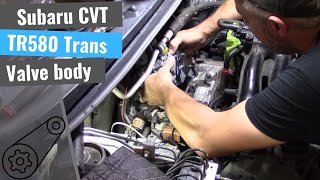
The 2012-2016 Impreza uses the TR580 Lineartronic CVT, which is known for issues with its valve body. The solenoids that control hydraulic pressure, especially the torque converter lock-up solenoid, are a common failure point, making this the most likely cause for a P0730 code. Due to the prevalence of this issue, Subaru issued a significant warranty extension (TSB 16-107-17R) for the CVT on 2012-2015 models, which is the most important factor for owners of these vehicles to be aware of before authorizing expensive repairs.
Symptoms You May Notice
- Check Engine Light is on
- AT OIL TEMP light flashing on the dashboard
- Vehicle enters 'limp mode' with significantly reduced power
- Hesitation or stumbling during acceleration
- Jerky or harsh shifting sensations
- Engine RPMs are higher than usual for the vehicle's speed
- Reduced fuel economy
- A rocking or bucking sensation during deceleration
- Replacing only the torque converter when the issue is the lock-up solenoid located within the valve body.
- Assuming the entire transmission needs to be replaced without first properly diagnosing the valve body.
- Using incorrect, non-Subaru CVT fluid after a service, which can cause shifting problems and trigger this code.
- Replacing individual solenoids with unreliable aftermarket parts that fail shortly after installation.
Most Likely Causes
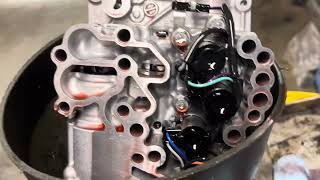
- Failing CVT Valve Body / Solenoids 🔴 High Probability → Shop Transmission Valve Body The control solenoids within the valve body, particularly the torque converter lock-up solenoid, are a well-documented failure point on the TR580 CVT used in this generation of Impreza. The solenoids degrade over time, leading to incorrect hydraulic pressure control.
How to confirm: A technician will use a diagnostic scan tool to monitor solenoid performance and line pressure data. Often, other codes like P2764 (Torque Converter Clutch Pressure Control Solenoid Control Circuit Low) will be present, pointing directly to the valve body.
Typical fix: Replace the entire CVT valve body assembly with a new OEM unit. While individual solenoids can be purchased aftermarket, they are known to be unreliable and fail quickly. The manufacturer-recommended and most reliable repair is a complete OEM valve body replacement.
Est. part cost: $800-$1200 - Low or Degraded CVT Fluid ⚪ Low Probability While Subaru marketed the fluid as 'lifetime', it can degrade or become low due to leaks, causing hydraulic pressure issues. This is less common than valve body failure but is a crucial first check. Some owners report the code appears only during hard cornering, suggesting fluid sloshing away from the pickup when the level is low.
How to confirm: The fluid level and condition must be checked. This is a complex procedure on this vehicle as there is no dipstick; it must be done on a lift with the vehicle at a specific temperature (95°F to 113°F) using an infrared thermometer on the pan. 🎬 Watch: How to properly perform a CVT fluid service Dark, burnt-smelling fluid indicates a problem.
Typical fix: Perform a CVT fluid drain and fill using only genuine Subaru High-Torque CVT fluid. If the fluid is very contaminated, a full transmission replacement may be necessary.
Est. part cost: $120-$200
Rare But Worth Checking
- Internal CVT Mechanical Failure: In some cases, the code can indicate a more severe problem with the CVT's internal components like the variator pulleys or chain, which would require a complete transmission replacement. This is usually a last resort after the valve body and fluid are ruled out.
- Faulty Transmission Control Module (TCM): → Shop Transmission Assembly It is rare for the TCM itself to fail, but it can happen. This is typically diagnosed only after all other possibilities, like the valve body and wiring, have been eliminated.
Diagnosis Steps
- Contact a Subaru dealership with your Vehicle Identification Number (VIN) to check for coverage under the CVT warranty extension (TSB 16-107-17R, for 2012-2015 models) or a PZEV warranty. This should be your first step.
- If not covered by warranty, have a qualified technician scan the TCM for P0730 and any other related codes, like P2764.
- Check the CVT fluid level and condition. This must be done according to the manufacturer's procedure, as there is no dipstick.
- If the fluid level and condition are good, the next step is to diagnose the valve body. A technician will use a scan tool to monitor live data from the transmission, including line pressure and solenoid commands.
- Inspect the wiring harness and connectors between the TCM and the CVT for any signs of damage or corrosion.
- If the valve body is confirmed to be faulty, it should be replaced with a new OEM part.
- After replacement, perform the CVT re-learn procedure with a compatible scan tool. Some owner experiences suggest the transmission will re-learn on its own over several drive cycles, but the official procedure is recommended.
Parts You'll Likely Need
- CVT Valve Body Assembly
(OEM #31825AA052 (superseded by 31825AA055))— This is the most common failure point on the TR580 CVT that causes code P0730. The entire assembly is replaced because individual solenoids are not sold by Subaru and aftermarket options are notoriously unreliable. Always confirm the exact part number with your vehicle's VIN.
Trusted brands: Subaru (OEM)
OEM price range: $800-$1200
Aftermarket price range: $250-$500 (Remanufactured, use with extreme caution as failures are common) 🎬 Watch: Why aftermarket and rebuilt valve bodies fail
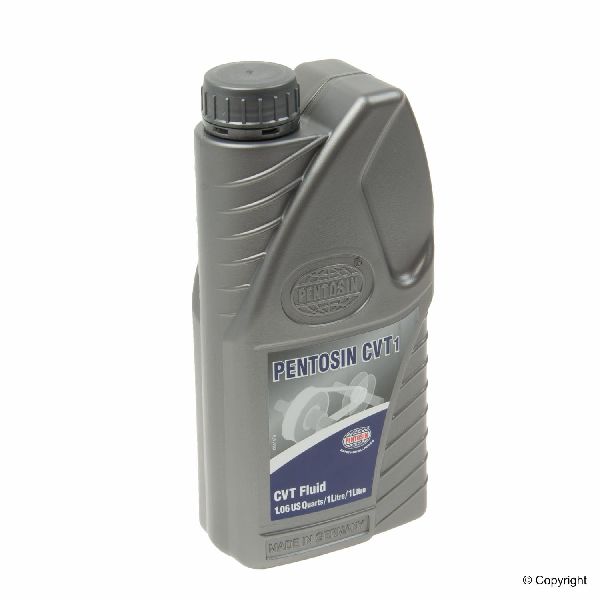
- Subaru High Torque CVT Fluid
(OEM #SOA427V1660)— This specific fluid is required for any service on the Lineartronic CVT. Using any other type of fluid can cause damage or performance issues.
Trusted brands: Subaru (OEM)
OEM price range: $20-$30 per quart
Related Codes That Often Appear With This One
- P0700 — This is a generic code that simply means the Transmission Control Module (TCM) has stored a fault. It will almost always appear alongside a specific transmission code like P0730.
- P2764 — This code points specifically to a 'Torque Converter Clutch Pressure Control Solenoid Control Circuit Low' fault, which is a primary solenoid located in the valve body. Its presence strongly suggests the valve body is the culprit.
Technical Service Bulletins (TSBs) & Recalls
- 16-107-17R: CVT Warranty Extension - This bulletin officially extends the powertrain warranty for the CVT to 10 years or 100,000 miles for 2012-2015 Impreza models, among others. It explicitly lists the applicable models and provides claim information.
Platform-Specific Known Issues
- Subaru extended the warranty on the CVT for 2012-2015 Impreza models to 10 years or 100,000 miles (TSB 16-107-17R). Note: this does not cover the 2016 model year.
- In states that adopted California's emission standards (PZEV states), some models may have the valve body covered under a 15-year/150,000-mile emissions warranty. These states include CA, CT, ME, MD, MA, NJ, NY, RI, and VT. Owners in these states with high-mileage vehicles should strongly pursue this with a dealer.
- Owner Story: A user on r/subaruimpreza with a 2014 Impreza at 144,000 miles in Maine confirmed their valve body replacement was fully covered under the PZEV warranty, saving them thousands of dollars.
Mechanic-Grade Diagnostic Values
- Lock-up Duty Solenoid Resistance — expected: 10.0 - 13.5 Ohms. Failure: A significantly lower reading (e.g., 2.5 Ohms) or an open circuit (OL) indicates a failed solenoid. The circuit may also test good when cold but fail when hot.
- AWD (Transfer Clutch) Solenoid Resistance — expected: 2.0 - 4.5 Ohms. Failure: A reading outside of this range indicates a failure of the AWD solenoid.
- Secondary Line Pressure Control Solenoid Resistance — expected: 5.0 - 7.0 Ohms. Failure: A reading outside of this range points to a fault in the line pressure control solenoid.
- Forward/Reverse Linear Solenoid Resistance — expected: 4.0 - 6.0 Ohms. Failure: An incorrect resistance reading suggests a fault with the forward/reverse control solenoid.
- Line Pressure Stall Test ('D' Range, Full Throttle) — expected: 1,000 — 1,200 kPa (145 — 174 psi). Failure: Pressure significantly below this range indicates a major hydraulic issue, such as a failing pump or severe internal leak.
Scan Tool Commands That Help
- Subaru Select Monitor (SSM) or compatible advanced scanner: Clear AT Learning Data — This function must be used immediately after installing a new valve body or TCM to erase the old adaptive values stored by the TCM before starting the relearn process.
- Subaru Select Monitor (SSM) or compatible advanced scanner: AT Learning Control / Compulsory Learning Mode — This is a mandatory guided procedure to be performed after replacing the CVT valve body or the entire transmission to calibrate the new components.
- Subaru Select Monitor (SSM): AWD ON/OFF Switching Mode — This command is used during advanced diagnostics, such as a Transfer Clutch Pressure Test, to isolate the AWD system.
Wiring & Ground Locations
- Transmission Control Module (TCM) — Located in the center of the dash, behind the dashboard assembly.. The TCM is the brain that commands the transmission. All solenoid resistance tests can be performed at the TCM connectors, which is often easier than accessing the transmission itself.
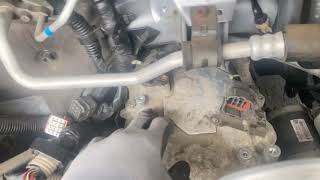
- Transmission Main Connectors (T3/B12 and T4/B11) — On top of the transmission housing, easily accessible from the engine bay. The Grey connector (T4/B11) contains the wiring for all seven transmission solenoids.. This is the primary connection point for testing the valve body solenoids directly at the transmission without removing any major components.
- Transmission Case Ground — A ground wire is typically attached to the transmission housing via a 12mm bolt.. A poor ground connection can cause erratic behavior from sensors and solenoids, potentially leading to incorrect diagnostic codes. Ensuring this ground is clean and tight is a critical check.
Real Owner Repair Stories
- Reddit user on r/subaru (2012 Impreza) — Dashboard lit up with Check Engine Light, AT OIL TEMP flashing. Codes P0700 and P2764 were present.
❌ Tried (didn't work) Replaced only the individual lock-up solenoid.
✅ What actually fixed it The single solenoid replacement worked for only one week before the codes returned. The final fix was replacing the entire CVT valve body assembly.
OEM Part Supersession History
31825AA050, 31825AA051, 31825AA052, 31825AA053, 31825AA054→31825AA055— Subaru has released multiple revisions of the TR580 valve body to address reliability issues with the control solenoids. The latest part number contains the most recent updates.
Heads up: While an older part number like 31825AA052 might physically fit, it will not have the engineering updates of the newest version (31825AA055) and is more prone to failure.
Model Year Variations Within This Range
- 2012-2015: These model years are covered by Subaru's CVT warranty extension (TSB 16-107-17R), which extends coverage to 10 years or 100,000 miles. This is a critical factor in the cost of repair.
- 2016: The 2016 model year was NOT included in the major CVT warranty extension, meaning owners of these vehicles are more likely to face the full out-of-pocket cost for a valve body replacement unless covered by a PZEV warranty.
Diagnostic Flowchart
Other Known Issues on This Vehicle
Issues unrelated to this code that are worth knowing about as an owner of this generation:
- Excessive Oil Consumption 🔴 High — Very common on early FB20B engines (approx. 2012-2014). Caused by faulty piston rings. Many engines had short blocks replaced under warranty. Consumption of 1 quart every 1,200-2,000 miles is frequently reported. (Ref: A class-action lawsuit led to warranty extensions and an oil consumption test protocol for dealers to follow.)
- Failing Front Lower Control Arm Bushings 🟠 Medium — The rearward bushing of the front lower control arm is prone to cracking and leaking its silicone filling, typically after 60,000-100,000 miles. This can cause clunking noises, poor alignment, and vague steering feel.
- Minor Oil Seepage/Leaks 🟡 Low — The boxer engine design can lead to minor oil seepage from areas like the timing cover, cam carriers, or head gaskets over the life of the vehicle. While not as severe as the EJ-series head gasket issues, it's a common point of observation.
Used vs. New Parts: Buying Guide for This Vehicle
When a used part is the smart pick: For this specific repair, sourcing a used valve body from a junkyard is NOT recommended. The failure is a known design and manufacturing defect, not just a wear item, meaning a used part is highly likely to have the same fault or develop it shortly after installation.
What to inspect on the donor part:
- Not applicable, as even low-mileage donor parts can be faulty. The risk of failure is too high to justify the labor involved in the replacement.
OEM-only on this vehicle (don't cheap out):
- CVT Valve Body Assembly
- Subaru High Torque CVT Fluid
Brands owners have reported issues with on this vehicle:
- All remanufactured valve bodies (e.g., from eBay, Amazon)
- Individual aftermarket solenoids (e.g., Dorman). While some users report short-term success, many stories document failures within weeks or months, necessitating a second repair. The consensus among professional mechanics and experienced owners is that only a new OEM valve body is a reliable, long-term fix.
Real Owner Stories
Aggregated from forums and TSBs cited above. Mileages and costs reflect what owners reported in those sources.
2012 Impreza — 140000 miles
Symptoms: Throws codes P0700 and P0730. When driving, it 'seems to randomly shift in first( i know its not actually a first gear but the equivalent)'.
What fixed it: The user replaced the valve body, but the issue persisted; no final resolution was reported.
Source hint: Reddit thread titled '2012 Impreza cvt i' in r/subaruimpreza
2014 Impreza — 144000 miles
Symptoms: P0730 and related codes leading to valve body failure.
What fixed it: Valve body replacement fully covered under the PZEV emissions warranty.
Source hint: Reddit r/subaruimpreza user report from Maine
2014 Forester 2.5L — ~100000 miles
Symptoms: Valve body solenoid failure leading to P0730 and related codes.
What fixed it: Valve body replacement.
Cost: $1,000-$1,400
Source hint: The Subaru Forums
Related OBD-II Codes
Frequently Asked Questions
Is my 2012-2015 Subaru Impreza covered for P0730 under a warranty extension?
Does the CVT warranty extension apply to the 2016 Impreza model year?
I live in a PZEV state and my Impreza has 140,000 miles. Can I still get the valve body fixed for free?
Can I just replace the individual solenoid instead of the whole valve body?
How do I check the CVT fluid level on my 2012-2016 Impreza?
What specific fluid should be used if I need a top-off or drain and fill?
Helpful Videos

We Have This Part in Stock

The information in this article is provided for general reference and educational purposes only. Vehicle specifications, procedures, and part compatibility can vary by production date, trim level, and region. Always consult your vehicle's factory service manual and verify part numbers before purchasing or performing repairs. Safety-critical components such as airbags, seat belts, and braking systems should be installed by a qualified professional.
- Subaru Impreza:
- 🧭 Diagnostic Flowchart
- 🎬 Helpful Videos
- 🛍️ Shop This Part
- What's Unique About the 2012-2016 Subaru Impreza
- Symptoms You May Notice
- Most Likely Causes
- Rare But Worth Checking
- Diagnosis Steps
- Parts You'll Likely Need
- Related Codes That Often Appear With This One
- Technical Service Bulletins (TSBs) & Recalls
- Platform-Specific Known Issues
- Mechanic-Grade Diagnostic Values
- Scan Tool Commands That Help
- Wiring & Ground Locations
- Real Owner Repair Stories
- OEM Part Supersession History
- Model Year Variations Within This Range
- Other Known Issues on This Vehicle
- Used vs. New Parts: Buying Guide for This Vehicle
- Real Owner Stories
- 2012 Impreza — 140000 miles
- 2014 Impreza — 144000 miles
- 2014 Forester 2.5L — ~100000 miles
- Related OBD-II Codes
- Frequently Asked Questions
- 🎟️ Get 5% Off