

P0730 on 2007-2011 Toyota Camry: Incorrect Gear Ratio Causes and Fixes
P0730 on a 2007-2011 Camry means the transmission is slipping. The most common causes are low/dirty transmission fluid, a faulty shift solenoid, or outdated transmission control module (TCM) software. A fluid service is the first step; if that doesn't work, a solenoid or TCM update may be needed.
- P0730 indicates a serious transmission slipping issue that should be addressed immediately to avoid catastrophic failure.
- The first and most important diagnostic step is to have the transmission fluid level and condition professionally checked.
- On a 2007-2011 Camry, ask your mechanic to check if a transmission software update (re-flash) is available, as this is a known fix for shifting problems on this model.
- If fluid and software are good, the next most likely cause is a faulty shift solenoid, which is far cheaper to replace than the entire transmission.
What's Unique About the 2007-2011 Toyota Camry
For the 6th generation Camry (2007-2011), this code often appears alongside complaints of harsh shifting or 'shift flare,' especially when the transmission is cold. This generation uses the U660E (V6) or U760E (4-cyl, 2010-11) transmissions, which are known for these issues. Toyota released software updates for the Transmission Control Module (TCM) to address these specific shift quality complaints. Therefore, before suspecting a major mechanical failure, it's crucial to rule out low fluid and ensure the TCM software is up-to-date, as these are common and less expensive fixes for this platform.
Symptoms You May Notice
- Check Engine Light is illuminated
- Harsh, jerky, or delayed gear shifts
- Transmission slipping, where engine RPMs increase but vehicle speed does not
- Vehicle enters 'limp mode,' getting stuck in a single gear (often 2nd or 3rd)
- Noticeable loss of power and poor acceleration
- Reduced fuel economy
- Harsh coasting downshifts
- Replacing the entire transmission without first checking fluid, solenoids, or for available software updates.
- Replacing the input or output speed sensors, which are less common failure points on this model compared to fluid, solenoid, or software issues.
Most Likely Causes
- Low or Dirty Transmission Fluid 🔴 High Probability → Shop Transmission Assembly These models have a 'lifetime' or 'sealed' transmission, which can lead owners to neglect fluid service. Over time, fluid degrades and loses its hydraulic properties, or leaks can lower the fluid level, causing slippage and shuddering.
How to confirm: The fluid level and condition must be checked. This is not a simple dipstick check; it requires the vehicle to be level, at a specific temperature, and involves removing an overflow plug. 🎬 Watch: How to check fluid on these sealed transmissions The fluid should be bright red and not smell burnt. Contaminated fluid can cause blockages in hydraulic passages.
Typical fix: Perform a transmission fluid drain-and-fill or a full fluid exchange using the correct Toyota ATF WS 🎬 See a step-by-step U760E transmission fluid service (World Standard) fluid. Fix any leaks found. A simple drain-and-fill may not be enough if the fluid is heavily degraded.
Est. part cost: $60-$150 - Faulty Shift Solenoid 🟡 Medium Probability → Shop Transmission Valve Body Solenoids are electro-hydraulic valves that control fluid flow to engage gears. They can fail electronically or become clogged with debris from old fluid, causing them to stick. The U660E and U760E transmissions are known for solenoid-related shift quality issues.
How to confirm: A professional scan tool can check for solenoid-specific trouble codes (e.g., P0746) and can often perform an active test to command the solenoid on and off. The solenoid's electrical resistance can also be tested with a multimeter after removing the transmission pan.
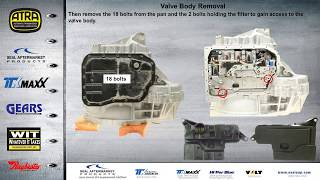
Typical fix: Replace the specific faulty solenoid or the entire solenoid pack. This requires removing the transmission oil pan. 🎬 Watch: How to replace a Toyota shift solenoid Aftermarket kits from brands like Rostra or Sonnax are popular for addressing known solenoid issues.
Est. part cost: $50-$200 - Outdated Transmission Control Module (TCM) Software 🟡 Medium Probability → Shop Transmission Assembly Toyota issued Technical Service Bulletins like T-SB-0287-10 for the 2010-2011 4-cylinder models to correct harsh shifting and 'flaring' issues via a software update. Incorrect shift logic can cause the conditions that trigger a P0730.
How to confirm: A Toyota dealership or a properly equipped independent shop can check the current software calibration ID against Toyota's database to see if an update is available for the vehicle's VIN.
Typical fix: Flash the TCM with the latest software calibration provided by Toyota. This is often covered under emissions warranty for a certain period.
Est. part cost: $0-$200 (Labor cost at a dealership)
Rare But Worth Checking
- Failing Torque Converter: → Shop Automatic Transmission Torque Converter A failing torque converter clutch can cause shuddering, slipping, and contamination of the transmission fluid with clutch material, which can clog solenoids and trigger a P0730 code. This is a known issue on the U760E transmission, particularly in the next generation.
- Clogged Transmission Filter: → Shop Transmission Assembly If the transmission fluid has severely degraded, the filter can become clogged, restricting fluid flow and pressure. This is usually replaced during a fluid service.
- Internal Mechanical Failure: This is the worst-case scenario and includes worn-out clutch packs, a failing oil pump, or a damaged valve body. The U660E (V6) in particular is prone to case wear from high torque loads, leading to internal alignment issues. This is usually only suspected after all other electronic and hydraulic causes have been ruled out.
Diagnosis Steps
- Check and document any other stored trouble codes in the ECM and TCM.
- Inspect the transmission fluid level and condition. This requires a specific procedure on a lift with the engine running and the fluid at a target temperature (typically 104-113°F).
- If the fluid is low, top it off, clear codes, and re-test. If it's dark, burnt, or full of debris, a fluid and filter change is necessary.
- Using a professional scan tool, monitor live data for the input and output speed sensors to ensure they are reading correctly while driving.
- Check with a Toyota dealer for any open recalls or available TCM software updates (referencing TSBs like T-SB-0287-10 for 2010-11 models).
- If specific solenoid codes are present, test the resistance of the indicated solenoid and check its wiring. If no specific codes are present, testing may still be warranted based on symptoms.
- If all external electronic and hydraulic checks pass, the issue is likely an internal problem (valve body, torque converter, clutch packs), requiring transmission removal and inspection by a specialist.
Parts You'll Likely Need
- Automatic Transmission Fluid (ATF)
(OEM #00289-ATFWS)— Low or degraded fluid is the most common cause of this code. A drain and fill is the first logical repair step.
Trusted brands: Toyota OE, Aisin (OEM supplier), Idemitsu TLS-WS
OEM price range: $12-$18 per quart
Aftermarket price range: $8-$15 per quart - Shift Solenoid
(OEM #35280-52040)— A stuck or failed solenoid is a frequent cause of shifting errors that lead to a P0730 code.
Trusted brands: Toyota OE, Rostra, Sonnax
OEM price range: $150-$250
Aftermarket price range: $40-$120 - Automatic Transmission Filter Kit
(OEM #35330-0W020)— If the fluid is being changed due to contamination, the filter should always be replaced at the same time to ensure proper fluid flow.
Trusted brands: Toyota OE, Wix, ATP
OEM price range: $40-$60
Aftermarket price range: $20-$40
Related Codes That Often Appear With This One
- P0731-P0735 — These codes indicate an incorrect gear ratio in a specific gear (1st, 2nd, etc.), which helps pinpoint the area of the malfunction. P0730 is a general code that may appear with one of these more specific codes.
- P0746, P0751, etc. — These are codes for specific shift solenoid performance issues. If one of these is present, it is the likely cause of the general P0730 code.
Technical Service Bulletins (TSBs) & Recalls
- TC007-07: Addresses harsh upshifts/downshifts, particularly when the engine is cold, with a TCM re-flash.
- T-SB-0287-10: A 'Shift Feeling Enhancement' TSB for 2010-2011 4-cylinder models to improve shift performance and smoothness during acceleration via a software update. This was covered under the Federal Emission Warranty for 96 months/80,000 miles.
Platform-Specific Known Issues
- A known issue of harsh shifting or 'shift flare' when cold can be addressed by a TCM software update as per Toyota TSBs TC007-07 and T-SB-0287-10.
- Owner Experience: A user on BobIsTheOilGuy.com with a 2010 Camry reported that having TSB T-SB-0287-10 applied by the dealer resulted in much smoother light- and off-throttle shifts and less sensitive throttle tip-in, resolving his complaints.
Mechanic-Grade Diagnostic Values
- Shift Solenoid (SSA, SSB) Resistance — expected: 10 - 11 ohms. Failure: A reading outside this range indicates a faulty solenoid coil.
- Linear Solenoid (SL) Resistance — expected: 11 - 15 ohms. Failure: A reading outside this range indicates a faulty solenoid coil.
- Solenoid Resistance to Ground — expected: Above 10kΩ. Failure: A resistance below 10kΩ indicates a short to ground within the solenoid, requiring replacement.
Scan Tool Commands That Help
- Toyota Techstream: Check Mode — To place the TCM in a high-sensitivity mode. This will cause fault codes that normally require two or more drive cycles to set immediately when the fault condition is detected, speeding up diagnosis. Note that enabling this mode erases existing codes and freeze frame data.
- Toyota Techstream: A/T Code Reset (Utility) — After replacing the transaxle or TCM, this function is used to reset the transaxle compensation code. Failure to do this can result in shift shock. The 60-digit compensation code must be recorded from the old transaxle before installation.
- Professional Scan Tool: Torque Converter Stall Speed Test — To help differentiate between a mechanical (e.g., slipping clutches, torque converter) and an electronic (e.g., sensor, solenoid) problem. If the engine stall speed is out of factory specifications, it points towards a mechanical issue.
Wiring & Ground Locations
- Main Transmission Ground — A ground wire runs from the negative battery terminal directly to a plate bracket that bolts to the top of the transmission housing.. A poor ground connection to the transmission can cause erratic behavior of sensors and solenoids, potentially leading to incorrect readings and shifting problems that could trigger a P0730.
- U760E Solenoid Connectors (SL3 & SL4) — On the valve body for the U760E transmission.. It is possible to cross the connectors for the SL3 (blue wire) and SL4 (green wire) solenoids during reassembly. This can cause incorrect solenoid activation and shifting problems. The wiring harness design leaves them loose, making a mix-up easy.
Model Year Variations Within This Range
- 2007-2009 (4-Cylinder): These models used the 2.4L 2AZ-FE engine paired with a 5-speed U250E automatic transmission.
- 2010-2011 (4-Cylinder): These models received the updated 2.5L 2AR-FE engine and the 6-speed U760E automatic transmission. The P0730 code on these years relates to the U760E.
- 2007-2011 (V6): All V6 models throughout this generation used the 3.5L 2GR-FE engine paired with the 6-speed U660E automatic transmission. The P0730 code on these models relates to the U660E.
Diagnostic Flowchart
Other Known Issues on This Vehicle
Issues unrelated to this code that are worth knowing about as an owner of this generation:
- Excessive Oil Consumption (2AZ-FE Engine) 🔴 High — Very common on 2007-2009 models with the 2.4L 4-cylinder engine. Caused by defective piston rings. Can lead to engine failure if oil level is not monitored frequently. (Ref: T-SB-0094-11 outlines the repair, which involves replacing pistons and rings. A warranty enhancement program was offered but has since expired.)
- Melting / Sticky Dashboard 🟡 Low — Widespread issue in hot climates for the entire 2007-2011 generation. The dashboard surface degrades, becomes sticky, and creates a dangerous glare on the windshield. (Ref: Toyota issued a Warranty Enhancement Program (ZE6) to replace affected dashboards, but the program has expired.)
- Torque Converter Shudder (U760E) 🟠 Medium → Shop Automatic Transmission Torque Converter — While more prominent in the next generation (2012-2014), the U760E transmission in 2010-2011 4-cylinder models can also exhibit this shudder, typically between 25-50 mph under light throttle. (Ref: Multiple TSBs (e.g., T-SB-0312-17, T-SB-0034-14) were issued for later models, but the issue's root cause is in the transmission design.)
- Water Pump Failure (2GR-FE V6) 🟠 Medium — A known failure point on the 3.5L V6 engine, often occurring without warning. Symptoms include coolant leaks (pink residue) and engine noise.
Used vs. New Parts: Buying Guide for This Vehicle
When a used part is the smart pick: A complete used transmission from a reputable salvage yard can be a cost-effective solution if a major internal failure like case wear or clutch pack damage is confirmed. It is often cheaper than rebuilding the original unit.
Donor-vehicle mileage cap: roughly under 120000 miles for the part to have meaningful remaining life.
What to inspect on the donor part:
- Check the salvage vehicle's VIN to confirm the model year and ensure it's a direct match (e.g., U660E for V6, U760E for 2010-11 4-cyl).
- Request a video of the donor car running and driving, if possible, to see the transmission shift.
- Inspect the transmission fluid from the donor unit. It should not be black, smell burnt, or contain excessive metal particles.
- Look for a warranty from the salvage yard, typically 30-90 days, which provides some protection against a defective unit.
OEM-only on this vehicle (don't cheap out):
- Transmission Control Module (TCM): While used modules can work, they often require VIN-specific programming. A new OEM part ensures compatibility and the latest software.
- Complete Valve Body Assembly: Due to the high potential for bore wear, a new or professionally remanufactured (e.g., by Sonnax) valve body is a safer bet than a used one of unknown condition.
Aftermarket brands forum-validated for this vehicle:
- Sonnax: Widely regarded for high-quality valve body repair kits (like the U660E-ZIP), oversized valves, and solenoid repair solutions.
- Rostra: A popular aftermarket manufacturer of replacement shift solenoids.
- Aisin: The original equipment manufacturer for Toyota transmissions; their ATF and hard parts are equivalent to Toyota OE.
Brands owners have reported issues with on this vehicle:
- Unbranded or generic 'white box' solenoid kits from online marketplaces. These often have high failure rates and inconsistent quality control compared to established brands.
Real Owner Stories
Aggregated from forums and TSBs cited above. Mileages and costs reflect what owners reported in those sources.
2010 Toyota Camry 4-cylinder
Symptoms: Aggressive shifting, sensitive throttle tip-in, and poor shift quality during light- and off-throttle transitions.
What fixed it: Applied TSB T-SB-0287-10 (TCM software calibration update) at the dealership.
Source hint: BobIsTheOilGuy.com thread titled 'Toyota TSB 0287-10: 2010-2011 Camry TCM Calib.'
2014 Lexus ES350 (U660E Platform Mate)
Symptoms: Harsh shifts and slipping between gears.
What fixed it: The U660E transmission (shared with V6 Camry) is prone to solenoid issues and internal wear requiring hydraulic or electronic repair.
Source hint: ClubLexus.com thread titled '2014 ES350 Transmission acting funny'
Related OBD-II Codes
Frequently Asked Questions
Is there a TSB for the harsh shifting I'm experiencing in my 2010 4-cylinder Camry?
Can I check the transmission fluid in my 2007-2011 Camry with a standard dipstick?
What type of transmission fluid does my 2008 Camry require to avoid P0730 codes?
Is the TCM software update covered under warranty for my 2011 Camry?
My V6 Camry is shifting harshly; does it share the same transmission as the 4-cylinder?
Could my P0730 code be related to the cold-start harsh shifting mentioned in Toyota bulletins?
Helpful Videos


We Have This Part in Stock

The information in this article is provided for general reference and educational purposes only. Vehicle specifications, procedures, and part compatibility can vary by production date, trim level, and region. Always consult your vehicle's factory service manual and verify part numbers before purchasing or performing repairs. Safety-critical components such as airbags, seat belts, and braking systems should be installed by a qualified professional.
- Toyota Camry:
- 🧭 Diagnostic Flowchart
- 🎬 Helpful Videos
- 🛍️ Shop This Part
- What's Unique About the 2007-2011 Toyota Camry
- Symptoms You May Notice
- Most Likely Causes
- Rare But Worth Checking
- Diagnosis Steps
- Parts You'll Likely Need
- Related Codes That Often Appear With This One
- Technical Service Bulletins (TSBs) & Recalls
- Platform-Specific Known Issues
- Mechanic-Grade Diagnostic Values
- Scan Tool Commands That Help
- Wiring & Ground Locations
- Model Year Variations Within This Range
- Other Known Issues on This Vehicle
- Used vs. New Parts: Buying Guide for This Vehicle
- Real Owner Stories
- 2010 Toyota Camry 4-cylinder
- 2014 Lexus ES350 (U660E Platform Mate)
- Related OBD-II Codes
- Frequently Asked Questions
- 🎟️ Get 5% Off