

P0730 on 2007-2021 Toyota Tundra: Incorrect Gear Ratio Causes and Fixes
P0730 on a Toyota Tundra most often points to low, old, or burnt transmission fluid. Start by checking the fluid level and condition via the specific overflow plug procedure. If the fluid is fine, the problem is likely a failing shift solenoid, a clogged valve body, or a worn torque converter, which are more involved repairs.
- P0730 indicates transmission slippage; do not continue to drive the vehicle.
- Always start diagnosis by checking the transmission fluid level and condition. On a Tundra, this is a specific procedure without a dipstick.
- Using the correct Toyota World Standard (WS) transmission fluid is mandatory for this vehicle.
- If the fluid is healthy, the next most likely cause is a faulty shift solenoid, which is replaceable without removing the entire transmission.
- A full transmission rebuild is the worst-case scenario and should only be considered after ruling out fluid and electronic issues.
What's Unique About the 2007-2021 Toyota Tundra
The 2007-2021 Toyota Tundra uses robust Aisin automatic transmissions (primarily the A760 6-speed for the 4.6L V8 and the AB60 6-speed for the 5.7L V8). These units are known for their durability, so P0730 is less commonly a catastrophic internal failure and more often related to fluid condition or serviceable components like solenoids. Toyota marketed the transmission fluid as 'World Standard' (WS) lifetime fluid, which can lead to owners neglecting fluid services. This neglect is a primary contributor to issues at higher mileage, as degraded fluid loses its hydraulic properties and can cause valve body and solenoid problems.
Generation note: The 2007-2021 model years cover the entire second generation of the Tundra. This generation had a significant facelift for the 2014 model year, but the core Aisin 6-speed automatic transmissions (AB60E/AB60F) remained largely the same. The diagnostic process for a P0730 code 🎬 Watch: Common causes and fixes for the P0730 code is consistent across this entire year range.
Symptoms You May Notice
- Check Engine Light is illuminated.
- Transmission slipping (engine RPMs increase but speed does not).
- Harsh, erratic, or delayed gear shifts.
- Vehicle enters 'limp mode,' often getting stuck in a single gear (like 3rd).
- Noticeable decrease in fuel economy.
- Transmission overheating warning light may appear, especially under load.
- Shuddering or jerking, which may feel like driving over a rumble strip, can indicate torque converter clutch issues.
- Immediately replacing the entire transmission without first checking the fluid and testing the solenoids. Many shops may quote a full replacement when a much cheaper solenoid or fluid service could solve the problem.
- Replacing the Transmission Control Module (TCM) when the problem is actually a mechanical or hydraulic fault within the transmission itself.
Most Likely Causes
- Low, Burnt, or Degraded Transmission Fluid 🔴 High Probability → Shop Transmission Assembly Many Tundras run on their original 'lifetime' fluid, which degrades significantly after 100,000+ miles, losing its hydraulic properties and causing slippage. The sealed nature of the transmission discourages DIY checks, leading to prolonged operation with low or worn-out fluid.
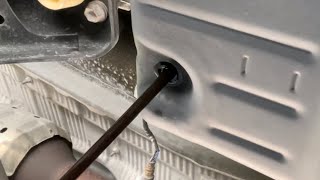
How to confirm: Check the transmission fluid level and condition. On these Tundras, there is no dipstick; a specific overflow plug procedure at a specific temperature (typically 97-115°F or 36-46°C) is required. The fluid should be bright red and clear, not dark brown, black, or have a burnt smell.
Typical fix: Perform a transmission fluid drain-and-fill or a full fluid exchange using Toyota-specific WS (World Standard) fluid. A full flush on a high-mileage transmission can sometimes cause issues by dislodging debris, so a drain-and-fill is often preferred. 🎬 Watch: Step-by-step Tundra transmission fluid drain and refill guide
Est. part cost: $70-$150 for fluid - Faulty Shift Solenoid or Valve Body 🟡 Medium Probability → Shop Transmission Valve Body Solenoids are electro-mechanical parts that wear out over time. Debris from old fluid can clog solenoid screens or the intricate passages within the valve body, causing them to stick. The pressure regulator valve bore within the AB60 valve body is a known wear point that can be repaired with specialized tools.
How to confirm: A professional scan tool can command individual solenoids to check for response. Often, P0730 will be accompanied by a more specific solenoid code (e.g., P0751, P2714). Resistance checks can also be performed on the solenoids with a multimeter to see if they are within spec (typically 11-15 ohms for shift solenoids).
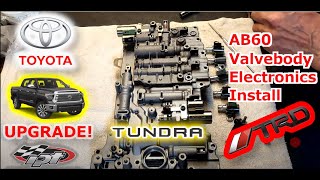
Typical fix: Replace the faulty shift solenoid(s). In some cases, the entire valve body may need to be cleaned, re-bored, or replaced. Extreme care must be taken to use the correct length bolts in the correct holes during reassembly to avoid cracking the valve body casting. 🎬 See: How to replace Tundra AB60 solenoids and electronics
Est. part cost: $50-$200 per solenoid, $500-$1200 for a valve body - Worn Internal Clutch Packs or Torque Converter ⚪ Low Probability → Shop Automatic Transmission Torque Converter While the Aisin transmissions are durable, high mileage, heavy towing, or prolonged operation with bad fluid can wear out the internal clutches or the torque converter clutch, leading to slippage. Torque converter shudder is a known issue acknowledged by Toyota in some service bulletins.
How to confirm: This is a diagnosis of exclusion. If fluid and solenoids are confirmed to be good, but slippage persists (often confirmed by excessive metal shavings in the pan), internal failure is likely. A torque converter stall test can also point to issues.
Typical fix: Complete transmission rebuild or replacement. A remanufactured transmission from Toyota can cost around $3,300 plus a core charge.
Est. part cost: $2500-$6000+
Rare But Worth Checking
- Faulty Transmission Control Module (TCM) or Wiring: → Shop Transmission Assembly While less common than mechanical or hydraulic issues, a damaged wiring harness or a failing TCM can cause incorrect signals, leading to shifting problems and triggering a P0730 code. This is typically a last resort after all mechanical and hydraulic components have been verified.
- Incorrect Transmission Filter Bolt Installation: → Shop Transmission Assembly A very specific but critical issue on AB60 transmissions is using a longer filter bolt in the wrong hole during a filter change. This can crack the valve body casting, leading to a loss of hydraulic pressure for reverse gear and potentially other shifting issues.
Diagnosis Steps
- Check and document any other stored trouble codes with an OBD-II scanner.
- Inspect the transmission fluid level and condition. This is a critical first step on the AB60/A760. The vehicle must be level, and the fluid checked via the overflow plug at a specific temperature (97-115°F / 36-46°C). Note any burnt smell or dark coloration.
- If fluid is low, top it off, clear codes, and test drive. If the fluid is very old or dirty, perform a drain-and-fill (or exchange) and re-evaluate.
- Using a professional scan tool, monitor live data for the transmission input (turbine) and output speed sensors to confirm they are reading correctly.
- Use the scan tool's bidirectional controls to command individual shift solenoids on and off to test their function and listen for a click.
- Drop the transmission pan and visually inspect for excessive metal debris. Fine gray material is normal wear, but large flakes or chunks indicate serious internal mechanical wear.
- With the pan off, inspect the wiring to the solenoids. Test the resistance of each solenoid with a multimeter (should be 11-15 ohms for shift solenoids, 5.0-5.6 ohms for linear solenoids like SLU/SLT).
- If solenoids test good, the valve body itself should be inspected for clogged passages or worn bores, particularly the pressure regulator valve bore.
- If all electronics and hydraulics are good, the issue is likely a worn torque converter or internal clutch packs, requiring a transmission overhaul or replacement.
Parts You'll Likely Need
- Transmission Fluid (Toyota WS)
(OEM #00289-ATFWS)— The most common cause is old, degraded fluid. Using the correct OEM fluid is critical for the performance of Aisin transmissions.
Trusted brands: Toyota, Aisin
OEM price range: $12-$20 per quart
Aftermarket price range: $10-$15 per quart - Shift Solenoid Kit (AB60E/F)
(OEM #35250-30050 (Superseding number, individual solenoids vary))— Solenoids are a frequent failure point that directly causes incorrect gear engagement and ratio codes. They are often replaced as a set when the valve body is serviced.
Trusted brands: Aisin, Rostra, Genuine Toyota
OEM price range: $150-$250 per solenoid
Aftermarket price range: $50-$150 per solenoid, or ~$150 for a full aftermarket kit - Transmission Filter and Pan Gasket
(OEM #35330-60050 (Filter), 35168-60010 (Gasket))— When servicing the valve body or solenoids, the filter and pan gasket should always be replaced to ensure a clean system and proper seal.
Trusted brands: Toyota, Beck/Arnley, WIX
OEM price range: $50-$70
Aftermarket price range: $20-$40
Related Codes That Often Appear With This One
- P0731-P0736 — These codes specify an incorrect ratio in a particular gear (e.g., P0731 for 1st gear). P0730 is a general code, while these point to which specific gear is failing to engage correctly.
- P2714 — This code indicates a problem with Pressure Control Solenoid 'D'. A failing solenoid is a direct cause for the transmission's inability to achieve the correct gear ratio, making it a common companion to P0730. Valve body wear is a known cause for this code.
- P2757 — This code relates to the Torque Converter Clutch Pressure Control Solenoid. A problem here can cause shudder and slipping, which the TCM may interpret as a general gear ratio error, logging P0730 as well.
Technical Service Bulletins (TSBs) & Recalls
- While no specific TSB directly addresses P0730 for the Tundra, related bulletins exist for transmission issues. For example, some TSBs address torque converter shudder, which can be a root cause of gear ratio problems. Always check with a Toyota dealer for the latest service bulletins related to transmission performance.
Platform-Specific Known Issues
- Valve Body Wear: → Shop Transmission Valve Body The AB60 valve bodies are known to wear in the pressure regulator valve bore, which can cause pressure loss and lead to codes like P2714 alongside P0730. Specialized tools from companies like Sonnax are available to ream the bore and install an oversized valve.
- Incorrect Valve Body Interchange: → Shop Transmission Valve Body When sourcing a used valve body, it's critical to get the correct one. Tundra AB60 valve bodies use two transmission fluid temperature sensors, while other similar Aisin units may only use one. Installing the wrong valve body will cause issues. The correct casting number is often 89010 or 8902.
Mechanic-Grade Diagnostic Values
- Shift Solenoid (S1, S2, S3, S4) Resistance — expected: 11 to 15 ohms at 68°F (20°C). Failure: A reading outside this range indicates a faulty solenoid coil.
- Linear Solenoid (SLT, SLU, SL1, SL2) Resistance — expected: 5.0 to 5.6 ohms at 68°F (20°C). Failure: A reading outside this range points to a bad solenoid.
Scan Tool Commands That Help
- Toyota Techstream: Active Test: Control the Shift Solenoid (S1, S2, etc.) — This allows a technician to individually command each shift solenoid to cycle on and off. It helps confirm if a solenoid is mechanically stuck or electrically unresponsive without having to first remove the valve body.
- Toyota Techstream: Utility: Reset Memory (AT) — This procedure should be performed after replacing the transmission, valve body, or ECM/TCM. It clears the transmission's learned shift values (adaptive memory). Failure to perform this reset can lead to harsh or erratic shifting as the computer tries to use old data with new parts.
- Manual Procedure: ECM/TCM Memory Reset — A full reset can be performed without a scan tool by disconnecting the negative battery terminal for at least 15-30 minutes. Some forum users suggest touching the disconnected positive and negative cables together (away from the battery) to drain any residual power from capacitors. This forces the transmission to relearn shift patterns.
Wiring & Ground Locations
- Engine Ground Straps — Main engine grounds are located at the rear of the cylinder heads, one on each side, near where the engine mates to the transmission.. A poor engine-to-chassis ground can cause floating voltages and erratic sensor readings, potentially confusing the TCM and contributing to incorrect ratio calculations or solenoid command errors.
- Transmission Harness Connector — The main electrical connector for the transmission is on the passenger side of the transmission case. It bundles the wiring for all internal solenoids and sensors.. This is the primary point for testing the entire internal transmission harness and solenoids from outside the transmission. Corrosion or damage here can cause a host of transmission codes, including P0730.
- TCM/ECM Location — The Engine Control Module (ECM), which also houses the Transmission Control Module (TCM) logic, is located in the engine bay on the passenger side, near the firewall.. This is the source of all commands to the transmission. While rare, checking the connectors here for corrosion or damage is a valid step if wiring issues are suspected.
- Interior Ground Point — A common and accessible chassis ground point inside the cab is located under the driver's side kick panel.. While not directly tied to the transmission, various control modules share common interior grounds. A fault at a major ground junction could theoretically cause communication issues on the CAN bus, affecting the TCM.
Real Owner Repair Stories
- TundraTalk.net forum user (2012 Tundra 4.6L with 136k miles) — Initial CEL was for a generic 'trans control solenoid'. After a fluid/filter change and testing solenoids from the battery, the code cleared but new symptoms appeared: jumping into drive, hard 2-3 downshift, and delayed/hard 4-5 upshift.
❌ Tried (didn't work) Clearing the code (it returned)., Testing all solenoids from the battery., Replacing transmission fluid and filter., Adding LubeGard additive.
✅ What actually fixed it The user did not post a final confirmed fix in the thread, but the symptoms appearing *after* the fluid service point towards either an electrical connection issue during reassembly, an issue with the non-OEM fluid used ('Valvoline Max that is good with WS'), or a failing solenoid that was borderline and the fluid change didn't resolve the underlying issue. - Tundras.com forum user (2012 Tundra with 241k miles) — P2714 (Pressure Control Solenoid D Performance/Stuck Off) and likely other shifting codes.
❌ Tried (didn't work) Initial diagnosis pointed to solenoid failure.
✅ What actually fixed it The owner replaced the S1 (Part# 520506) and S4 (Part# 520587) solenoids using aftermarket Rostra brand parts from Rock Auto. This resolved the codes and returned the transmission to normal operation. The owner noted the original transmission filter screen was still very clean at 241k miles.
OEM Part Supersession History
Varies by specific solenoid→Varies, e.g., 35250-30070— Revisions to internal design or materials for improved durability or performance.
Heads up: While many solenoids are physically interchangeable, using the wrong part number can result in incorrect hydraulic pressures and shifting problems. It is critical to match the solenoid part number to the vehicle's VIN and specific valve body casting number.N/A (Valve Body Casting)→N/A— There are different valve body castings used across the model years, such as #89010 and #8870.
Heads up: A valve body assembly with a different casting number may not be a direct fit or may have different hydraulic passage configurations. It is crucial to match the casting number from the old valve body when ordering a replacement.
Model Year Variations Within This Range
- 2007-2021: The AB60E is the 2-wheel drive version, while the AB60F is the 4-wheel drive version. They are internally very similar but have different tail housings and output shafts.
- Varies: Some earlier AB60 valve bodies use two transmission temperature sensors, while later versions may only use one. The valve bodies can sometimes be interchanged if the unused sensor port is properly plugged.
Diagnostic Flowchart
Other Known Issues on This Vehicle
Issues unrelated to this code that are worth knowing about as an owner of this generation:
- Cam Tower Leak 🟠 Medium — Common on 4.6L and 5.7L V8 engines, often appearing as a slow seep after 80,000-100,000 miles. Many owners live with minor seeping, as the repair is labor-intensive and expensive ($2,500-$4,000+).
- Secondary Air Injection System Failure 🔴 High — Widespread issue where moisture enters the air pumps or valves, causing them to fail and forcing the truck into 'limp mode'. Most common on 2007-2014 models. (Ref: Toyota issued a warranty extension and a Limited Service Campaign (LSC DOE) for some 2012-2013 models to reprogram the ECM to prevent the failure.)
- Frame Rust/Corrosion 🔴 High — Significant issue, particularly for trucks operated in cold-weather states with high road salt use. Early 2nd gen models were more susceptible. (Ref: Toyota initiated several recalls and warranty enhancement programs for frame inspection and replacement on 2000-2003 and later 2004-2006 models, though the problem persists to a lesser degree on newer models.)
- Torque Converter Shudder 🟠 Medium → Shop Automatic Transmission Torque Converter — Some owners report a shudder or vibration during light acceleration as the torque converter clutch engages/disengages. This can be caused by old fluid or a design issue. (Ref: Toyota has acknowledged this issue via technical service bulletins for certain model years.)
Used vs. New Parts: Buying Guide for This Vehicle
When a used part is the smart pick: A complete used transmission assembly from a reputable salvage yard can be a cost-effective alternative to a rebuild, especially if the failure is major internal mechanical damage. Sourcing a used valve body can also be viable if it's from a low-mileage donor and guaranteed to be the correct casting number.
Donor-vehicle mileage cap: roughly under 100000 miles for the part to have meaningful remaining life.
What to inspect on the donor part:
- Check the VIN of the donor vehicle to confirm the year and that it hasn't been in a flood.
- Ask for a video of the donor vehicle running and driving, if possible.
- Inspect the fluid from the donor transmission. If it's black, burnt, or full of metal, walk away.
- Ensure all electrical connectors are intact and not damaged during removal.
OEM-only on this vehicle (don't cheap out):
- Transmission Control Module (TCM/ECM): Aftermarket or improperly matched used modules can cause a host of issues and may not program correctly to the vehicle.
- Transmission Fluid: Strictly use Toyota World Standard (WS) or an exact equivalent from Aisin. Using generic multi-vehicle fluid is a common cause of shifting problems.
Aftermarket brands forum-validated for this vehicle:
- Rostra (for solenoids): Frequently mentioned in forums as a reliable and cost-effective alternative to OEM.
- Aisin (for fluid, filter, and hard parts): Aisin is the original manufacturer of the transmission itself, so their branded parts are equivalent to Toyota OEM quality.
Brands owners have reported issues with on this vehicle:
- Unbranded or 'white box' solenoid kits from online marketplaces. Forum users report a high failure rate with cheap, no-name electrical components, often leading to doing the job twice.
Real Owner Stories
Aggregated from forums and TSBs cited above. Mileages and costs reflect what owners reported in those sources.
2007 Toyota Tundra — 400000 miles
Symptoms: Owner described the AB60F transmission as expensive and complex but very tough and worth replacing after reaching extremely high mileage.
What fixed it: Complete transmission replacement with a remanufactured unit from a dealer.
Cost: $3300-$3300
Source hint: Tundras.com - A Reddit user on r/ToyotaTundra details their experience with a 400k mile '07 Tundra
Toyota Tundra (AB60F transmission)
Symptoms: Transmission failure occurred after the unit overheated; the owner noted specific solenoid codes and discussed the risks of fluid flushes on high-mileage trucks.
What fixed it: Diagnosis of solenoid failure (P2714) and valve body wear.
Source hint: tundras.com - A user's experience with transmission failure after overheating
Toyota Tundra (AB60 Valve Body)
Symptoms: Pressure loss and gear ratio issues caused by internal wear in the valve body casting.
What fixed it: Reaming the pressure regulator valve bore and installing an oversized valve using specialized Sonnax tools.
Source hint: ImportPerformanceTrans.com / YouTube - Multiple videos from this transmission specialist detail common AB60F failure points
Related OBD-II Codes
Frequently Asked Questions
How do I check the transmission fluid on my 2007-2021 Tundra since there is no dipstick?
What type of transmission fluid does my Tundra require to avoid P0730 gear ratio codes?
Can a faulty valve body be repaired on the AB60 transmission, or do I need a full replacement?
Is there a risk to flushing the transmission fluid on a high-mileage Tundra?
Why did my Tundra get stuck in 3rd gear after the Check Engine Light came on?
Are there any specific assembly risks I should know about when replacing the transmission filter?
Helpful Videos

We Have This Part in Stock

The information in this article is provided for general reference and educational purposes only. Vehicle specifications, procedures, and part compatibility can vary by production date, trim level, and region. Always consult your vehicle's factory service manual and verify part numbers before purchasing or performing repairs. Safety-critical components such as airbags, seat belts, and braking systems should be installed by a qualified professional.
- Toyota Tundra:
- 🧭 Diagnostic Flowchart
- 🎬 Helpful Videos
- 🛍️ Shop This Part
- What's Unique About the 2007-2021 Toyota Tundra
- Symptoms You May Notice
- Most Likely Causes
- Rare But Worth Checking
- Diagnosis Steps
- Parts You'll Likely Need
- Related Codes That Often Appear With This One
- Technical Service Bulletins (TSBs) & Recalls
- Platform-Specific Known Issues
- Mechanic-Grade Diagnostic Values
- Scan Tool Commands That Help
- Wiring & Ground Locations
- Real Owner Repair Stories
- OEM Part Supersession History
- Model Year Variations Within This Range
- Other Known Issues on This Vehicle
- Used vs. New Parts: Buying Guide for This Vehicle
- Real Owner Stories
- 2007 Toyota Tundra — 400000 miles
- Toyota Tundra (AB60F transmission)
- Toyota Tundra (AB60 Valve Body)
- Related OBD-II Codes
- Frequently Asked Questions
- 🎟️ Get 5% Off