

P0731 on 2006-2013 Chevrolet Silverado 1500: 1st Gear Ratio Error Causes & Fixes
This code means your transmission is slipping in 1st gear. The most common cause is low or burnt transmission fluid. If the fluid is fine, the next likely culprits are a failed shift solenoid or internal transmission wear, which may require professional service.
- P0731 means your transmission is slipping in first gear. Do not ignore it.
- Always check your transmission fluid level and condition first; this is the easiest and most common fix.
- If the fluid is okay, the problem is likely a bad shift solenoid (a moderate repair) or internal wear (an expensive repair).
- Because of the complexity and potential for severe damage, professional diagnosis is highly recommended if a fluid change doesn't solve the problem.
What's Unique About the 2006-2013 Chevrolet SILVERADO 1500
The 2006-2013 Silverado 1500 used two primary automatic transmissions: the 4-speed 4L60-E (common in early years) and the 6-speed 6L80 (common in later years). While both can suffer from universal issues like low fluid, the specific mechanical causes often differ. On the 4L60-E, P0731 frequently 🎬 Watch: Understanding the causes and fixes for the P0731 code. points to a failing 1-2 shift solenoid or worn forward clutches. On the 6L80, this code can be an early sign of more complex issues like a failing torque converter, a cracked 1-2-3-4 clutch piston, or a problem with the internal control module (TEHCM), as hinted at by GM's technical service bulletins.
Diagnostic Flowchart
Tap your situation to follow the diagnostic path that matches what you're seeing on this vehicle.
Generation note: This range covers the end of the GMT800 generation (sold as the 'Classic' in 2006 and early 2007) and the entire GMT900 generation (late 2007-2013). GMT800 models primarily used the 4L60-E/4L65-E 4-speed transmission. GMT900 models started with the 4L60-E but transitioned to the 6L80 6-speed around 2009, especially with V8 engines. The diagnostic approach is similar, but the specific internal parts that fail are different. For instance, the 6L80 is known for torque converter and TEHCM issues that are less common on the 4L60-E.
Symptoms You May Notice
- Delayed or no engagement into Drive from a stop.
- Slipping or engine RPMs flaring up when accelerating from a stop.
- Harsh clunk when 1st gear finally engages.
- Check Engine Light is on.
- Vehicle feels sluggish or has poor acceleration.
- Transmission may enter 'limp mode' (fail-safe), often getting stuck in 2nd or 3rd gear.
- Whining noise from the transmission, indicating a possible pump issue or low fluid.
- Replacing the input or output speed sensors when the root cause is mechanical (worn clutches) or hydraulic (low fluid, bad solenoid). Always check fluid and pressures before replacing sensors.
- Mistaking the code for an engine misfire or driveline problem due to the sluggish feeling from a stop.
Most Likely Causes
- Low or Dirty Transmission Fluid 🔴 High Probability → Shop Transmission Assembly Neglected maintenance is common. Low fluid levels reduce hydraulic pressure needed to engage clutches, while old, burnt, or contaminated fluid loses its hydraulic properties and can clog the filter. This is the cause in an estimated 40% of P0731 cases.
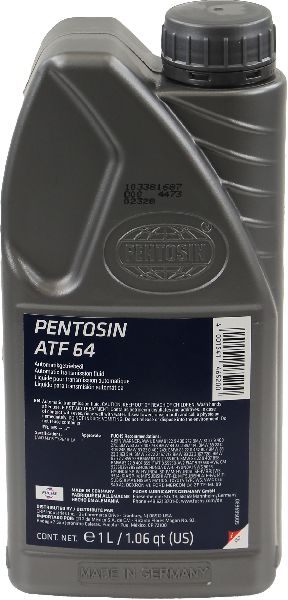
How to confirm: Check the transmission fluid dipstick (if equipped) with the engine running and transmission warm. The fluid should be at the correct level, bright red (DEXRON-VI), and not smell burnt. Dark fluid with metallic particles (looks like glitter) indicates a severe internal problem, often from the torque converter.
Typical fix: Perform a transmission fluid and filter change. If the fluid was very low, the source of the leak must be found and repaired. If the fluid is full of debris, a simple fluid change will not fix the underlying mechanical damage.
Est. part cost: $50-$120 - Failed 1-2 Shift Solenoid ('A' Solenoid) 🟡 Medium Probability → Shop Transmission Valve Body This solenoid is an electromechanical valve that controls the hydraulic fluid flow for the 1-2 shift. It is a very common failure point on the 4L60-E transmission due to age, heat, and contamination from old fluid. On the 6L80, solenoid failure is also common, often as part of a larger TEHCM or valve body issue.
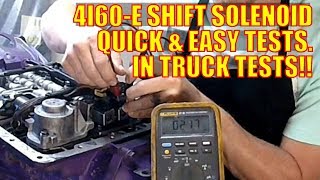
How to confirm: A mechanic can command the solenoid on and off with a bidirectional scan tool. It can also be tested for correct resistance with a multimeter after removing the transmission oil pan. A resistance reading outside the manufacturer's spec (typically 20-40 ohms for a 4L60-E solenoid) indicates failure.
Typical fix: Replace the faulty shift solenoid. It is located inside the transmission on the valve body, so the oil pan must be removed. It's often recommended to replace both the 'A' and 'B' solenoids at the same time, or the entire solenoid block on 6L80 models.
Est. part cost: $30-$80 - Worn Internal Components (Clutches/Seals) 🟡 Medium Probability Over time, the friction material on the clutch plates for 1st gear (the forward clutch on 4L60-E, or 1-2-3-4 clutch on 6L80) wears away, or the seals that apply hydraulic pressure to them become hard and brittle. This is a common result of high mileage, towing, or operating with low fluid levels.
How to confirm: This is diagnosed by finding excessive clutch material or metal shavings in the transmission pan and fluid. A transmission pressure test may also show low pressure in the 1st gear circuit. This is a definitive sign of internal failure requiring a rebuild.
Typical fix: The transmission must be removed and rebuilt or replaced.
Est. part cost: $1500-$4000+ - Valve Body or TEHCM Malfunction (6L80) 🟡 Medium Probability → Shop Transmission Valve Body On 6L80 transmissions, the valve body and TCM are an integrated unit called a TEHCM. These are known to fail, causing various shifting issues. A crack in the valve body, a worn pressure regulator valve bore, or a stuck valve can also cause a pressure loss specific to the 1st gear circuit.
How to confirm: Diagnosis requires a pressure test and careful inspection of the valve body after removal. For TEHCM issues, specific diagnostic codes related to the control module or its solenoids are often present. A professional scan tool is needed to diagnose the TEHCM.
Typical fix: Replace the valve body or the entire TEHCM unit. The TEHCM must be programmed to the vehicle's VIN. Sometimes, an oversized pressure regulator valve can be installed to fix a worn bore.
Est. part cost: $400-$1200
Rare But Worth Checking
- Faulty Input/Output Speed Sensor: While possible, a failing speed sensor usually triggers other specific sensor codes (like P0715 or P0720) or affects multiple gears, not just first. It's worth considering if no mechanical or hydraulic faults are found.
- Cracked Forward Piston (4L60-E): In the 4L60-E, the forward clutch is applied in first gear. A hairline crack in the cast aluminum piston that applies this clutch can cause a pressure leak and lead to a P0731. This requires a full transmission teardown to identify.
- Cracked 1-2-3-4 Clutch Piston (6L80): A known weak point in the 6L80, the 1-2-3-4 clutch piston can crack, causing a loss of apply pressure for the clutch pack. This can result in a P0731 code and no forward movement. GM released an updated piston to address this issue.
- Failing Torque Converter (6L80): → Shop Automatic Transmission Torque Converter While often associated with shudder (P0741), a failing torque converter on a 6L80 can shed debris that clogs the valve body and solenoids, leading to pressure issues in any gear, including first. Finding excessive metallic 'glitter' in the pan points to this. If the converter fails, it often takes the transmission pump with it.
Diagnosis Steps
- Check the transmission fluid level and condition. This is the first and most important step.
- Use an OBD-II scanner to check for any other transmission-related codes, such as P0700 or other gear ratio faults.
- With a capable scan tool, monitor the live data for the Input Speed Sensor (ISS) and Output Speed Sensor (OSS) while driving. Confirm that the TCM is seeing a slip in 1st gear (Input RPM rises but Output RPM does not).
- Perform a transmission line pressure test. Low pressure points to a clogged filter, failing pump, or internal leaks.
- Drop the transmission oil pan. Inspect the fluid in the pan for metal shavings or excessive clutch material ('glitter' or 'coffee grounds'), which confirms internal mechanical failure, likely from the torque converter or clutches.
- While the pan is off, inspect the wiring harness for damage and test the resistance of the 1-2 shift solenoid (on 4L60-E).
- If solenoids test good and no debris is found, the problem is likely deeper inside the transmission (clutches, seals) or within the valve body, requiring professional disassembly.
Parts You'll Likely Need
- Transmission Filter and Gasket Kit
(OEM #24236933 (6L80 Deep Pan), 24208576 (4L60-E))— Always replaced during a fluid change, which is the first step in diagnosis.
Related Codes That Often Appear With This One
- P0700 — This is a generic code that means the Transmission Control Module (TCM) has stored a fault. It almost always appears with specific transmission codes like P0731.
- P0732, P0733, P0734 — If you have incorrect ratio codes for other gears, it strongly suggests a widespread problem like very low fluid, a clogged filter, a failing transmission pump, or a major internal failure, rather than an issue isolated to 1st gear.
- P0741 — This code for 'Torque Converter Clutch Circuit Performance or Stuck Off' is very common on 6L80 transmissions. If seen with P0731, it strongly points to a failing torque converter that is shedding debris and causing widespread hydraulic issues.
Technical Service Bulletins (TSBs) & Recalls
- PIP4379M - Mentions a wide range of DTCs including P0731 related to no gear engagement, noting to follow published service information for diagnosis.
Platform-Specific Known Issues
- 4L60-E Specific Failures: For trucks with the 4-speed 4L60-E, P0731 is very commonly caused by a failed 1-2 shift solenoid ('A' solenoid) or a worn/cracked forward clutch accumulator piston. These are relatively straightforward repairs that can be done by removing the transmission pan and valve body.
- 6L80 Specific Failures (Torque Converter & Pistons): For trucks with the 6-speed 6L80, P0731 is often a symptom of a larger, more catastrophic failure chain. The OEM torque converter clutch is known to fail, sending metallic debris throughout the transmission. This debris contaminates the TEHCM/valve body and scores the pump, leading to pressure loss. Additionally, the 1-2-3-4 clutch piston is known to crack, causing a direct loss of pressure for first gear.
Mechanic-Grade Diagnostic Values
- 4L60-E 1-2 & 2-3 Shift Solenoid Resistance — expected: 20-40 Ohms (most healthy solenoids test between 20-25 Ohms). Failure: A reading outside this range, or an open/short circuit, indicates a failed solenoid.
- 4L60-E EPC (Pressure Control) Solenoid Resistance — expected: 3.5-8.0 Ohms. Failure: A reading outside this range indicates a failed EPC solenoid.
- 6L80 On/Off Shift Solenoid Resistance — expected: 20-40 Ohms (typically 20-24 Ohms). Failure: Resistance outside this range indicates a failed solenoid, requiring TEHCM replacement.
- 6L80 PWM Solenoid (Pressure Control) Resistance — expected: 3-8 Ohms (typically 5-6 Ohms). Failure: Resistance outside this range indicates a failed solenoid, requiring TEHCM replacement.
- 4L60-E Line Pressure at Idle (in Park/Drive) — expected: 55-75 PSI. Failure: Pressure below 50 PSI suggests a clogged filter, worn pump, or major leak. Significantly higher pressure can indicate a stuck pressure regulator.
- 6L80 Line Pressure at Idle — expected: 45-80 PSI (Scan tool shows calculated pressure around 87 PSI). Failure: Low pressure indicates potential pump wear, valve body leaks, or a clogged filter.
- 6L80 Line Pressure at WOT (Wide Open Throttle) — expected: Up to 300 PSI. Failure: Failure to reach high pressure under load confirms a hydraulic deficit (pump, valve body, internal leak).
Scan Tool Commands That Help
- GM Tech2 / GDS2: Solenoid Cleaning Procedure — For 6L80 transmissions, if a solenoid performance code is present or a solenoid is suspected of sticking, this automated function cycles all solenoids to flush out debris. It can sometimes resolve an issue without parts replacement.
- GM Tech2 / GDS2: Pressure Control Solenoid Test — This allows a technician to command the EPC/PCS solenoid through its full range (e.g., from 1.0 amp down to 0.1 amps) while monitoring line pressure with a mechanical gauge. This verifies if the solenoid and valve body are responding correctly to commands.
- GM Tech2 / GDS2: Transmission Output Speed Control — Allows a technician to command specific shifts on a hoist to isolate which gear circuit has a fault without having to perform a full road test.
Real Owner Repair Stories
- SilveradoSierra.com forum user (2011 Chevrolet Silverado 1500 w/ 6L80) — P0731 and P0732 codes, no 1st or 2nd gear, starts in 3rd gear (limp mode).
❌ Tried (didn't work) Initial assumption was a failed TEHCM.
✅ What actually fixed it The transmission was disassembled and a cracked 1-2-3-4 clutch piston was found. The piston was replaced with an updated billet aluminum version from Sonnax, which resolved the issue. The TEHCM was not faulty.
OEM Part Supersession History
GM 24238700, 24224146, 24266364→Sonnax 104984-01— The original cast aluminum 1-2-3-4 clutch pistons in the 6L80 are prone to cracking under stress. The Sonnax replacement is made of stronger billet aluminum with a revised design to prevent breakage.
Heads up: The Sonnax piston is a universal replacement for multiple OE part numbers used from 2006 onward.GM 24256939, 24257213, and others→Sonnax GM6L-TEHCM-C6 (Example for 2011+)— Original GM TEHCMs (integrated TCM and solenoid body in 6L80) have a high failure rate for internal circuits and solenoids. Remanufactured units from companies like Sonnax replace failed components and are fully tested.
Heads up: A TEHCM must be programmed to the vehicle's VIN after installation using a J2534 device. Installing a TEHCM from a different year range can result in a no-start or immediate limp mode.
Model Year Variations Within This Range
- 2006-2009 (Primarily): These trucks most often have the 4L60-E. For P0731, focus on the 1-2 shift solenoid, forward clutch accumulator piston, and the forward clutch pack itself.
- 2009-2013: These trucks increasingly used the 6L80. For P0731, the most likely culprits are different: failing torque converter shedding debris, a cracked 1-2-3-4 clutch piston, or a faulty TEHCM (solenoid body/TCM unit).
Helpful Videos


We Have This Part in Stock


The information in this article is provided for general reference and educational purposes only. Vehicle specifications, procedures, and part compatibility can vary by production date, trim level, and region. Always consult your vehicle's factory service manual and verify part numbers before purchasing or performing repairs. Safety-critical components such as airbags, seat belts, and braking systems should be installed by a qualified professional.
- Chevrolet SILVERADO 1500:
- 🧭 Diagnostic Flowchart
- 🎬 Helpful Videos
- 🛍️ Shop This Part
- What's Unique About the 2006-2013 Chevrolet SILVERADO 1500
- Symptoms You May Notice
- Most Likely Causes
- Rare But Worth Checking
- Diagnosis Steps
- Parts You'll Likely Need
- Related Codes That Often Appear With This One
- Technical Service Bulletins (TSBs) & Recalls
- Platform-Specific Known Issues
- Mechanic-Grade Diagnostic Values
- Scan Tool Commands That Help
- Real Owner Repair Stories
- OEM Part Supersession History
- Model Year Variations Within This Range
- 🎟️ Get 5% Off