

P0731 on 2020-2023 Ford Explorer: Gear 1 Incorrect Ratio Causes and Fixes
P0731 on a 2020-2023 Ford Explorer almost always indicates a known internal transmission problem related to the CDF clutch assembly. This is a major, non-DIY repair requiring transmission removal and overhaul, with costs often ranging from $3,000 to $7,000. The failure is due to a bushing in the CDF clutch drum moving out of place, causing a hydraulic leak, a problem well-documented in multiple Ford Technical Service Bulletins.
- P0731 on a 2020-2023 Explorer is a serious code that strongly points to a known, widespread mechanical failure inside the 10-speed transmission.
- The most probable cause is a faulty CDF clutch drum, which requires an updated part from Ford.
- This is not a DIY-friendly repair. It requires complete transmission removal and disassembly by a qualified technician.
- While checking fluid and updating software are good initial steps, be prepared for the likelihood of a major transmission repair.
- Ignoring the symptoms can lead to more severe and costly damage to the transmission.
What's Unique About the 2020-2023 Ford EXPLORER
The 2020-2023 Explorer uses Ford's 10-speed automatic transmission (10R60 or 10R80), which is known to have a specific, widespread design flaw. Multiple Technical Service Bulletins (TSBs), including TSB 23-2250, point to a bushing within the CDF (Clutch C/D/F) clutch drum that can move out of position, or "walk". This movement uncovers an oil passage, causing a significant loss of hydraulic pressure to the clutch pack. This hydraulic leak leads to slipping, harsh shifts, and various gear ratio error codes, including P0731. This is not a simple sensor or fluid issue; it's a well-documented mechanical failure point inside the transmission requiring an updated part.
Diagnostic Flowchart
Tap your situation to follow the diagnostic path that matches what you're seeing on this vehicle.
Symptoms You May Notice
- Check Engine Light is on
- Harsh, delayed, or clunking shifts, especially into or out of first gear.
- Vehicle hesitates or has poor acceleration from a stop.
- Transmission slipping (engine RPMs increase but vehicle speed does not).
- Transmission goes into "limp mode," possibly limiting available gears.
- Whining or grinding noises from the transmission.
- Noticeable shift flares, particularly between 3rd and 5th gear, which can occur even when the primary code is for 1st gear due to the nature of the CDF drum failure.
- Replacing only the speed sensors without checking for the underlying mechanical CDF clutch issue.
- Assuming it's just a simple fluid change fix when the transmission has already suffered mechanical damage from the CDF drum failure.
- Misdiagnosing the issue as a faulty valve body when the root cause is the CDF drum, leading to unnecessary and expensive repairs.
- Mistaking the code for an engine misfire or driveline problem without performing a thorough transmission diagnosis.
Most Likely Causes
- CDF Clutch Cylinder Sleeve Failure 🔴 High Probability → Shop Automatic Transmission Coast Clutch Hub This is a widely documented issue in Ford's 10R60 and 10R80 transmissions. Multiple TSBs, including TSB 23-2250 and 24-2254, identify the cause as "axial movement of the CDF clutch cylinder sleeve causing hydraulic circuit leaks." A bushing inside the drum walks out of place, uncovering an oil passage and causing a pressure loss. This is a known design defect in the original part.
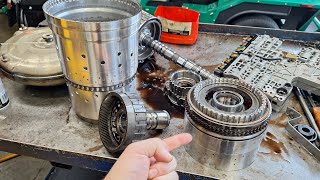
How to confirm: A technician will perform hydraulic pressure tests on the transmission's clutch circuits as outlined in Ford's service procedures. Ultimate confirmation requires transmission disassembly to visually inspect the CDF clutch drum for a migrated bushing. 🎬 Watch: Detailed teardown showing exactly how the CDF bushing fails.
Typical fix: The transmission must be removed and partially disassembled to replace the faulty CDF clutch drum with an updated part. The redesigned part, OEM # JL3Z-7H351-B, has a machined lip or 'dam' to prevent the bushing from moving. This is often done as part of a larger transmission overhaul.
Est. part cost: $200-$400 for the updated CDF drum assembly. - Low or Contaminated Transmission Fluid ⚪ Low Probability → Shop Transmission Assembly While possible, it's a less likely primary cause for this specific vehicle given the known TSBs. However, low fluid levels will reduce hydraulic pressure and can cause slipping in any automatic transmission. In one documented case on an F-150, an incorrectly sized aftermarket transmission filter prevented proper fluid flow, causing a P0731 code immediately after a service.
How to confirm: Check the transmission fluid level and condition according to the manufacturer's procedure. The fluid should be at the correct level, red in color, and not smell burnt. Ensure an OEM-spec filter is used. The correct fluid temperature for checking is between 190-200°F.
Typical fix: Perform a transmission fluid drain and fill or a full fluid exchange with the correct Motorcraft MERCON ULV fluid. If the fluid is low, the source of the leak must be found and repaired. Replace any non-OEM filters with a genuine Ford part.
Est. part cost: $150-$300 for fluid. - Main Control Valve Body Failure ⚪ Low Probability → Shop Transmission Valve Body Sticking solenoids or internal leaks in the valve body can cause shifting issues and are mentioned as a possible cause in early TSBs like 20-2403 for the 2020 Explorer. However, later TSBs point more directly to the CDF drum as the root cause, suggesting the valve body is a less frequent culprit for this specific code.
How to confirm: Diagnosis involves testing shift solenoids with a scan tool and may require hydraulic pressure testing. The valve body may be replaced as part of the diagnostic process outlined in TSBs if other steps fail.
Typical fix: Replacement of the main control valve body assembly. Ford part numbers include L1MZ-7A100-B (10R60) and L1MZ-7A100-A (10R80).
Est. part cost: $800-$1500
Rare But Worth Checking
- Faulty Transmission Speed Sensor: → Shop Transmission Assembly An input or output speed sensor can fail and provide incorrect data to the TCM, causing it to falsely detect a gear ratio error. While not common for this platform's P0731, it's a simpler and cheaper check before condemning the transmission.
- Powertrain Control Module (PCM) Software Issue: Outdated software can sometimes cause shifting irregularities. TSBs often recommend reprogramming the PCM to the latest calibration as a first step before mechanical repairs.
- Damaged Wiring or Connectors: In some cases, a poor connection at the main transmission harness connector can cause erratic behavior and trigger various codes. Reseating the connector has occasionally resolved issues for some owners.
Diagnosis Steps
- Check and verify the transmission fluid level and condition. Ensure the correct Motorcraft ULV fluid is used and that the filter is an OEM part.
- Use an advanced scan tool to check for any other accompanying transmission trouble codes. Note all codes present, as they are critical for diagnosis.
- Check for applicable Technical Service Bulletins (TSBs). For this vehicle, TSB 23-2250 is the most comprehensive, superseding several earlier versions.
- As recommended by Ford TSBs, reprogram the PCM/TCM to the latest software calibration. Perform the adaptive learning drive cycle.
- Monitor live data with a scan tool, observing the commanded gear vs. the actual gear ratio and comparing the Turbine Speed Sensor (TSS) and Output Speed Sensor (OSS) readings.
- If symptoms persist, perform transmission hydraulic pressure tests as outlined in TSB 24-2254 or the service manual to check for leaks in the CDF clutch circuit. This requires specialized equipment.
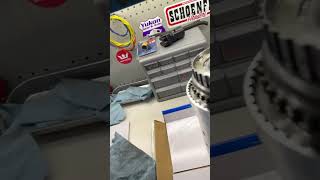
- If pressure tests fail or are inconclusive, the final step is to remove and disassemble the transmission for inspection and replacement of the CDF clutch drum assembly with the updated part 🎬 See this quick overview of the CDF drum replacement process. (JL3Z-7H351-B).
Parts You'll Likely Need
- CDF Clutch Cylinder Assembly (Updated Design)
(OEM #JL3Z-7H351-B)— This is the component identified in multiple Ford TSBs as the primary failure point due to a design flaw with its internal bushing. Ford has released this updated part which supersedes previous versions (HL3Z-7H351-A, JL3Z-7H351-A) to correct the issue.
Trusted brands: Motorcraft
OEM price range: $200-$400 - Transmission Overhaul Gasket and Seal Kit — Required for reassembling the transmission after replacing the CDF clutch drum. Includes all necessary seals, gaskets, and O-rings that must be replaced during the overhaul.
Trusted brands: Motorcraft, TransTec
OEM price range: $300-$500
Aftermarket price range: $200-$350 - Motorcraft MERCON ULV Automatic Transmission Fluid
(OEM #XT-12-QULV)— This is the specific, required ultra-low viscosity fluid for the 10R60/10R80 transmission. The transmission will need to be refilled with approximately 8-10 quarts after the repair.
Trusted brands: Motorcraft
OEM price range: $15-$25 per quart
Related Codes That Often Appear With This One
- P0729, P0732, P0733, P0734, P0735 — These are incorrect gear ratio codes for other gears. The CDF clutch issue can affect multiple gear engagements, so it's common to see faults for several gears at once.
- P2700, P2701, P2702, P2703, P2704, P2705 — These codes relate to transmission friction element apply time ranges. They often accompany the gear ratio codes as they point to the same internal hydraulic leak/clutch slippage problem.
Technical Service Bulletins (TSBs) & Recalls
- TSB 23-2250: This is a comprehensive bulletin that supersedes earlier versions. It covers a wide range of Ford models with the 10-speed transmission, lists numerous DTCs including P0731, and identifies potential causes as software, valve body issues, or the axial movement of the CDF clutch cylinder sleeve.
- TSB 24-2254: A later TSB that provides specific procedures for hydraulic testing to confirm a leak in the CDF clutch circuit before transmission removal.
- TSB 22-2102 / 21-2434: Earlier TSBs that addressed harsh/delayed shifts and listed P0731 among other DTCs. These were superseded by later bulletins that more clearly identify the CDF clutch issue.
- TSB 20-2403: An early TSB specific to 2020 Explorer/Aviator models that initially pointed towards sticking valves in the main control body as a primary cause for shifting issues and related codes like P0731.
Platform-Specific Known Issues
- A widespread and well-documented problem exists with the 10-speed (10R60/10R80) automatic transmission concerning the CDF clutch drum. A bushing within the drum can 'walk' or move axially, which uncovers hydraulic passages and causes a significant pressure leak. This leads to a variety of shifting problems and sets numerous trouble codes, with P0731 being one of them. Ford has issued multiple TSBs to address this, and the fix involves replacing the drum with a redesigned part that features a physical stop to prevent the bushing from migrating.
Mechanic-Grade Diagnostic Values
- Shift Solenoid Resistance (All A-F) — expected: 5.0 - 5.4 Ohms at 68°F (20°C). Failure: Readings outside of this range indicate a faulty solenoid coil.
- Transmission Fluid Temperature for Level Check — expected: 190°F - 200°F (88°C - 93°C). Failure: Checking the fluid when it is too cold or too hot will result in an inaccurate level reading.
Scan Tool Commands That Help
- Ford IDS (Integrated Diagnostic System): Transmission Characterization / Solenoid IDN — This function is required after replacing the valve body or individual solenoids. It writes the 13-digit solenoid body strategy number to the TCM to ensure correct hydraulic pressures and shift timing. Failure to perform this can cause erratic shifting.
- Ford IDS (Integrated Diagnostic System): Adaptive Learning Drive Cycle — After any transmission repair or software update, this procedure must be performed. It allows the TCM to relearn the clutch apply characteristics and shift points. Skipping this step can result in harsh or erratic shifts.
Wiring & Ground Locations
- Transfer Case Control Module (TCCM) — Underneath the driver's seat, below the carpet and an air vent. It is held by three 10mm nuts.. While the TCM is the primary module, issues with the TCCM or its wiring can sometimes cause related powertrain communication faults that may be confused with a primary transmission issue. Its location under the carpet makes it susceptible to water damage.
- Main Transmission Harness Connector — The main electrical connector on the transmission case, which connects the internal solenoids and sensors to the vehicle's wiring harness.. A loose or corroded connection at this point can interrupt signals from the speed sensors or commands to the shift solenoids, directly causing gear ratio and other transmission codes.
Real Owner Repair Stories
- Reddit user in r/f150 (2019 F-150 Lariat 2.7L 4x4) — A 2-3 second delay when shifting from Park to Drive/Reverse, or between Drive and Reverse. Previously had harsh upshifts/downshifts that were addressed with a reflash.
❌ Tried (didn't work) PCM/TCM reflash per a TSB.
✅ What actually fixed it The dealer performed a transmission overhaul and replaced the CDF drum, which resolved the delayed engagement issue. However, this was followed by a new problem of very hard shifts into 3rd gear, which then required a valve body assembly replacement to fully resolve all issues.
OEM Part Supersession History
HL3Z-7H351-A→JL3Z-7H351-A, then JL3Z-7H351-B— The original and first revision parts were prone to the internal bushing 'walking' out of place. The latest part, JL3Z-7H351-B, features a redesigned drum with a machined lip that acts as a physical stop, preventing the bushing from migrating and uncovering the hydraulic fluid passages.
Helpful Videos
We Have This Part in Stock


The information in this article is provided for general reference and educational purposes only. Vehicle specifications, procedures, and part compatibility can vary by production date, trim level, and region. Always consult your vehicle's factory service manual and verify part numbers before purchasing or performing repairs. Safety-critical components such as airbags, seat belts, and braking systems should be installed by a qualified professional.
- Ford EXPLORER:
- 🧭 Diagnostic Flowchart
- 🎬 Helpful Videos
- 🛍️ Shop This Part
- What's Unique About the 2020-2023 Ford EXPLORER
- Symptoms You May Notice
- Most Likely Causes
- Rare But Worth Checking
- Diagnosis Steps
- Parts You'll Likely Need
- Related Codes That Often Appear With This One
- Technical Service Bulletins (TSBs) & Recalls
- Platform-Specific Known Issues
- Mechanic-Grade Diagnostic Values
- Scan Tool Commands That Help
- Wiring & Ground Locations
- Real Owner Repair Stories
- OEM Part Supersession History
- 🎟️ Get 5% Off