

P0731 on 2018-2023 Ford Mustang: Gear 1 Incorrect Ratio Causes and Fixes
P0731 on a 2018-2023 Mustang almost always points to an internal failure in the 10R80 transmission, specifically the CDF clutch drum. A bushing inside the drum assembly is known to move out of position, causing a loss of hydraulic pressure that leads to slipping in first gear. This is a major, well-documented repair requiring transmission removal and teardown, often costing several thousand dollars.
- P0731 on a 2018-2023 Mustang indicates a serious internal transmission problem, not a simple sensor issue.
- The most likely cause is a well-documented failure of the CDF clutch drum inside the 10R80 10-speed transmission.
- The repair is not DIY-friendly. It requires removing and disassembling the transmission to replace the faulty drum with an updated part.
- Do not continue to drive the vehicle extensively, as this can lead to catastrophic transmission failure.
- Ensure any repair includes the updated CDF drum (part number JL3Z-7H351-B or newer) to prevent the issue from recurring.
What's Unique About the 2018-2023 Ford MUSTANG
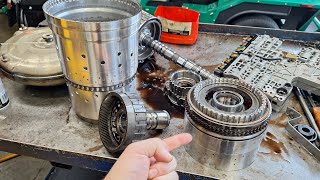
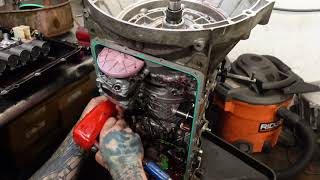
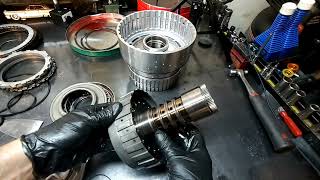
The 2018-2023 Mustang uses the Ford 10R80 10-speed automatic transmission, which was co-developed with GM. A primary cause for P0731 is the failure of the C-D-F (clutch) drum assembly. 🎬 Watch: See how the CDF drum bushing fails internally. A bushing (sleeve) within this drum can move or 'walk' out of position, exposing fluid passages and causing a critical loss of hydraulic pressure to the clutch packs. This prevents proper clutch engagement, leading to slipping and incorrect gear ratio codes. Ford has issued multiple Technical Service Bulletins (TSBs), such as TSB 24-2254, acknowledging this issue and providing diagnostic procedures.
Diagnostic Flowchart
Tap your situation to follow the diagnostic path that matches what you're seeing on this vehicle.
Symptoms You May Notice
- Check Engine Light is on
- Delayed or harsh shifting, especially into first gear from a stop.
- A noticeable delay of several seconds when shifting from Park to Drive.
- Slipping while in gear (engine RPMs rise without an increase in speed).
- Poor or sluggish acceleration from a stop, may require high RPMs to get moving.
- Transmission may enter "limp mode," limiting available gears to prevent further damage.
- Whining or grinding noises from the transmission.
- Harsh downshifts, particularly from 3rd to 2nd gear.
- Replacing only the transmission speed sensors. While faulty sensors can cause ratio codes, it's rarely the case for the P0731 on this platform without other sensor-specific codes being present.
- Performing only a fluid flush. If the code is caused by the CDF drum failure, a fluid change will not solve the mechanical or hydraulic issue and the problem will quickly return.
- Replacing the valve body without addressing the CDF drum. Some owners and shops replace the valve body first, only to have the symptoms return, indicating the root cause was the drum assembly all along.
Most Likely Causes
- Internal Failure of the CDF Clutch Drum 🔴 High Probability → Shop Transmission Clutch Pressure Plate The 10R80 transmission has a widely documented design issue where a bushing/sleeve in the CDF clutch drum can walk out of place. This axial movement exposes hydraulic fluid ports, causing a pressure leak that prevents the C, D, or F clutch packs from engaging correctly. This is explicitly mentioned in Ford TSBs (like 24-2254) as the root cause for this code and related shifting complaints.
How to confirm: Diagnosis requires an advanced scan tool to check for transmission-specific codes and monitor live data. A technician will then follow the steps in TSB 24-2254, which involves a detailed hydraulic pressure test to confirm the internal leak. Ultimately, confirmation requires transmission removal and disassembly to visually inspect the CDF drum for a migrated bushing and damaged seals.
Typical fix: The transmission must be removed and partially or fully rebuilt. The original CDF drum must be replaced with an updated OEM version (Part No. JL3Z-7H351-B) that has a revised design to prevent the bushing from moving. 🎬 See this video for a close-up of the CDF drum failure. All related seals, gaskets, and often the affected clutch frictions are also replaced. Aftermarket companies like Sonnax also offer a 'CDF Drum Saver Kit' (129910-01K) to repair the original drum.
Est. part cost: $150-$400 for the updated CDF drum assembly. A full rebuild kit with clutches and seals can cost $400-$700. - Faulty Main Control Valve Body or Solenoids 🟡 Medium Probability → Shop Transmission Valve Body Sticking valves or failing solenoids within the main control (valve body) can cause incorrect hydraulic pressure, leading to shifting problems and slipping. This is another common issue on the 10R80 transmission and is sometimes addressed before the CDF drum, as it's a less intensive repair. TSBs mention sticking valves as a potential cause alongside the CDF drum issue.
How to confirm: A technician can use a high-level scan tool (like Ford's FDRS) to command individual solenoids and monitor transmission pressures and command responses. The valve body can be removed and inspected for sticking valves or debris. In some cases, a faulty valve body is replaced, but the problem persists, leading to the eventual diagnosis of the CDF drum.
Typical fix: Replacement of the faulty solenoid or the entire main control valve body assembly. Ford often recommends this as a diagnostic step.
Est. part cost: $800-$1200 for a new Motorcraft valve body assembly. - Low or Contaminated Transmission Fluid ⚪ Low Probability → Shop Transmission Assembly While less likely to be the root cause on this specific platform, low fluid level will always cause pressure issues and slipping. Many 10R80 transmissions have reportedly been under-filled from the factory. However, if the code is present, contamination from internal part wear (like clutch material from the CDF drum failure) is more likely a symptom of the larger problem, not the cause.
How to confirm: Check the transmission fluid level and condition according to the manufacturer's procedure, which is complex on the 10R80 and lacks a traditional dipstick. The fluid should be at the correct level, red in color, and not smell burnt. Metal shavings or a gray sludge are a definitive sign of severe internal wear.
Typical fix: If the fluid is simply low, top it off with the correct fluid (Motorcraft MERCON ULV) and check for leaks. If the fluid is burnt or full of debris, the transmission has internal damage (likely the CDF drum) that requires a teardown.
Est. part cost: $20-$30 per quart of Motorcraft MERCON ULV fluid (XT-12-QULV).
Diagnosis Steps
- Verify the code with a quality OBD-II scanner.
- Check for any related Technical Service Bulletins (TSBs) for the vehicle's VIN. TSB 24-2254 is highly relevant and outlines the specific diagnostic procedure for the CDF drum issue.
- Use an advanced scan tool (like Ford's FDRS) to monitor transmission data PIDs, including input/output speed sensor readings, commanded vs. actual gear, and clutch apply pressures.
- Check the transmission fluid level and condition. This is a complex procedure on the 10R80 and should be done by a professional. Note any burnt smell or metallic particles ('glitter').
- Follow the diagnostic procedure in TSB 24-2254, which includes performing a hydraulic pressure test with a transducer kit to check for leaks within the CDF clutch circuit.
- If pressure tests fail, the transmission must be removed from the vehicle for teardown and inspection, focusing on the CDF clutch drum assembly for a migrated sleeve and damaged seals.
Parts You'll Likely Need
- CDF Clutch Drum Assembly (Updated)
(OEM #JL3Z-7H351-B)— This is the most common point of failure on the 10R80 transmission that leads to code P0731. The original design is prone to a bushing failure. This updated part, which supersedes HL3Z-7H351-A and JL3Z-7H351-A, has a lip or improved press fit to prevent the sleeve from walking out.
Trusted brands: Motorcraft (Ford OEM)
OEM price range: $150-$400 - Transmission Overhaul Kit — When the transmission is removed for the CDF drum replacement, it is standard practice to replace all seals, gaskets, and wearable clutch friction plates. A full repair invoice shows numerous individual seals and plates being replaced.
Trusted brands: Motorcraft, Raybestos, Alto
OEM price range: $400-$700
Aftermarket price range: $250-$500 - Sonnax CDF Drum Saver Kit
(OEM #129910-01K)— For transmission shops that prefer to repair the existing drum, this aftermarket kit provides a redesigned bushing and tools to install it securely in the original drum, preventing it from walking out. This is an alternative to replacing the entire drum assembly.
Trusted brands: Sonnax
Aftermarket price range: $100-$150
Related Codes That Often Appear With This One
- P0729, P0732, P0733, P0734, P0735, P0736 — These are incorrect gear ratio codes for other gears (6th, 2nd, 3rd, etc.). They often appear with P0731 because the underlying hydraulic issue from the CDF drum failure can affect multiple clutch packs and gears. The CDF drum houses clutches for gears 3, 4, 5, and 6.
- P2700-P2708 — These codes relate to transmission friction element apply time and range/performance. They are also listed in the same TSBs and point to the same internal clutch and hydraulic problems stemming from the valve body or CDF drum.
Technical Service Bulletins (TSBs) & Recalls
- TSB 24-2254: Supersedes previous versions. Specifically identifies axial movement of the CDF clutch cylinder sleeve as the cause for harsh/delayed shifts and a host of DTCs including P0731. It provides a detailed service procedure for verifying the hydraulic leak before authorizing the replacement of the CDF drum.
- TSB 26-2046 / 25-2018: Earlier bulletins that list a large group of DTCs, including P0731, related to various shift quality concerns. They point to potential causes like the solenoid ID strategy, sticking valves in the main control, and the CDF clutch drum sleeve movement.
Platform-Specific Known Issues
- Ford has released multiple TSBs (including TSB 24-2254) that directly link P0731 and other shifting codes to "axial movement of the CDF clutch cylinder sleeve" in the 10R80 transmission.
- The failure of the CDF drum is a widely documented problem in the Ford community for vehicles with the 10R80, including the Mustang and F-150.
- Owner experiences on forums like Mustang6G.com describe the symptoms vividly, such as a 4-second delay shifting into drive and a hard jerk into first gear before the P0731 code appears.
Mechanic-Grade Diagnostic Values
- Shift Solenoid Resistance (SSA-SSG) — expected: 5.0-5.4 ohms at 68°F (20°C).. Failure: A resistance reading outside of this range indicates a faulty solenoid coil.
- Live Data Gear Ratio Calculation — expected: The calculated ratio (Input Speed / Output Speed) should match the specified ratio for 1st gear.. Failure: A calculated ratio that is 10% or more higher than the target ratio confirms a slip condition and will trigger P0731.
Scan Tool Commands That Help
- Ford FDRS/IDS, FORScan: Clear Transmission Adaptive Tables / Reset KAM — This must be performed after any major transmission repair, such as replacing the valve body or CDF drum. It erases the learned clutch apply pressures, forcing the TCM to start a new learning process.
- Ford FDRS/IDS: Solenoid Body Strategy and ID Programming — This is required when the main control valve body is replaced. The new valve body has a unique 13-digit strategy number and 12-digit ID number on its tag that must be programmed into the PCM/TCM for correct operation.
- Ford FDRS/IDS: Adaptive Learning Drive Cycle — After clearing the adaptive tables, a specific, multi-step drive cycle must be performed to allow the transmission to properly relearn shift and clutch engagement pressures. Failure to do this can result in continued poor shift quality.
Wiring & Ground Locations
- G104 — Located in the engine compartment on the right-hand (passenger) side, near the battery.. G104 is a primary ground for the Powertrain Control Module (PCM) and the Data Link Connector (DLC). A poor connection here can cause a wide range of erratic electronic issues, including incorrect sensor readings and communication faults that could potentially mimic transmission problems.
- Transmission Bulkhead Connector — A 16-pin connector located on the passenger side of the transmission case.. This is the main electrical interface for the entire transmission, including all solenoids and sensors. While not a primary cause for P0731, it's a critical point to inspect for corrosion, damage, or fluid intrusion (wicking) up the harness, which can cause various electrical faults.
Real Owner Repair Stories
- Mustang6g.com forum user (2018 Mustang GT, approx. 45,000 miles) — Harsh shifting, delayed engagement, and eventually codes P0731 and P0729 (Gear 6 Incorrect Ratio).
❌ Tried (didn't work) The dealership first replaced the main control valve body.
✅ What actually fixed it The symptoms returned, and the final repair was the removal of the transmission and replacement of the CDF clutch drum with the updated part. The total cost was approximately $4,500. - Reddit user in r/ecoboostmustang (2019 Mustang Premium PP, 10,000 miles) — Jerky and weird transmission behavior, which the owner initially thought was normal for the 10-speed.
✅ What actually fixed it The dealer diagnosed a CDF drum issue. The repair was covered under a third-party warranty. A Ford technician commented on the thread that the repair itself should take 1-2 business days, provided parts are in stock.
OEM Part Supersession History
HL3Z-7H351-A→JL3Z-7H351-B (also supersedes JL3Z-7H351-A)— The original drum design allowed an internal bushing to 'walk' out of position, uncovering fluid passages and causing a hydraulic leak. The updated JL3Z-7H351-B part features an integrated retention lip or is staked to physically prevent the bushing from moving.
Helpful Videos
We Have This Part in Stock


The information in this article is provided for general reference and educational purposes only. Vehicle specifications, procedures, and part compatibility can vary by production date, trim level, and region. Always consult your vehicle's factory service manual and verify part numbers before purchasing or performing repairs. Safety-critical components such as airbags, seat belts, and braking systems should be installed by a qualified professional.
- Ford MUSTANG:
- 🧭 Diagnostic Flowchart
- 🎬 Helpful Videos
- 🛍️ Shop This Part
- What's Unique About the 2018-2023 Ford MUSTANG
- Symptoms You May Notice
- Most Likely Causes
- Diagnosis Steps
- Parts You'll Likely Need
- Related Codes That Often Appear With This One
- Technical Service Bulletins (TSBs) & Recalls
- Platform-Specific Known Issues
- Mechanic-Grade Diagnostic Values
- Scan Tool Commands That Help
- Wiring & Ground Locations
- Real Owner Repair Stories
- OEM Part Supersession History
- 🎟️ Get 5% Off