

P0731 on 2006-2010 GMC Sierra: Incorrect Gear 1 Ratio Causes and Fixes
P0731 on a 2006-2010 GMC Sierra indicates the transmission is slipping or failing to engage first gear properly. The most common causes are low/dirty transmission fluid or a failing shift solenoid. A fluid and filter change may fix it, but internal repairs are often necessary.
- P0731 on your Sierra is a serious transmission code indicating a problem with first gear.
- The first and simplest check is the transmission fluid level and condition. Low or dirty fluid is a common cause.
- Do not continue to drive with this code, as you risk catastrophic transmission failure and being stranded.
- Other common causes include a bad shift solenoid or internal mechanical wear requiring professional repair.
- Due to the complexity of automatic transmissions, this code should be diagnosed and repaired by a qualified technician.
What's Unique About the 2006-2010 Gmc SIERRA
The 2006-2010 Sierra spans two generations (GMT800 and GMT900), which used different primary automatic transmissions. The earlier models often have the 4-speed 4L60E, while the later models introduced the 6-speed 6L80. While both can set a P0731, the specific internal components that fail are very different. For the 4L60E, a P0731 often points to a faulty 1-2 shift solenoid. For the 6L80, this code is a notorious indicator of torque converter failure, where the lockup clutch disintegrates and sends metallic debris throughout the transmission, often leading to a full rebuild or replacement.
Diagnostic Flowchart
Tap your situation to follow the diagnostic path that matches what you're seeing on this vehicle.
Generation note: This range covers the end of the GMT800 generation (2006 and 2007 'Classic' models) and the beginning of the GMT900 generation (2007.5-2010). GMT800s typically use the 4L60E/4L65E 4-speed automatic, while GMT900s use the 6L80/6L90 6-speed automatic. Diagnostic steps are similar, but the internal parts like solenoids and valve bodies are not interchangeable. A P0731 on a 4L60E is often a simpler solenoid fix, while on a 6L80 it is frequently a sign of impending, major transmission failure.
Symptoms You May Notice
- Check Engine Light is on
- Transmission warning light may be on
- Vehicle has delayed engagement or won't move from a stop
- Harsh or clunking shifts into gear
- Transmission slipping (engine RPMs rise but speed doesn't increase)
- Poor acceleration from a standstill
- Vehicle may enter 'limp mode', stuck in a higher gear
- Decreased fuel economy
- For 6L80: A shudder or vibration feeling during light acceleration, like driving over rumble strips
- Replacing speed sensors when the problem is low fluid or mechanical slip.
- Assuming the entire transmission is bad when only a shift solenoid has failed (more common on 4L60E).
- Replacing only the torque converter on a 6L80 without thoroughly cleaning or rebuilding the rest of the transmission, leading to a repeat failure.
Most Likely Causes
- Low or Contaminated Transmission Fluid 🔴 High Probability → Shop Transmission Assembly Leaks or extended service intervals can lead to fluid breakdown, reducing hydraulic pressure needed for gear engagement. On 6L80 models, fluid contaminated with metallic 'glitter' is a tell-tale sign of torque converter failure.
How to confirm: Check the transmission fluid level and condition with the engine running and transmission warm. The fluid should be bright red (DEXRON-VI) and not smell burnt. If it's brown/black or has visible metallic particles, it's contaminated and indicates internal damage.
Typical fix: Perform a transmission fluid and filter change. If the fluid is heavily contaminated, a full flush is not recommended as it can dislodge debris and cause more issues. Finding metal in the pan often means a rebuild is unavoidable.
Est. part cost: $50-$150 - Faulty Shift Solenoid (4L60E) / TEHCM (6L80) 🟡 Medium Probability → Shop Transmission Valve Body On 4L60E models, the 1-2 shift solenoid is a common failure item that can be replaced individually. On 6L80 models, the solenoids are integrated into the Transmission Electro-Hydraulic Control Module (TEHCM) located inside the pan. A single solenoid failure requires replacing the entire TEHCM, which must then be programmed to the vehicle 🎬 Watch: How to program a new 6L80 TCM and TEHCM..
How to confirm: A professional scan tool can command the solenoid to activate and monitor its response. Resistance can be checked with a multimeter on the 4L60E solenoid. For the 6L80, specific solenoid fault codes (e.g., P0751) often accompany the P0731.
Typical fix: For 4L60E, replace the faulty shift solenoid 🎬 Watch: Step-by-step guide to replacing 4L60E shift solenoids. (ACDelco P/N 24230298). For 6L80, replace the entire TEHCM assembly and program it.
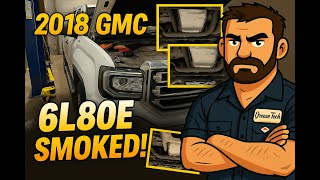
Est. part cost: $40-$100 (4L60E Solenoid), $400-$800 (6L80 TEHCM) - Torque Converter Failure (6L80) 🔴 High Probability → Shop Automatic Transmission Torque Converter The lock-up clutch inside the stock 6L80 torque converter is a known weak point. It wears and sheds its friction material, causing shudder, overheating, and sending metal debris throughout the transmission 🎬 See how a failed 6L80 torque converter destroys the internals.. This debris clogs the valve body and solenoids, starves clutch packs of pressure, and ultimately causes slipping and codes like P0731.
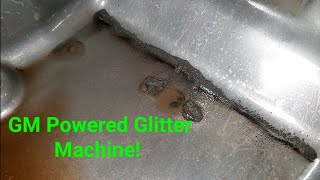
How to confirm: Symptoms include a shudder at light throttle, RPM flare, and grinding/chatter. Confirmation is finding excessive metallic debris ('glitter') in the transmission pan and fluid.
Typical fix: Requires transmission removal. At a minimum, the transmission must be flushed and a new torque converter installed. In most cases where P0731 is present, the contamination has already damaged other components, necessitating a full transmission rebuild or replacement.
Est. part cost: $300-$800 (Converter only), $2500-$5000+ (Rebuild/Replacement) - Worn Internal Clutch Packs or Bands 🟡 Medium Probability High mileage and heavy use cause wear on friction materials. On the 6L80, this is often a secondary failure caused by debris from the torque converter clogging passages and reducing hydraulic pressure to the clutch packs.
How to confirm: This is diagnosed after ruling out fluid and electronic issues. A transmission pressure test can indicate internal hydraulic leaks. Burnt, dark fluid with a significant amount of clutch material in the pan is a definitive sign.
Typical fix: Requires a complete transmission rebuild or replacement.
Est. part cost: $1500-$4000+ - Faulty Valve Body ⚪ Low Probability → Shop Transmission Valve Body The valve body is the hydraulic brain. In 6L80s, bores for the pressure regulator and clutch select valves can wear or get stuck by debris from a failing torque converter, causing pressure loss and delayed engagement.
How to confirm: Diagnosis is complex, often done by a transmission specialist. It involves pressure testing and visual inspection for wear or stuck valves after removal.
Typical fix: The valve body may be cleaned and reconditioned with oversized valves (e.g., Sonnax kits), or replaced entirely.
Est. part cost: $300-$1000
Rare But Worth Checking
- Faulty Transmission Control Module (TCM): → Shop Transmission Assembly While rare for the external TCM on the 4L60E, it's a more common issue on the 6L80 where it's integrated into the TEHCM inside the transmission. A software glitch or internal failure can cause it to misinterpret sensor data or fail to command shifts correctly. This should be considered after mechanical and hydraulic causes are ruled out.
- Faulty Input/Output Speed Sensors: → Shop Automatic Transmission Speed Sensor If the sensors that report shaft speeds to the TCM are faulty, the TCM may calculate an incorrect gear ratio even if the transmission is mechanically sound. This usually triggers other sensor-specific codes as well.
Diagnosis Steps
- Check for other stored trouble codes with an OBD-II scanner.
- Check the transmission fluid level and condition. Ensure the fluid is at the correct level, red in color, and does not smell burnt. Look for metallic glitter in the fluid, especially on 6L80 models.
- If fluid is low, top it off, clear the codes, and test drive to see if the code returns. If it does, look for leaks.
- If the fluid is dirty or burnt, a fluid and filter change is the next step. Inspect the pan magnet for excessive metal.
- Use a professional scan tool to monitor live data, specifically the input and output transmission speed sensors, commanded gear vs. actual gear, and solenoid status to see the slip occur in real-time.
- Command the shift solenoids using the scan tool to check for proper electronic function.
- If external checks don't reveal the cause, perform a transmission pressure test to check for internal hydraulic leaks.
- If pressure is low or other signs point to internal failure (e.g., metal in the pan), the transmission will need to be removed for inspection and repair. On a 6L80 with metal in the pan, assume torque converter failure.
Parts You'll Likely Need
- Transmission Filter and Gasket Kit
(OEM #ACDelco 24236934 (4L60E Deep Pan), Varies for 6L80)— Required for a basic fluid and filter service, the first diagnostic step. A clogged filter from debris is a common issue.
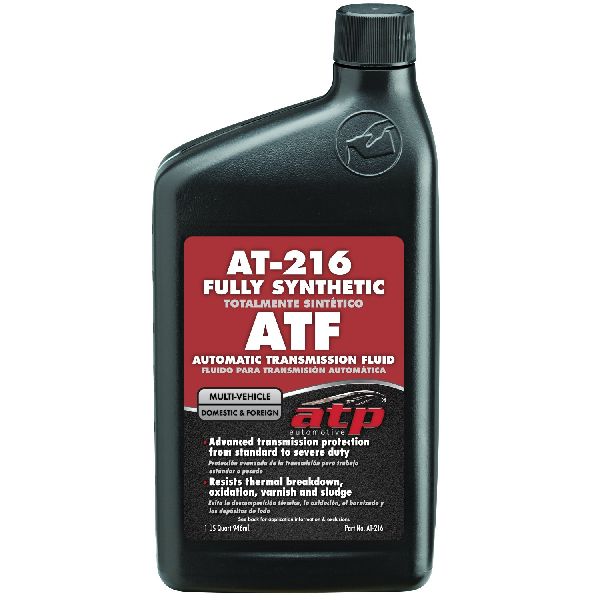
Trusted brands: ACDelco, Wix, ATP
Related Codes That Often Appear With This One
- P0700 — This is a generic transmission fault code that simply indicates the TCM has stored a specific fault code, like P0731.
- P0732, P0733, etc. — If multiple incorrect gear ratio codes are present, it points towards a more widespread problem like low fluid pressure or a major mechanical failure affecting multiple gear sets.
- P0751, P0756, etc. — These are codes for specific shift solenoids. If one of these is present with P0731, it strongly suggests the corresponding solenoid is the root cause, especially on 4L60E models.
- P0741 — Torque Converter Clutch Circuit Performance or Stuck Off. This code is very common alongside P0731 on 6L80 models and is a strong indicator that the torque converter is the root of the problem.
Technical Service Bulletins (TSBs) & Recalls
- PIP4379K: Mentions P0731 as part of a group of codes related to delayed/no gear engagement, directing technicians to standard diagnostic procedures.
- 16-NA-019: Information on Transmission Adaptive Functions and correcting harsh shifts or flares. While not a direct fix for a mechanical slip causing P0731, it is relevant to the overall behavior of these transmissions.
Platform-Specific Known Issues
- For 6L80-equipped trucks (2007.5+), P0731 is a classic symptom of torque converter lock-up clutch failure. The clutch material disintegrates, sending fine metal debris throughout the transmission. This debris abrades seals, clogs solenoid screens, and wears out the valve body, leading to pressure loss and slipping. This is why a simple torque converter replacement is often insufficient; the entire unit is likely contaminated.
- For 4L60E-equipped trucks (2006-2007 Classic), P0731 is more commonly traced to a simple, inexpensive 1-2 shift solenoid failure. The solenoid becomes weak or sticks, preventing the hydraulic pressure needed to apply the 1st gear clutch pack correctly.
- TSB 16-NA-019 discusses transmission adaptive functions. While not a direct fix for a mechanical P0731, it highlights that GM is aware of shift quality issues. In some very mild cases, a TCM software update and a 'fast learn' procedure might be attempted, but this will not fix a mechanical slip.
- TSB PIP4379K mentions P0731 in a list of codes related to delayed or no engagement, indicating this is a known pattern of failure across many GM vehicles. The bulletin directs technicians to follow published service information for diagnosis.
Mechanic-Grade Diagnostic Values
- 4L60E 1-2 Shift Solenoid (A) Resistance — expected: 20 - 40 Ohms. Failure: Reading outside of this range indicates a failed solenoid coil.
- 6L80 On/Off Shift Solenoid Resistance — expected: 20 - 40 Ohms. Failure: A reading outside this range points to a faulty solenoid within the TEHCM.
- 6L80 PWM Shift & Pressure Control Solenoid Resistance — expected: 3 - 8 Ohms. Failure: A reading outside this range points to a faulty solenoid within the TEHCM.
- 6L80 TEHCM Pressure Switch Resistance — expected: ~10 Ohms (when manually pressed). Failure: Reading should be near open-loop (OL) with no pressure, and drop to ~10 Ohms when pressed with a pencil eraser. An incorrect reading indicates a bad switch membrane.
- Transmission Line Pressure Test (1st Gear) — expected: 80 - 120 psi (generic). Failure: Pressure below 60 psi suggests a significant hydraulic leak from a worn pump, valve body, or clutch circuit.
Scan Tool Commands That Help
- GM GDS2 / Tech2 (or equivalent high-end scanner): Service Fast Learn / Transmission Adapts Relearn — This is a mandatory procedure after replacing the 6L80 TEHCM, valve body, or the entire transmission. It allows the TCM to learn the hydraulic characteristics and clutch fill volumes to ensure smooth shifts. Failure to perform this can cause harsh shifting or future codes.
- GM SPS (Service Programming System) with J2534 device: TEHCM Programming — Required when a new TEHCM is installed in a 6L80 transmission. The module must be flashed with the correct VIN-specific calibration file from GM's servers. The vehicle will not operate correctly, if at all, until this is done.
Wiring & Ground Locations
- 6L80 Main Harness Connector — Large, round, black connector on the passenger side of the transmission case.. This is a twist-lock connector that is frequently not seated correctly after service. An incomplete connection can cause a loss of communication to the entire TEHCM, resulting in no-shift conditions and multiple fault codes, including P0731. It must be twisted until a click is felt and the locking tab is engaged.
- 4L60E Main Case Connector — Round connector that passes through the passenger side of the transmission case, secured by tabs from inside the pan.. The internal wiring harness connects here. If the harness is damaged or the connector is not fully seated during a filter service or solenoid replacement, it can cause erratic signals for the shift solenoids, leading to ratio codes.
Real Owner Repair Stories
- Snap-on Diagnostics Product Forums (2008 GMC Yukon XL (6L80 Transmission)) — Torque converter clutch failure.
❌ Tried (didn't work) The user was in the process of repair, not listing things that failed.
✅ What actually fixed it The root cause was a failed torque converter. The user was performing a comprehensive repair that included replacing pump components and installing a Sonnax Zip Kit in the valve body to address wear from the debris. The final step was to perform a 'service fast learn adapt' with a scan tool. This story confirms the common 6L80 failure pattern: converter failure leads to debris, which requires cleaning/repairing the pump and valve body, followed by a mandatory relearn procedure.
"I Checked Everything" — The Actual Cause
- In the context of transmissions, the equivalent is when fluid and electronics check out, but a slip persists. A common cause on 6L80 models is worn stator support bushings in the pump, damaged by debris from the failing torque converter. This causes a loss of critical line pressure that isn't always obvious from an external pressure test and is missed if the tech only replaces the converter and TEHCM without inspecting the pump.
OEM Part Supersession History
10478120, 10478131→24230298 (ACDelco)— Part consolidation and potential minor internal improvements.
Heads up: Part number 24230298 is the correct service replacement for both the 1-2 (A) and 2-3 (B) shift solenoids on 1993-and-up 4L60E transmissions.
Model Year Variations Within This Range
- 2008-2010 (vs. 2006-2007): For the 6L80 transmission, a design change was implemented in 2008 to reduce the oil capacity of the 3-5-Reverse clutch piston by 20%. This was done to decrease the time it took to engage reverse. This change means the 2008+ pistons and seals are not backward compatible with 2006-2007 models, and a corresponding TCM calibration was required. Using mismatched parts will cause engagement delays and potential codes.
Helpful Videos


We Have This Part in Stock


The information in this article is provided for general reference and educational purposes only. Vehicle specifications, procedures, and part compatibility can vary by production date, trim level, and region. Always consult your vehicle's factory service manual and verify part numbers before purchasing or performing repairs. Safety-critical components such as airbags, seat belts, and braking systems should be installed by a qualified professional.
- Gmc SIERRA:
- 🧭 Diagnostic Flowchart
- 🎬 Helpful Videos
- 🛍️ Shop This Part
- What's Unique About the 2006-2010 Gmc SIERRA
- Symptoms You May Notice
- Most Likely Causes
- Rare But Worth Checking
- Diagnosis Steps
- Parts You'll Likely Need
- Related Codes That Often Appear With This One
- Technical Service Bulletins (TSBs) & Recalls
- Platform-Specific Known Issues
- Mechanic-Grade Diagnostic Values
- Scan Tool Commands That Help
- Wiring & Ground Locations
- Real Owner Repair Stories
- "I Checked Everything" — The Actual Cause
- OEM Part Supersession History
- Model Year Variations Within This Range
- 🎟️ Get 5% Off