

P0731 on 2009-2010 GMC Sierra 2500: Incorrect Gear 1 Ratio Causes and Fixes
P0731 on a 2009-2010 Sierra 2500 means the transmission is slipping in first gear. This is often caused by a failing torque converter in the 6L80/6L90 transmission, which contaminates the system with metallic debris. Do not drive the vehicle; professional diagnosis is required, and repairs can range from a fluid change to a full transmission rebuild, as the contamination often damages the entire unit.
- P0731 on this truck is a critical code indicating first gear is slipping, and you should stop driving immediately to prevent catastrophic damage.
- The most likely cause is a failing torque converter contaminating the entire transmission with metallic debris.
- Always start diagnosis by checking the transmission fluid level and condition; dark, glittery fluid confirms a major internal failure.
- This is not a DIY-friendly repair. It requires professional diagnosis and can lead to a full transmission rebuild or replacement.
- Simply replacing the torque converter is not enough; the entire system, including the transmission cooler, must be flushed or replaced to remove all contaminants.
What's Unique About the 2009-2010 Gmc SIERRA 2500
The 2009-2010 GMC Sierra 2500 is typically equipped with the heavy-duty 6L90 6-speed automatic transmission, a larger and stronger version of the 6L80. For this platform, code P0731 is a well-documented and serious issue. The problem often starts with the torque converter's lock-up clutch failing and shedding metallic debris into the transmission fluid. This contaminated fluid then circulates throughout the transmission, clogging the valve body, solenoid screens, and the entire Transmission Control Module/solenoid assembly (known as the TEHCM), leading to pressure loss and the inability to engage first gear properly. 🎬 See this breakdown of causes and fixes for the P0731 code. This specific failure pattern is a notorious issue for the 6L80/6L90 family. A cracked 1-2-3-4 apply piston is another known casting flaw that causes pressure loss and can trigger this code.
Diagnostic Flowchart
Tap your situation to follow the diagnostic path that matches what you're seeing on this vehicle.
Symptoms You May Notice
- Vehicle hesitates or has poor acceleration from a stop.
- Engine RPMs increase, but the vehicle doesn't move as it should (slipping).
- Transmission gets stuck in a higher gear (limp mode).
- Harsh or abrupt clunking when shifting into Drive or Reverse.
- Illuminated Check Engine Light.
- Transmission warning message on the dashboard.
- Feeling like the truck is starting in a higher gear.
- Grinding or whining noises from the transmission area.
- Replacing only the torque converter without flushing the entire system and replacing the cooler. Debris left in the system will cause the new converter and transmission to fail quickly.
- Replacing a single solenoid. On the 6L80/6L90, the solenoids are integrated into the TEHCM and are not typically serviced individually; the entire module is replaced.
- Mistaking the code for an engine misfire or driveline problem without proper transmission diagnostics.
Most Likely Causes
- Failing Torque Converter 🔴 High Probability → Shop Automatic Transmission Torque Converter The lock-up clutch within the stock 6L80/6L90 torque converter is a widely documented weak point that wears and sheds friction material, causing a 'shudder' and contaminating the fluid.
How to confirm: Check the transmission fluid for a large amount of fine, metallic 'glitter'. A professional may perform a stall test or analyze fluid pressure. The presence of code P0741 alongside P0731 is a strong indicator of torque converter failure.
Typical fix: The torque converter must be replaced. However, due to widespread contamination, this almost always requires a full transmission flush, cooler replacement, and often a complete transmission rebuild or replacement to prevent a repeat failure. Simply replacing the converter is often insufficient.
Est. part cost: $300-$800 for the converter only; $2500-$5000+ for a rebuilt transmission. - Low or Contaminated Transmission Fluid 🔴 High Probability → Shop Transmission Assembly This is often a symptom of the failing torque converter contaminating the fluid. It can also be the primary cause if the fluid level is low due to a leak or if the incorrect fluid was used.
How to confirm: Check the transmission fluid level and condition per the owner's manual 'Hot Check' procedure. The fluid should be bright red and clear. Dark, burnt-smelling fluid or fluid with metal particles indicates a serious internal problem.
Typical fix: If the fluid is only low, top it off with DEXRON-VI and check for leaks. If the fluid is dirty or burnt, a fluid and filter change is required. This is often a temporary fix if internal damage from the debris has already occurred.
Est. part cost: $50-$150 for fluid and a filter kit. - Failed TEHCM (TCM / Valve Body / Solenoids) 🟡 Medium Probability → Shop Transmission Valve Body The TEHCM unit is highly susceptible to clogging from the metallic debris shed by a failing torque converter. The internal solenoids, pressure switches, or the control module itself can fail electronically or hydraulically.
How to confirm: Requires a professional scan tool to check for specific solenoid fault codes (like P0751) and to monitor solenoid commands versus actual performance. Pressure testing can also isolate a valve body issue. Resistance tests on the solenoids can be performed on the bench.
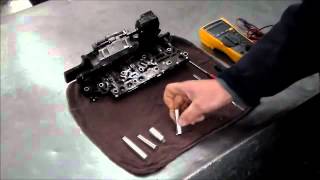
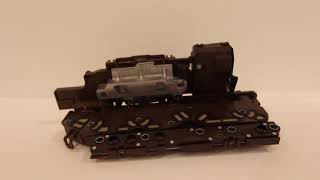
Typical fix: Replacement of the entire TEHCM unit, which is located inside the transmission oil pan. The new unit must be programmed to the vehicle's VIN using a J2534 pass-through device. 🎬 Watch: What you need to know about TEHCM and TCM replacements.
Est. part cost: $500-$1200 for the TEHCM assembly. - Worn Internal Clutch Packs ⚪ Low Probability This is often a secondary failure. Debris from the torque converter clogs hydraulic passages, which starves the clutch packs of the pressure needed to engage firmly, causing them to slip and burn out. It can also be a primary failure in very high-mileage vehicles.
How to confirm: This is diagnosed after all other external and electronic causes have been ruled out. It requires transmission disassembly to visually inspect the clutch friction plates.
Typical fix: A complete transmission rebuild or replacement.
Est. part cost: $2500-$5000+
Diagnosis Steps
- Check the transmission fluid level and condition. Look for bright red DEXRON-VI fluid at the correct level. Dark fluid or metallic particles are a strong sign of serious internal wear, likely from the torque converter.
- Use a professional scan tool to check for other related trouble codes, especially P0700, P0741, and any solenoid-specific codes like P0751.
- Review the freeze-frame data to see the vehicle conditions (speed, RPM, temperature) when the code was set.
- Inspect the transmission wiring harness and connectors for any visible damage, corrosion, or loose connections. Pay attention to the main 16-pin connector and grounds.
- If fluid is full of metallic debris, suspect a failed torque converter and contaminated system. The transmission pan should be dropped for inspection to confirm the extent of debris.
- If codes point to a solenoid or control module issue, the TEHCM may need to be tested. This often involves monitoring commanded vs. actual states with a scan tool and may lead to TEHCM replacement and programming.
- If fluid is clean and no other codes are present, a transmission pressure test should be performed by a professional to check for internal hydraulic leaks or a weak pump, as suggested by TSB PIP4379N.
Parts You'll Likely Need
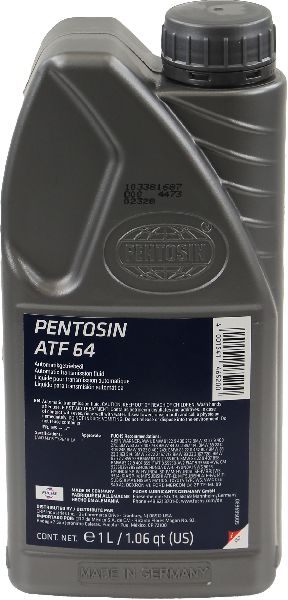
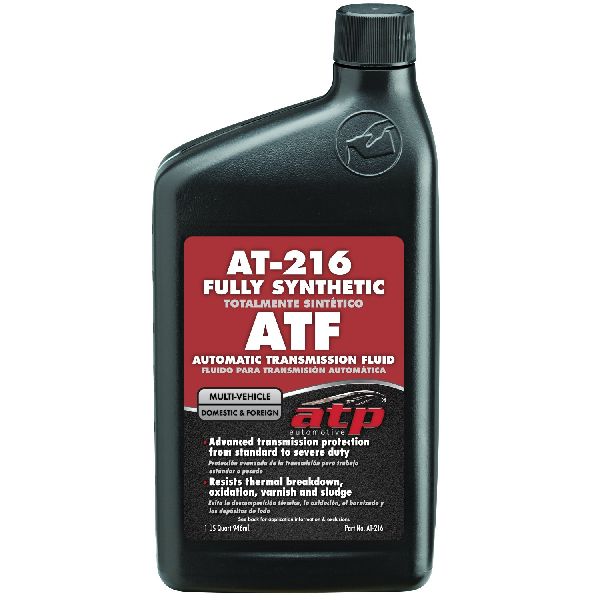
- Transmission Fluid and Filter Kit — This is the first and most basic step. Low or dirty fluid is a common cause or symptom. A clogged filter can restrict fluid flow. Use DEXRON-VI fluid.
Trusted brands: ACDelco
OEM price range: $80-$120
Aftermarket price range: $50-$90 - Torque Converter
(OEM #24242551 (ACDelco GM Original Equipment - check VIN for exact fit))— A known failure point on the 6L90 transmission. Its failure is often the root cause of the P0731 code by contaminating the entire system.
Trusted brands: ACDelco, LuK, TC Remanufacturing
OEM price range: $500-$800
Aftermarket price range: $300-$500 - Transmission Control Module (TEHCM)
(OEM #24256939 (Superseded by various numbers, check VIN. Example aftermarket: Sonnax GM6L-TEHCM-C5).)— This integrated unit containing the TCM, valve body, and solenoids can get clogged with debris or fail electronically, causing pressure and shifting issues. Requires VIN programming after installation.
Trusted brands: ACDelco (GM Genuine), Sonnax (Remanufactured)
OEM price range: $700-$1200
Aftermarket price range: $475-$900 - Remanufactured Transmission Assembly — Often the most cost-effective solution when a failed torque converter has sent debris throughout the entire unit, damaging the pump, valve body, and clutch packs. A remanufactured unit typically comes with a warranty and updated components.
Trusted brands: Moveras, Jasper, Tier One Transmissions
OEM price range: $4000-$5500+
Aftermarket price range: $2500-$4500
Related Codes That Often Appear With This One
- P0700 — This is a general transmission fault code that simply means the TCM has detected a problem and has requested the Check Engine Light to be turned on. It will almost always be present with P0731.
- P0741 — This code for 'Torque Converter Clutch Circuit Performance or Stuck Off' points directly to the torque converter as the likely root cause of the debris that leads to the P0731 code.
- P0751 — This code for 'Shift Solenoid 'A' Performance/Stuck Off' is often seen with P0731 because Solenoid 'A' is involved in controlling the 1-2 shift, and its malfunction due to debris or electronic failure can cause the first gear ratio error.
- P0732, P0733, etc. — Incorrect ratio codes for other gears. If multiple ratio codes are present, it strongly suggests a widespread hydraulic issue like low fluid, a failing pump, or major internal failure affecting multiple clutch packs.
Technical Service Bulletins (TSBs) & Recalls
- TSB #PIP4379N: This is a broad Preliminary Information bulletin from GM covering a wide range of models and years, including the 2009-2010 Sierra 2500. It lists a large number of DTCs, including P0731, that can be associated with delayed or no gear engagement. It suggests that these codes could indicate a loss of prime or low pressure in the transmission pump, especially in cold weather, and advises technicians to follow standard diagnostic procedures, starting with a fluid level check.
Platform-Specific Known Issues
- The provided NHTSA TSB #PIP4379N confirms that P0731 is part of a pattern of known transmission issues on this platform, including delayed engagement and range inhibit problems.
Mechanic-Grade Diagnostic Values
- Shift Solenoid (On/Off type) Resistance — expected: 20-40 Ohms. Failure: Readings outside this range indicate a failed solenoid coil.
- Pressure Control (PWM type) Solenoid Resistance — expected: 3-8 Ohms. Failure: Readings outside this range indicate a failed solenoid coil.
- Transmission Line Pressure at Idle (in Park) — expected: 45-80 PSI. Failure: Significantly lower pressure indicates a weak pump, major leak, or pressure regulator valve issue.
- Transmission Line Pressure at WOT Stall — expected: Up to 300 PSI. Failure: Failure to reach high pressure under load points to pump, converter, or internal seal failure. Do not maintain WOT for long.
- Pump Rotor and Slide End Clearance — expected: 0.0008 - 0.002 inches (0.020 - 0.051 mm). Failure: Excessive clearance, measured with plastigage during a rebuild, indicates a worn pump body or components, leading to pressure loss.
Scan Tool Commands That Help
- GM GDS2 / Tech2 or equivalent high-end scanner: Service Fast Learn Adapts — This procedure is mandatory after replacing the TEHCM or rebuilding the transmission. It resets and relearns the clutch apply pressures and shift timing. Failure to perform this will result in poor shift quality and potential damage.
- GM GDS2 / Tech2 or equivalent: Reset Transmission Adapts — As a preliminary diagnostic step for resolving harsh shifting complaints without codes, this function can be used to force the TCM to relearn shift patterns. If shifting doesn't improve after 50-100 miles, a hardware issue is likely.
- GM GDS2 / Tech2 or equivalent: Solenoid Cleaning Procedure — If a solenoid performance DTC is present, this automated function cycles all solenoids to flush out minor debris. If the code returns after cleaning, the TEHCM likely needs replacement.
Wiring & Ground Locations
- Main Transmission Connector (16-pin) — On the passenger side of the transmission case.. This is the primary interface between the vehicle harness and the internal TEHCM. Pin 5 is the ground, Pin 4 is Battery+, and Pins 10/11 and 13/14 are for CAN bus communication. Corrosion or damage here can cause a loss of communication or power to the TCM, leading to various codes including P0731.
- Engine Block to Chassis/Firewall Ground Strap — Typically runs from the back of the passenger side cylinder head to a stud on the firewall.. This is a critical ground path for the entire powertrain. On GMT900 trucks, this strap is known to corrode and break, causing a host of electrical issues, including erratic sensor readings and module behavior. A poor ground can cause the TCM to receive incorrect data or function improperly, potentially setting false codes.
- Pressure Test Port — Located on the passenger's side of the transmission, behind the bell housing area.. This is the physical access point needed to connect a pressure gauge to verify line pressure, a critical step in diagnosing hydraulic faults (low pump output, internal leaks) that cause slipping and incorrect gear ratio codes.
OEM Part Supersession History
Various, e.g., 24241350, 24252114→Various, e.g., 24256939— Hardware and software updates to improve reliability and address failures of solenoids and pressure switches.
Heads up: TEHCMs are NOT interchangeable between year ranges or even different software calibrations (identified by the 4-letter tag ID). Installing an incorrect TEHCM will cause a no-start, no-shift, or immediate limp mode condition. The module must be programmed to the vehicle's VIN after installation using GM's Service Programming System (SPS).Original 1-2-3-4 Clutch Piston (pre-2010)→24258159— The original piston was prone to cracking due to casting flaws. The updated part has 22% more rib area for increased strength.
Helpful Videos

We Have This Part in Stock

The information in this article is provided for general reference and educational purposes only. Vehicle specifications, procedures, and part compatibility can vary by production date, trim level, and region. Always consult your vehicle's factory service manual and verify part numbers before purchasing or performing repairs. Safety-critical components such as airbags, seat belts, and braking systems should be installed by a qualified professional.
- Gmc SIERRA 2500:
- 🧭 Diagnostic Flowchart
- 🎬 Helpful Videos
- 🛍️ Shop This Part
- What's Unique About the 2009-2010 Gmc SIERRA 2500
- Symptoms You May Notice
- Most Likely Causes
- Diagnosis Steps
- Parts You'll Likely Need
- Related Codes That Often Appear With This One
- Technical Service Bulletins (TSBs) & Recalls
- Platform-Specific Known Issues
- Mechanic-Grade Diagnostic Values
- Scan Tool Commands That Help
- Wiring & Ground Locations
- OEM Part Supersession History
- 🎟️ Get 5% Off